Log in
Sign up for FREE
arrow_back
Library

Chemistry Review 24-25

star
star
star
star
star
Last updated over 1 year ago
8 questions
Required
1
Required
1
Required
1
Required
1
Required
1
Required
1
Required
3
Required
3
Question 1
1.

Question 2
2.

Question 3
3.

Draggable itemarrow_right_altCorresponding Item
arrow_right_alt
arrow_right_alt
arrow_right_alt
arrow_right_alt
arrow_right_alt
arrow_right_alt
Question 4
4.

Question 5
5.

Question 6
6.

Question 7
7.

Question 8
8.

What is the fundamental building block of all the elements?
molecule
element
atom
nucleus
Go to this link. Scroll down and take a look... what is the name of element #8 AND how many protons does that element have?
hydrogen - 1 proton
oxygen - 8 protons
oxygen - 15.999 protons
nitrogen - 8 protons
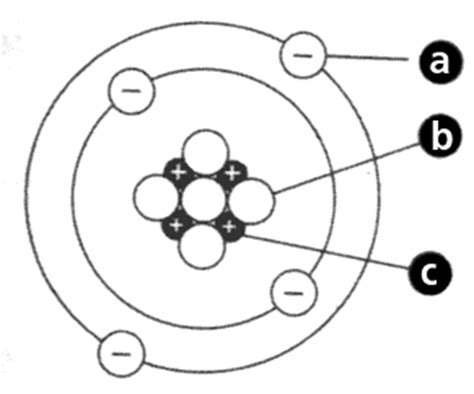
electron
c
neutron
a
number of this particle determines what element it is
b
this particle has the same mass as a proton and has no charge
proton
proton
electron
this particle is found outside the nucleus in level or shells
neutron
What is the rule for the number of electrons needed to fill electron shells of atoms?
The first level needs 8 electrons and the 2nd level needs 2 electrons
The first level needs 2 electrons and the 2nd level needs 8 electrons
The number of electrons needed for the electron shells of atoms is random - it varies in every element
Both the first and second electron shells need 2 electrons each
Individual atoms are "stable" on their own (by themselves) and therefore do not need to chemically bond with other atoms to become stable
True
False
Why do atoms form chemical bonds with each other and form molecules?
Atoms need to have full outside energy levels so must share electrons with other atoms to do this... in the process the atoms "stick" to each other to form molecules. Molecules are more "stable" than individual atoms.
Atoms are attracted to other atoms because electrons from one atom want to be near the electrons of other atoms. Like charges like negative to negative electrons attract each other.
Molecules are very rare in nature... it is unlikely atoms will be near enough to each other to form chemical bonds and make molecules
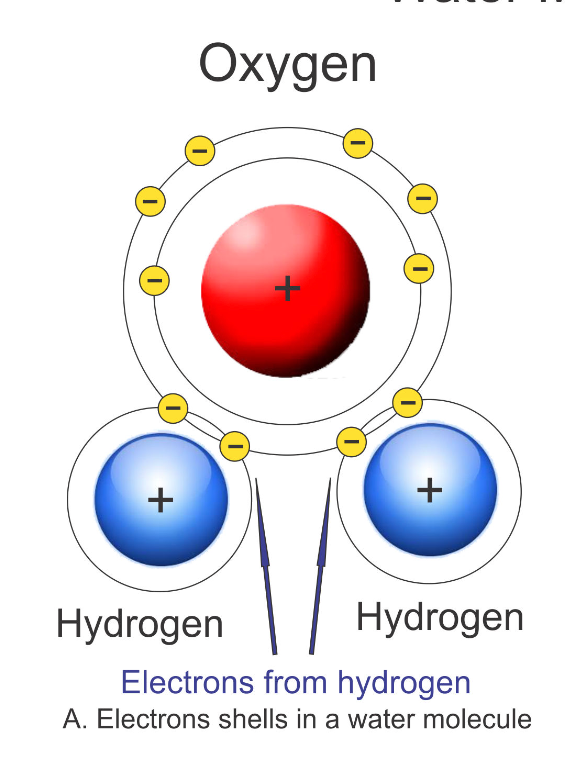
Select all the statements that are true diagram above?
This is a water molecule - H2O
The overlapping areas where the outside circles of the atoms touch represent chemical bonds called covalent bonds
The 3 atoms above are less stable when they are "connected" as shown in the diagram above than if they were all separate and not connected to each other.
See the water molecule diagram above... Select all the statements that are true the water molecule?
Due to the covalent bonds in the water, the hydrogen atoms have 2 electrons and the oxygen has 8 electrons in their outer shells
Neither the hydrogens or the oxygen atom have full outer shells of electrons
All the atoms in the water molecule are more "stable" as part of the water molecule than the atoms would be if they were all separate from each other
The water molecule is stable because all 3 atoms in it have full outside electron shells