Log in
Sign up for FREE
arrow_back
Library
A0 - The Discovery of the Structure of DNA
By Caleb Guesno
star
star
star
star
star
Share
share
Last updated about 3 years ago
26 questions
Add this activity
5
1
1
1
1
1
1
1
1
1
Question 1
1.
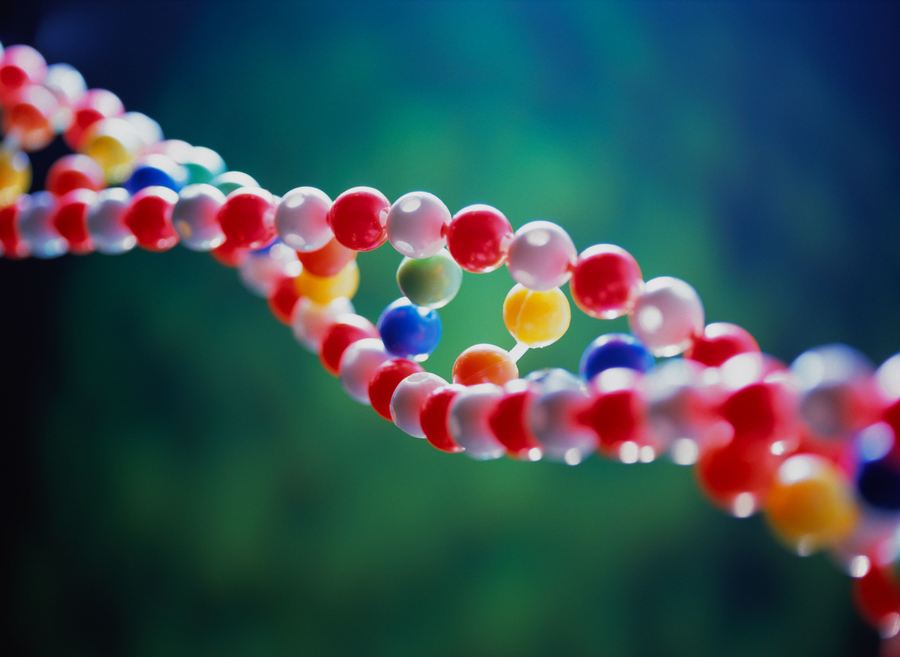
Recreate your own version of this model. Add a lot flare to it!!!
visibility
View drawing
play_arrow
Question 2 | 00:10
Question 3 | 00:17
Question 4 | 00:23
Question 5 | 00:38
Question 6 | 00:51
Question 7 | 01:02
Question 8 | 01:11
Question 9 | 01:30
00:00/00:00
closed_caption_disabled
slow_motion_video
fullscreen
Question 2
00:10
keyboard_arrow_down
1
Question 3
00:17
keyboard_arrow_down
1
Question 4
00:23
keyboard_arrow_down
1
Question 5
00:38
keyboard_arrow_down
1
Question 6
00:51
keyboard_arrow_down
1
Question 7
01:02
keyboard_arrow_down
1
Question 8
01:11
keyboard_arrow_down
1
Question 9
01:30
keyboard_arrow_down
1
zoom_in
play_arrow
Question 10 | 00:34
Questions 11-13 | 01:07
Question 14 | 01:22
Questions 15 & 16 | 01:35
Question 17 | 01:54
00:00/00:00
closed_caption_disabled
slow_motion_video
fullscreen
Question 10
00:34
keyboard_arrow_down
1
Questions 11-13
01:07
keyboard_arrow_down
1
1
1
Question 14
01:22
keyboard_arrow_down
1
Questions 15 & 16
01:35
keyboard_arrow_down
1
1
Question 17
01:54
keyboard_arrow_down
1
Question 18
18.
Why is DNA important?
because we eat it every day for energy
it serves as the blueprint for traits of all living things
it's in everything
it is very small and very complicated
Question 19
19.
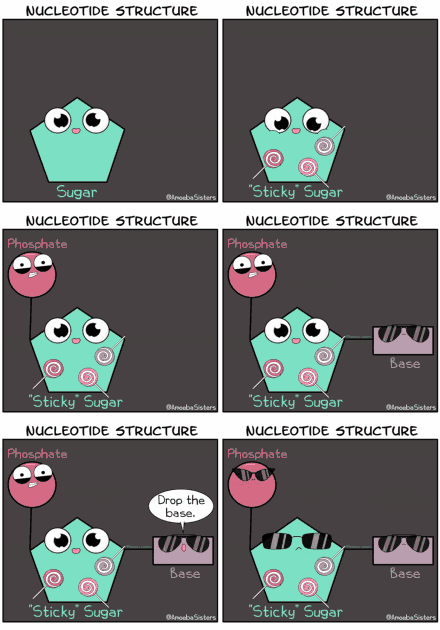
Which of the following units are repeatedly joined together to form a strand of DNA?
fatty acids
amino acids
nucleotides
carbohydrates
Question 20
20.
What are the 4 nitrogen bases?
adenine, thymine cytosine, and guanine
adenine, thymine, cytosine, and gylcerol
adenine, thymine, cytosine, and glucose
adenine, thymine, cytoplasm, and guanine
Question 21
21.
Why does DNA stay in the nueclus?
It is lazy.
To protect it from becoming damaged.
It cannot move.
It is grounded.
Question 22
22.
Which organelle is DNA usually found in?
vacuole
chloroplast
cell membrane
nucleus
Question 23
23.
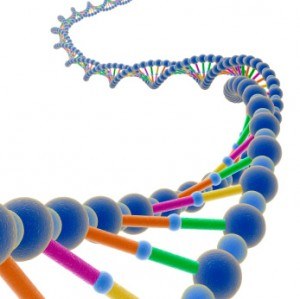
Which of the following best describes a DNA molecule?
contains Uracil
made of amino acids
double helix
contains ribose
Question 24
24.
In a molecule of double-stranded DNA, the amount of Adenine present is always equal to the amount of
axial
thymine
cytosine
guanine
Question 25
25.
What will the matching sequence be on a strand that reads AAGCTAT?
TTCGATA
TTCGTTA
CCTGATA
AACGATA
Question 26
26.
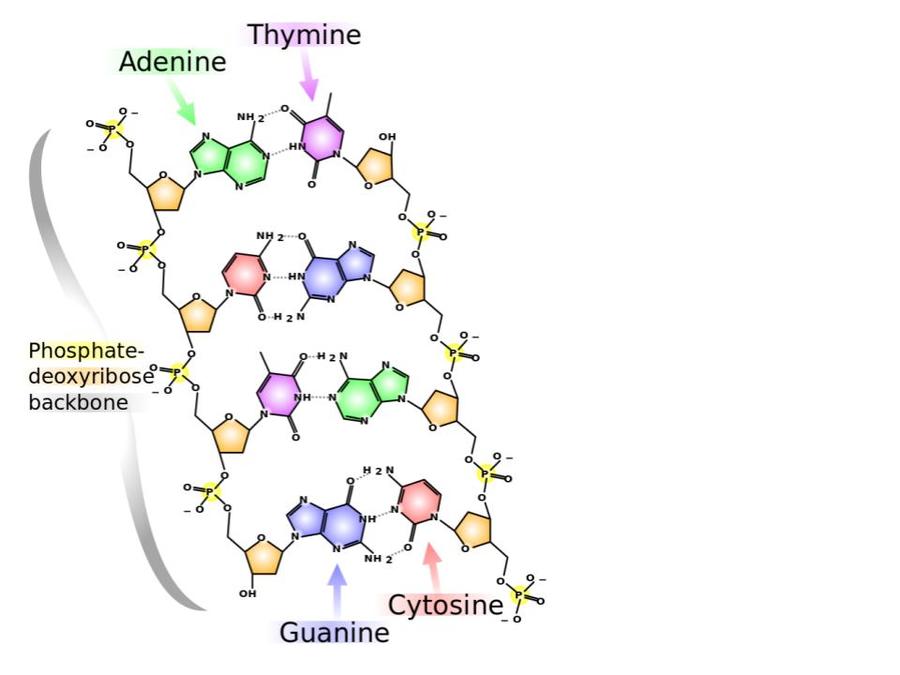
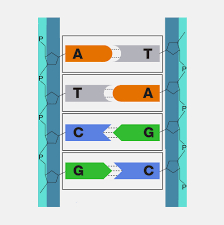
Which shows the correct complementary base pairing for DNA?
The image should help.
A-G, C-T
C-A, T-G
T-A, G-C
C-G, U-A
Question 2
2.
DNA stands for _______.
Word bank:
detoxify
deoxyribonucleic acid
dettritous chromo
dexerititus matrix
Question 3
3.
DNA is...
a short molecule
a long molecule
Question 4
4.
Why is DNA very long?
Question 5
5.
Each nucleotide has...
a sugar (deoxyribose
a nitrogen base
a phosphate group
a tital function
Question 6
6.
Which parts of the DNA make the backbone?
the sugar and phosphate group
the toxul group and tonsil group
the base and carbohydrate
the maximus and minimus sign
Question 7
7.
Thymine always pairs up with _______.
Question 8
8.
Cytosine and _______ always pair up togther.
Question 11
11.
What did Erwin Chargaffe discover about DNA?
Question 12
12.
The amount of adenine in DNA is equal to
the amount of thymine
the amount of cytosine
the amount of guanine
Question 13
13.
The amount of cytosine in DNA is equal to...
the amount of thymine
the amount of guanine
the amount of cytosine
Question 15
15.
Watson and Crick searched for all possible bonds of the 4 nucelotides. What did they find about A and T.
three H bonds exist between A and T
two H bonds exist between A and T
Question 16
16.
Watson and Crick searched for all possible bonds of the 4 nucelotides. What did they find about C and G.
three H bonds exist between G and C
two H bonds exist between G and C
Question 17
17.
DNA can be...
copied
lost
pleated
sensed