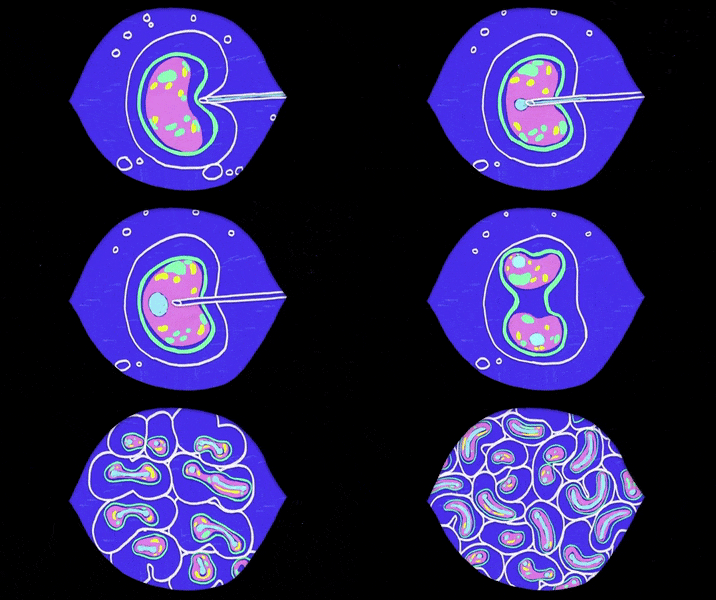
What is a mutation? At first, it may sound like a bad thing, and sometimes it is. However, life as we know it today could not exist without mutations. They are the reason that organisms have changed over the course of time. What does this mean? Mutations generate the raw material for natural selection and are the main source for genetic variation in the gene pool. Mutations can be harmful, beneficial, or neutral (meaning they have no effect on the organism in which the mutation occurs). Let’s look at mutations, how they occur, and how they contribute to genetic variation.
1 point
1
1 point
1
Question 2
2.
Could life today exist without mutations? Explain you reasoning.
Sentence Starter: According to the text,...
1 point
1
Question 3
3.
"Geneitic variation in the gene pool" means that there are many organisms with different charactertistics. What causes this?
Sentence Starter: According to the text, what causes genetic variation in the gene pool is...
1 point
1
Question 4
4.
Are mutations only harmful?
Let us take a moment to remember how genetic information is carried and passed along in individual organisms. All living organisms have DNA, or deoxyribonucleic acid. The DNA molecule is made of a long strand of compounds called nucleotides attached to a sugar-phosphate backbone. It is the sequence of nucleotides along the strand that makes individual organisms unique. Why?
Along each DNA strand are segments that code for traits. The segments of DNA that code for traits are called genes. Traits include such things as skin color, height, fruit size, or amount of fur. Because each organism has its own sequence of nucleotides along its DNA, it is this sequence that makes every organism unique.
1 point
1
1 point
1
1 point
1
Question 7
7.
The segments of DNA that code for traits are called...
1 point
1
Question 8
8.
The text mentions a few traits made by genes... what are they?
1 point
1
Question 9
9.
What sequence makes every organism unique?
Every time a cell is replicated, the sequence of the nucleotides found on the DNA strand must be copied exactly. If the copies are exact, the organism can function and reproduce properly.
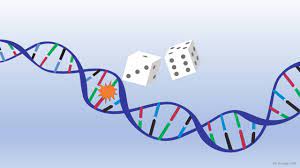
However, the cellular machinery that copies DNA sometimes makes mistakes, which can lead to a change in the sequence of nucleotides that is copied. An extra base may be inserted or left out. In its most basic sense, a mutation is any change in the sequence of DNA in a cell.
1 point
1
1 point
1
Question 11
11.
Every time a cell is replicated, the sequence of the nucleotides found on the DNA strand must be ___________ exactly.
Other Answer Choices:
positioned
mounted
fixed
trusted
copied
1 point
1
Question 12
12.
The machinery that copies DNA...
1 point
1
Question 13
13.
The cellular machinery that _______ DNA sometimes makes _______ , which can lead to a change in the sequence of _______ that is copied. This means the an extra base may be _______ or left out.
Word Bank:
mistakes
nucleotides
copies
1 point
1
Question 14
14.
In its most basic sense, a mutation is
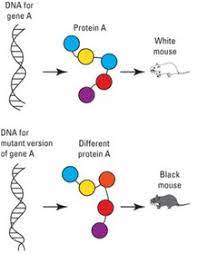
In other words, mutations are random changes in the sequence of DNA that occur to individual organisms. Many mutations have no effect on an organism’s traits because they occur in sections of the DNA strand that do not code for traits. If the mutations do occur in a gene sequence, the mutation may be either harmful or helpful.
1 point
1
1 point
1
Question 16
16.
Mutations are _______ changes of DNA.
1 point
1
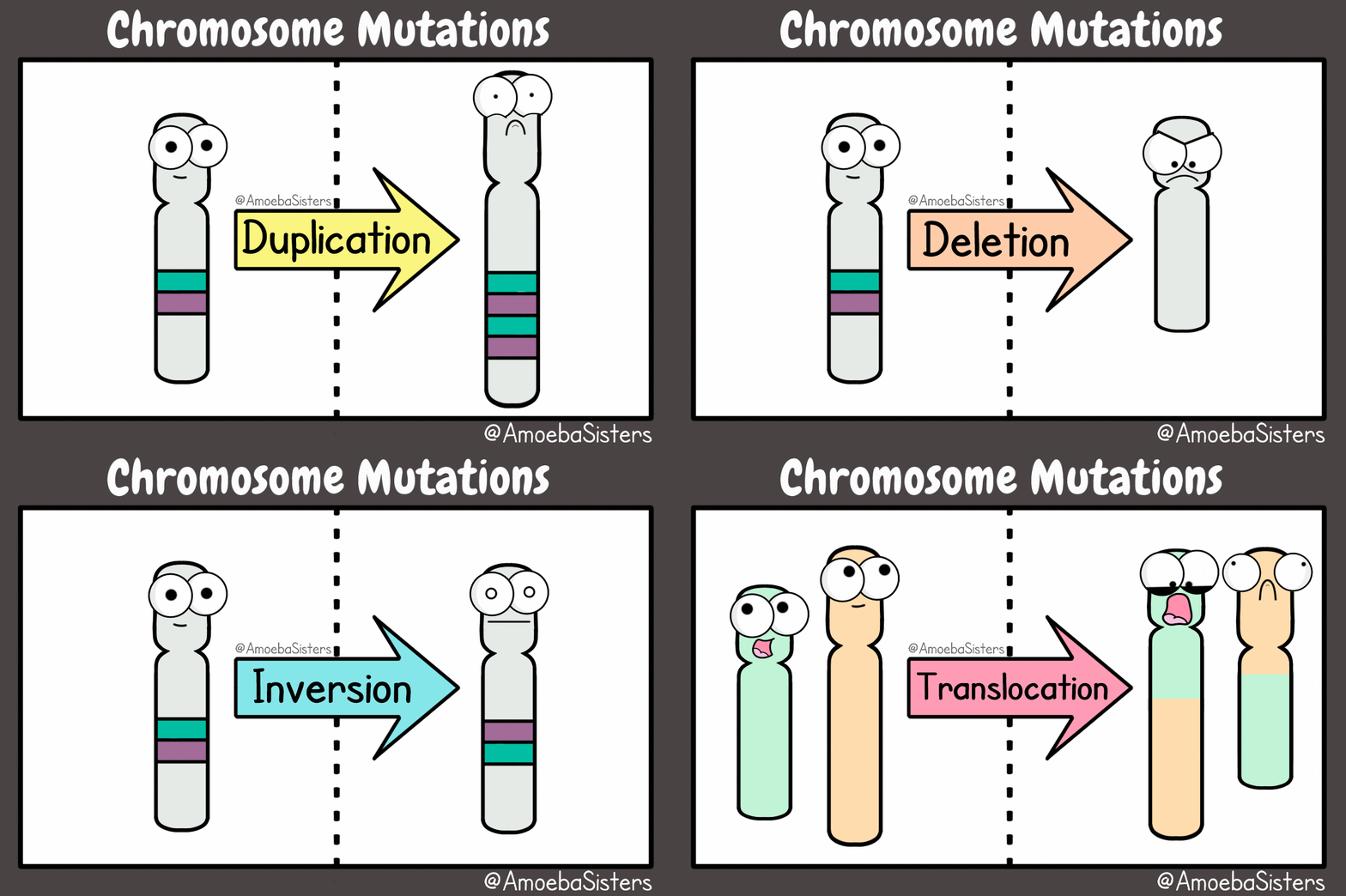
Mutations may happen during the replication process in several ways. A point mutation is a mutation in which one “letter” of the genetic code is changed to another. In another type of mutation, sections of DNA can be added to or removed from genes. In a third type of mutation, genes, or parts of genes, can become reversed or duplicated.
But these “mistakes” do not occur to all of the DNA within an organism at the same time. Most mutations only occur within single cells. It is the type of cells in which these mutations occur that is important.
1 point
1
1 point
1
Question 19
19.
Dna can be _________ from genes.
In single-celled organisms, all mutations can be passed to the next generation. Things are more complicated in multicellular organisms.
Mutations that occur in the somatic (nonreproductive) cells usually only affect the individual organism with the mutation. If the mutation occurs within these types of cells, the individual organism may change, but those changes will not be passed to future generations.
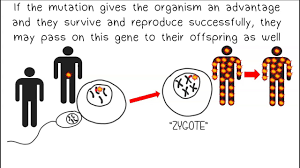
It is the mutations that occur within the reproductive cells that become important for evolutionary change, as mutations that occur in reproductive cells (gametes) can be passed-on to offspring. Although a mutation in any particular gene sequence (allele) is rare, it is the only way that new traits can be generated within a population.
1 point
1
1 point
1
Question 21
21.
What happens if a mutation occurs in a somatic cell...
1 point
1
Question 22
22.
Where must mutations occur for them to be carried on into future generations?
1 point
1
All of the mutations that occur to DNA sequences are random. They do not occur as the result of a “need.” For example, if an organism’s environment suddenly turns much colder than it was before, its DNA will not simply generate a mutation that results in thicker fur. A mutation that results in thicker fur may arise naturally, but an organism cannot generate a mutation for a specific purpose.
1 point
1
1 point
1
To follow this example, if an organism in a colder environment has a mutation, by chance, that creates thicker fur, this individual organism will be more likely to survive to reproduce. If this new trait of thicker fur, caused by the mutation, can be passed to its offspring, then its offspring will also be more likely to survive.
If the individuals with less fur become less likely to survive, then more and more individuals with the thick fur mutation will live. If each new generation is able to pass on this beneficial mutation to the next generation, then it will not take long before the entire population will have the mutated gene for thicker fur, and the population will have evolved.
1 point
1
1 point
1
Question 27
27.
Beneficial traits like developing less fur in warmer environments to stay cool...
1 point
1
Question 28
28.
Let's say a mutation helps an organism, like growing fur in a cold environment. Why would this trait show up in the future?
1 point
1
Question 29
29.
Based on the text, what causes a population of organisms to evolve?
New traits that arise due to a mutation start out at a very low frequency within the population, usually with one individual within a total population. If this individual is born with a beneficial mutation, that individual will be more likely to survive than others without the mutation, a principle called “survival of the fittest.” The beneficial mutation will likely be passed on to the next generation. This is why mutations are the raw materials for evolutionary change.
1 point
1
1 point
1
Natural selection favors beneficial mutations, increasing their frequencies, and eliminates harmful ones. If a particular mutation happens to work well with the environment, that mutation could be favored by natural selection and the frequency of that gene could increase within that population. On the other hand, it could have a negative effect on the organism and cause it to be less successful or even die; therefore, the effect of a mutation often depends on the environment and on the other traits within the organism and the population.
1 point
1
1 point
1
Question 33
33.
If a particular mutation happens to work well with the _______ , that mutation could be _______ by natural selection and the frequency of that gene could _______ within that population.