Create your own diagram of cellular chromsomes, DNA, and genes. Below is an example. Draw your own LABLED DIAGRAM and add a little flare to your own.
Lables you should have:
cell
nucleus
chromosome
DNA
gene
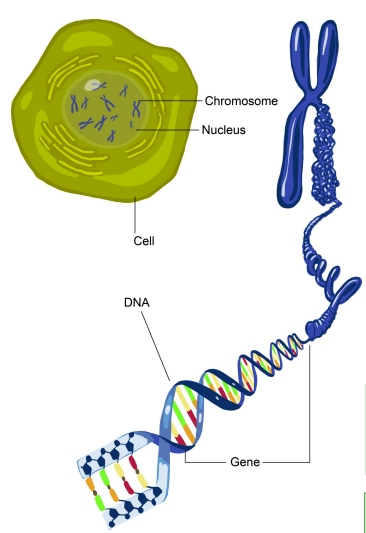
Create your own diagram of cellular chromsomes, DNA, and genes. Below is an example. Draw your own LABLED DIAGRAM and add a little flare to your own.
Lables you should have:
cell
nucleus
chromosome
DNA
gene
Ouch! Imagine you just cut your finger. How does your body know to grow another skin cell and not a heart cell or stomach cell?
Now look at the image of the baby zebra with its mother. How did the offspring inherit its
parent’s stripes and red mane? The answer is the same for both pictures. Genes! Your body contains about 50 trillion cells, each with a set of genes that have coded for making a specific cell.

Genes code for a .
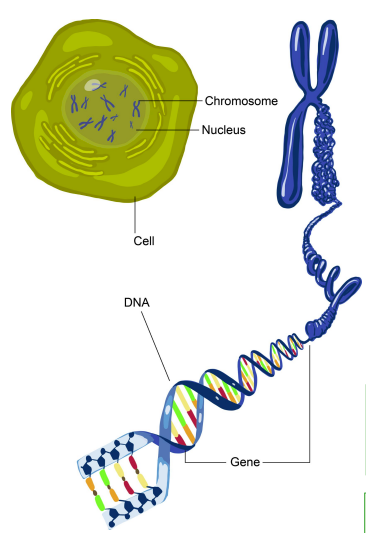
Based on looking at the diagram, where do chromosomes live.
Each parent has a set of genes with coded instructions for characteristics that are passed on to their offspring. Those instructions are the blueprints of life.
Where do those instructions originate? How do they control cell structure and function?
Where did your cells get instructions to make you?
The blueprints for cell growth, or for passing on
traits to offspring during reproduction, come from instructions inside the cell’s control center, which is called the nucleus.
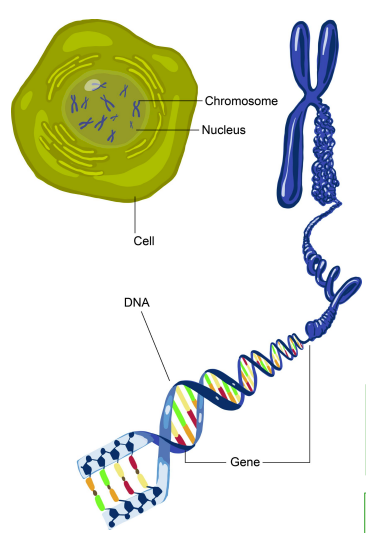
Chromosomes inside the nucleus of cells are made up of DNA (deoxyribonucleic acid), a long, twisted, ladder-shaped molecule. DNA is the source of the coded instructions. Chromosomes are divided into short segments of DNA called genes, each with a specific purpose. Each chromosome has many different genes lined up one after the other along the chromosome. You can think of the DNA as a cookbook, and the genes are the individual recipes in that cookbook.
Chromosomes exist inside of the
Word bank:
DNA
purpose
genes
nucleus
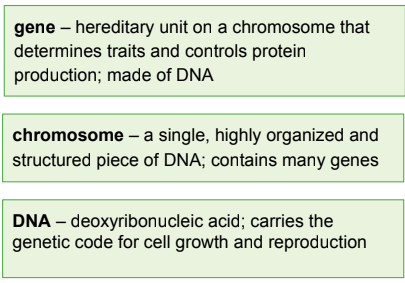
The order of size from smallest to largest is
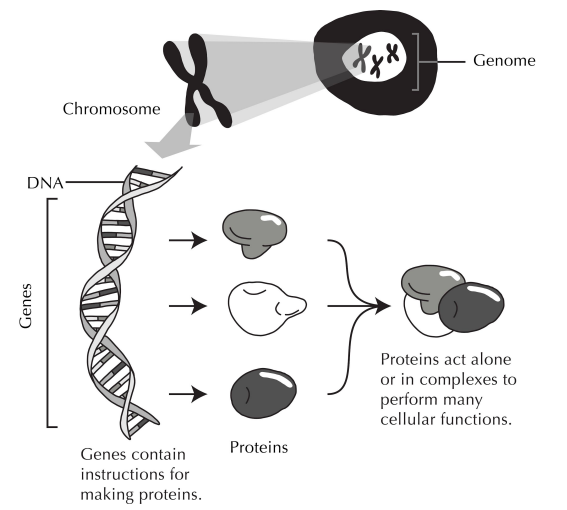
Every gene has a set of instructions for making a specific set of proteins. Protein structure influences protein function (ex: the structure of some blood proteins allows them to attach to oxygen, and the structure of a normal digestive protein allows it to break down particular food
molecules).
Word bank:
peace
lipids
proteins
instructions
love
nucleosomes
advances
Genes contain
Do you think proteins are key to your body functioning properly?
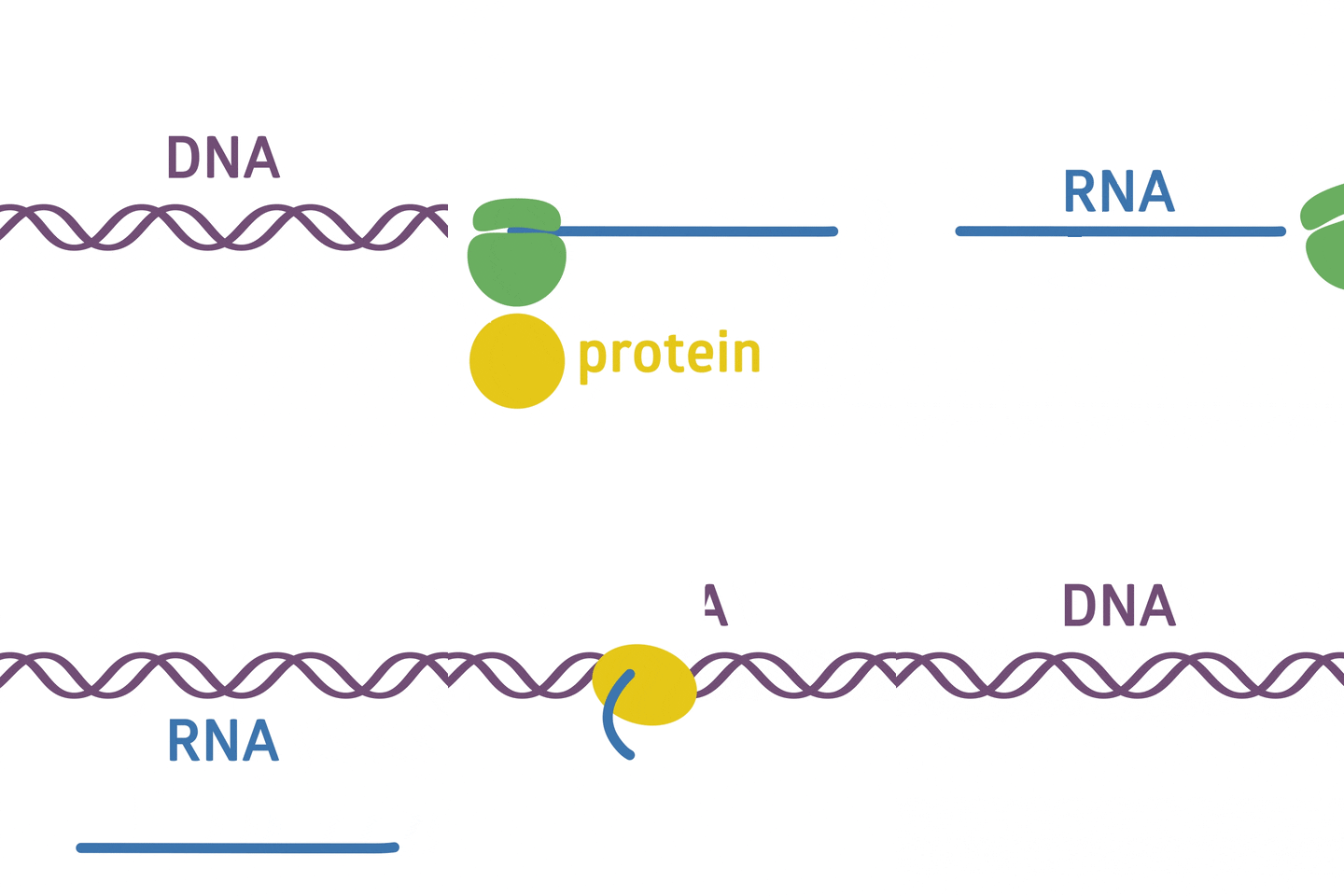
Yes! These proteins, in turn, form cells and control all processes inside cells. The sequence of DNA in your genes tells your body which proteins to make. Think of proteins as the building blocks for an organism. Proteins make up the skin, hair, and cells of the organism. If the DNA sequence is disturbed, then the formation of essential proteins can be disturbed.
Proteins
Word Bank:
DNA
building blocks
help
make
What does a chromsome unravel to be...