Twa kɔ nsɛm atitiriw so
Log in
Sign up for FREE
arrow_back
Laabri

(U2) Lesson 3 - Name Game

star
star
star
star
star
Last updated over 3 years ago
19 Nsɛmmisa

Modeling and Practice

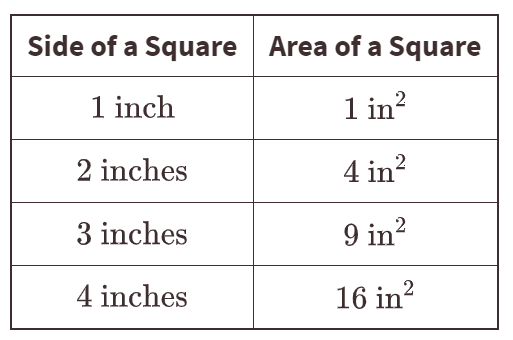
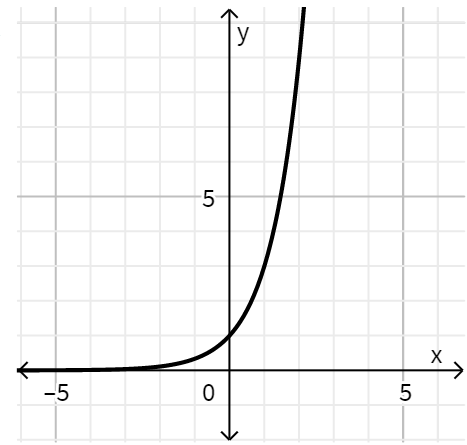
Based on each of the given representations of a function, determine the following.

  1. Is it linear, exponential or neither?

  2. If the function is linear or exponential, state whether it discrete or continuous.

  3. Identify the rate of change (common difference) or a growth factor (common ratio).

  4. Write the explicit equation.

Quiz 1 :

Independent Quiz:

You may use notes in binder or previous formatives.

Click here to start Quiz 1

Remember the Arena Task is still due! Complete all formatives from unit 2 so far!

Today's Learning Goal:

  • Understand that a function is linear if it has a constant rate of change.

  • Understand that a function is exponential if it has equal growth factors over equal intervals.

  • Use representations to distinguish between functions that are linear, exponential, or neither by identifying the type of growth exhibited by the function.

  • Find equal intervals on a continuous function to determine if it is linear or exponential.

  • Build fluency in determining if a function is discrete or continuous and finding the domain of the function.

Today's Materials:

  1. Laptop

  2. Pencil

  3. Binder

Please complete the Jump Start (activator). This is independent it should be silent.

Ɛhia
1
Asemmisa {{asɛmmisaAhyɛnsode}}
1.

The table below represents a discrete function. What is the domain?
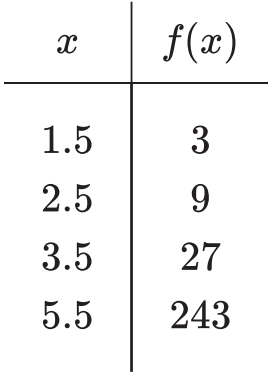
The Domain = { }

Ɛhia
1
Asemmisa {{asɛmmisaAhyɛnsode}}
2.

The table below represents a continuous function. What is the domain?
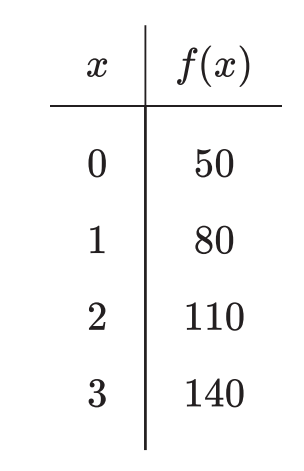
The Domain = { _________________ }
a. Watch me while I...

The population of a town, p(x), is 15,000 people to begin and grew by 1.5% per year, x.

Ɛhia
1
Asemmisa {{asɛmmisaAhyɛnsode}}
3.

Type of function?

Ɛhia
1
Ɛhia
1
1

b. Together let try...

Joanna earns a starting salary s(x), of $30,000 and will receive a raise of $2,500 per year,x, every january for the first 10 years.

Ɛhia
1
Asemmisa {{asɛmmisaAhyɛnsode}}
7.

Type of function?

Ɛhia
1
Ɛhia
1
Ɛhia
1

c. Independently...

Ɛhia
1
Asemmisa {{asɛmmisaAhyɛnsode}}
11.

Type of function?

Ɛhia
1
Ɛhia
1
Ɛhia
1

d. Independently...

Ɛhia
1
Asemmisa {{asɛmmisaAhyɛnsode}}
15.

Type of function?

Ɛhia
1
Ɛhia
1
Ɛhia
1

e. Independently...

Ɛhia
1
Asemmisa {{asɛmmisaAhyɛnsode}}
19.

Type of function?

Asemmisa {{asɛmmisaAhyɛnsode}}
4.

If the function is linear or exponential, state whether it discrete or continuous.

Asemmisa {{asɛmmisaAhyɛnsode}}
5.

Identify the rate of change as a slope (common difference) or a growth factor (common ratio).

Asemmisa {{asɛmmisaAhyɛnsode}}
6.

Explicit equation.

Asemmisa {{asɛmmisaAhyɛnsode}}
8.

If the function is linear or exponential, state whether it discrete or continuous.

Asemmisa {{asɛmmisaAhyɛnsode}}
9.

Identify the rate of change as a slope (common difference) or a growth factor (common ratio).

Asemmisa {{asɛmmisaAhyɛnsode}}
10.

The equation is

Asemmisa {{asɛmmisaAhyɛnsode}}
12.

If the function is linear or exponential, state whether it discrete or continuous.

Asemmisa {{asɛmmisaAhyɛnsode}}
13.

Identify the rate of change as a slope (common difference) or a growth factor (common ratio).

Asemmisa {{asɛmmisaAhyɛnsode}}
14.

Which value represents the rate of change?

Asemmisa {{asɛmmisaAhyɛnsode}}
16.

If the function is linear or exponential, state whether it discrete or continuous.

Asemmisa {{asɛmmisaAhyɛnsode}}
17.

Identify the rate of change as a slope (common difference) or a growth factor (common ratio).

Asemmisa {{asɛmmisaAhyɛnsode}}
18.

Write the explicit equation.

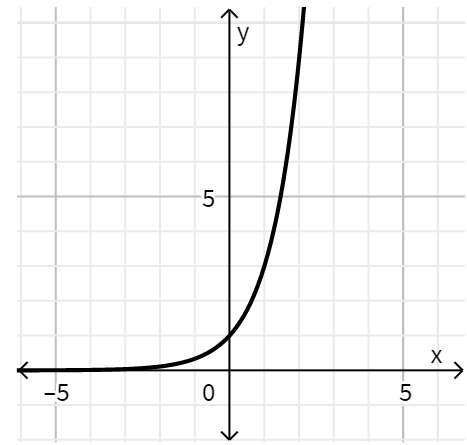
(Fill in the outputs for 0,1,2 from the graph before writing the equation)