Rhetorical Analysis - Lord of the Flies

Last updated about 2 years ago
9 questions
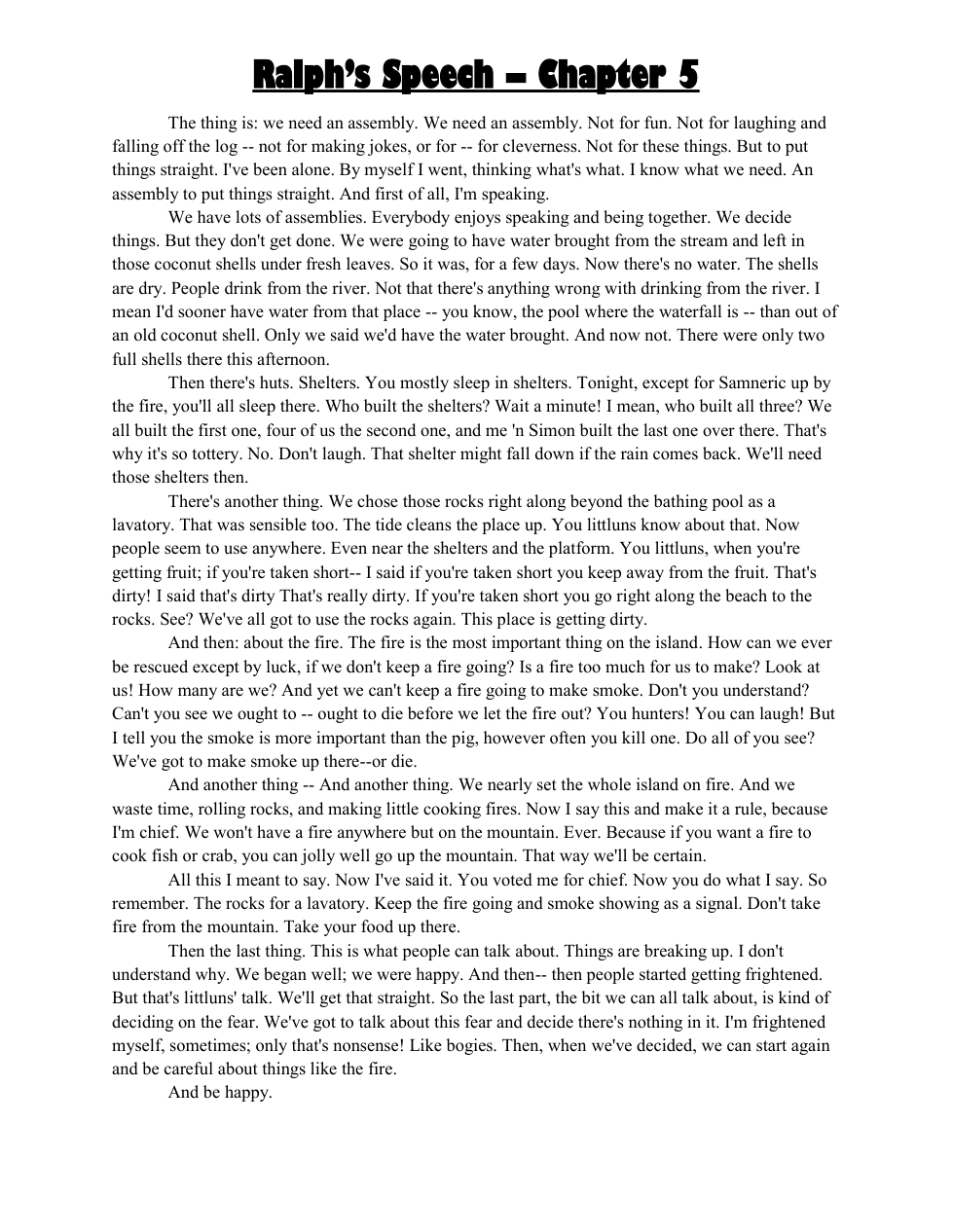
Read Ralph's speech from Ch. 5 and then complete the reading and questions below.
SOAPSTone (Speaker, Occasion, Audience, Purpose, Subject, Tone) is an acronym for a series of questions that students must consider to create or evaluate an argument.
  1. Speaker: Who is the Speaker? A Speaker aims to create a particular persona. A persona, from the Greek word for mask, is the personality that the speaker projects and that from which the audience interprets. A speaker also has a real-life background though, a personal history. Both persona and personal history must be analyzed to arrive at a complete understanding of a speaker. When considering the speaker, we are determining credibility, or ethos
  2. Occasion: What is the Occasion? Occasion is much more than simple time and place. Students should consider that rhetoric always take place within a context that influences how the speaker understands, analyzes, and generates the persona, the appeals, and the subject matter material.
  3. Audience: Who is the Audience? Once determined, the speaker or writer appeals to the audience through the three rhetorical appeals: ethos, pathos, and logos. It is important to note that audience groups can vary drastically and can fall into multiple categories. Most audiences are not homogeneous, and so, belief and value structures may differ amongst members of the same audience. Students should consider if the speaker is trying to reach all audience members equally or whether the discourse is aimed at persuading a particular segment of the audience only.
  4. Purpose: What is the Purpose, Intent or Aim? "A rhetor's intention is what he or she wants to happen as a result of the text, what he or she wants the audience to believe or do after hearing or reading the text. In some rhetorical situations, the rhetor knows his or her intention right from the start; in other situations, the intention becomes clear as the text evolves." Purposes may be explicit or implicit.
Required
1

Complete a SOAPSTone for Ralph's speech using bullets points.

Required
1

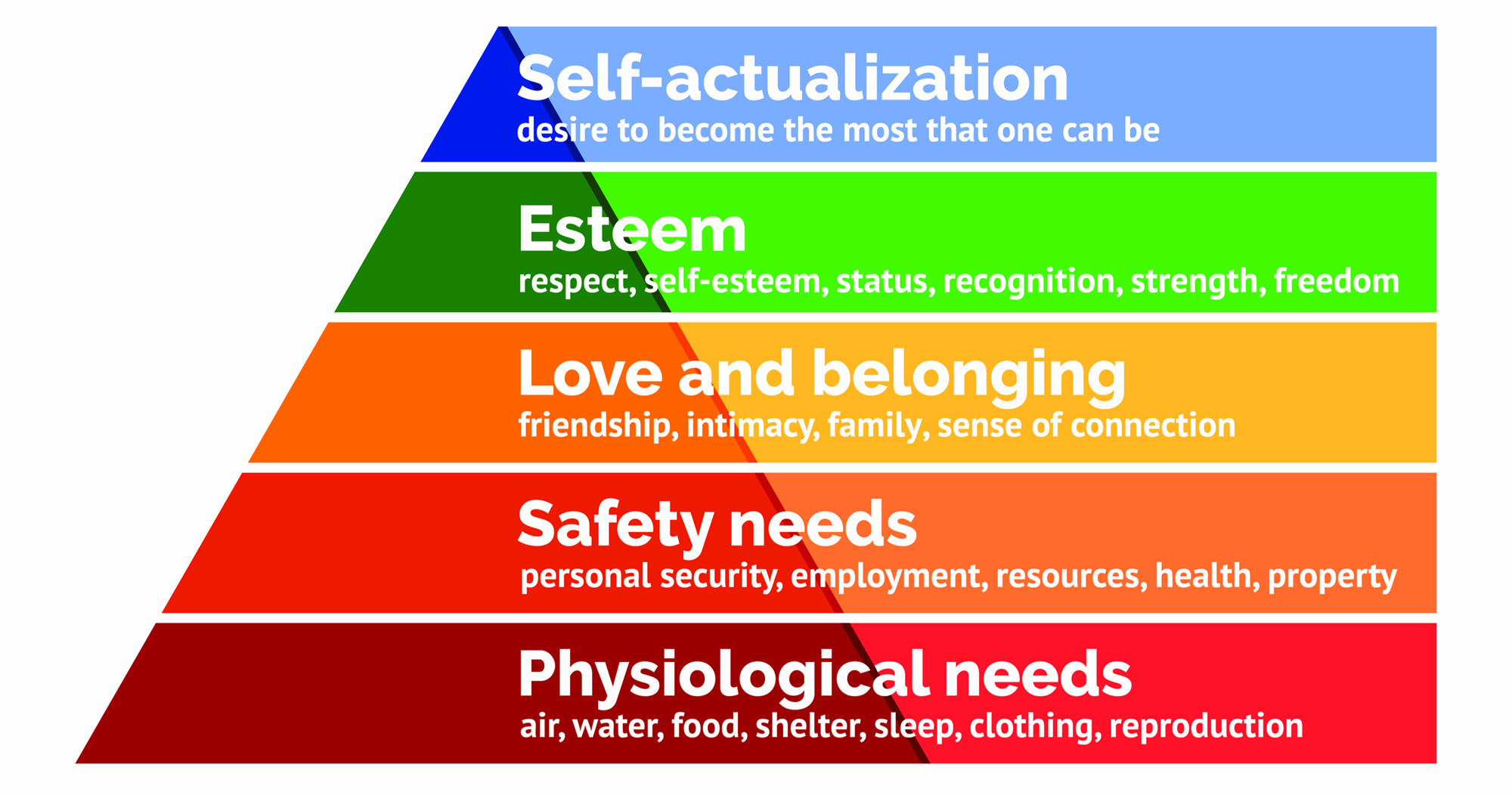
Explain: What are the motivations/goals/drives/wants of this character? Connect to Maslov’s Hierarchy of Needs and psychoanalyze this character

Required
1

Go one step further now. What is the author saying through this character? What is Golding satirizing (or, critiquing/commenting on) in society through this character HOW?

Rhetoric, according to Aristotle, is observing means of persuasion. Aristotle and his descendants classified and called the rhetorical appeals ethos, pathos, and logos.

  1. Ethos: Ethos is Greek for character, and it refers to the credibility or trustworthiness of the speaker or writer. Ethos can be further broken down to consider the categories of trustworthiness, similarity, authority, reputation, and expertise.
  2. Pathos: Persuasion from pathos involves engaging the audience's emotions. The word is derived from the Greek for suffering or experience. Most of our students have become adept at playing to emotion, crafting speech and delivery to evoke pity for being late to class or benevolence from tight-fisted parents. Aristotle himself identifies and then explains how to create seven pairs of opposite emotions, such as anger and calmness, fear and confidence, kindness and unkindness, envy and emulation. He then explains how to create such feelings toward ideas in various types of humans. Aristotle also warns of the dangerous potential for mind manipulation through the use of pathos.
  3. Logos: Finally, a writer or speaker can persuade through the appeal to the audience's sense of logic. Aristotle identified this as the most important means of persuasion. It is what makes us humans and differentiates us from other animals. Ideally, reason should dominate all of people's thinking and actions, but actually, they are often influenced by passions and prejudices and customs.
While persuasion generally involves a combination of appeals, being aware of their effective use allows speakers and writers to tailor their message to a particular audience or context in order to maximize the efficacy of an argument, whether the intended effect is to borrow a dollar or lead a nation to war.
Reread Ralph's speech looking for the 3 elements of rhetoric: ethos, pathos, and logos
1

How/where do you see ethos in Ralph's speech? Paraphrase or quote directly from the novel.

Required
1

How do you see pathos in Ralph's speech? Paraphrase or quote directly from the novel.

Required
1

How do you see logos? Paraphrase or quote directly from the novel

Required
1

Analysis: How do these rhetorical appeals help or hurt Ralph's speech? Explain. (3 sentences)

Writing a Rhetorical Analysis
- Requires the reader to explain how the appeals are used and what effect they have.
- Identifying specific strategies used for each appeal is critical.
- Writing that separates the content (what the passage is about) from the methods (rhetorical strategies) used to successfully convey that content.
2

Using the following structure, craft a rhetorical analysis thesis statement:

- The author’s name + a strong verb + name the rhetorical strategies + in Lord of the Flies + the function (what the rhetoric does for the piece- to do what? for what purpose?)

  • William Golding...verb...ethos, pathos, logos in Lord of the Flies to...

Monroe's Motivated Sequence

In the mid-1930s, Alan H. Monroe developed a pattern of logically and psychologically sound steps for moving an audience to action. The method he developed is a sequence and includes Attention, Need, Satisfaction, Visualization, and Action. (ANSVA)
  1. Attention: A speaker first needs to capture an audience's attention, and then ease the audience into a consideration of the topic. This can be done in a variety ways such as illustrating or emphasizing the importance of the topic, making a startling statement, arousing curiosity or suspense, posing a question, or telling a dramatic story.
  2. Need: Next, a speaker must create a reason for the audience to care about the topic. This is done by developing a problem or creating a need that can only be satisfied by engaging with the speaker's proposal.
  3. Satisfaction: Proposing a satisfying solution to the need or problem is the next step.
  4. Visualization: True persuasion next provides the audience an image of the consequence of their choice.
  5. Action: The final step is to move an audience to take some form of action in response to the speech.
Required
1

Does Ralph's speech satisfy Monroe's activated sequence? Why or why not?