Log in
Sign up for FREE
arrow_back
Library

Mesopotamia Test 2022-23 (TCI L4-6)

star
star
star
star
star
Last updated over 3 years ago
30 questions
Note from the author:
Required
1
Required
1
Required
1
Required
1
Required
1
Required
1
Required
1
Required
1
Required
1
Required
1
Required
1
Required
1
Required
1
Required
1
Required
1
Required
1
Required
1
Required
1
Required
1
Required
1
Required
1
Required
1
Required
1
Based on 6th grade TCI Lessons 4-6 (The Rise of Sumerian City-States, Ancient Sumer, and Exploring Four Empires of Mesopotamia)
DIRECTIONS: Choose the best answer to each question. You may look back at your notes to help you.
Question 1
1.

Question 2
2.

Required
1
Question 4
4.

Question 5
5.

Question 6
6.

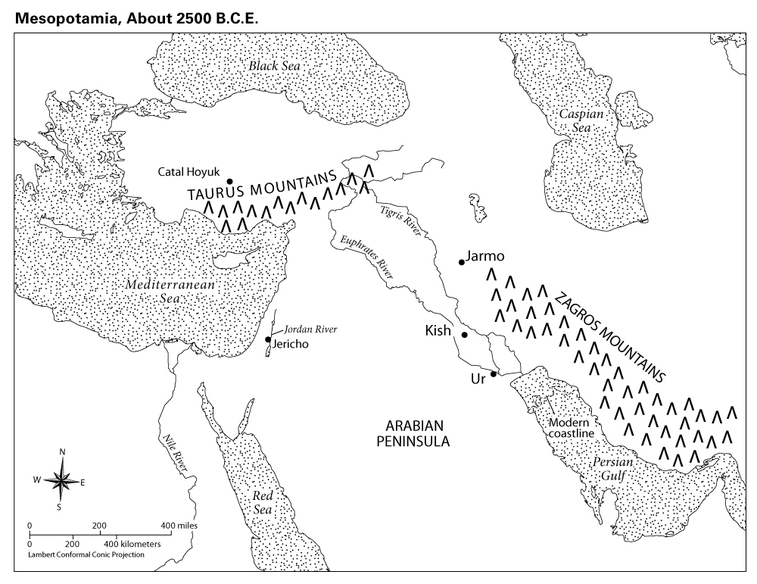
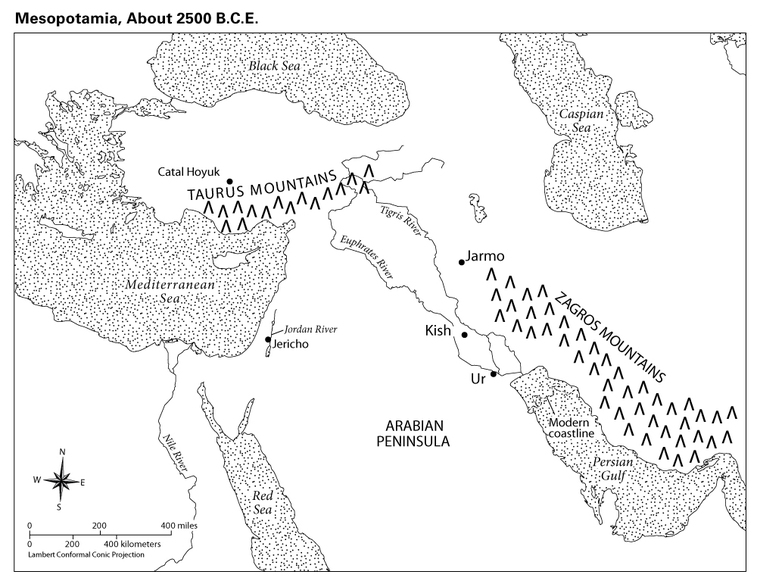
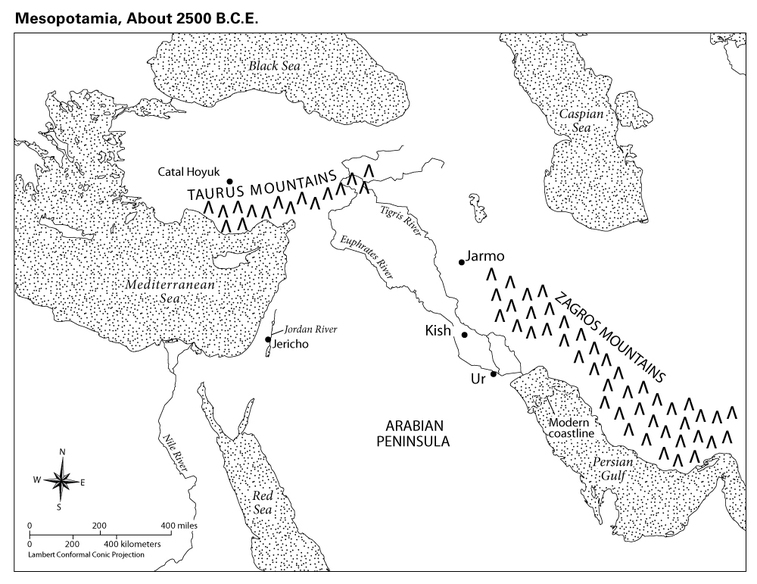
Use the map to answer the next three questions.
Required
1
Required
1
Required
1
Question 10
10.

Question 11
11.

Question 12
12.

Question 13
13.

Required
1
Question 15
15.

Question 16
16.

Question 17
17.

Question 18
18.

Required
1
Question 20
20.

Question 21
21.

Question 22
22.

Question 23
23.

Question 24
24.

Question 25
25.

Question 26
26.

Required
1
Question 28
28.

Question 29
29.

Question 30
30.

The name of Mesopotamia comes from its location, which was...
between two rivers.
in mountain foothills.
near a region of many conflicts.
at the site of the earliest cities.
Why were Sumerian communities called city-states?
Each of them kept written records.
They were all part of one great empire.
They all depended on each other for water.
Each of them had its own ruler and farmland.
Question 3
3.

One factor that made farming difficult in the area of Sumer was...
fertile soil.
steep hillsides.
lack of rainfall and floods.
growth of weeds.
If you were in ancient Sumer, you might see a levee beside a river. Why was the levee built?
to load barges
to irrigate crops
to prevent floods
to control workers
Why was silt a problem for the people of Sumer?
It dried up the rivers.
It crumbled the city walls.
It ruined the soil for planting.
It clogged the irrigation canals.
Question 7
7.

Question 8
8.

Question 9
9.

A society has a stable food supply if...
it gives food to the king.
it has enough food for its people.
it has to buy food from other groups.
it gets food by hunting and fishing.
Which one of these inventions most affected the food supply in Sumer?
the arch
the plow
the wheel
the chariot
Which Sumerian belief about the king helped strengthen the social order?
He was supported by the gods.
He cared most about the poor.
He consulted with wise advisers.
He wanted everyone to be happy.
Why were scribes important in Sumerian government?
to entertain the rulers
to write down the laws
to collect people's taxes
to teach the royal children
Question 14
14.

Which invention made it possible for Sumerian armies to use chariots?
wheels
swords
sledges
horseshoes
Which invention added strength and beauty to Sumerian buildings?
glass
paints
arches
concrete
What evidence found by archaeologists shows that Sumerians were not prehistoric?
ziggurats
city walls
stone statues
written records
Records of the goods people exchanged were made on...
metal coins.
clay tablets.
animal hides.
flattened reeds.
Question 19
19.

What was a problem caused by Sumerian city-states’ independence from one another?
They were unable to trade crops with one another.
They did not cooperate to build irrigation systems.
They had very few different natural resources available.
They could not defend themselves against stronger groups.
The Sumerians were a civilization but not an empire. What feature did the Akkadian, Babylonian, and Assyrian empires have that the Sumerians lacked?
One government ruled several groups.
Rulers claimed to get power from the gods.
Many beautiful works of art were produced.
Public works such as irrigation were organized.
Which of these leaders of empires came first?
Cyrus
Sargon
Hammurabi
Nebuchadnezzar
The Akkadians used steles to...
attack enemy forces.
get water for farming.
record important events.
make objects from metal.
Which of these did the Akkadians use to gain power over Sumer?
military strategy
economic wealth
religious teachings
complex technology
For what is Hammurabi best remembered?
a code of laws
a style of battle
a hanging garden
a system of canals
How was the legal system of Babylon more advanced than that of other societies at that time?
It put an end to slavery.
It used mild punishments.
It gave women some rights.
It treated all classes the same.
Question 27
27.

Who conquered the land of the Israelites and took many Israelites to Babylon as captives?
Sargon
Marduk
Hammurabi
Nebuchadnezzar
Why did Nebuchadnezzar build two walls, some towers, and a moat around his capital?
to make farmers stay outside
to protect the city from attacks
to keep his army from revolting
to isolate his people from outsiders
A problem that all four Mesopotamian empires had was difficulty in...
choosing strong leaders.
trading with other empires.
controlling such a large area.
keeping track of their history.
What solution did people in the Zagros foothills find to fix the problem of food shortages?
building terraces
moving south to the plains
constructing reservoirs
joining villages togethe
Which of the following is a Mesopotamian city-state shown on the map?
Kish
Jericho
Catal Hoyuk
Tustin
Rivers flow to larger bodies of water. The Tigris and lower Euphrates rivers generally flow _______________________.
south to the Persian Gulf
north to the Persian Gulf
south to the Mediterranean
north to the Mediterranean
What major physical feature lies between the waters of the Caspian Sea and the Persian Gulf?
Taurus Mountains
Mediterranean Sea
Arabian Peninsula
Zagros Mountains
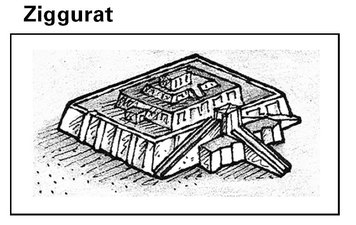
The building in the picture was most closely related to which of these features of Sumerian civilization?
food
writing
religion
government
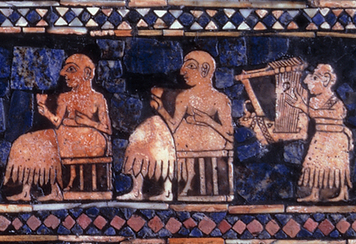
We learned about seven different characteristics of a civilization. Which of the following characteristics does this artifact least show about Mesopotamia?
culture/art
stable food supply
written language
social structure
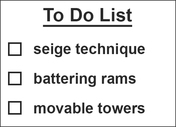
The Assyrians use the things on this list mainly to...
collect taxes.
train soldiers.
farm crops.
conquer cities.