1
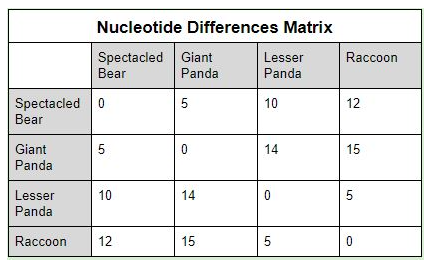
FIRST what is the table showing you?
FIRST what is the table showing you?
1
1
These were the MOST missed test questions on the test. There are some extra questions to get you to THINK about what you are reading.
A student is having a difficult time comparing and contrasting the characteristics of the kingdoms fungi and plantae. Which question below would lead the student to discovering a difference between the two kingdoms?
BUT FIRST...Where do BOTH Fungi and Plantae organisms store their DNA?
A student is having a difficult time comparing and contrasting the characteristics of the kingdoms fungi and plantae. Which question below would lead the student to discovering a difference between the two kingdoms?
Which of the following best describes how Fungi and Plantae get their energy?
A student is having a difficult time comparing and contrasting the characteristics of the kingdoms fungi and plantae. Which question below would lead the student to discovering a difference between the two kingdoms?
A research assistant has been asked to take microscopic images of a sample from a study. It was requested that the image must be 3D, but does not require color. It is also important that the image shows the plasmodesmata, which are small openings or pores on the cell wall that allow for exchange of molecules such as water.
Which microscope should the research assistant use?
but FIRST... where is the cell wall?
A research assistant has been asked to take microscopic images of a sample from a study. It was requested that the image must be 3D, but does not require color. It is also important that the image shows the plasmodesmata, which are small openings or pores on the cell wall that allow for exchange of molecules such as water.
Which microscope should the research assistant use?
FIRST what is the table showing you?

The figure below demonstrates the changes to our understanding of the scientific taxonomy for living organisms.
As technology became more advanced, what happened to the classification system?
BUT FIRST how did the classification change over time?

What organism only has TWO traits: amniotic egg and nucleated red blood cells?
Scientists struggled with classifying lesser pandas and giant pandas because they have physical similarities to both raccoons and spectacled bears. Lesser pandas were previously thought to be closely related to giant pandas. Nucleotide differences between each organism are found below.
Using data from the table, which statement best describes how the newer nucleotide evidence would change the classification of these organisms?
According to the table, how many differences are there between the lesser panda and the raccoon?
The figure below demonstrates the changes to our understanding of the scientific taxonomy for living organisms.
As technology became more advanced, what happened to the classification system?
Using the diagrams what characteristics do lizards have? (more than one is correct)
Which organism has FOUR traits: amniotic egg, nucleated red blood cell, no outer shell, and all have legs?
A scientist has been working on creating a cladogram, a tool scientists use to display the evolutionary relationships between organisms. They were able to determine the placement of lizards, which can be seen in the image below.
Based on the information provided, which animals are most closely related to lizards?