Word Bank:
peptide
more
help
synthesis
pH
helix
side
chain
hydrogen
diseases
water
reversible
denature
substrates
ideal
outside
vary
folding
influence
monomer
function
roles
We all have things that challenge us- and for me- it is folding. Sheets, towels, shirts- let’s just say I invest in a lot of anti-wrinkle laundry spray. It was the actual folding part that I tended to get stuck on. You may think of folding as a convenience- of a way to take something and make it more organized or condensed so it doesn’t have to take up as much space.This is true.
In biology, folding can also have a lot to do with . Proteins can play so many . They can make up channels, be a part of structure, serve as enzymes for important biological processes, be involved with protecting the body...just to name a few. You are making proteins, all the time, in a process known as protein . But the conclusion of producing a long chain of amino acids doesn’t necessarily equal a functional protein. There are modifications to a protein that often need to happen in order for it to be functional. By modifications, we can mean many things. It might be adding certain chemical groups, such as phosphorylation. But another important event to make a functional protein is---believe it or not--- . But before we get into protein folding, let’s talk about shape and why shape is so important.
Shape and function, in biology, frequently go hand in hand.
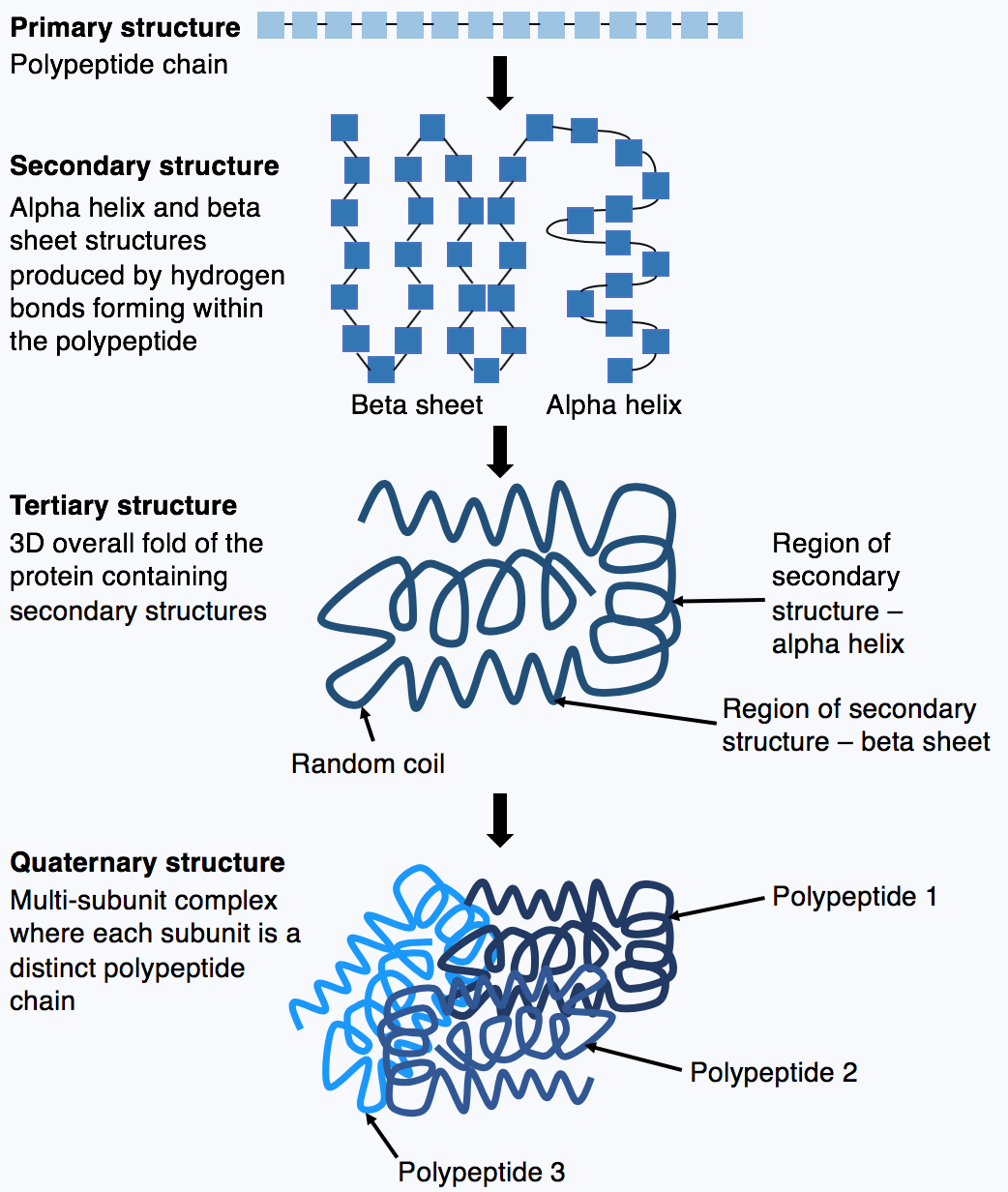
In cell signaling, protein receptors and the signal molecules that bind them can fit together so perfectly to start some type of cellular response. Enzymes---which are frequently proteins---have a very specific shape for the that they build up or break down. When we talk about the way proteins are folded, we need to understand the different levels of protein structure because there are different ways of folding that can happen in the different structural levels.
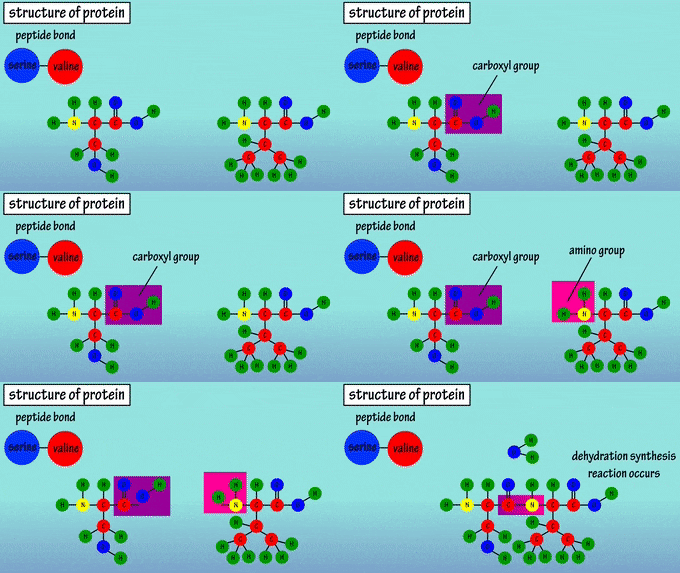
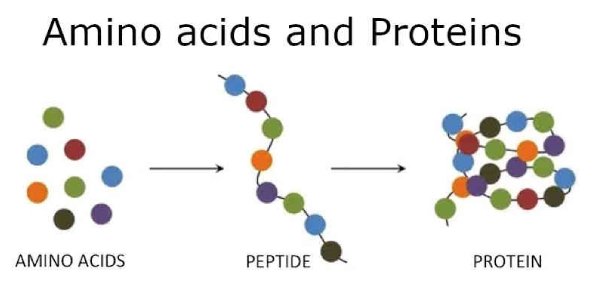
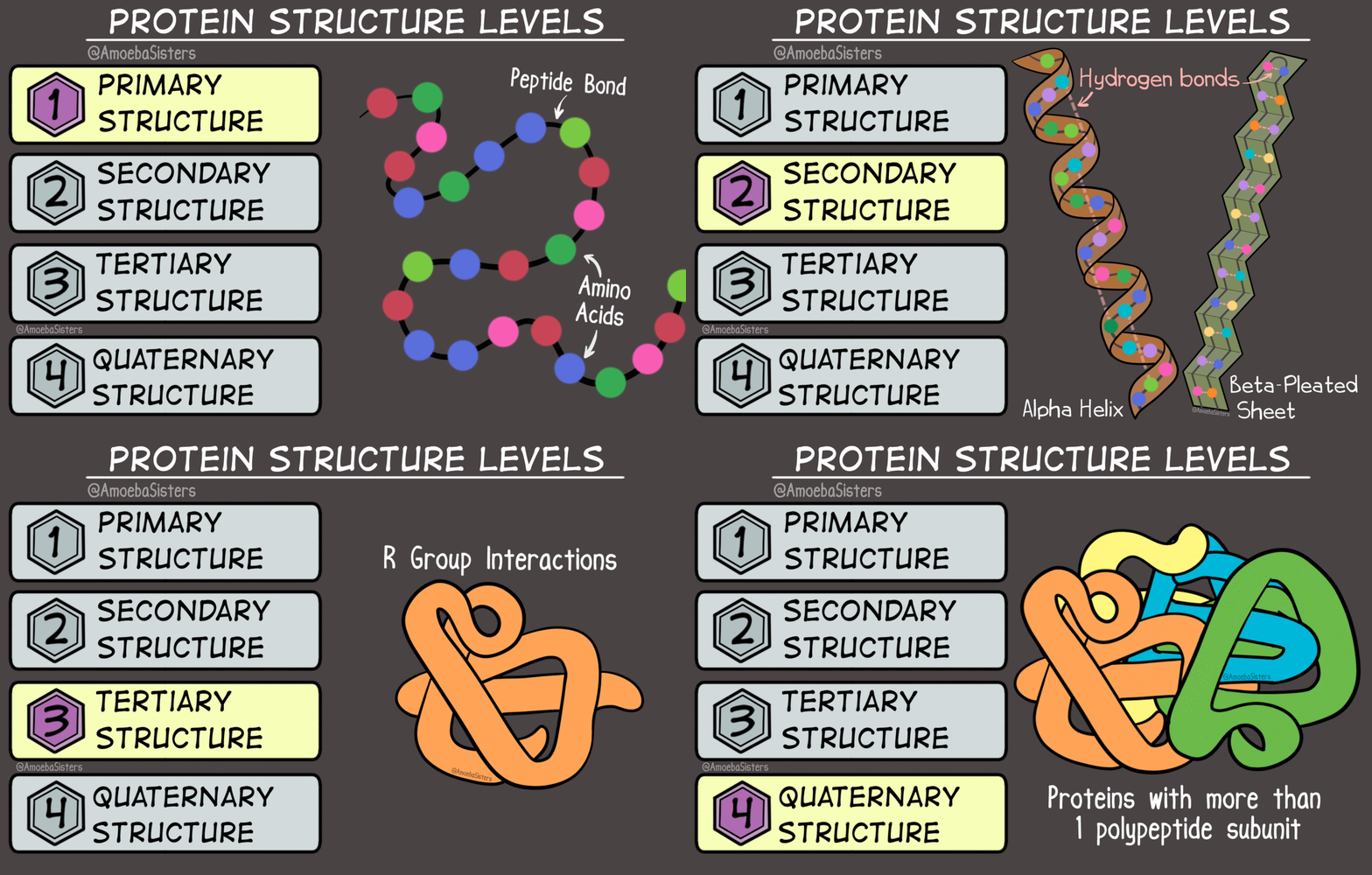
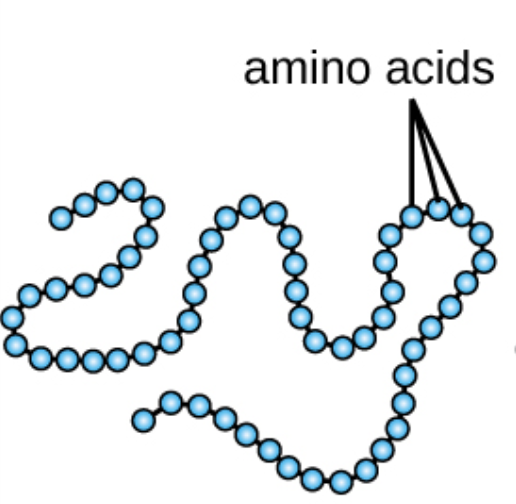
The first level of protein structure is primary structure. This is the sequence of amino acids that make up a protein. Amino acids are the ---which means the building block---of a protein. They are held together by bonds. In protein synthesis, amino acids are added to form a polypeptide and proteins are made of 1 or more of these polypeptide chains. Genes, which are made of DNA, determine the order and number of these amino acids. That sequence is critical to the protein’s structure and function.
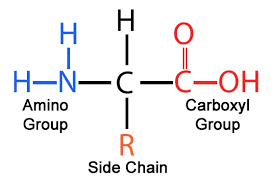
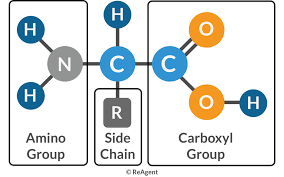
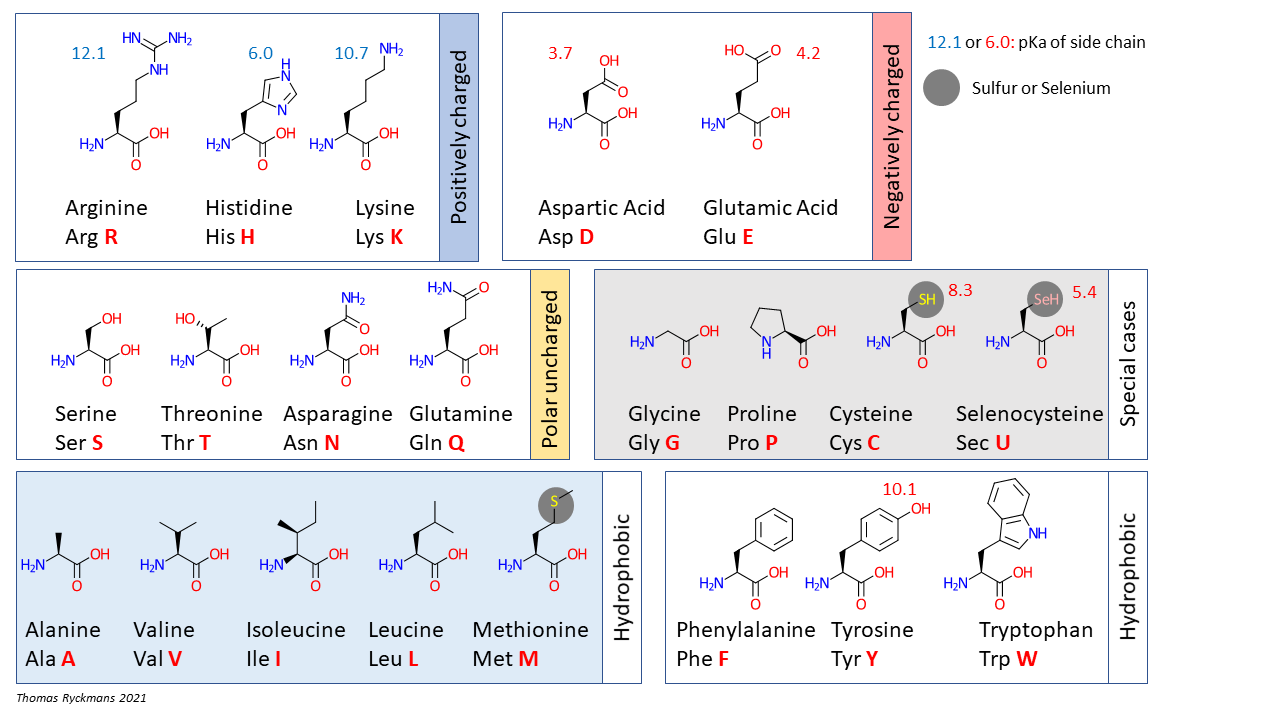
In mutations, one amino acid can be changed in sickle cell disease. Even a single change of an amino acid has the potential to affect a protein’s function. We do want to point out- each amino acid has a carboxyl group, an amino group, and a R group- an R group is also called a chain.
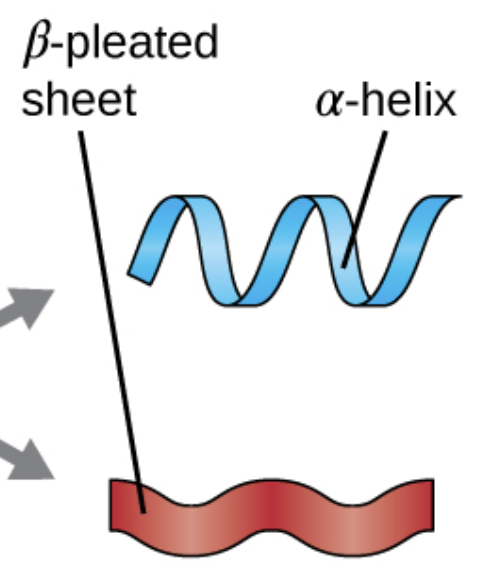
Folding is really going to start to happen in the secondary structure. In secondary structure, the sequence of amino acids that we mentioned in primary structure, can fold in different ways. The most common ways are the alpha and the beta pleated sheet and which one of these foldings the protein does depends on the amino acid arrangement it has. Both of these shapes are due largely in part to bonds. Those hydrogen bonds can occur at specific areas of the protein’s amino acids. Specifically, these are hydrogen bonds involving the backbone of the amino acid structure-we’re not focusing on the R groups right now.
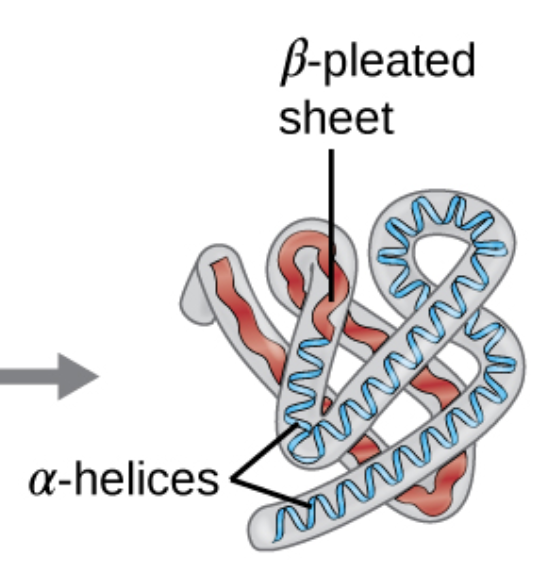
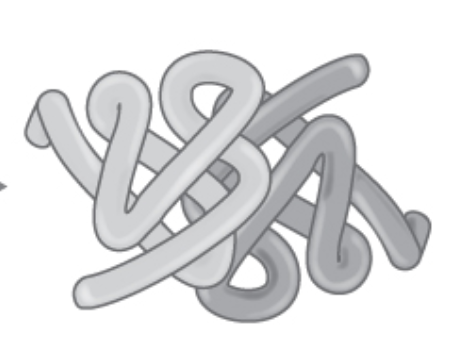
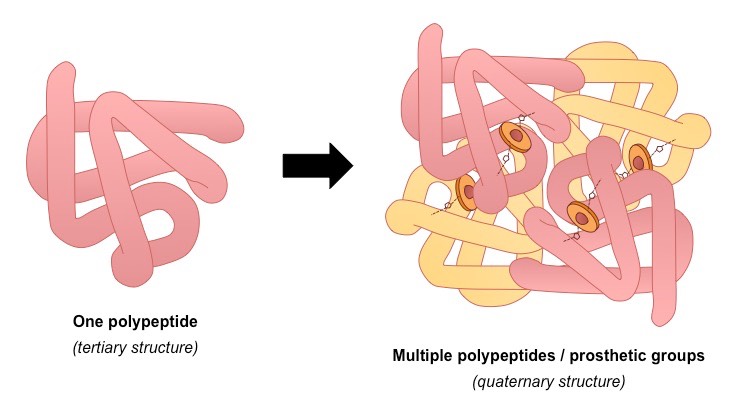
On to tertiary structure. This is looking at more folding that occurs in the 3D shape of a functional protein. And a lot of this is due to something we haven’t mentioned much…the R groups. Also called side chains. See, the amino group and the carboxyl group are generally standard parts of an amino acid, although the R group found in amino acids can among different amino acids. That means, the R group can define the amino acid and can make amino acid behave a certain way. For example, some R groups are hydrophilic. They like . Some R groups are hydrophobic. They don’t. And remember that proteins contain many amino acids which can contain different R groups and so different areas of the protein can therefore be impacted based on those R groups. When protein folding is going on, amino acids with hydrophilic R groups may hang out on the while hydrophobic R groups. Where are they? They may hang out in the inside part of the protein. The 3D shape is due to other interactions besides hydrophobic interactions. Ionic bonds, Van der Waals interactions, disulfide bonds, and hydrogen bonds- all involving the R groups- also the folding occurring in tertiary structure. We’ve been talking about a polypeptide chain that has been folded into a functional protein.
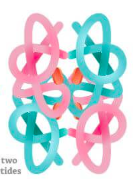
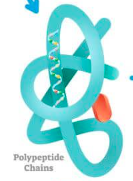
But proteins can be made of 1 or polypeptide chains and in quaternary structure-- Each of these polypeptide chains can be a subunit and interactions between them such as hydrogen bonds or disulfide bonds can keep them together. Who is doing this folding anyway? Are the proteins just folding themselves? Well, the interactions mentioned like hydrogen bonds and R group interactions are occurring depending on the protein’s own amino acids. Folding is far more complex than that, and there can be intermediate steps involved when a protein is folding. In fact, there’s a phrase you can search called the protein-folding problem to learn more about the questions scientists continue to explore regarding protein folding. Research has shown that proteins often have help in the folding process. Chaperonins, for example, are proteins that can with the folding process. They have almost a barrel shape. Proteins go into them, and the chaperonin tends to have an environment that is for the proteins’ folding. This can help the protein to be folded correctly so it’s functional.
All of these interactions we mentioned in primary, secondary, tertiary, and quaternary structure are paramount for a mature protein to have its correct shape so it can carry out its function. And that’s very relevant! There are many that are related to protein misfoldings.
One last thing we haven’t mentioned: each protein has an ideal environment for functioning which might include a certain temperature or range. If the protein is exposed to something outside of its ideal temperature or pH range- exposed to high heat for example- you can disrupt the interactions that we have talked about taking place at the different structural levels. This can the protein, which disrupts its shape. This prevents it from functioning correctly. And depending on what caused it to be denatured, sometimes you are interfering with many levels of protein structure. Sometimes, it’s just one or two levels. Sometimes denaturing a protein may be . But in many other cases…it’s not. The environment that a protein is in definitely matters for its functioning.