Do First October 27, 2022 - Denaturing of Proteins

Last updated 8 months ago
11 questions
1

Denaturation and protein folding


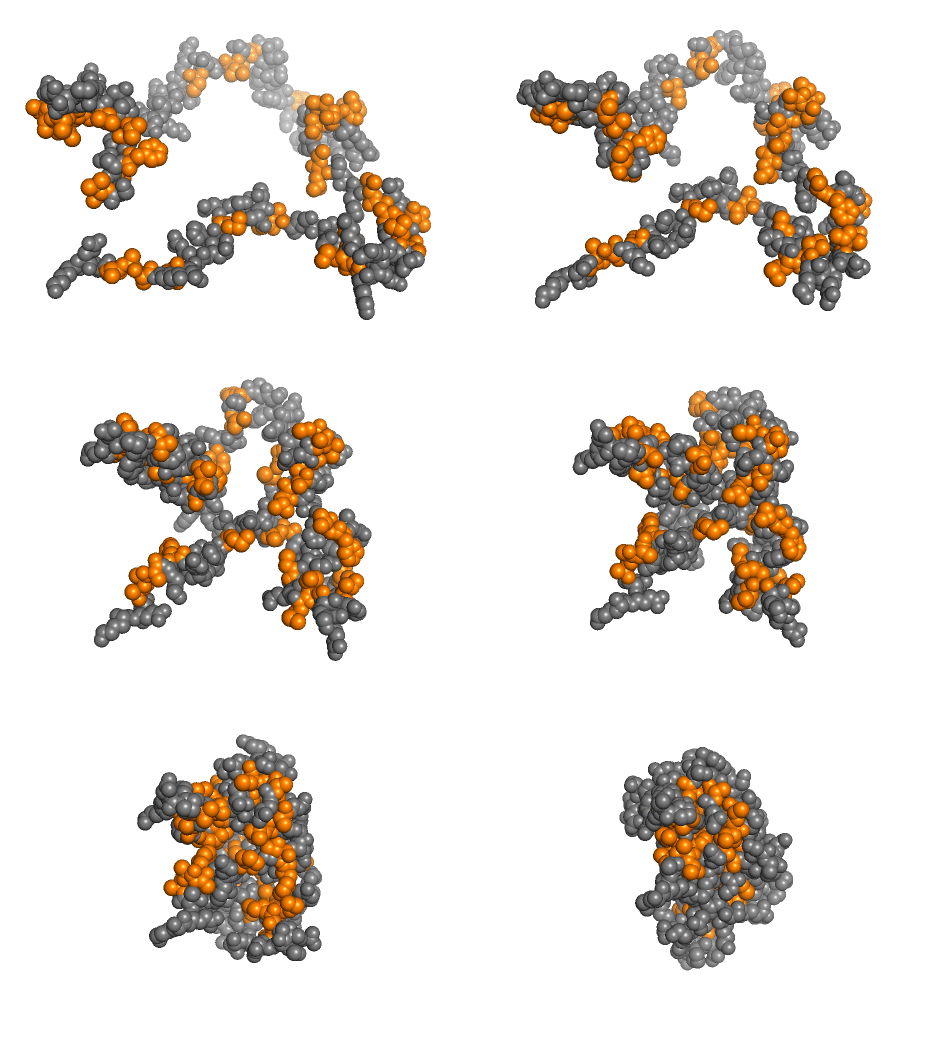
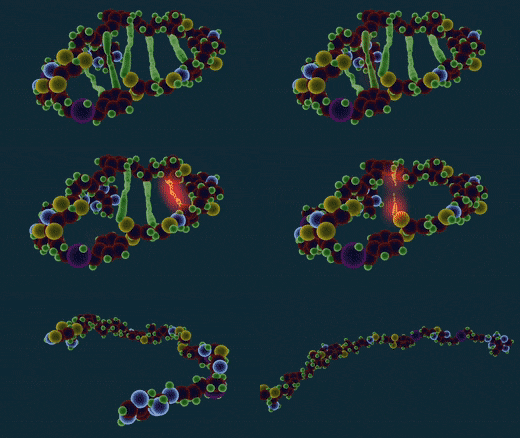
Each protein has its own unique shape. If the temperature or pH of a protein's environment is changed, or if it is exposed to chemicals, these interactions may be disrupted, causing the protein to lose its three-dimensional structure and turn back into an unstructured string of amino acids. When a protein loses its higher-order structure, but not its primary sequence, it is said to be denatured. Denatured proteins are usually non-functional.
1
1

Each protein has it's own shape. What types of things can change the three-dimensional shape/structure of a protein?

1
1
For some proteins, denaturation can be reversed. Since the primary structure of the polypeptide is still intact (the amino acids haven’t split up), it may be able to re-fold into its functional form if it's returned to its normal environment.

Other times, however, denaturation is permanent. One example of irreversible protein denaturation is when an egg is fried. The albumin protein in the liquid egg white becomes opaque and solid as it is denatured by the heat of the stove, and will not return to its original, raw-egg state even when cooled down.
1
1

Can denaturing (unfolding of a protein to the primary structure) be reversed?

1
A protein may be able to re-fold into its functional form if it's returned to its _______________________ .
Other Answer Choices:
normal environment
colorful environment
basic environment
acidic environment
oxygentated environment
1

The example of the albumin protein in the liquid egg white which becomes opaque and solid as it is denatured by the heat of the stove is...

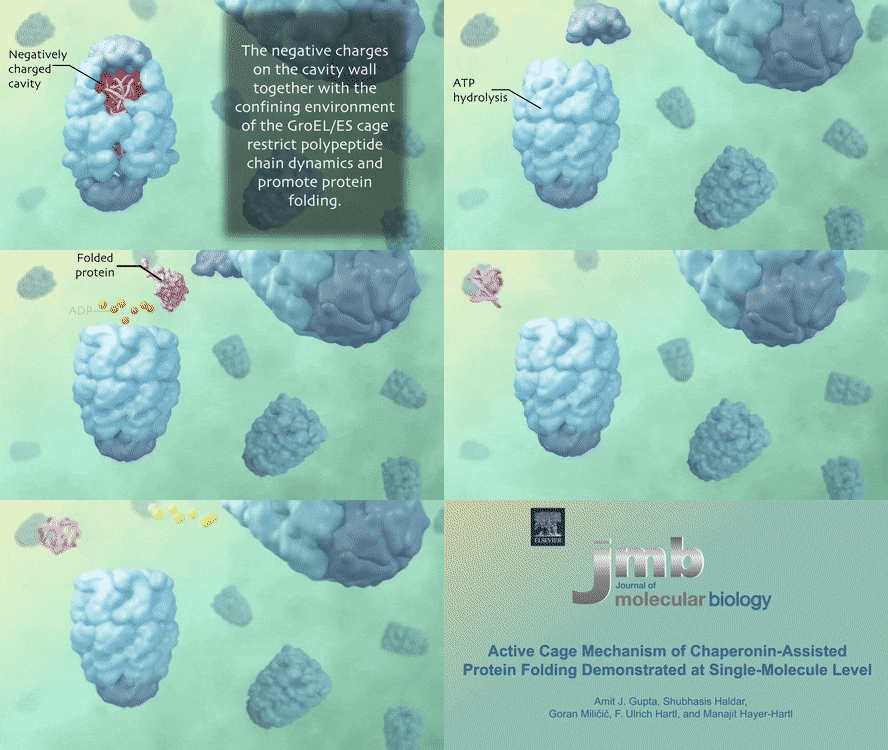
Researchers have found that some proteins can re-fold after denaturation even when they are alone in a test tube. Since these proteins can go from unstructured to folded all by themselves, their amino acid sequences must contain all the information needed for folding. However, not all proteins are able to pull off this trick, and how proteins normally fold in a cell appears to be more complicated. Many proteins don’t fold by themselves, but instead get assistance from chaperone proteins (chaperonins).
1
1