Log in
Sign up for FREE
arrow_back
Library

Period 3, Day 6: The U.S. Constitution

star
star
star
star
star
Last updated over 1 year ago
15 questions
Note from the author:
Content Objective: I will be able to identify two compromises in the U.S. Constitution.
Standard Objective: I will be able to identify information and ideas explicitly stated in the text.

Absent? Just want to review the guided notes? Slides are linked here.
Content Objective: I will be able to identify two compromises in the U.S. Constitution.
Standard Objective: I will be able to identify information and ideas explicitly stated in the text.

Absent? Just want to review the guided notes? Slides are linked here.
Required
1
0
0
1
Required
1
Required
1
Required
1
Required
1
Required
1
0
Question 1
1.

Warm Up: What is a compromise? Please describe a time when you've have to compromise with someone.

Question 2
2.

Warm Up: Please rate how well you understood last night's pre-work on a scale from 1 to 4. If you have any questions, drop them in the "Show Your Work" area.

Question 3
3.

Warm Up 3: One interesting historical fact I learned from the pre-work is…

Question 4
4.

Building Knowledge Together: Let's make sure we're all on the same page with vocabulary!

Draggable itemarrow_right_altCorresponding Item
Checks and Balances
arrow_right_alt
Different levels of government in which the power rests with the people, is exercised through representative government, and has an elected head of state.
Federalism
arrow_right_alt
A type of government that allows citizens to be directly involved in the political process by voting on each individual issue
Representative Democracy
arrow_right_alt
A form of government in which the representatives of the people are chosen to vote on behalf of a specific group of citizens
Direct Democracy
arrow_right_alt
A system in which each branch of government is given specific powers so that no single branch becomes too powerful
Required
1
Question 5
5.
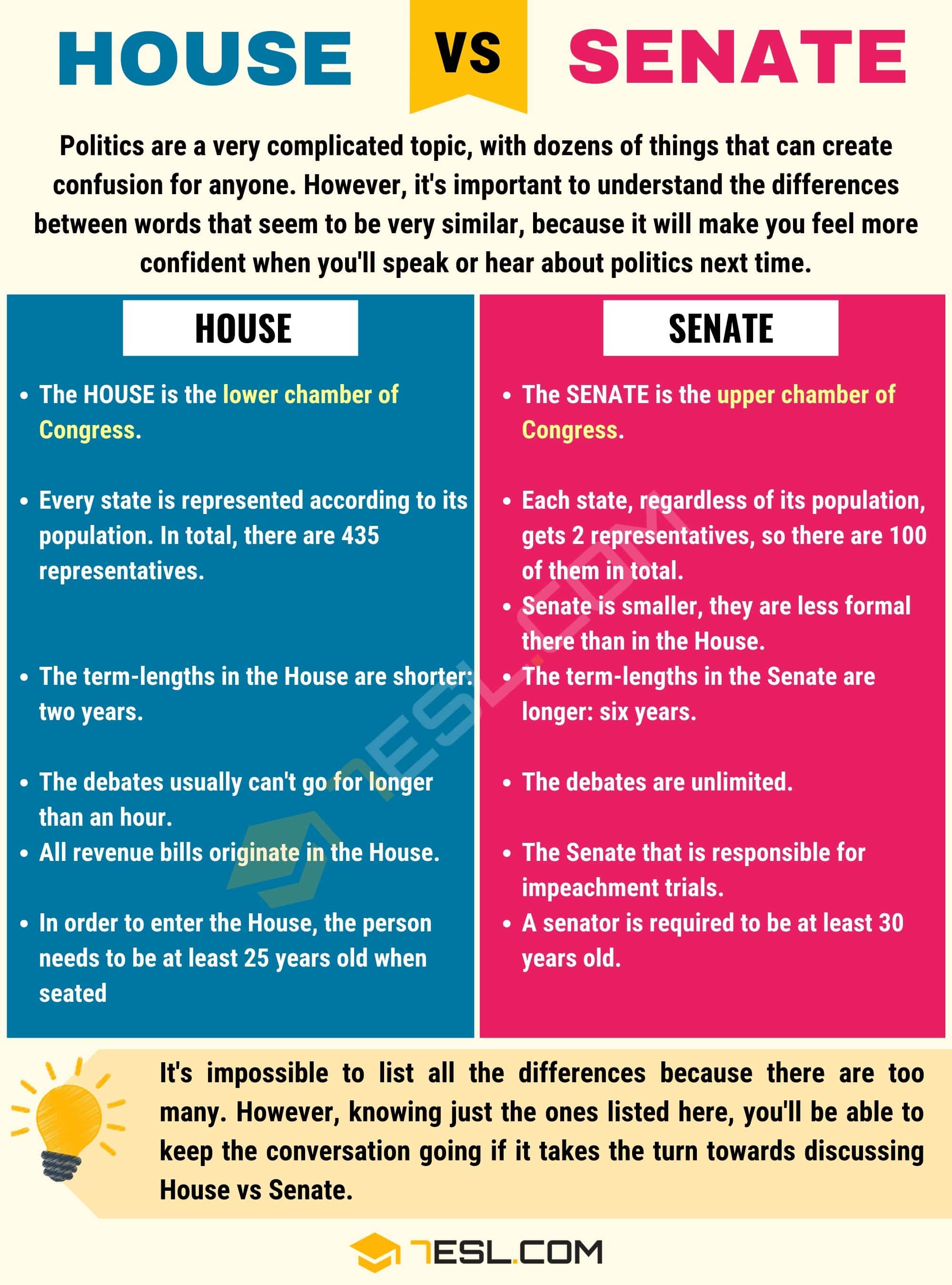
When people say that politics are complicated, they are often referring to Congress. The U.S. Government has a bicameral legislature, which includes the _______ of Representatives and the _______.
Required
1
Required
1
Question 7
7.

How many representatives are in the House of Representatives?

Required
1
Question 8
8.

How many senators are in the Senate?

Question 9
9.

Applying Knowledge: If you wanted to have a big impact on the U.S. government, should you be a member of the House or the Senate?

Explain your answer under "Show Your Work." What role you would prefer to have (if you had to choose)?

Applying Knowledge: Next, we are going to review pg. 129-130 of your Chapter 9 reading (#15-17 in Formative).

Question 10
10.

Applying Knowledge: The Great Compromise of 1787 resulted in

Question 11
11.

Applying Knowledge: The “Three-Fifths Compromise” originally contained in the Constitution referred to the

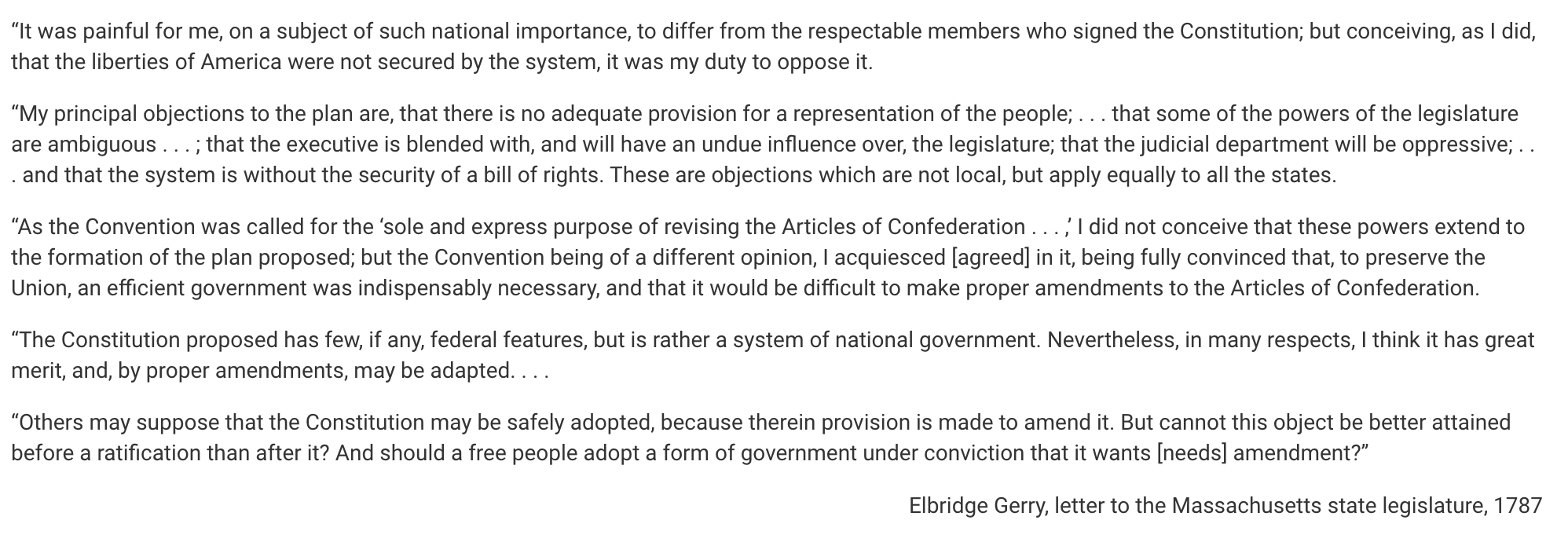
Exit Ticket: The following questions refer to the excerpt below (Mastery, 80% of grade, 4 points).

Required
1
Question 13
13.

Exit Ticket: In the excerpt, Gerry claimed that he did not sign the United States Constitution for which of the following reasons?

Question 14
14.

Exit Ticket: Gerry made which of the following arguments regarding amending the Constitution?

Question 15
15.

Please evaluate how well you understood today’s lesson on a scale from 1 to 4:

Question 6
6.

What powers does Congress have? [Check 2 that apply]
Question 12
12.

Sourcing: In terms of historical context surrounding this document, the Constitutional Convention of 1787 was able to create