1
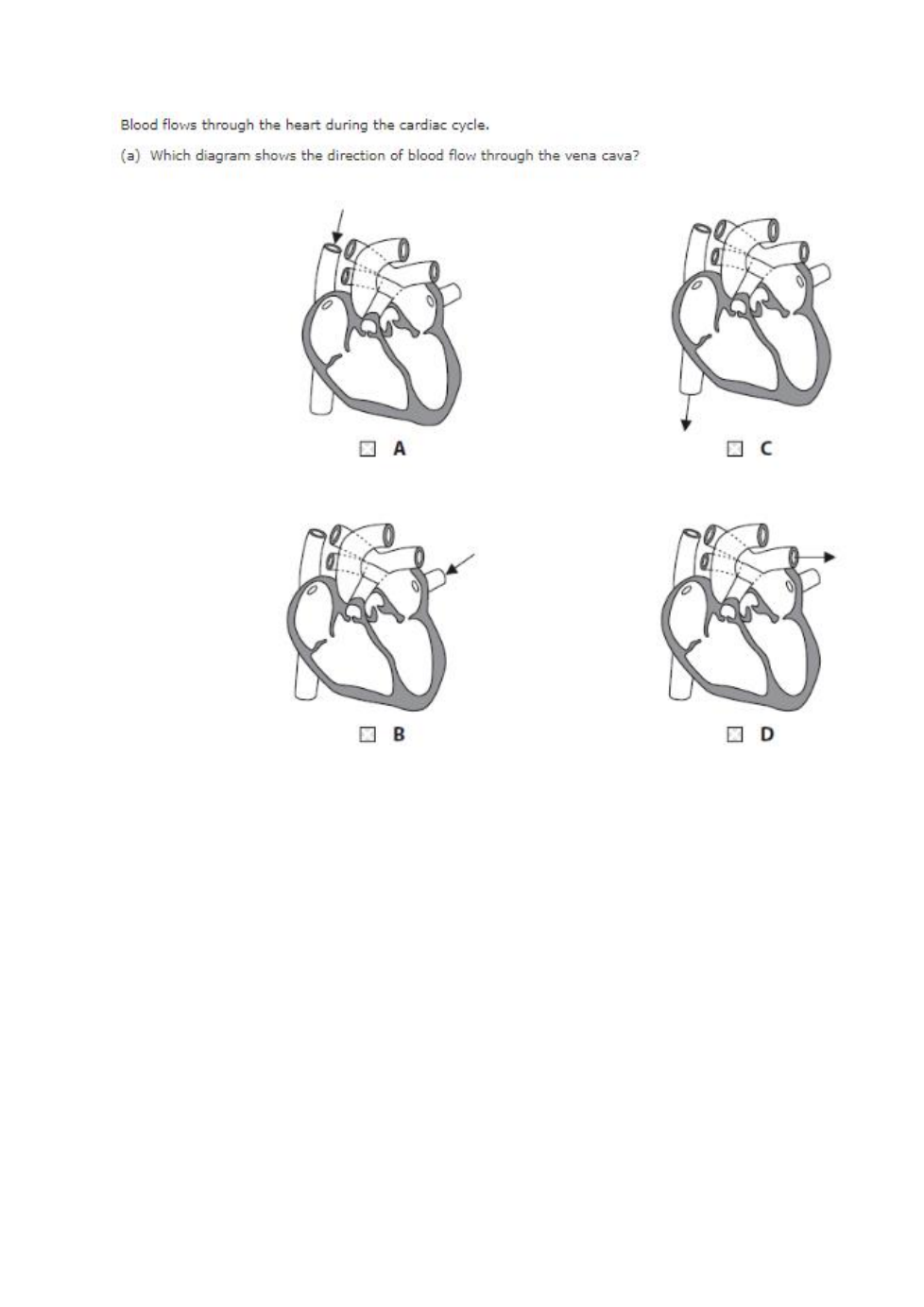
Which diagram shows the direction of blood flow through the vena cava?
Which diagram shows the direction of blood flow through the vena cava?
Which components of the blood clotting process are enzymes in their active form?
Which components of the blood clotting process are soluble in blood plasma?
Which polysaccharide does the liver store?
Blood glucose levels can become high following the digestion of carbohydrates.
Which of the following can be digested to release glucose?
Which type of drug is warfarin?
Warfarin is used to treat people with blood clots as it lowers the number of clotting factors in the blood. One clotting factor in blood is prothrombin.
Prothrombin is converted to the enzyme thrombin by ..............................................................
The .............................................................. of thrombin binds to fibrinogen and as a result a
mesh of fibres and .............................................................. is formed.
Which molecule traps red blood cells and platelets in the formation of a blood clot at a wound?
How many of the following are converted into an active enzyme during blood clotting?
fibrin
fibrinogen
prothrombin
thrombin
How many of the following are soluble in blood plasma?
fibrin
fibrinogen
prothrombin
thrombin
Which diagram shows the direction of blood flow through the vena cava?
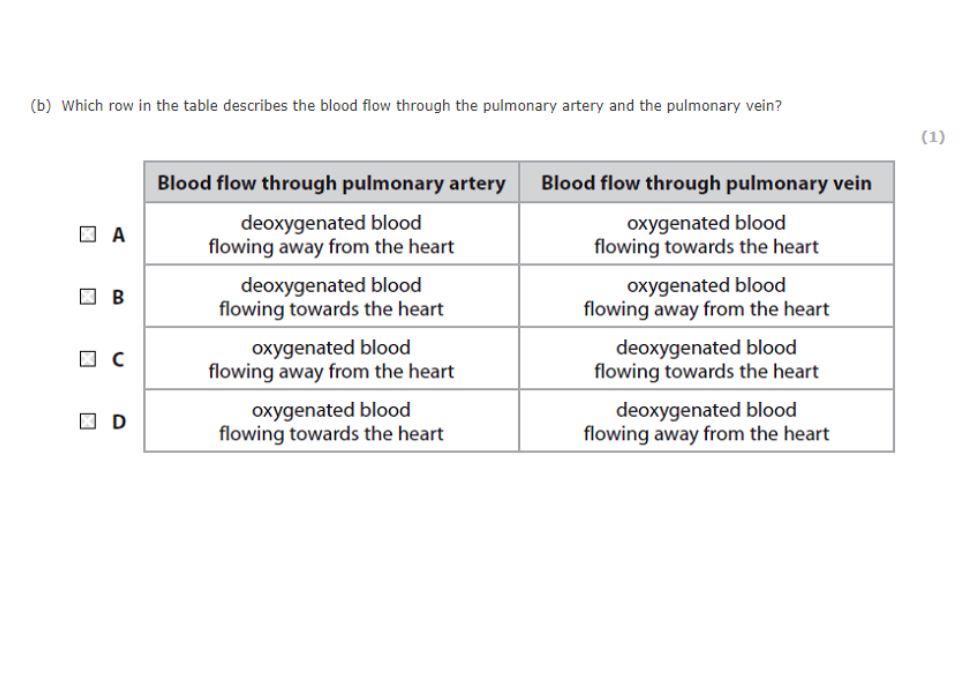
Which row in the table describes the blood flow through the pulmonary artery and the pulmonary vein?
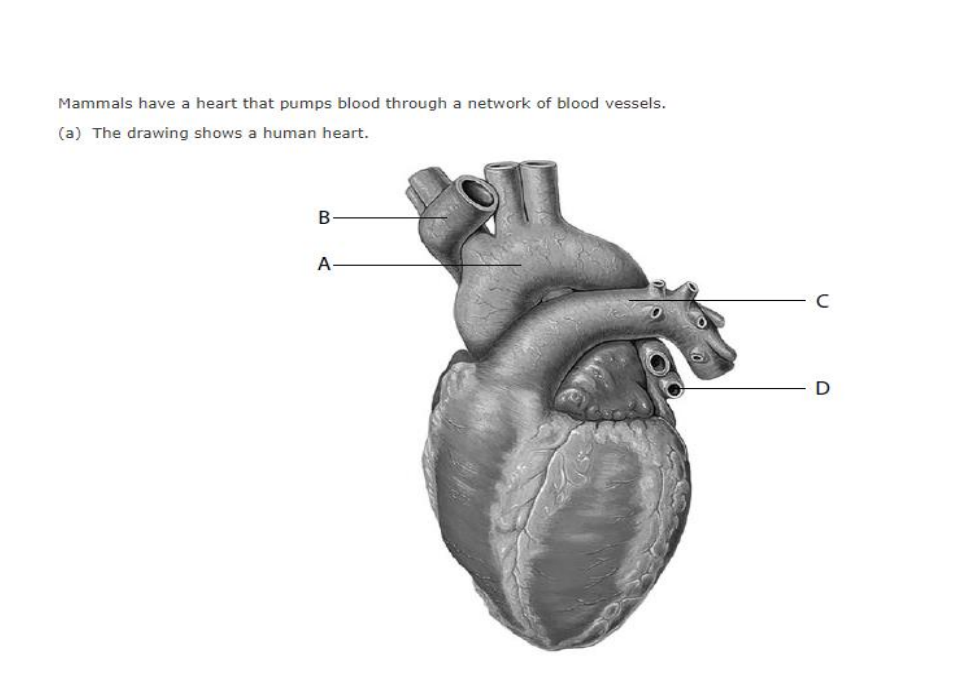
Which blood vessel takes blood from the heart to the body?
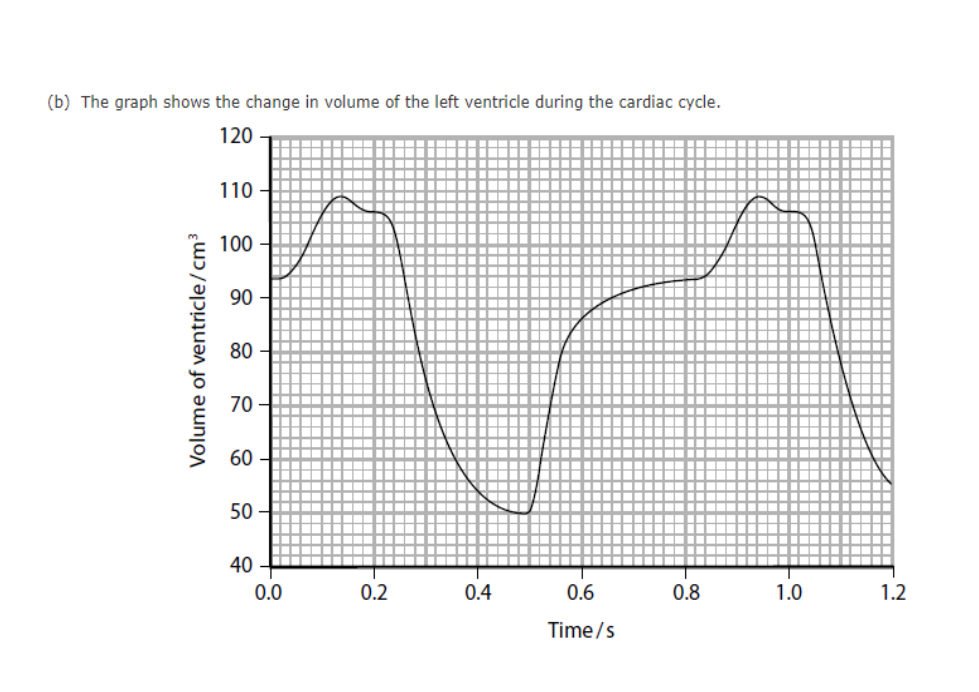
When is this heart in ventricular systole?
The nectar in flowers contains nutrients including sugars, amino acids and lipids.
The sugars in the nectar are fructose, glucose and sucrose.
Which of these contain glycosidic bonds?
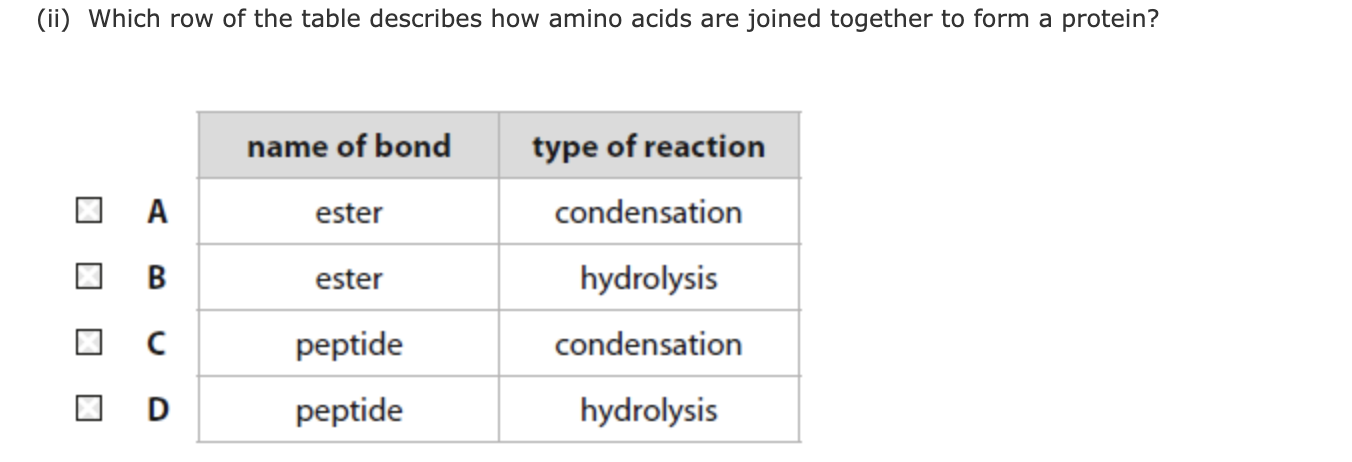
Which row of the table describes how amino acids are joined together to form a protein
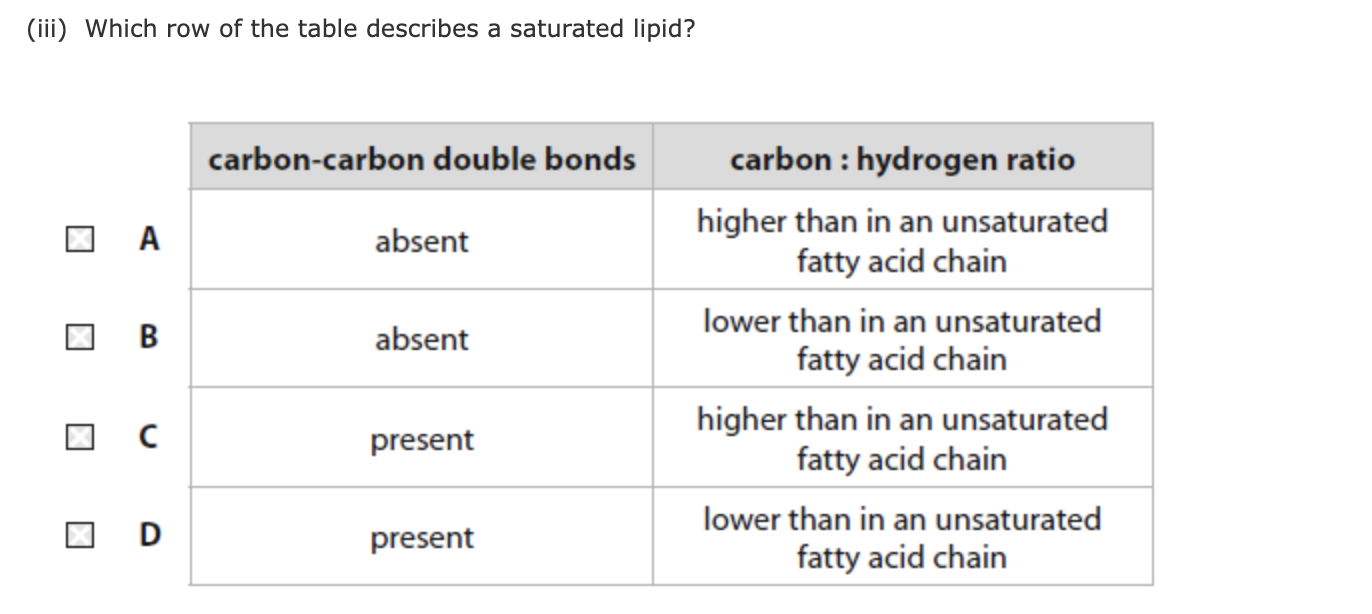
Which row of the table describes a saturated lipid?
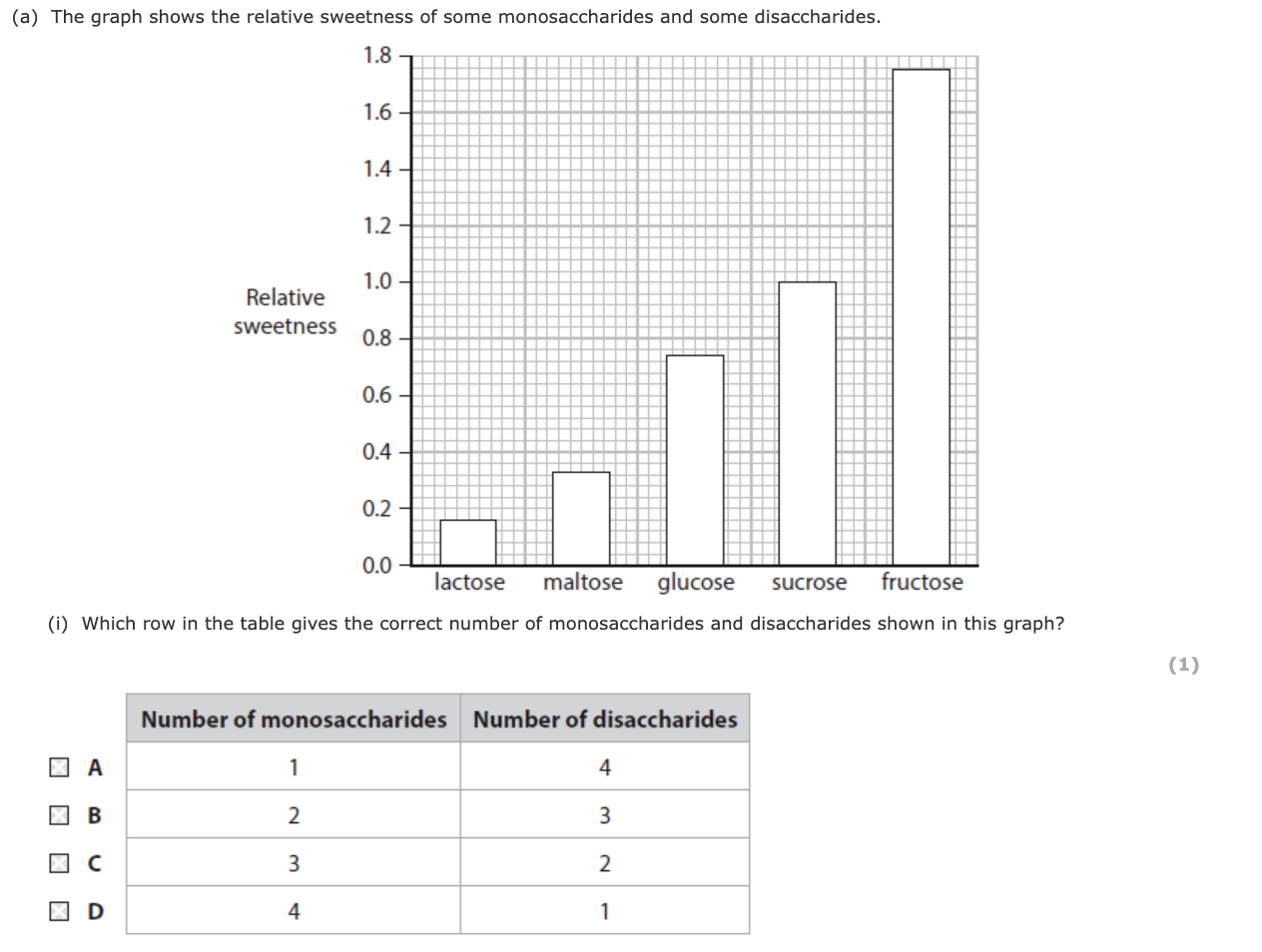
Which row in the table gives the correct number of monosaccharides and disaccharides shown in this graph?
Which bond joins two monosaccharides together to form a disaccharide?
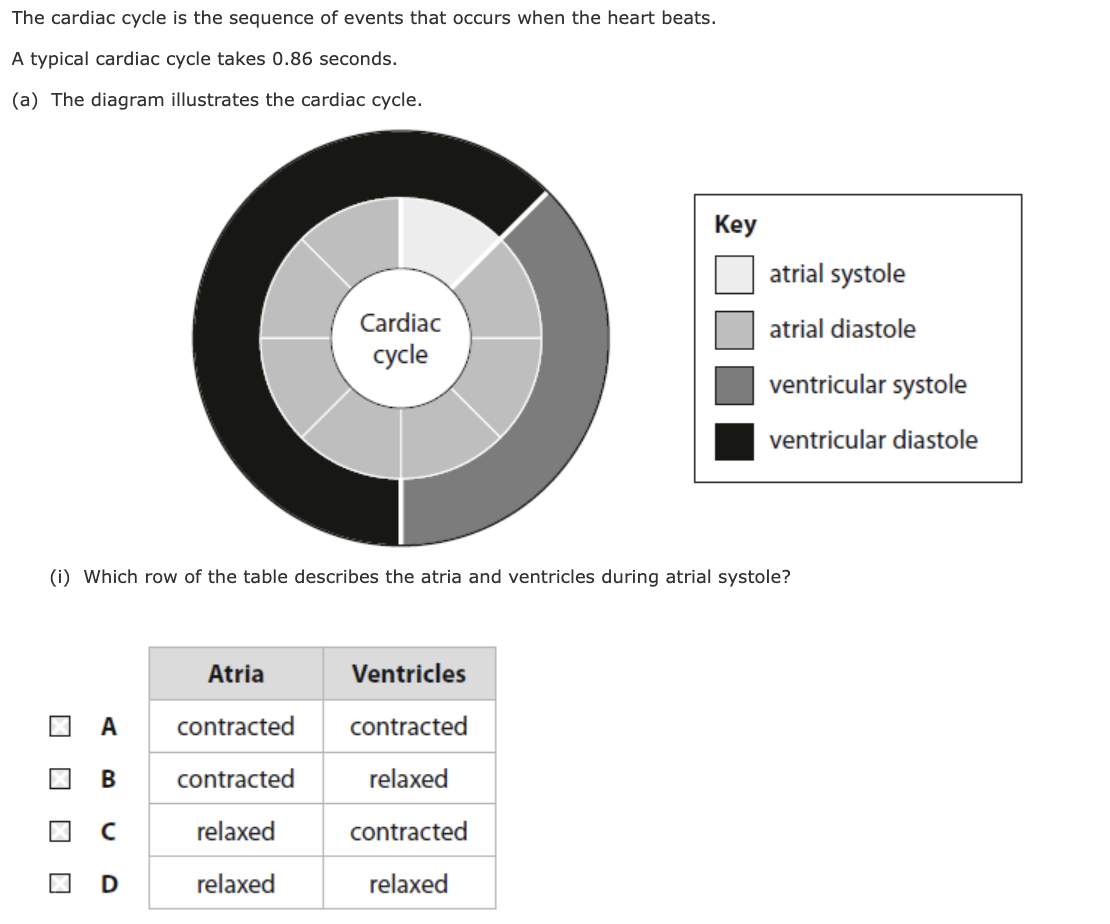
Which row of the table describes the atria and ventricles during atrial systole?
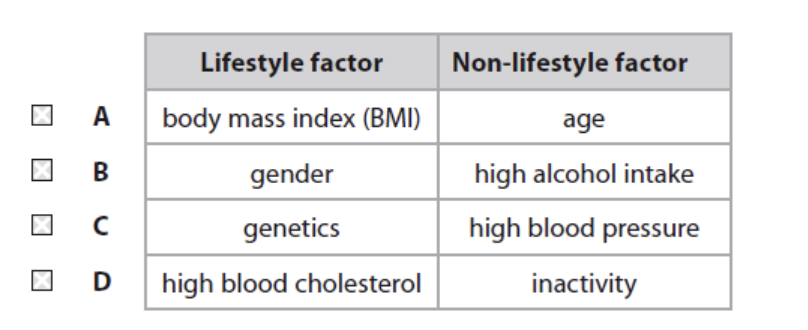
Which row of the table identifies one lifestyle factor and one non-lifestyle factor?
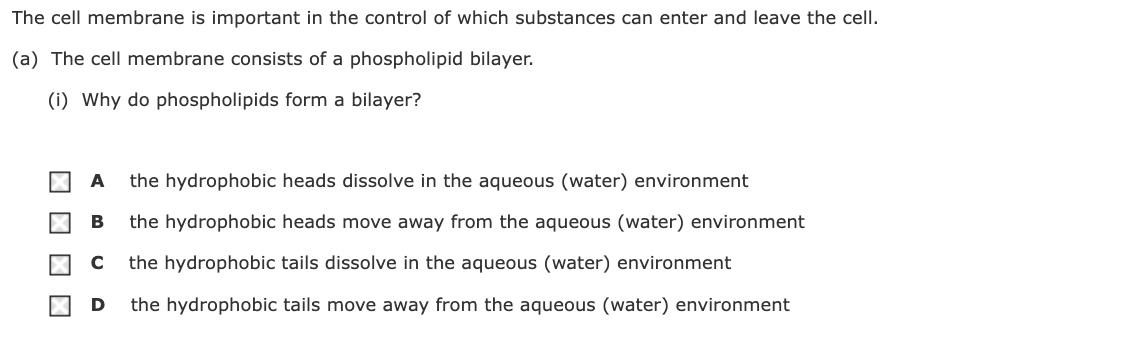
Why do phospholipids form a bilayer?
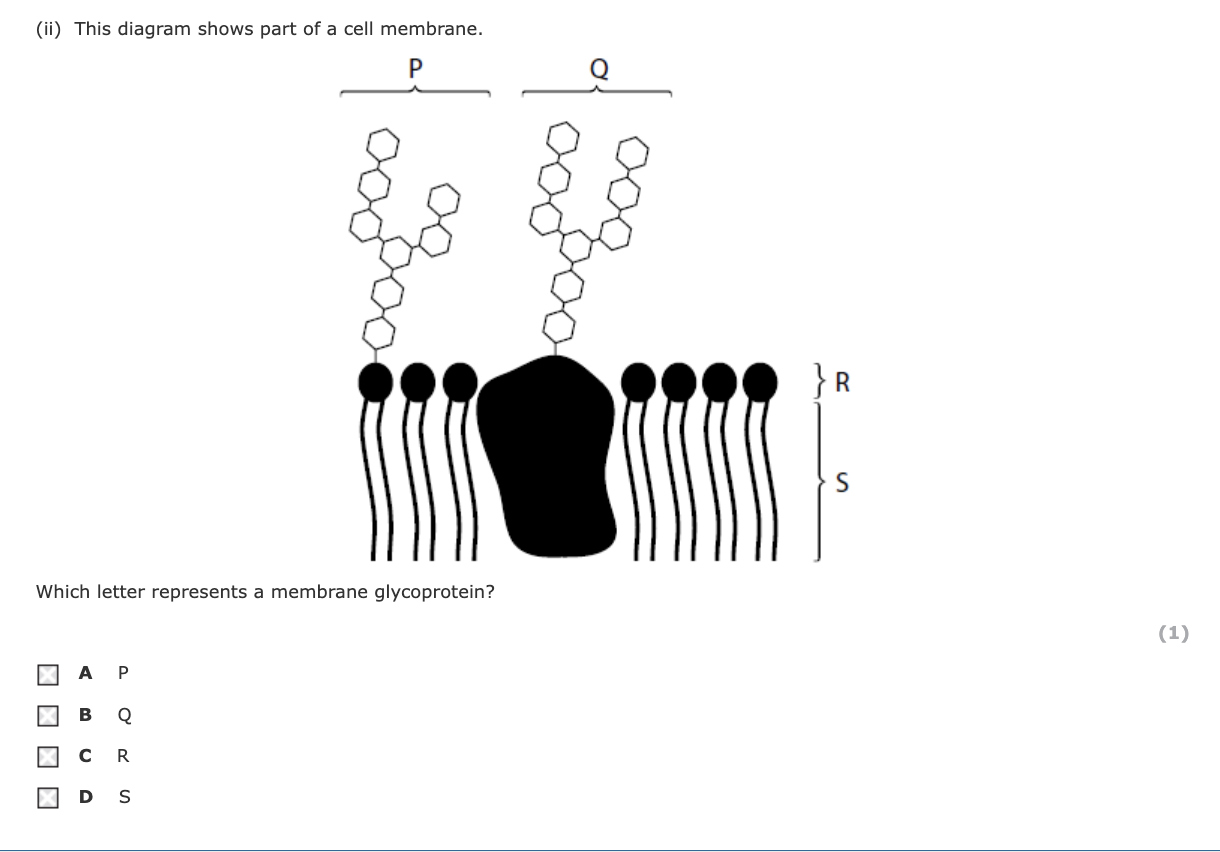
Which letter represents a membrane glycoprotein?
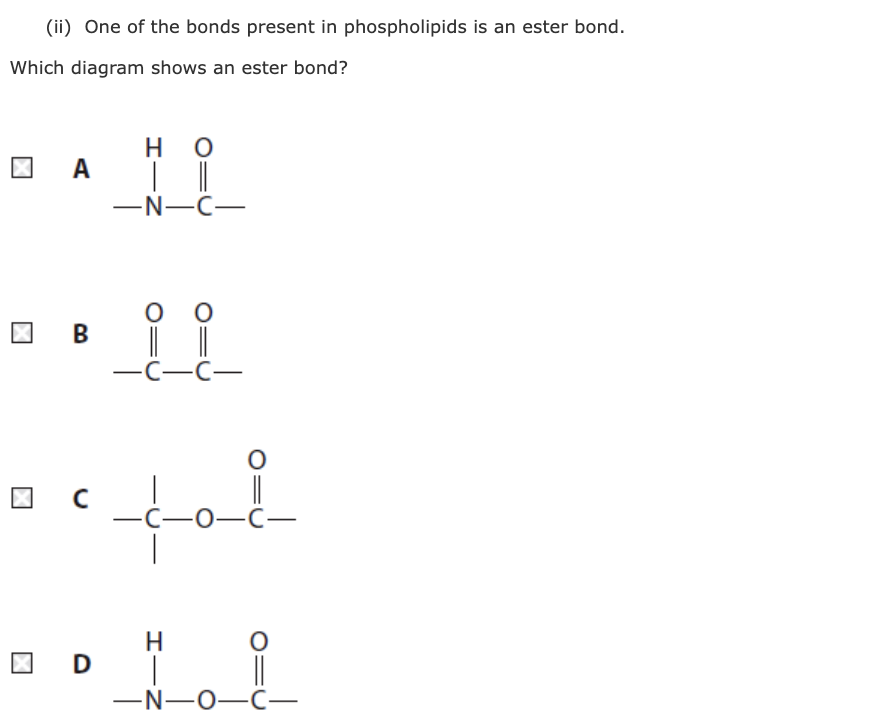
Which diagram shows an ester bond?
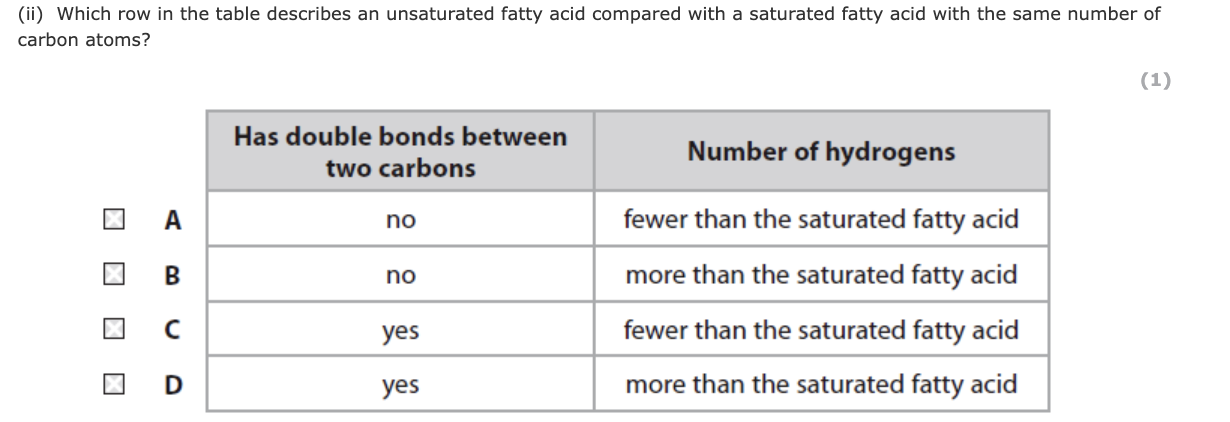
Which row in the table describes an unsaturated fatty acid compared with a saturated fatty acid with the same number of carbon atoms?
How does glycerol pass through the liposome membrane?
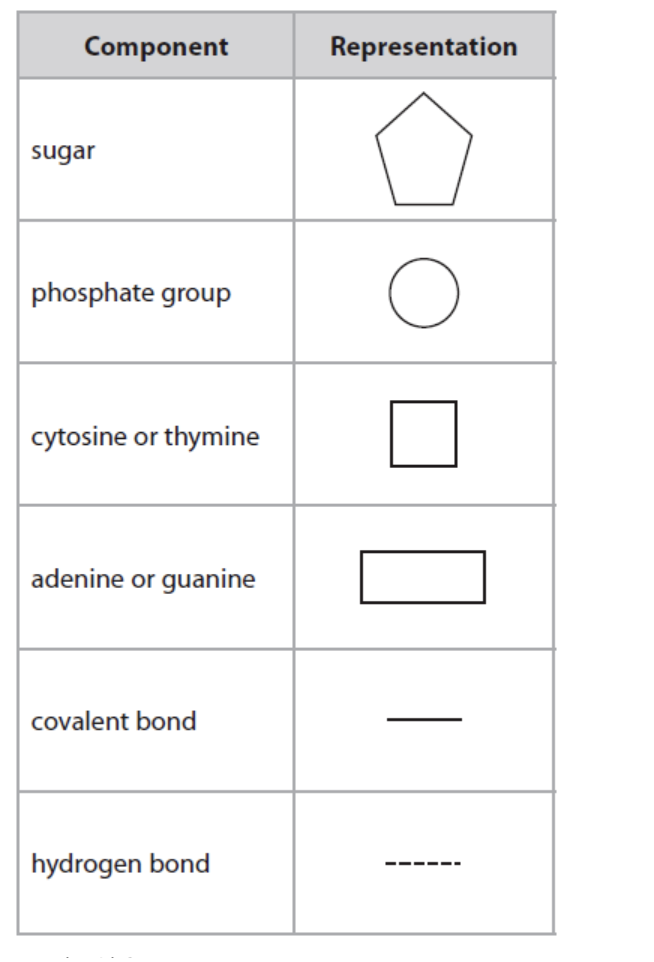
Both DNA and RNA are polynucleotides. The table shows how the components of polynucleotides can be represented.
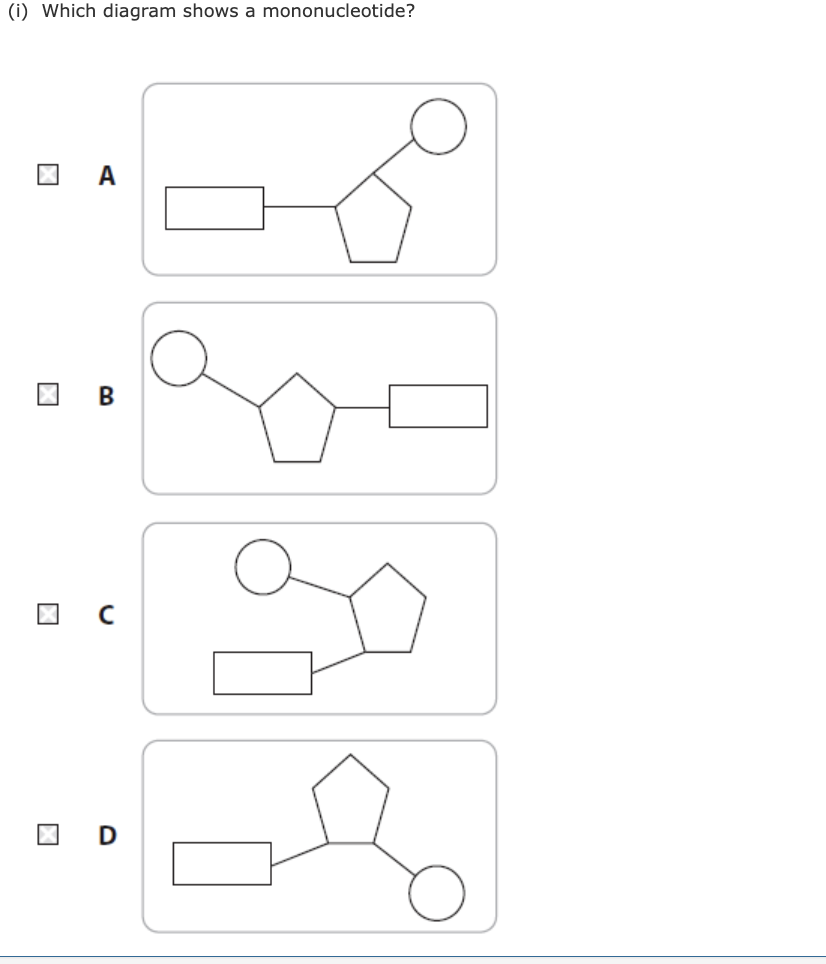
Using the table in Q28, which diagram shows a mononucleotide?
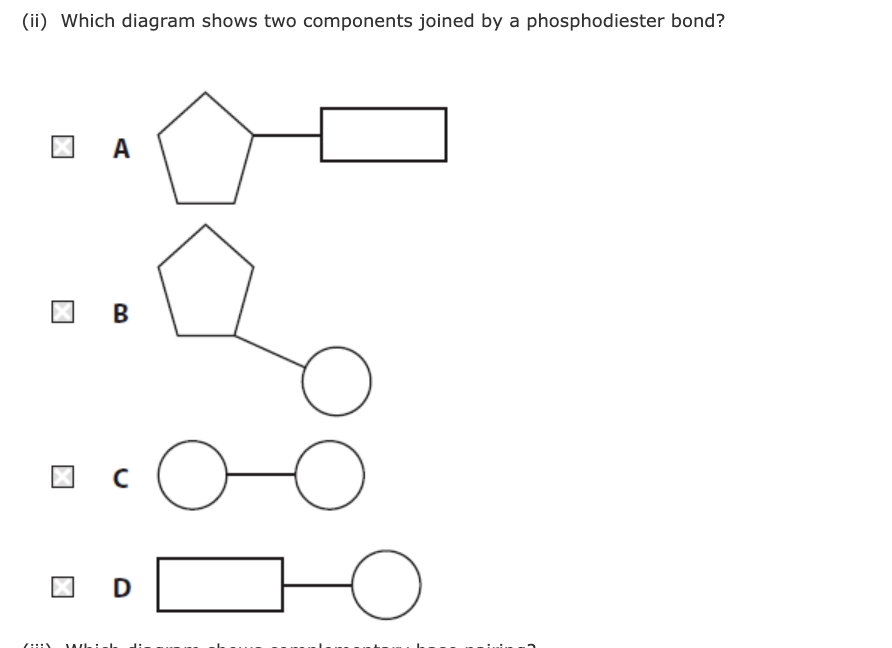
Using the table in Q28, which diagram shows two components joined by a phosphodiester bond?
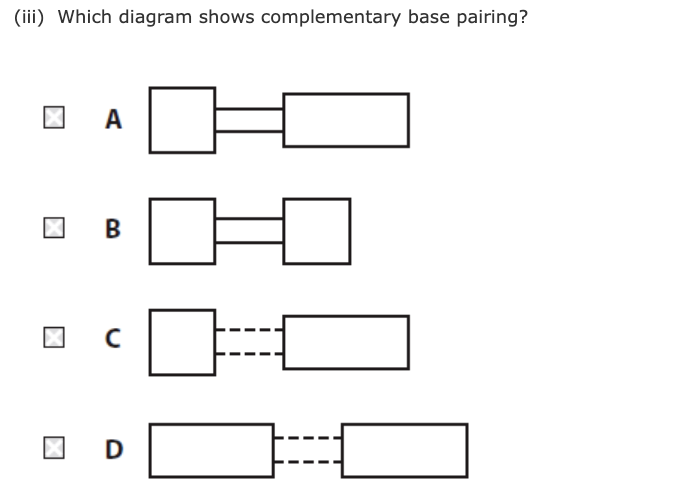
Using the table in Q28, which diagram shows complementary base pairing?
Which blood vessel has semilunar valves and contains blood with the highest concentration of carbon dioxide?