Ɛhia
1
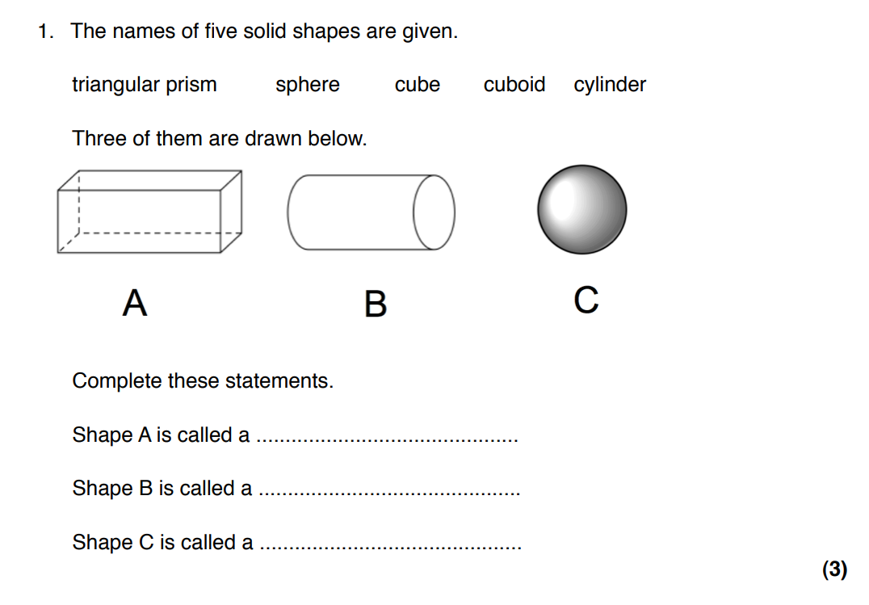
Fill in the blanks
Fill in the blanks
Fill in the blanks
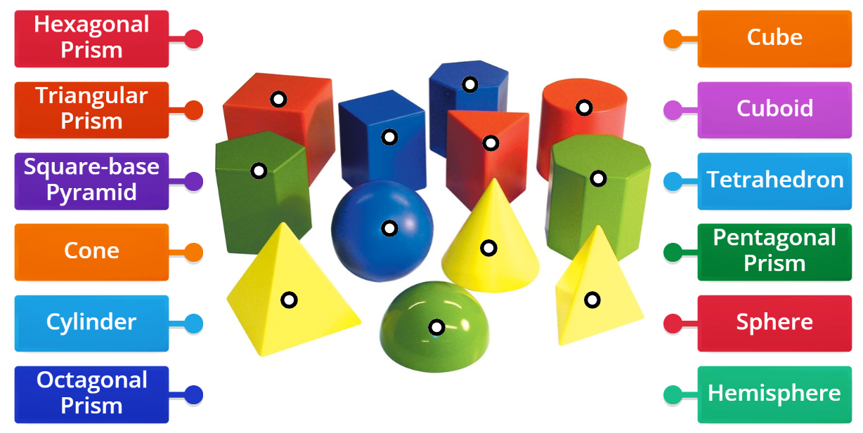
Draw lines to match each shape up to the correct name.
Match each shape up to the correct properties
| Draggable item | arrow_right_alt | Corresponding Item |
|---|---|---|
Triangular Prism | arrow_right_alt | 6 faces, 12 edges and 8 vertices |
Cube | arrow_right_alt | 2 faces, 1 edge and 1 vertex |
Square-based pyramid | arrow_right_alt | 3 faces, 2 edges and 0 vertices |
Cone | arrow_right_alt | 5 faces, 8 edges and 5 vertices |
Cylinder | arrow_right_alt | 5 faces, 9 edges and 6 vertices |
Explain the difference between a 'prism' and a 'pyramid'
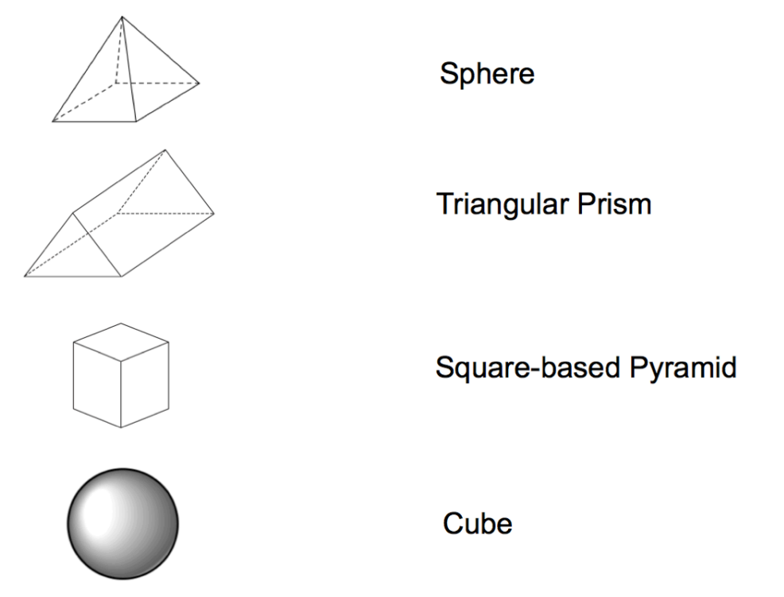
Order these shapes from the most to the least amount of vertices (the names are not in the correct order)
Cube
Sphere
Triangular Prism
Square-based Pyramid
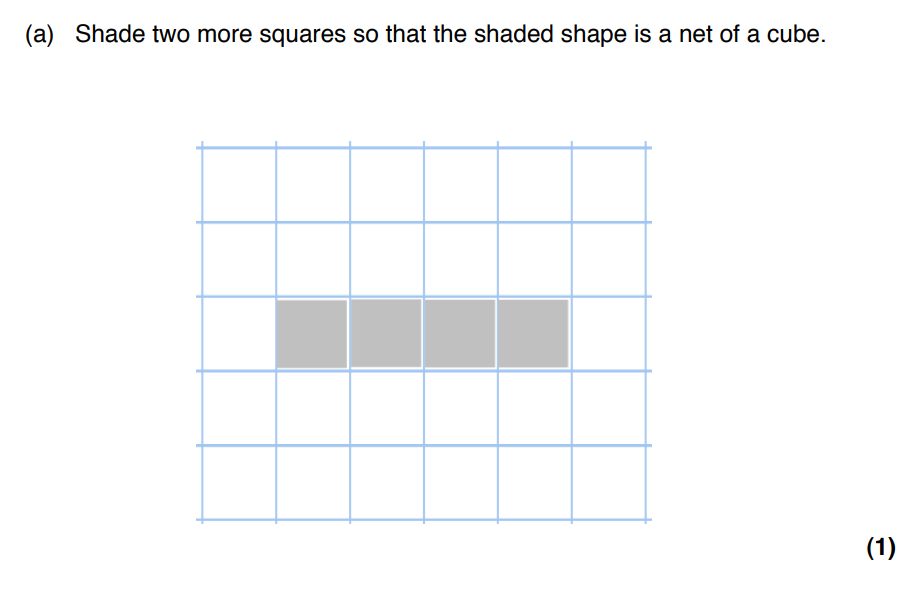
Shade two more squares so that the shaded shape is a net of a cube.
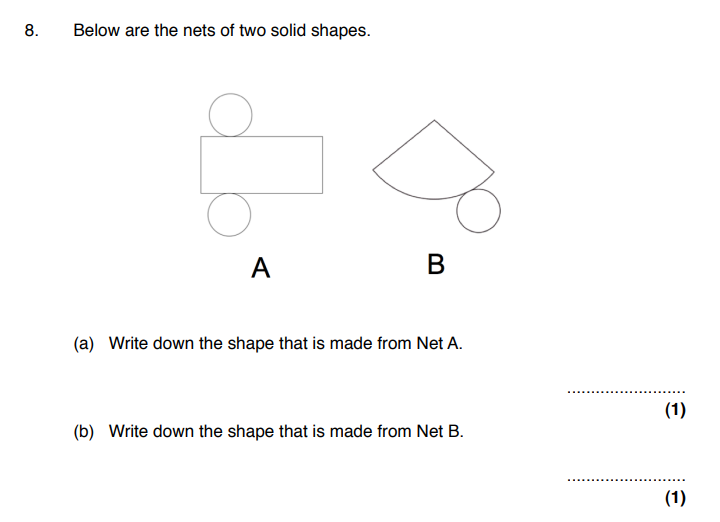
Write down the shapes that these nets represent.
The net of which shape is being described here: One central hexagon with 1 triangle attached to each of its edges (6 triangles in total).
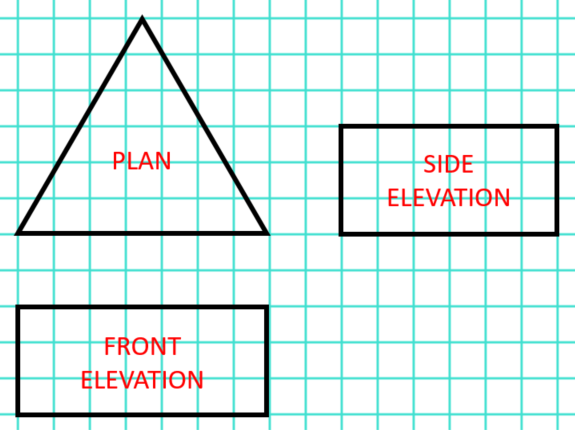
What 3D shape do these drawings represent?
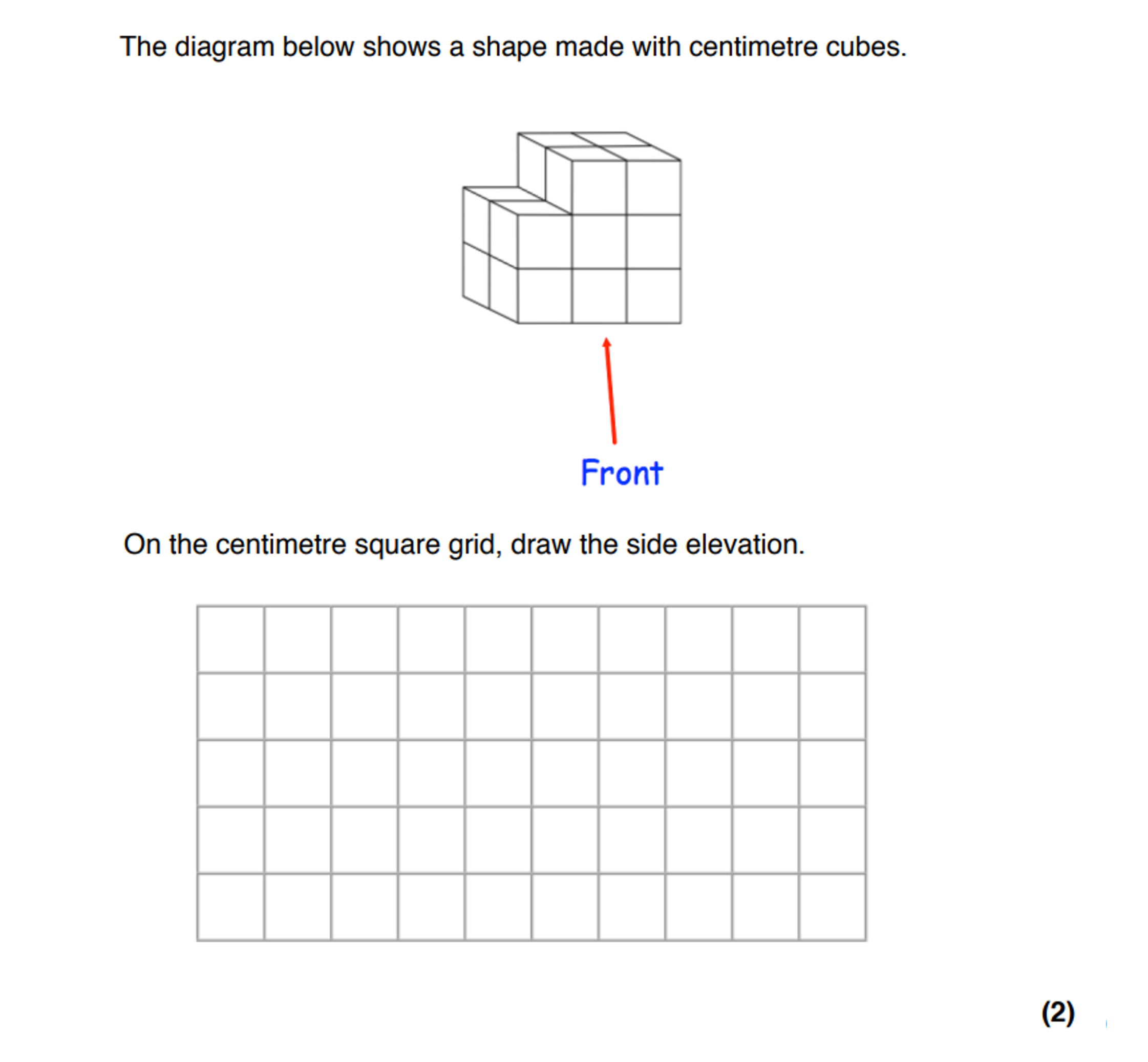
Draw the side elevation of this shape.
"The plan of a cylinder is always the same as its side elevation." Explain why this is false.