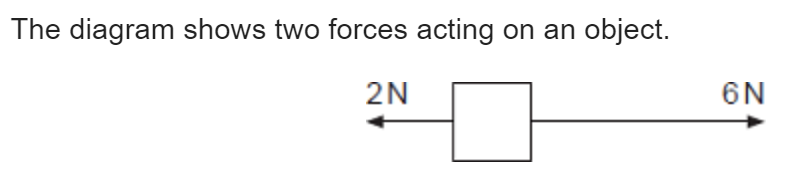
1
What is the resultant force acting on the object?
What is the resultant force acting on the object?
Describe the meaning of scalar quantity.
Describe the meaning of vector quantity
Drag the quantities into the correct group (1 mark per correct pair)
time
distance
displacement
force
energy
mass
Vector Quantities
Scalar Quantities
Give the name of another vector quantity that is not in the options to the previous question.
What is the resultant force acting on the object?
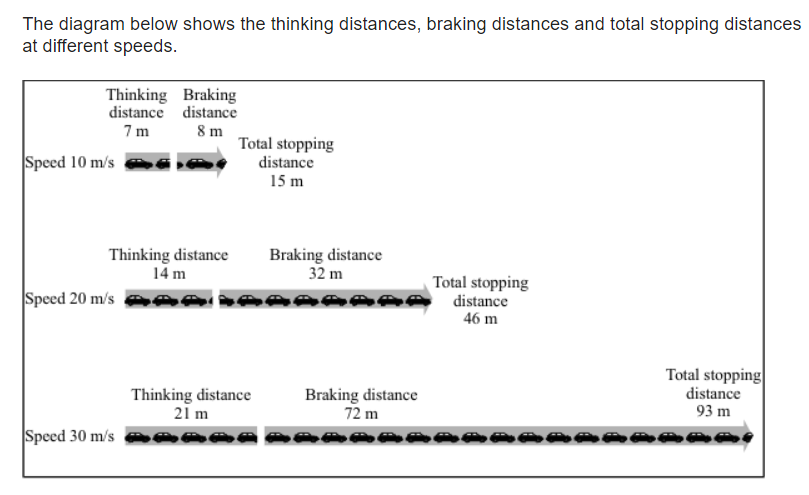
Write the equation which links stopping distance, thinking distance and braking distance
Speed affects the thinking distance and braking distance.
Name another factor that affects the thinking distance.
Other than speed, name a factor that affects the braking distance of a car
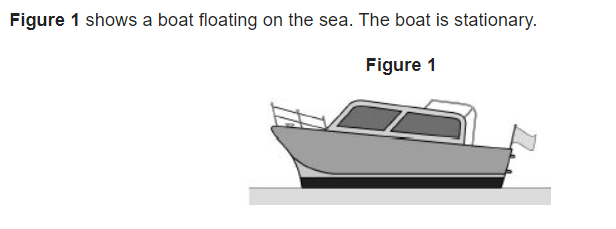
move onto the next question
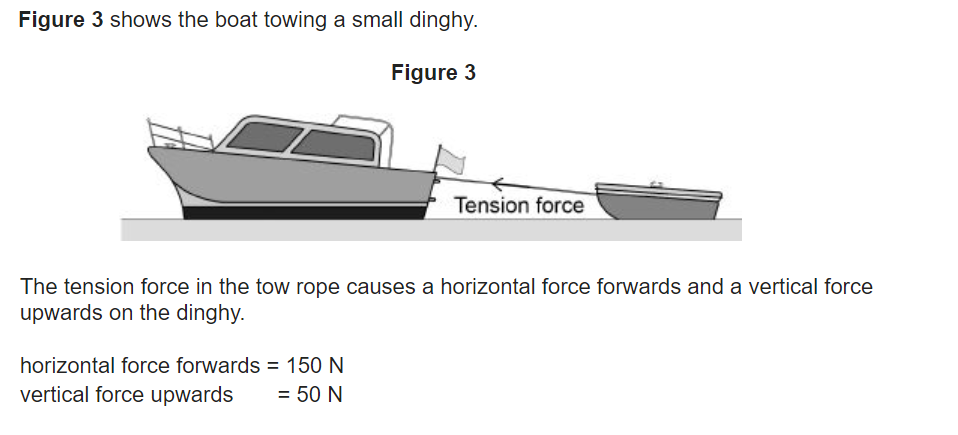
move onto the next question
Calculate the magnitude of the resultant, or use you diagram to determine the magnitude.
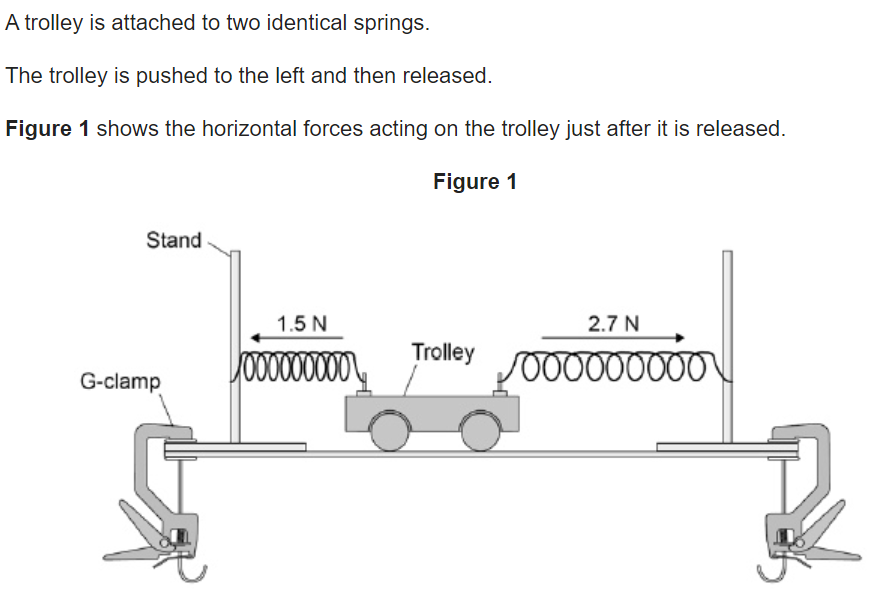
Write the equation which links acceleration, mass and resultant force
The trolley has a mass of 0.75 kg. Calculate the acceleration of the trolley just after it is released. Give the unit.
(Either type you working out or use the whiteboard space).
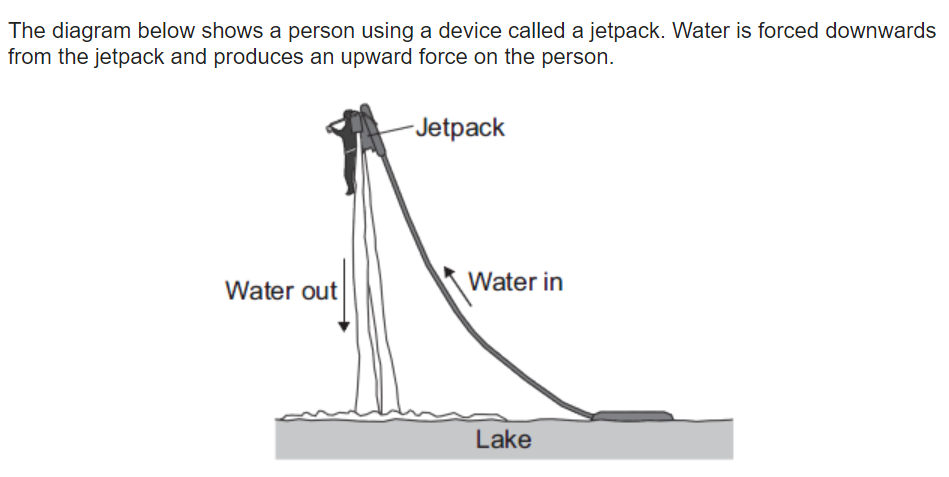
There is a downwards force and an upwards force. How do the forces compare when the jetpack and person are stationary?
The person weighs 700 N and the jetpack weighs 140 N. Calculate the combined mass of the person and the jetpack.Gravitational field strength = 10 N/kg
Increasing the upward force to 1850 N causes the person to accelerate upwards. Calculate the acceleration of the person and the jetpack. Give the unit.
(Either type you working out or use the whiteboard space).
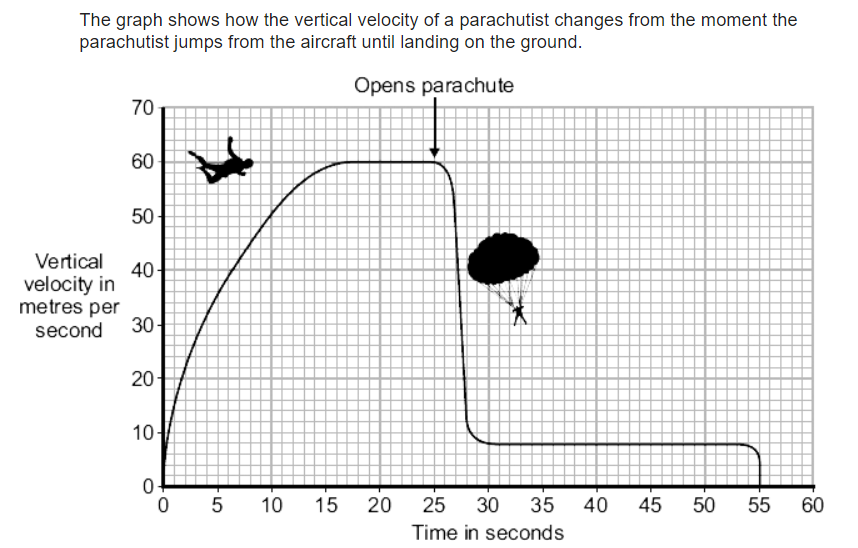
Using the idea of forces, explain why the parachutist reaches a terminal velocity and why opening the parachute reduces the terminal velocity.