Log in
Sign up for FREE
arrow_back
Library

Thermodynamics Introduction

star
star
star
star
star
Last updated about 3 years ago
17 questions
Note from the author:
2
2
2
2
2
1
1
1
1
1
1
1
1
1
2
2
2
Select all that apply for the following questions. Some have more than one answer. Not all answers need to be used.
Question 1
1.

Question 2
2.

Question 3
3.

Question 4
4.

Question 5
5.

Section 2

Question 6
6.

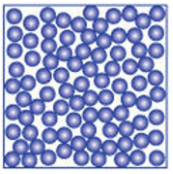
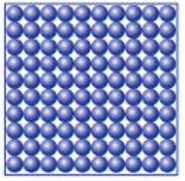
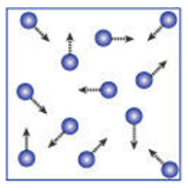
Which state of matter is shown here?
Question 7
7.

Which state of matter is shown here?

Question 8
8.

Which state of matter is shown here?

Question 9
9.

Question 10
10.

Question 11
11.

Question 12
12.

How are kinetic energy and velocity related?

Question 13
13.

How are temperature and kinetic energy related?

Question 14
14.

How are temperature and particle velocity related?

Question 15
15.

How are mass and velocity related if KE is constant?

Question 16
16.

If particles of different masses are at the same temperature, which particles will be moving slowest?

Question 17
17.

If particles of different masses are at the same temperature, which particles will be moving fastest?
Kinetic Molecular Theory (KMT)
Total energy of all the molecular motion of an object
The measure of an object’s thermal energy
Molecules are in constant random motion
The average kinetic energy of a substance
An evaluation of a systems ability to transfer energy in or out of the system
“Form of energy” that can be transferred from one object to another
0 Kelvin
The lowest theoretically temperature at which particles no longer move
Energy an object contains due to motion
An increase in energy increases the rate of motion of molecules
A measure of the amount of thermal energy transferred from one object to another
Heat
Total energy of all the molecular motion of an object
The measure of an object’s thermal energy
Molecules are in constant random motion
The average kinetic energy of a substance
An evaluation of a systems ability to transfer energy in or out of the system
“Form of energy” that can be transferred from one object to another
0 Kelvin
The lowest theoretically temperature at which particles no longer move
Energy an object contains due to motion
An increase in energy increases the rate of motion of molecules
A measure of the amount of thermal energy transferred from one object to another
Absolute Zero
Total energy of all the molecular motion of an object
The measure of an object’s thermal energy
Molecules are in constant random motion
The average kinetic energy of a substance
An evaluation of a systems ability to transfer energy in or out of the system
“Form of energy” that can be transferred from one object to another
0 Kelvin
The lowest theoretically temperature at which particles no longer move
Energy an object contains due to motion
An increase in energy increases the rate of motion of molecules
A measure of the amount of thermal energy transferred from one object to another
Kinetic Energy
Total energy of all the molecular motion of an object
The measure of an object’s thermal energy
Molecules are in constant random motion
The average kinetic energy of a substance
An evaluation of a systems ability to transfer energy in or out of the system
“Form of energy” that can be transferred from one object to another
0 Kelvin
The lowest theoretically temperature at which particles no longer move
Energy an object contains due to motion
An increase in energy increases the rate of motion of molecules
A measure of the amount of thermal energy transferred from one object to another
Temperature
Total energy of all the molecular motion of an object
The measure of an object’s thermal energy
Molecules are in constant random motion
The average kinetic energy of a substance
An evaluation of a systems ability to transfer energy in or out of the system
“Form of energy” that can be transferred from one object to another
0 Kelvin
The lowest theoretically temperature at which particles no longer move
Energy an object contains due to motion
An increase in energy increases the rate of motion of molecules
A measure of the amount of thermal energy transferred from one object to another
Select all that apply for solids according to KMT
dense, tightly packed, definite shape and volume
kinda spread out, takes shape of container, indefinite shape, definite volume
spread our as far as possible, fills container, indefinite shape and volume
low KE
medium KE
high KE
low velocity
medium velocity
high velocity
Select all that apply for liquids according to KMT
dense, tightly packed, definite shape and volume
kinda spread out, takes shape of container, indefinite shape, definite volume
spread our as far as possible, fills container, indefinite shape and volume
low KE
medium KE
high KE
low velocity
medium velocity
high velocity
Select all that apply for gases according to KMT
dense, tightly packed, definite shape and volume
kinda spread out, takes shape of container, indefinite shape, definite volume
spread our as far as possible, fills container, indefinite shape and volume
low KE
medium KE
high KE
low velocity
medium velocity
high velocity
unrelated
cousins
unrelated
cousins
unrelated
cousins
unrelated
cousins