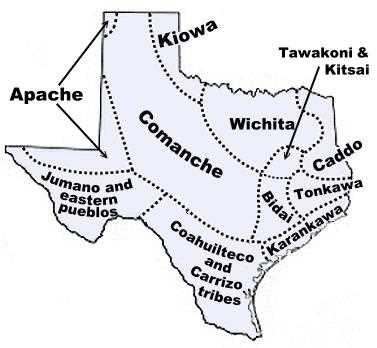
According to the map, what group would have access to foods such as oysters and fish?
According to the map, what group would have access to foods such as oysters and fish?
Which one of these is NOT a reason for Spanish colonization?
What is one way in which Native Americans were affected by colonization?
According to the map, what group would have access to foods such as oysters and fish?
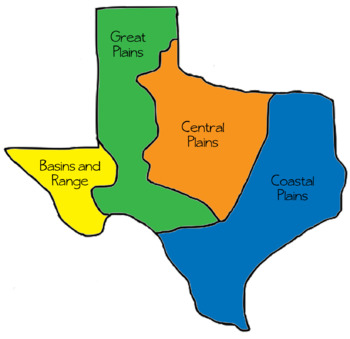
Using the map, what area would most likely be affected by changes in sea level?
This branch of government interprets the constitutionality of the laws.
Which one of the amendments best reflects the ideas of federalism?
She was the first African American woman elected to the Texas Senate
This president signed the Civil Rights Act of 1964 into law.
Order in chronolgical order:
Mexico declares independence from Spain
Texas decides to seperate from Mexico; Texas Revolution begins
Texas is annexed into the United States
Battle of the Alamo is fought; Mexican troops declare victory
Treaty of Gudalupe Hidalgo
Battle of San Jacinto
The battle of the Alamo was a Texan victory which eneded the Texas Revolution
- Abolished Slavery in all the United States
- Gave African Americans the right to citizenship; birthright citizenship
- Allowed African American men the right to vote
| Draggable item | arrow_right_alt | Corresponding Item |
|---|---|---|
Limited Government | arrow_right_alt | Federal government and state government share power |
Popular Sovereignty | arrow_right_alt | a system that allows each branch of a government to amend or veto acts of another branch so as to prevent any one branch from exerting too much power. |
Federalism | arrow_right_alt | Government based on consent of the people. The government's source of authority is the people, and its power is not legitimate if it disregards the will of the people. |
Republicanism | arrow_right_alt | The government only has those powers delegated to it by law, often through a written constitution. |
Checks and balances | arrow_right_alt | The political belief that the best form of government is one in which citizens choose their representatives and leaders |
Founded in Corpus Christi in 1929, this group sought to fight for better job opportunities, education and civil rights.
Analyze the impact of slavery on Texas' decision to secede from the United States.
- seperated from the United States, president Jefferson Davis
- Northern forces, president Abraham Lincoln
Depended on agriculture for economy
Depended on factories for economy
Formed after South Carolina seceded from the U.S
Winners of the Civil War
Confederacy
Union
This was the period after the Civil War
What document outlines how the government is run?
Order in chronolgical order:
Texas controlled by Mexico
Texas returns to US
Texas in the Confederacy
Texas controlled by Spain
Texas as a US state
Texas as a Republic
Texas controlled by France
"All political power is vested in and derived from the people." This is an example of:
This individual served in WW2. During their time in congress, the actively supported civil rights proposals.
| Draggable item | arrow_right_alt | Corresponding Item |
|---|---|---|
6th Amendment | arrow_right_alt | Congress make no law respecting an establishment of religion or prohibiting its free exercise. It protects freedom of speech, the press, assembly, and the right to petition the Government for a redress of grievances. |
4th Amendment | arrow_right_alt | gives citizens the right to bear arms. |
10th Amendment | arrow_right_alt | prohibits the government from quartering troops in private homes, a major grievance during the American Revolution. |
5th Amendment | arrow_right_alt | protects citizens from unreasonable search and seizure. The government may not conduct any searches without a warrant, and such warrants must be issued by a judge and based on probable cause. |
3rd Amendment | arrow_right_alt | provides that citizens not be subject to criminal prosecution and punishment without due process. Citizens may not be tried on the same set of facts twice and are protected from self-incrimination (the right to remain silent). The amendment also establishes the power of eminent domain, ensuring that private property is not seized for public use without just compensation. |
2nd Amendment | arrow_right_alt | assures the right to a speedy trial by a jury of one’s peers, to be informed of the crimes with which one is charged, and to confront the witnesses brought forward by the government. The amendment also provides the accused the right to compel testimony from witnesses, as well as the right to legal representation. |
1st Amendment | arrow_right_alt | provides that civil cases preserve the right to trial by jury. |
7th Amendment | arrow_right_alt | prohibits excessive bail, excessive fines, and cruel and unusual punishments. |
8th Amendment | arrow_right_alt | states that the list of rights enumerated in the Constitution is not exhaustive, and that the people retain all rights not enumerated. |
9th Amendment | arrow_right_alt | assigns all powers not delegated to the United States, or prohibited to the States, to either the States or to the people. |