Log in
Sign up for FREE
arrow_back
Library

APUSH Chapter 9: The Confederation and the Constitution (1776-1790)

star
star
star
star
star
Last updated almost 2 years ago
24 questions
Note from the author:
1
IIWD.01
1
IIRC.02
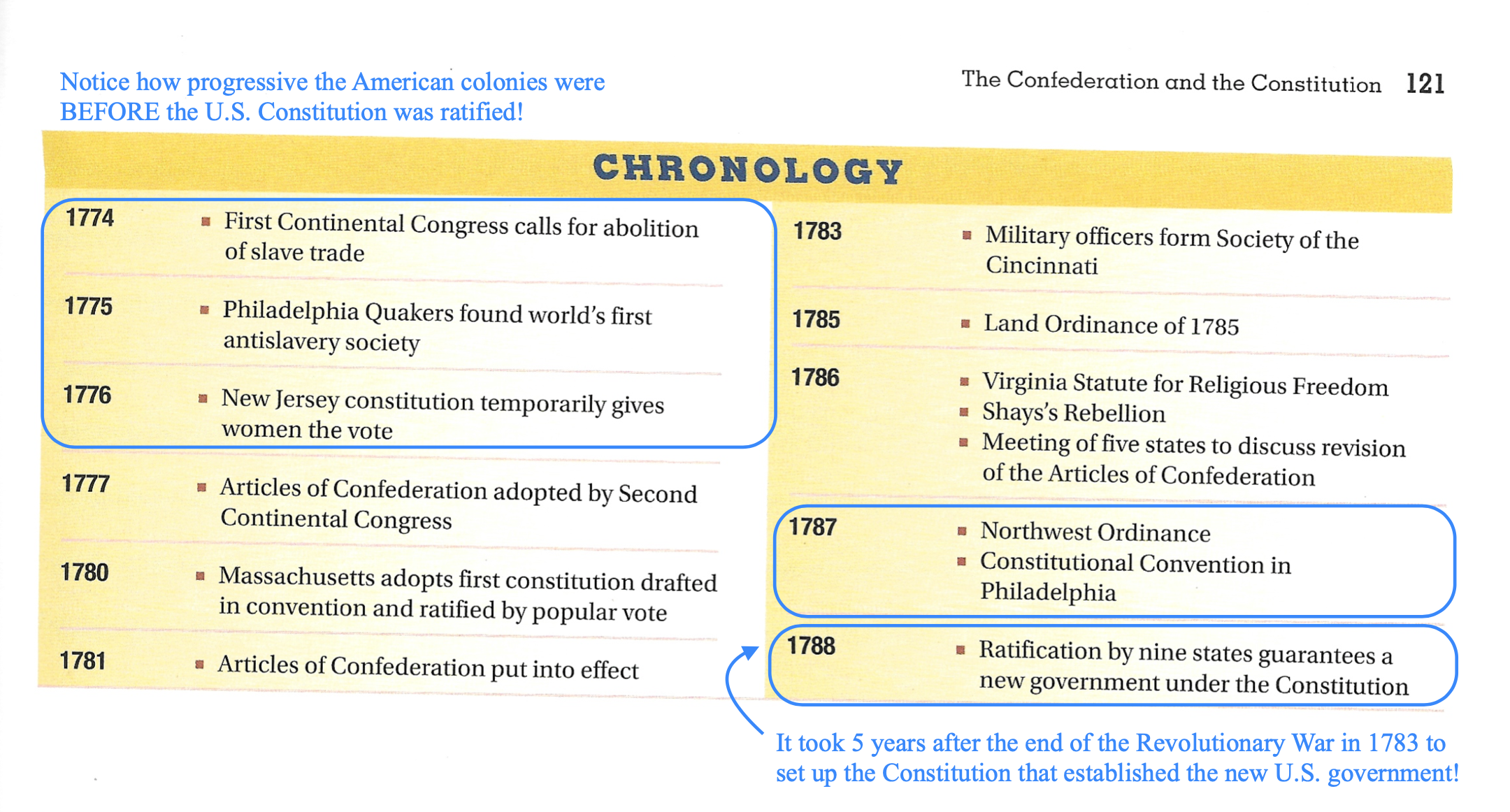
Directions: In order to be fully prepared for the Period 3 DBQ, we need to have a strong start and follow-through the Chapter 9 reading!

Absent? Just want to review the guided notes? Slides are linked here.
Directions: In order to be fully prepared for the Period 3 DBQ, we need to have a strong start and follow-through the Chapter 9 reading!

Absent? Just want to review the guided notes? Slides are linked here.
TLDR; We skipped Chapter 8, which was about the Revolutionary War itself. In history, we care more about the causes and effects of wars rather than the actual battles themselves.
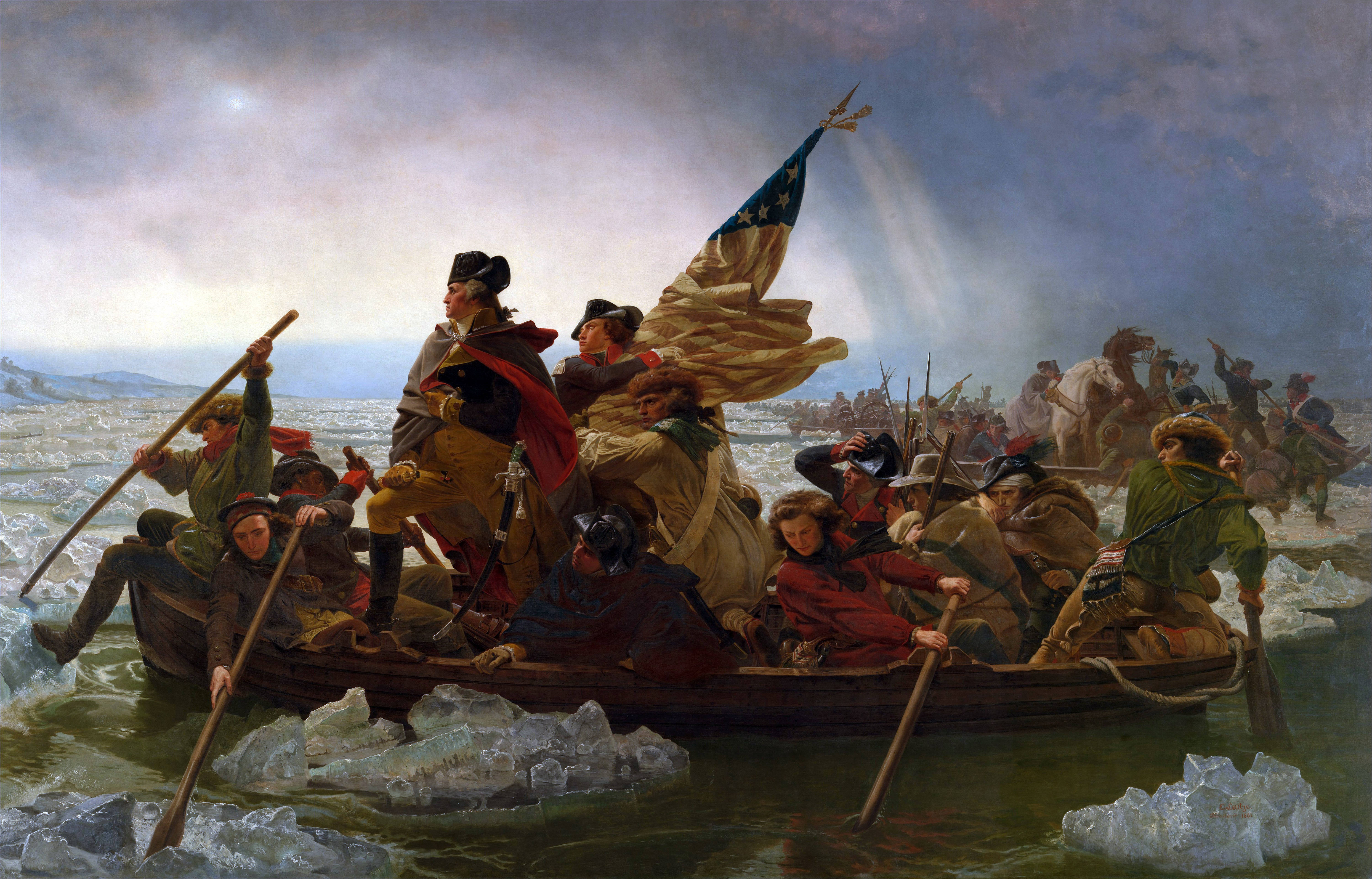

"Washington Crossing the Delaware," Emanuel Leutze, 1851
Oil on Canvas, The Metropolitan Museum of Art
1
IICI.01
Last week, we learned about how African Americans fought in the Revolutionary War. Did you know that women also helped the Patriot cause?
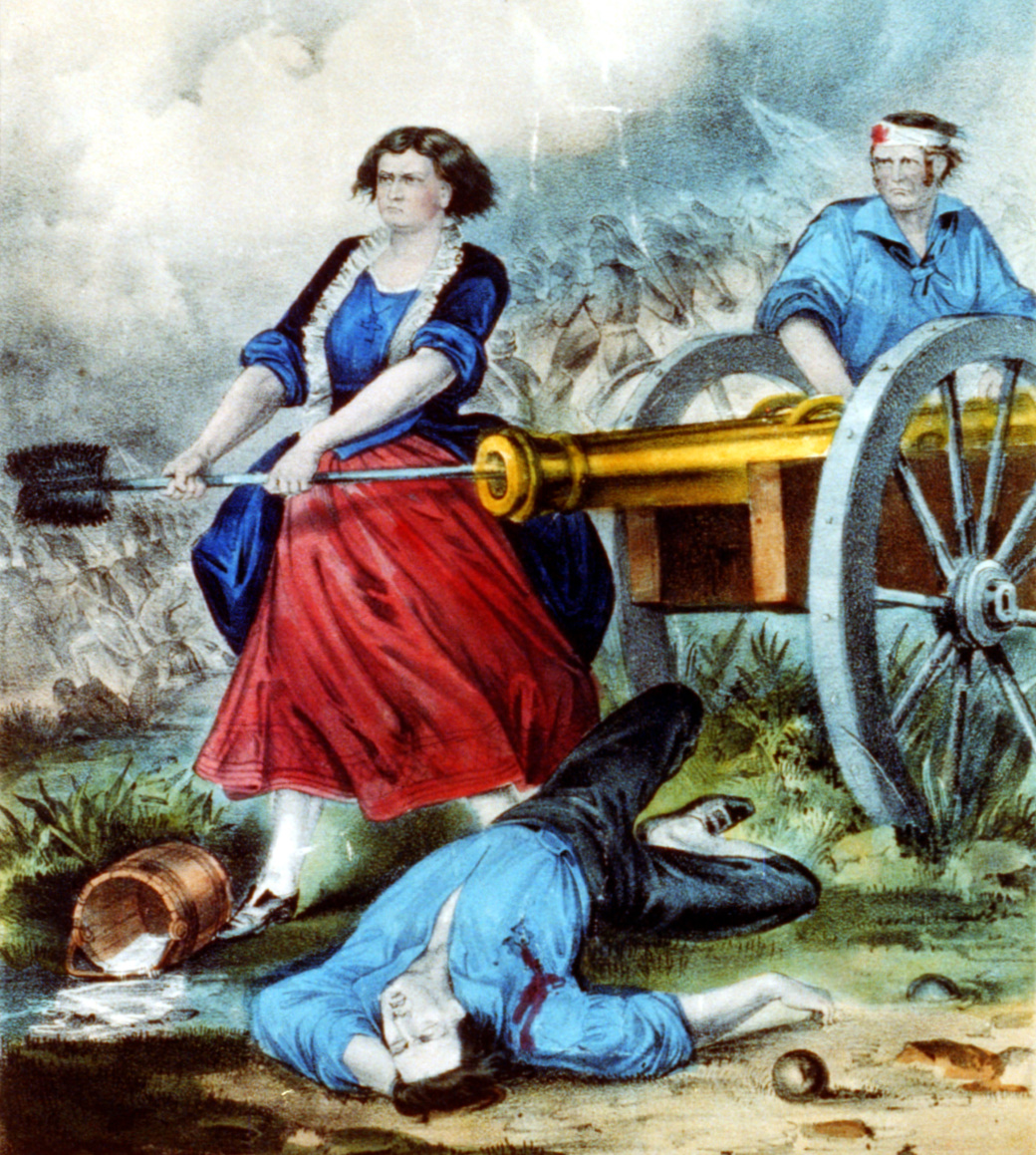
Historical Society of Pennsylvania Collection
1
Question 2
2.
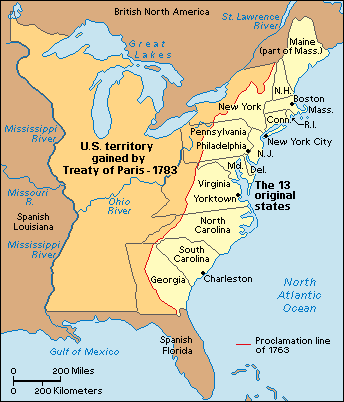
With help from an alliance with France, the Americans were able to win their independence from Great Britain. The Revolutionary War ended with the Treaty of Paris in 1783, which was negotiated with England by Benjamin Franklin, John Adams, and John Jay.
1
SQN.01
0
Question 4
4.

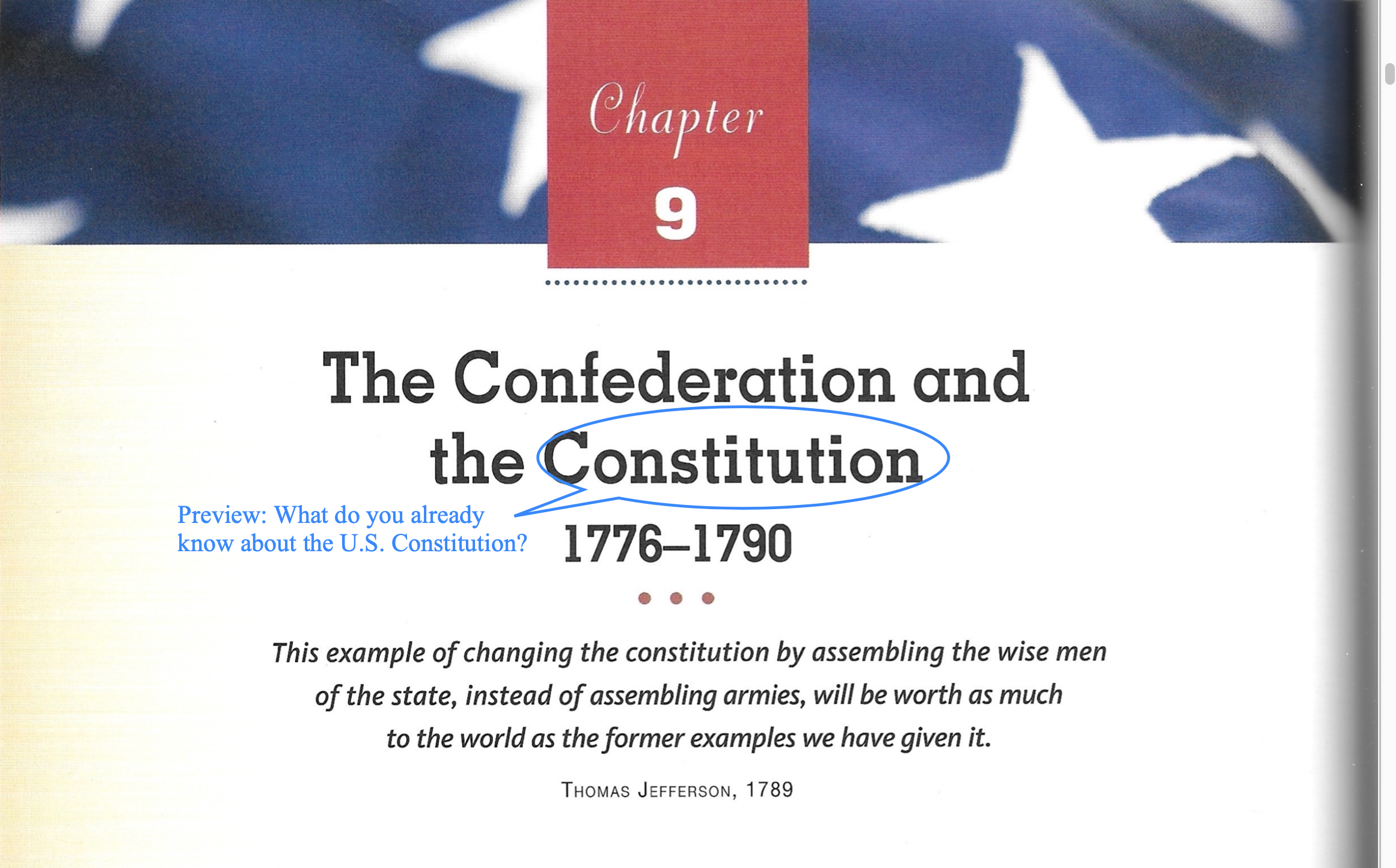
What do you already know about the U.S. Constitution?

Stuck? Think back to the Constitution test you took back in 8th grade!

1
IIUR.01
1
IIRC.03
1
IIRC.02
1
RPU.01
1
IIWD.01
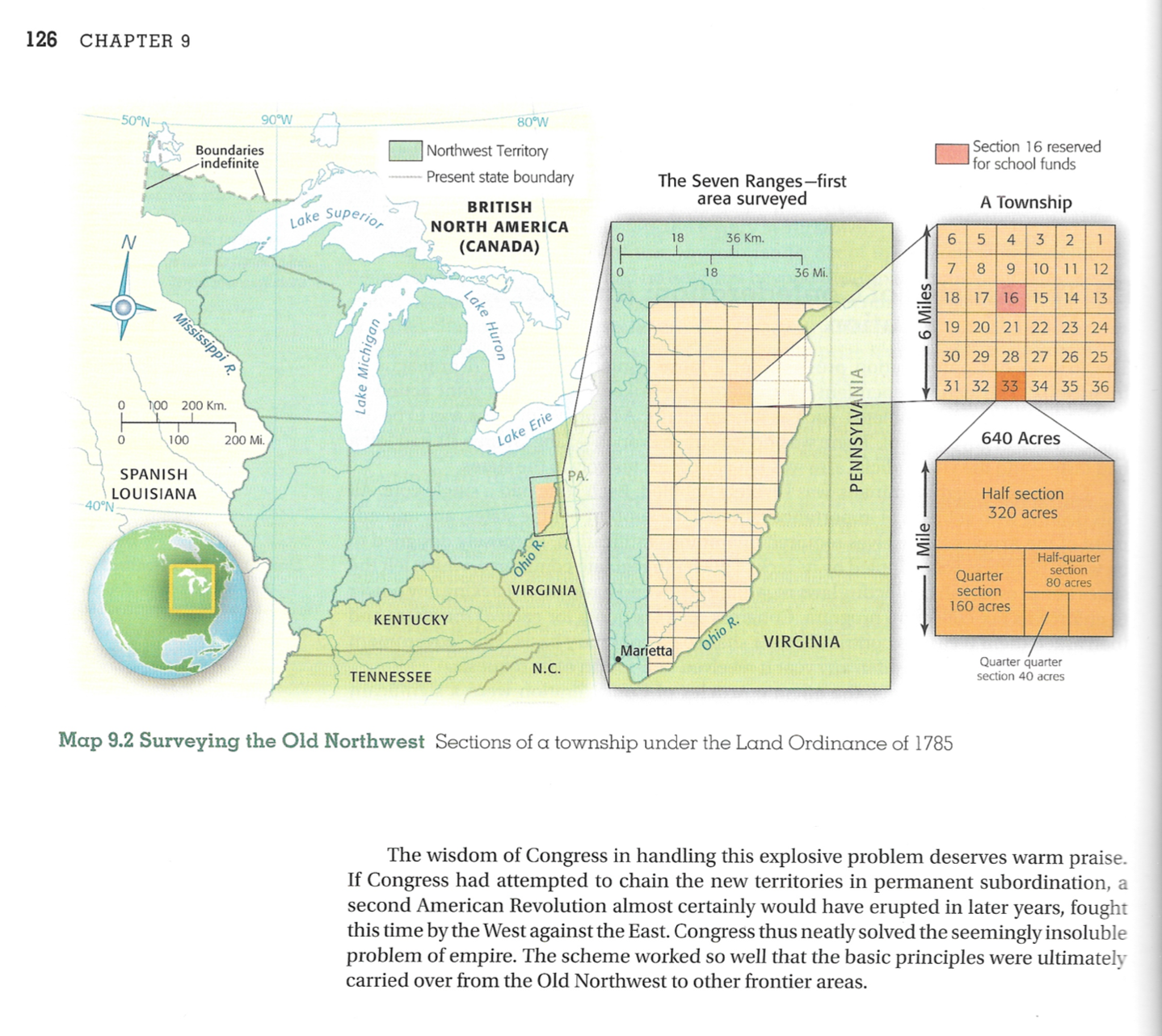
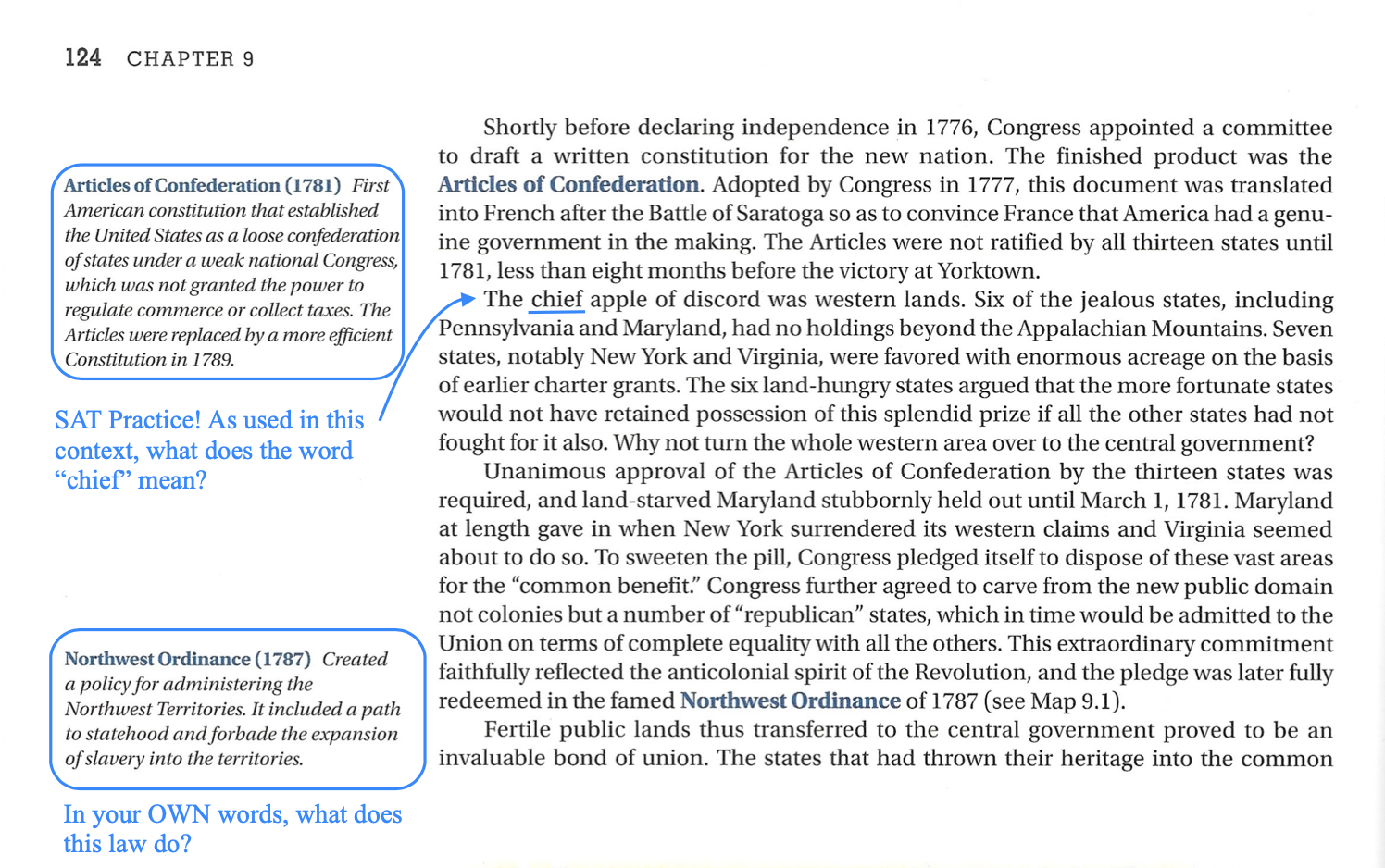
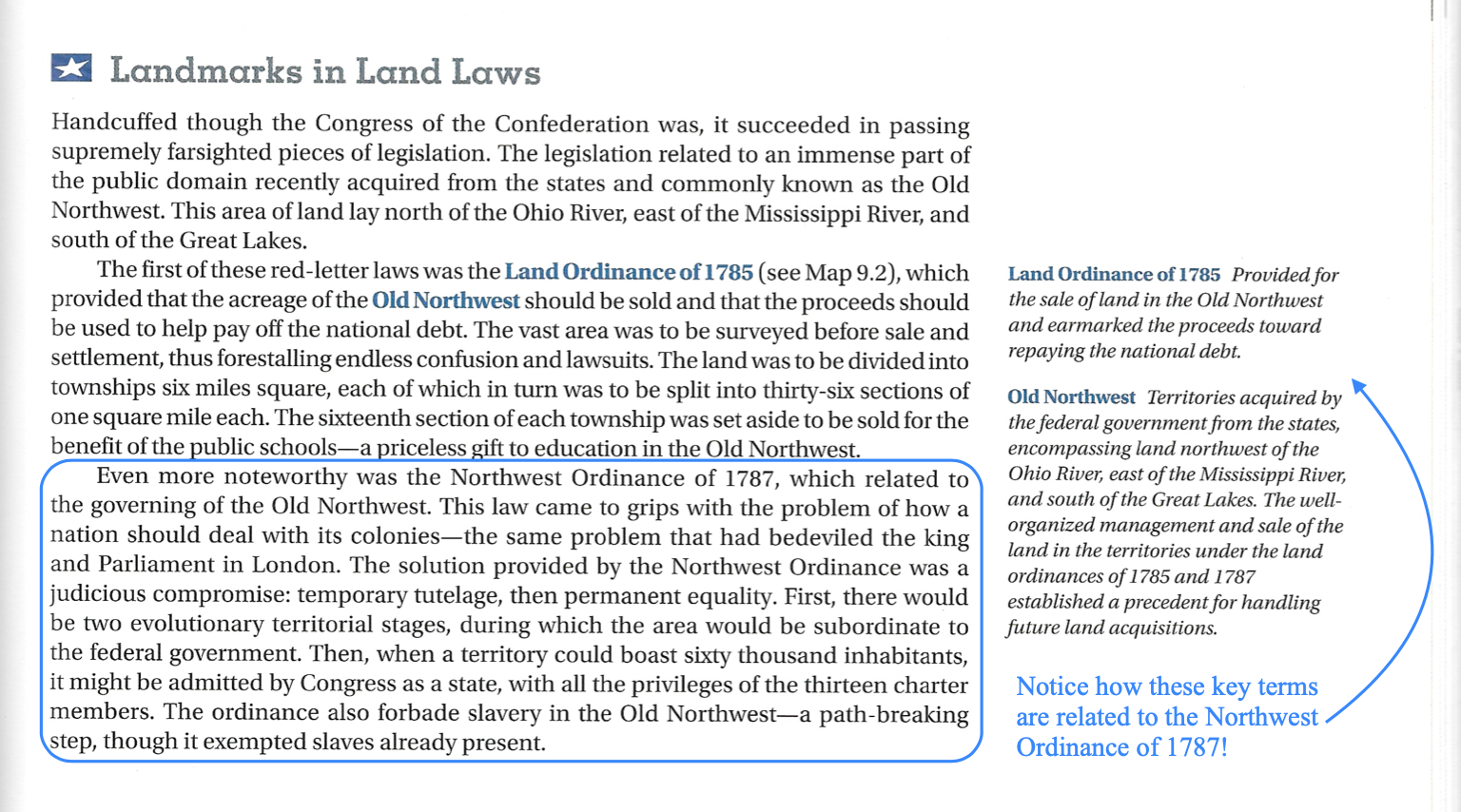
Under thee Articles of the Confederation, the Northwest Ordinance (1787) was historically significant because it established a system for adding new states to the United States. This will become increasingly important as the nation gets larger and expands further west!
0
Question 10
10.

That's all the reading due for Wednesday, 10/26/2022. Any questions?

1
IIRC.01
1
IIRC.01
Question 13
13.

1
IIRC.01
1
IIRC.01
1
IIRC.02
0
Question 17
17.

Would you rather run the country under the Articles of Constitution or the Federal Constitution? Explain why.

0
Question 18
18.

That's all the reading due for Thursday, 10/27/2022. Any questions?

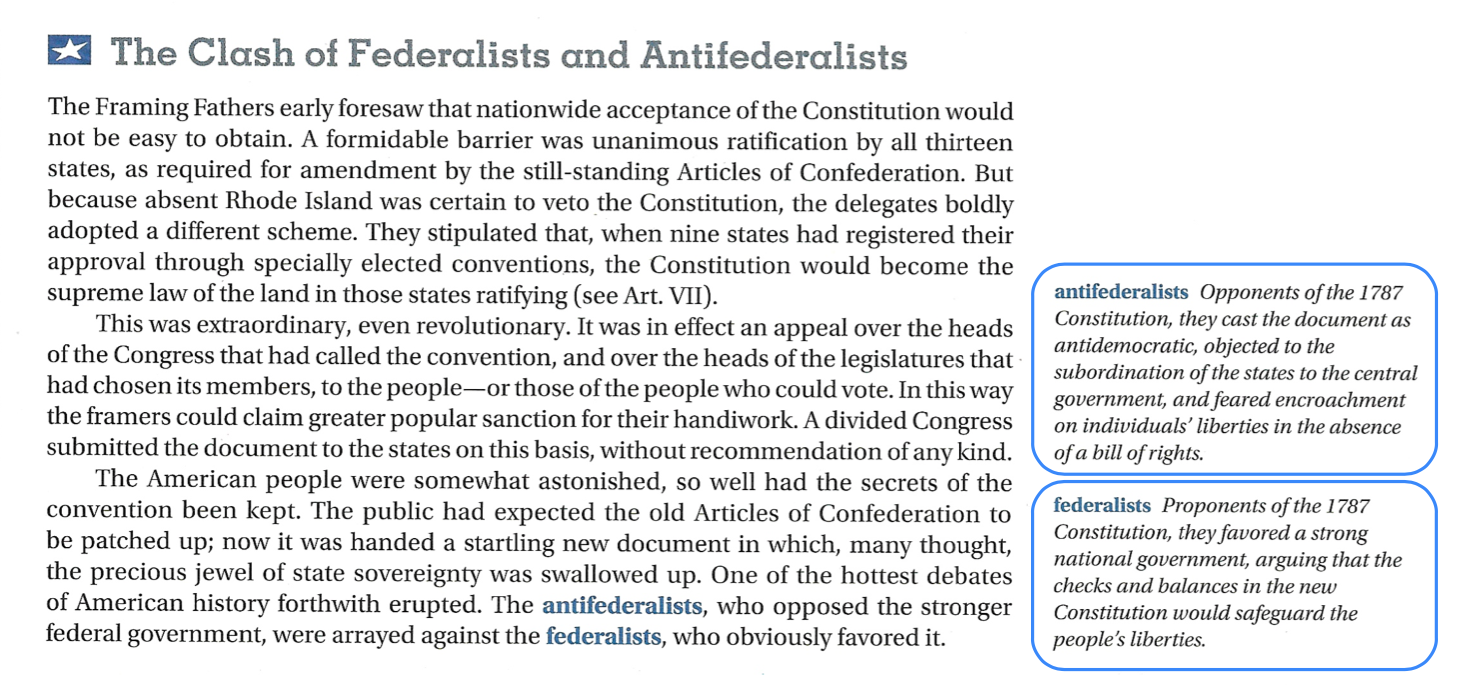
Your textbook refers to the U.S. national government in many different ways:
  • central government
  • federal government
1
Question 19
19.
In the Hamilton! musical, _______ was always at odds with Alexander Hamilton because he was an antifederalist who opposed the strong central government that he was trying to establish with George Washington.
Question 20
20.

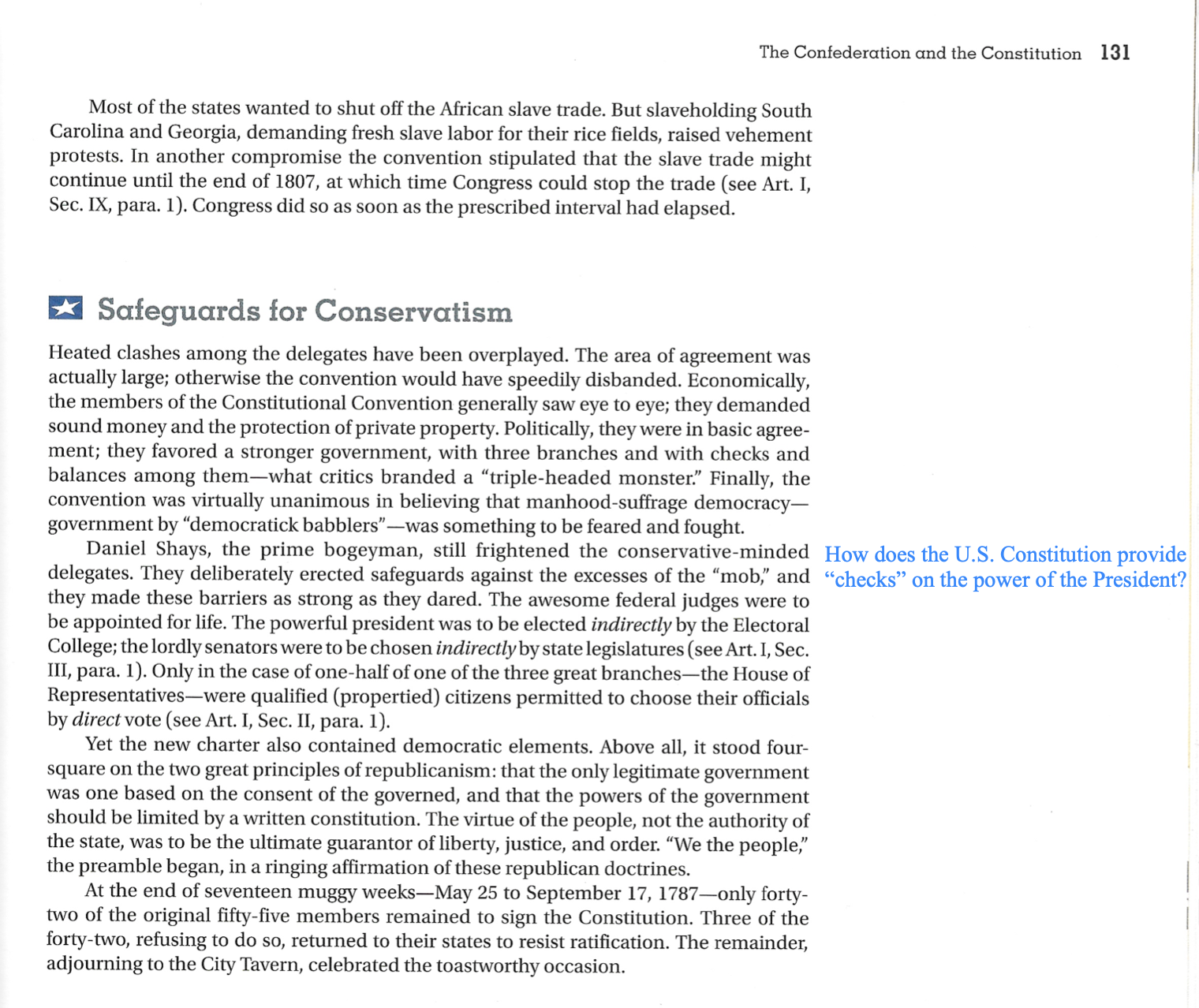
This 5-minute video briefly explains how the U.S. Constitution addresses these concerns about "checks and balances."
1
IIRC.02
1
IIRC.01
0
Question 23
23.

Based on key ideas emphasized in class, which 5 key terms or people are most important to recall from Chapter 9?

0
Question 24
24.

Way to complete the rest of the reading for Friday, 10/28/2022! Any questions?

Question 1
1.

During the Revolutionary War, the American _______ consisted mainly of able-bodied American males who received only basic training. Women played a significant part in _______ farms and businesses while men were away at war.

Some women even _______ in the Revolutionary war effort, and were referred to as “Molly Pitcher.” Pictured on the left, Molly Pitcher was not a single historical figure, but a composite folk hero inspired by the actions of _______ different people -- most of them women who carried water to troops, cooked, sewed, and even fought for the _______ cause.
Question 3
3.

Question 5
5.

Question 6
6.

Question 7
7.

Question 8
8.

Question 9
9.

Question 11
11.

Question 12
12.

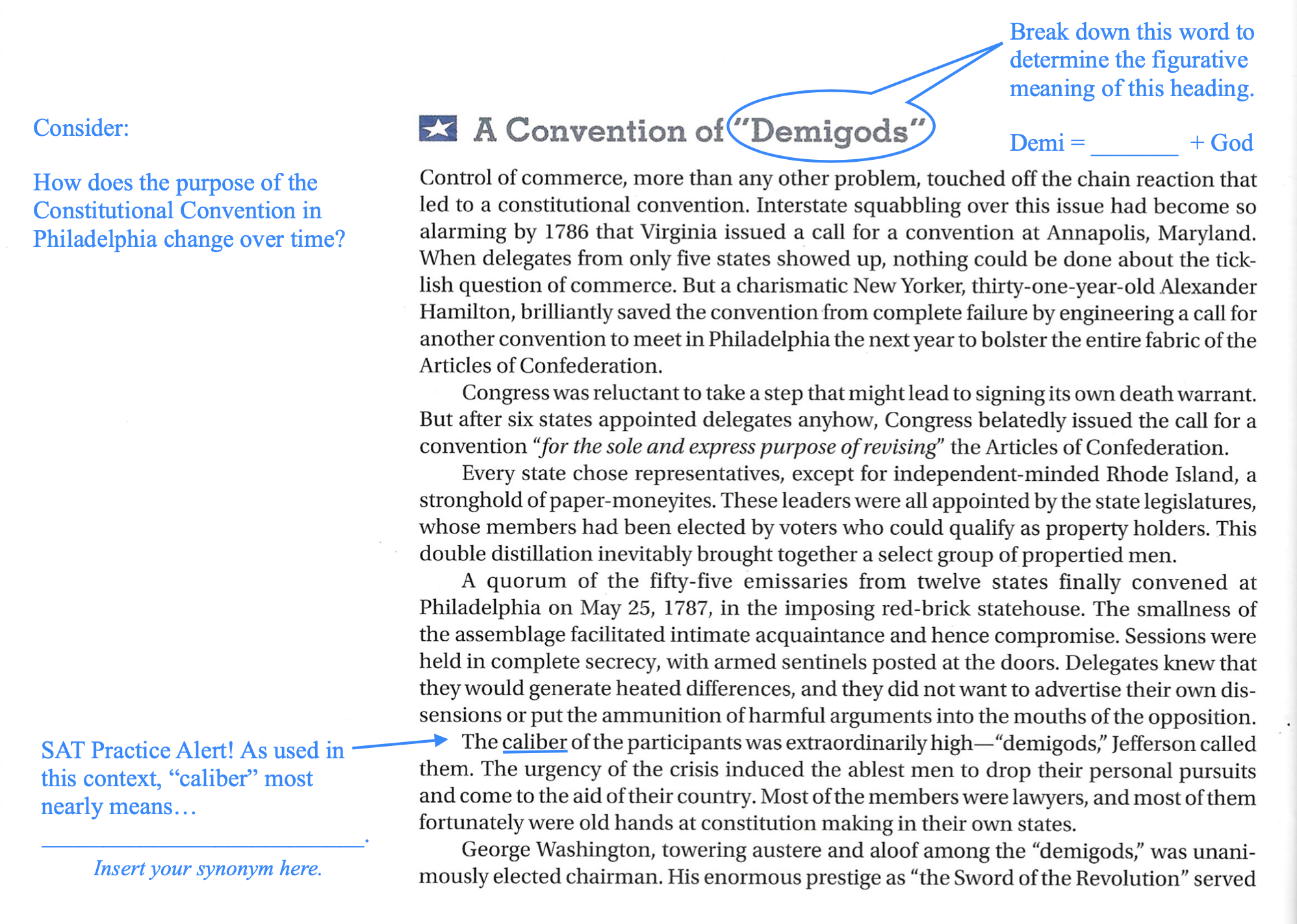
As used in line 1 of the 5th paragraph, "caliber" most nearly means
ammunition
competence
ability
social status
Question 14
14.

Question 15
15.

Question 16
16.

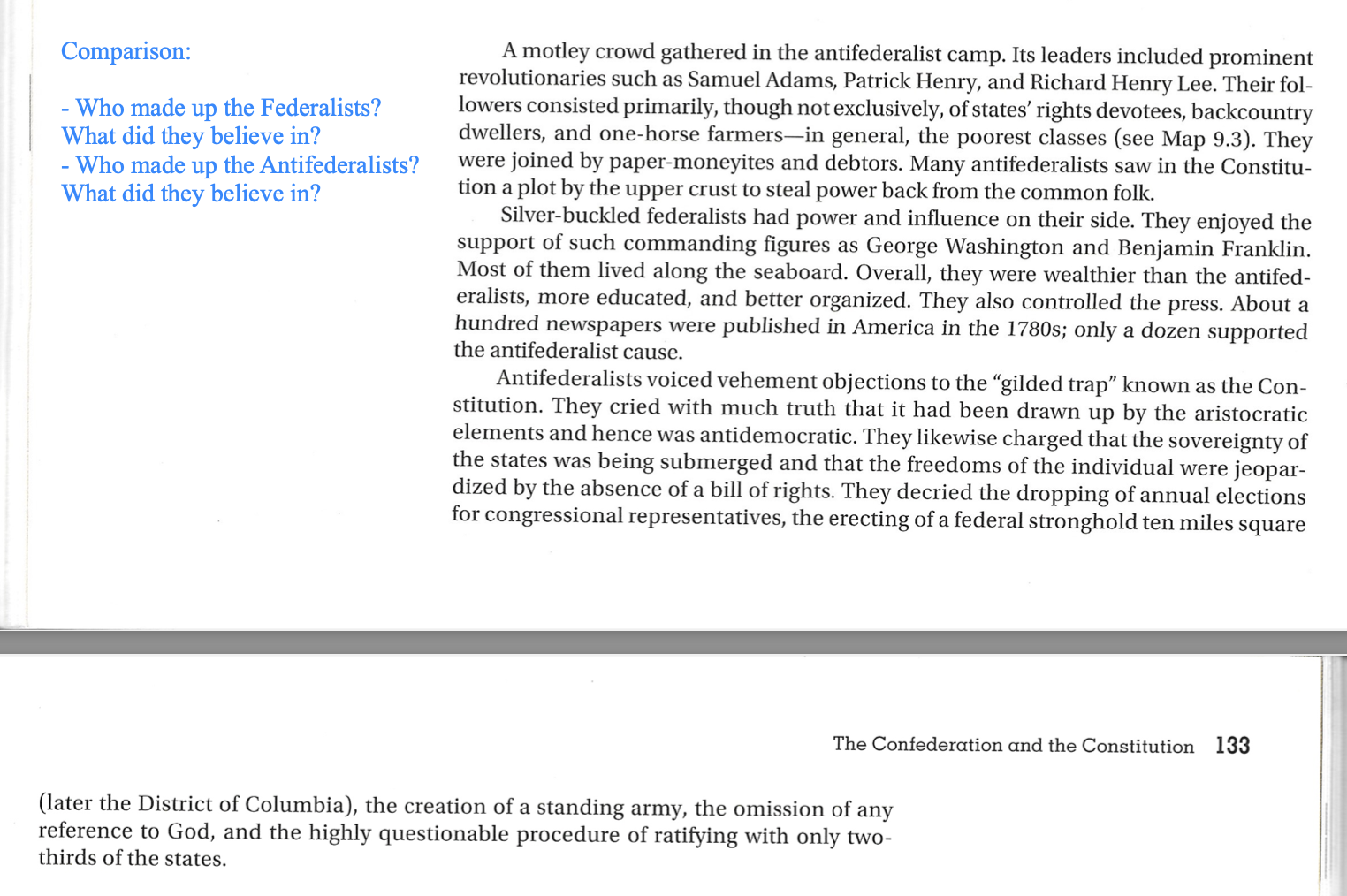
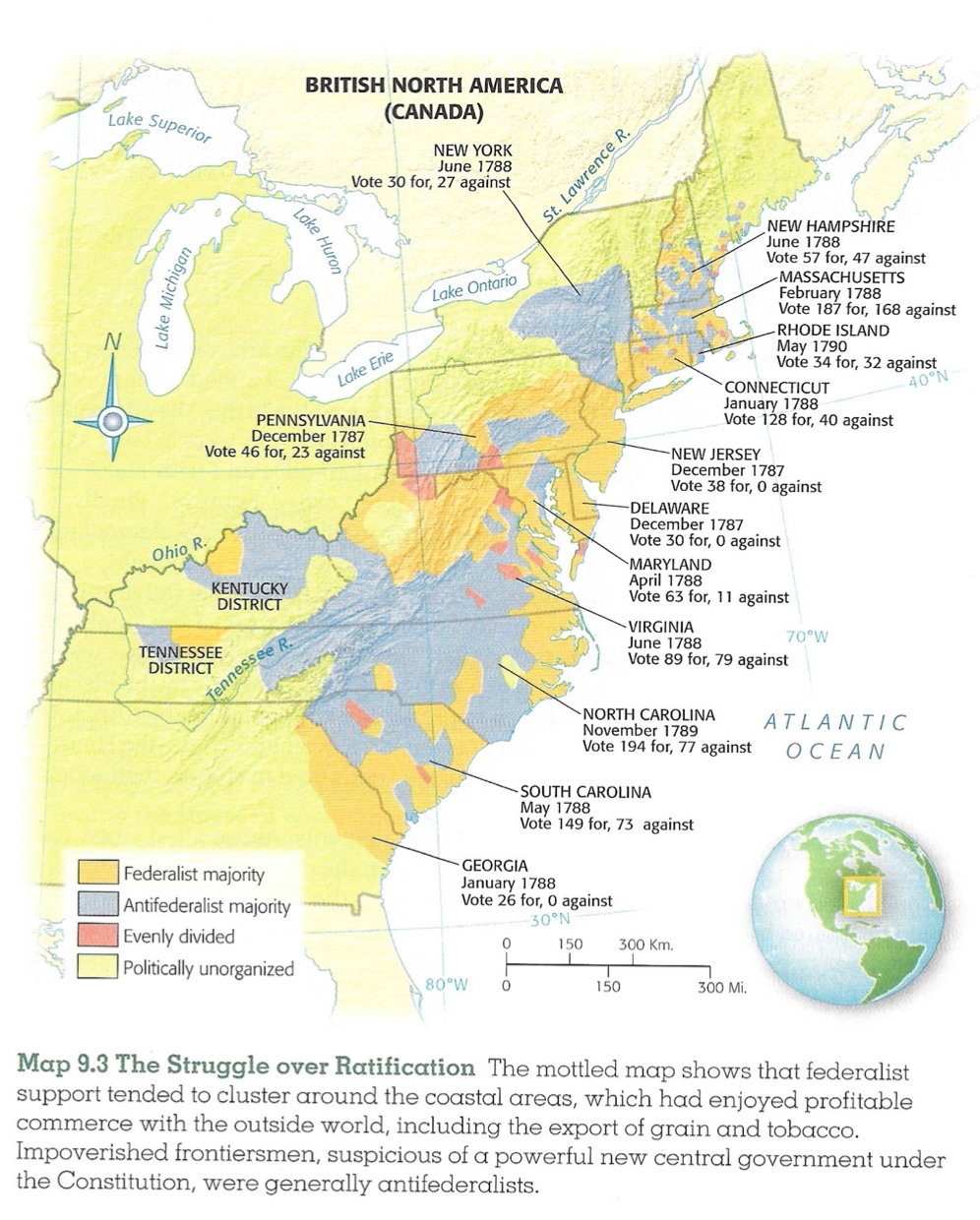
Which aspect of the new Constitution did the antifederalists find most alarming?
Creation of a standing army
Absence of a bill of rights
Creation of a federal district for the national capital
Omission of any reference to God
Question 21
21.

Question 22
22.

Make sure you submit on Formativen and on Google Classroom!
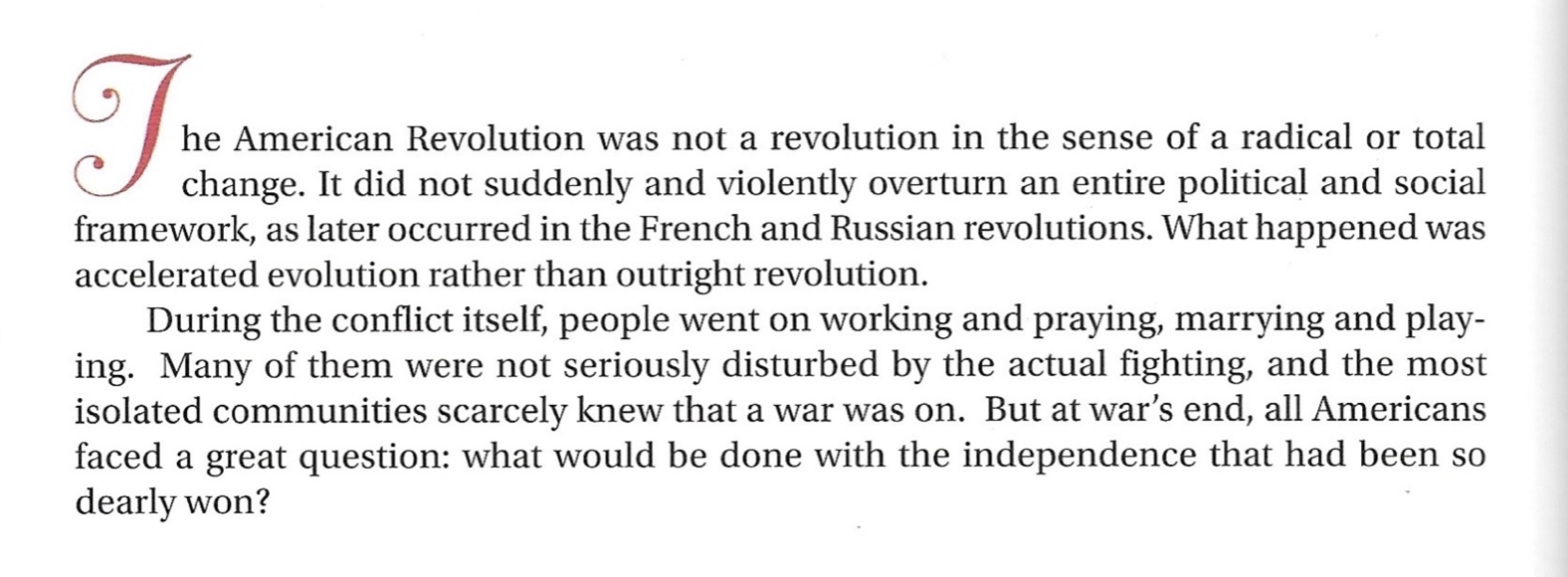
Review: What is the difference between the American Revolution and the Revolutionary War?
The American Revolution refers to the causes of the War for Independence, whereas the Revolutionary War is another name for the Seven Years War.
There is no difference. Both terms refer to America's fight for independence from Great Britain.
The Revolutionary War refers to the actual reasons why we wanted to seek independence from Great Britain, whereas the American Revolution refers to what happened afterwards.
The American Revolution refers to the causes of the American desire to become independent from England, whereas the Revolutionary War is the actual war, itself.
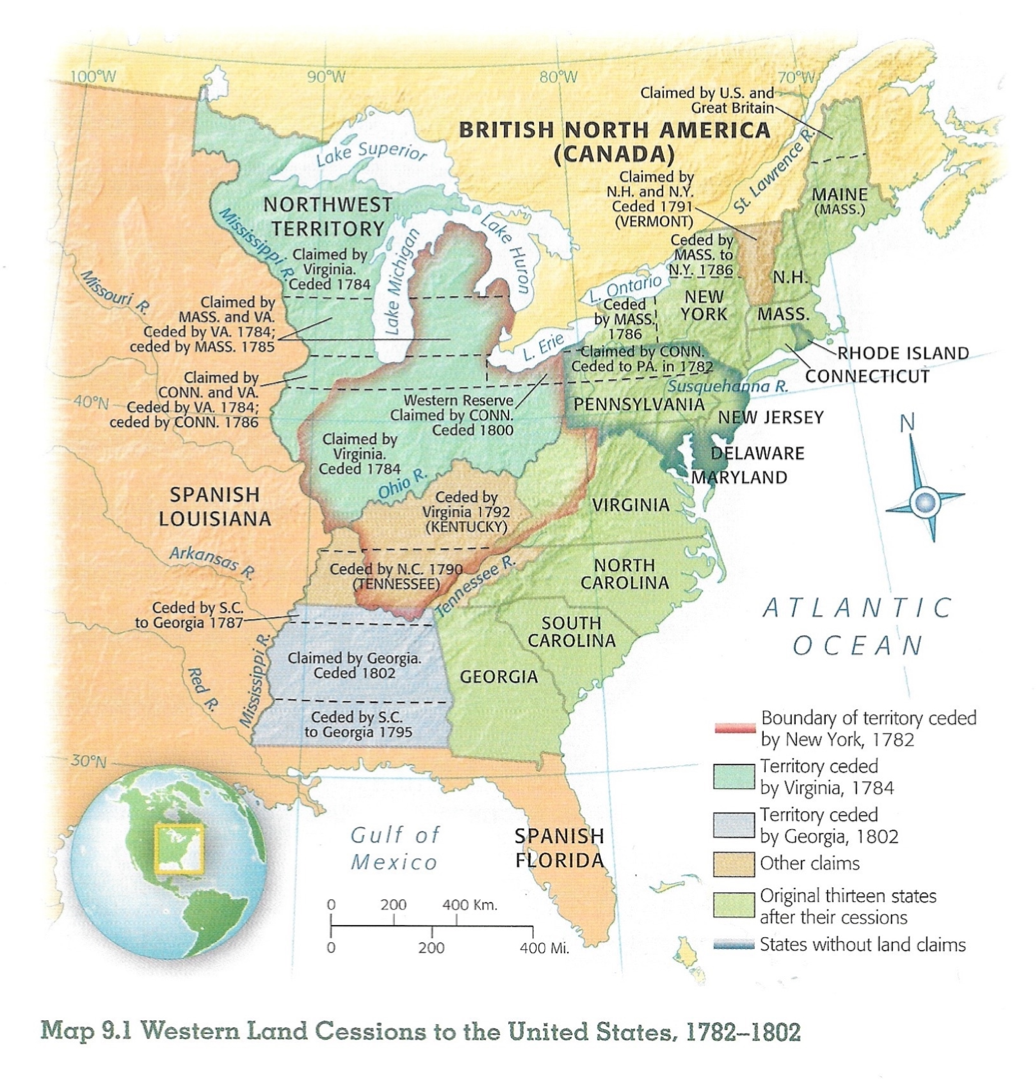
According to the map, all of the following were part of the Treaty of Paris (1793) that ended the Revolutionary War EXCEPT
All territory west of the Mississippi River between Canada & Florida
Full American independence
The removal of the British army from U.S. claims in America
Fishing rights in the Atlantic Ocean
Review: What is the historical time period that inspired the American Revolution with ideas of "natural rights" and political philosophy?
European Colonization
Atlantic System
Seven Years War
European Enlightenment
Let's check our understanding of federalism: Which of the following is an example of federalism within the Legislative branch?
President Biden > Governor Pritzker > Mayor Lightfoot
Congress > State Legislative Assembly > Chicago City Council
Bulls Prep > Student Council > Advisory
Supreme Court > District Court > Local Courts
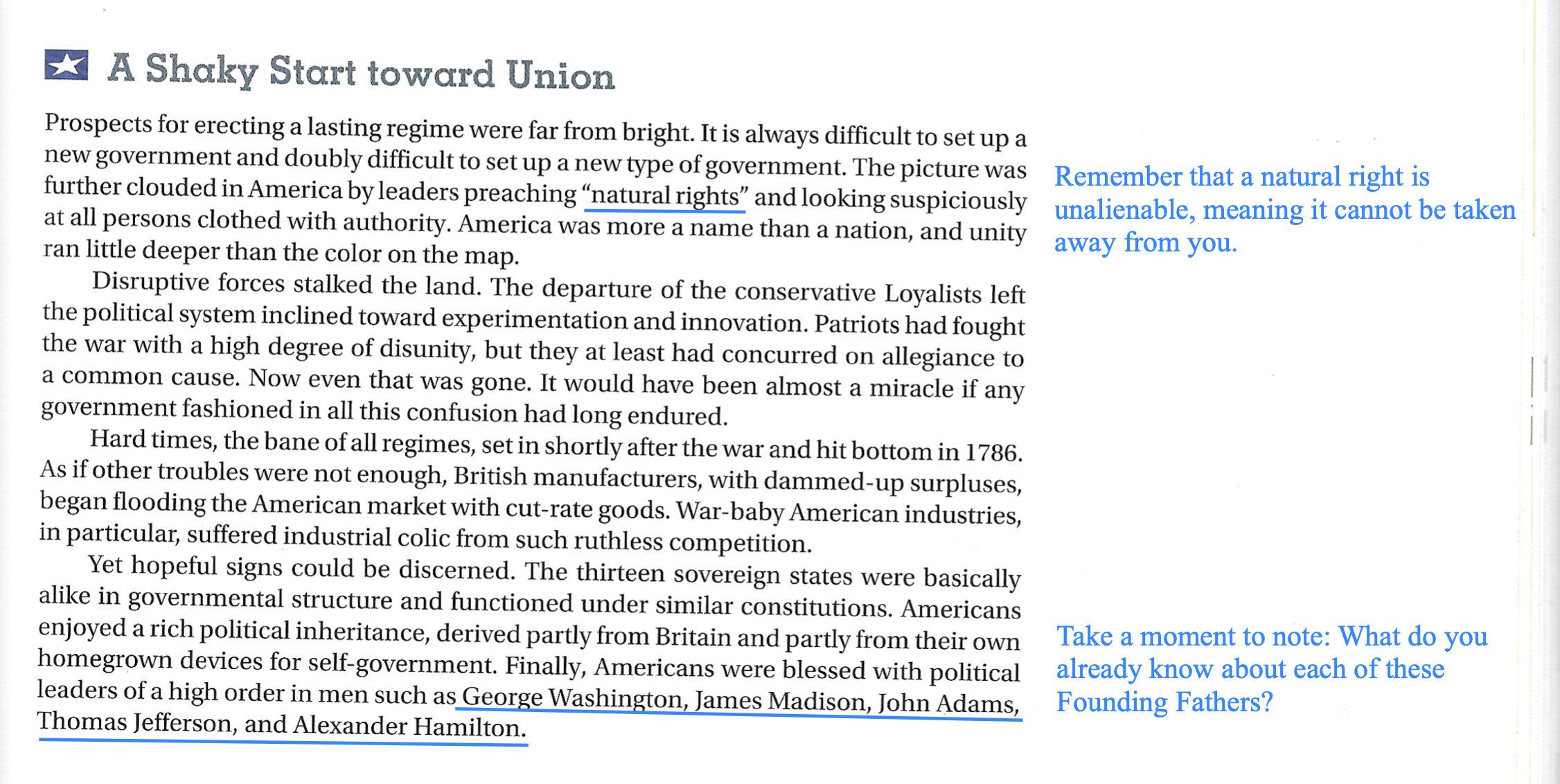
Why was it difficult to set up a new government in post-Revolutionary America?
Economic problems after the war complicated the situation for the new nation.
The states had little experience with self-government and unsure how to proceed.
Few people wanted to serve as political leaders.
Each of the thirteen sovereign states had their own unique form of government.
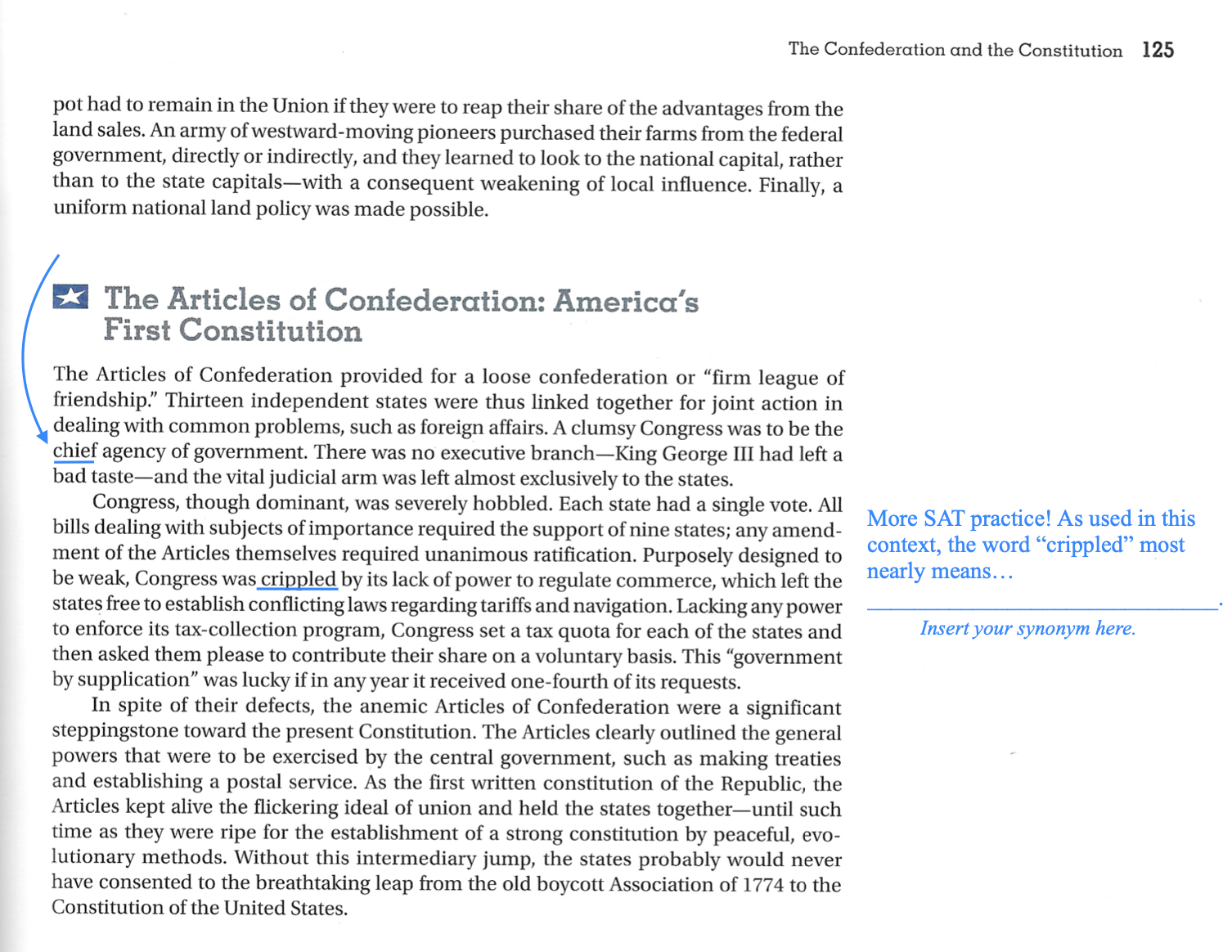
What purpose did the Articles of Confederation serve during the Revolutionary War?
It created a strong central government to better wage the war on Britain.
It was the document that truly made America independent.
It was held up to France as proof that America had a government.
It freed slaves to fight for the Patriots.
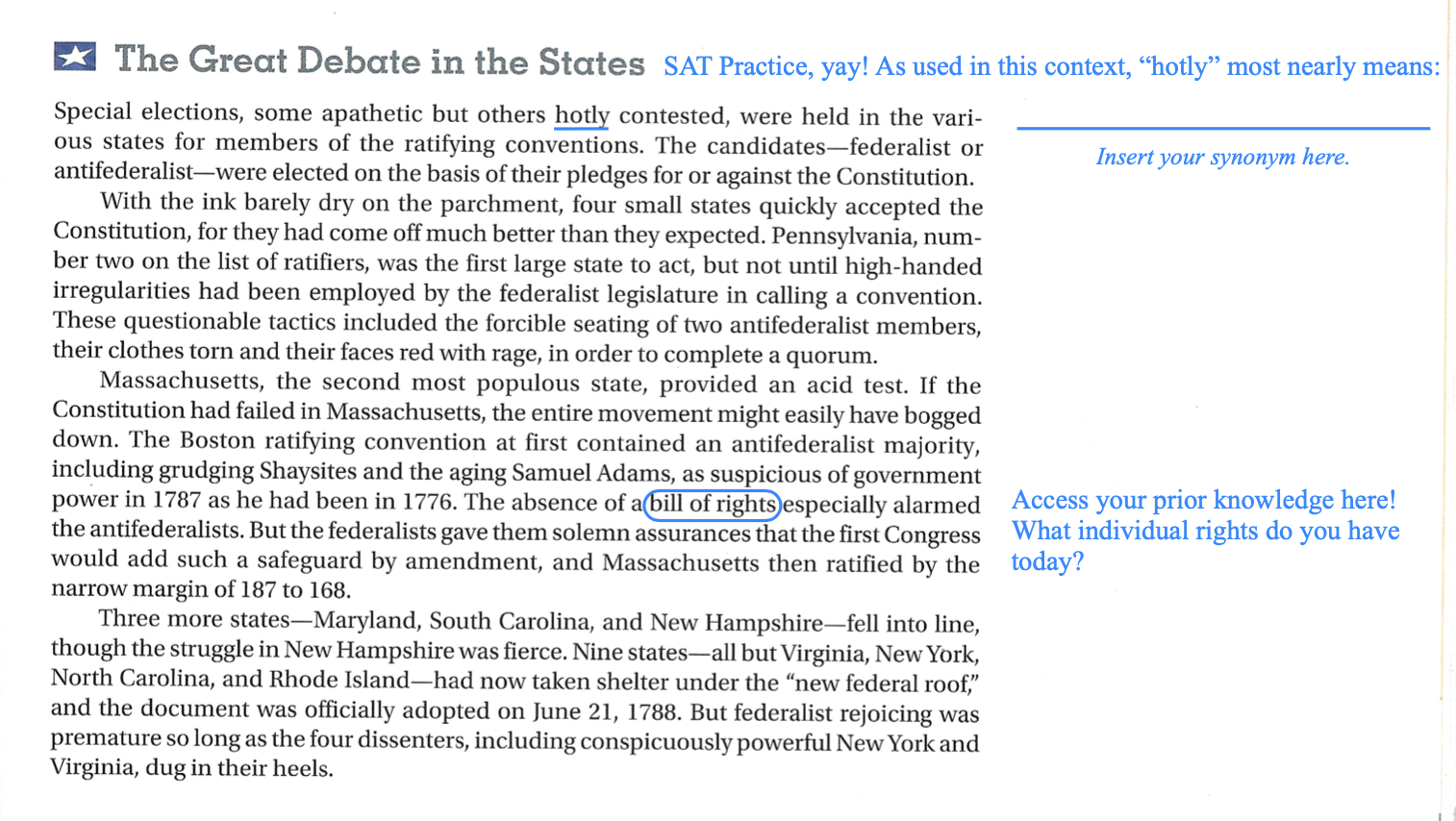
As used in line 4 of the second full paragraph, "crippled" most nearly means
strengthened
weakened
impaired
injured
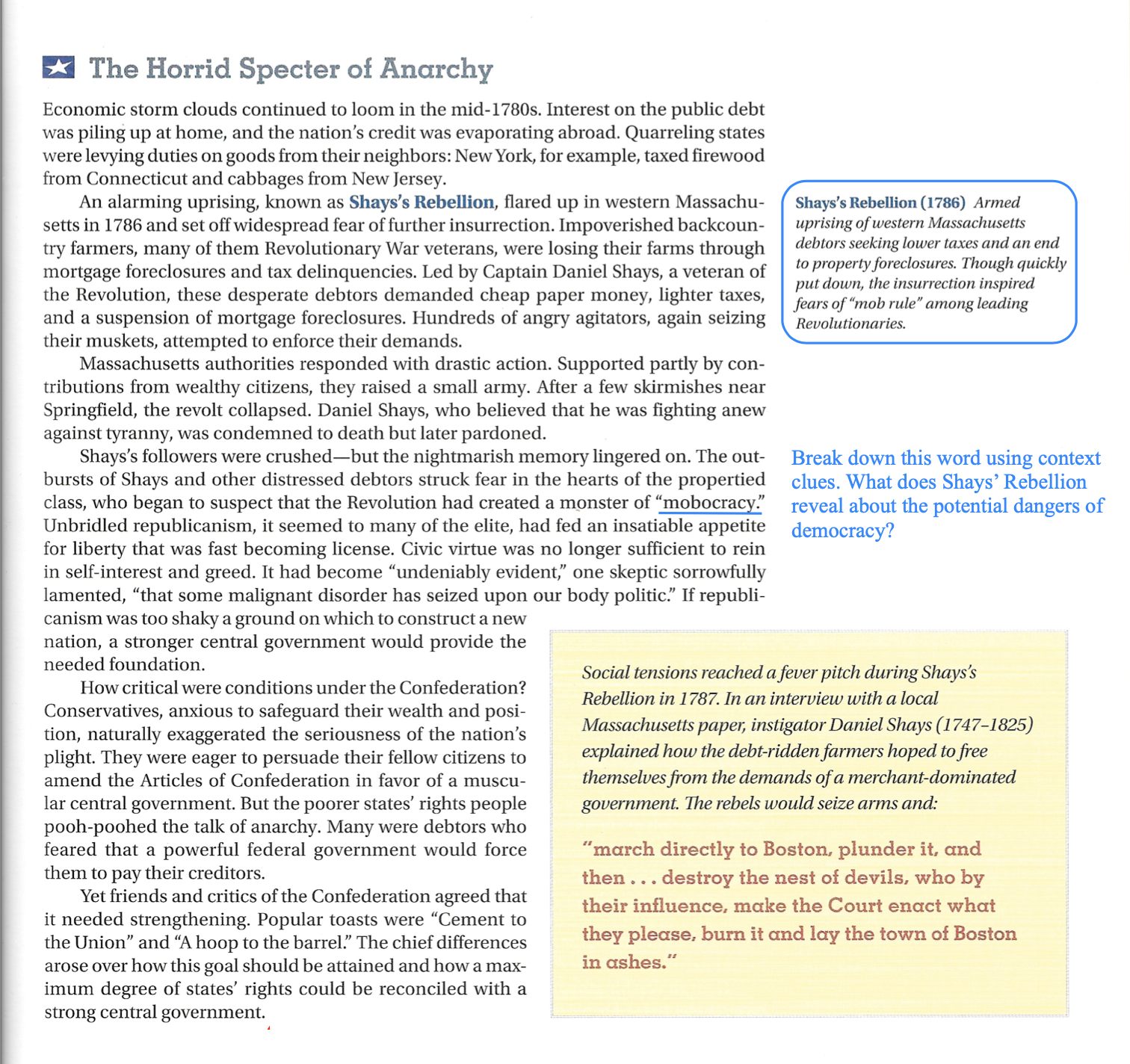
Shays' Rebellion convinced many Americans of the need for
a stronger military to halt the Indian threat.
a weaker military presence in the West.
a stronger central government.
granting pensions to Revolutionary War veterans.
The Constitutional Convention of 1787 was called to
allow the most radical Revolutionary leaders to write their ideas into law.
write a completely new constitution.
revise the Articles of Confederation.
weaken the power of the central government.
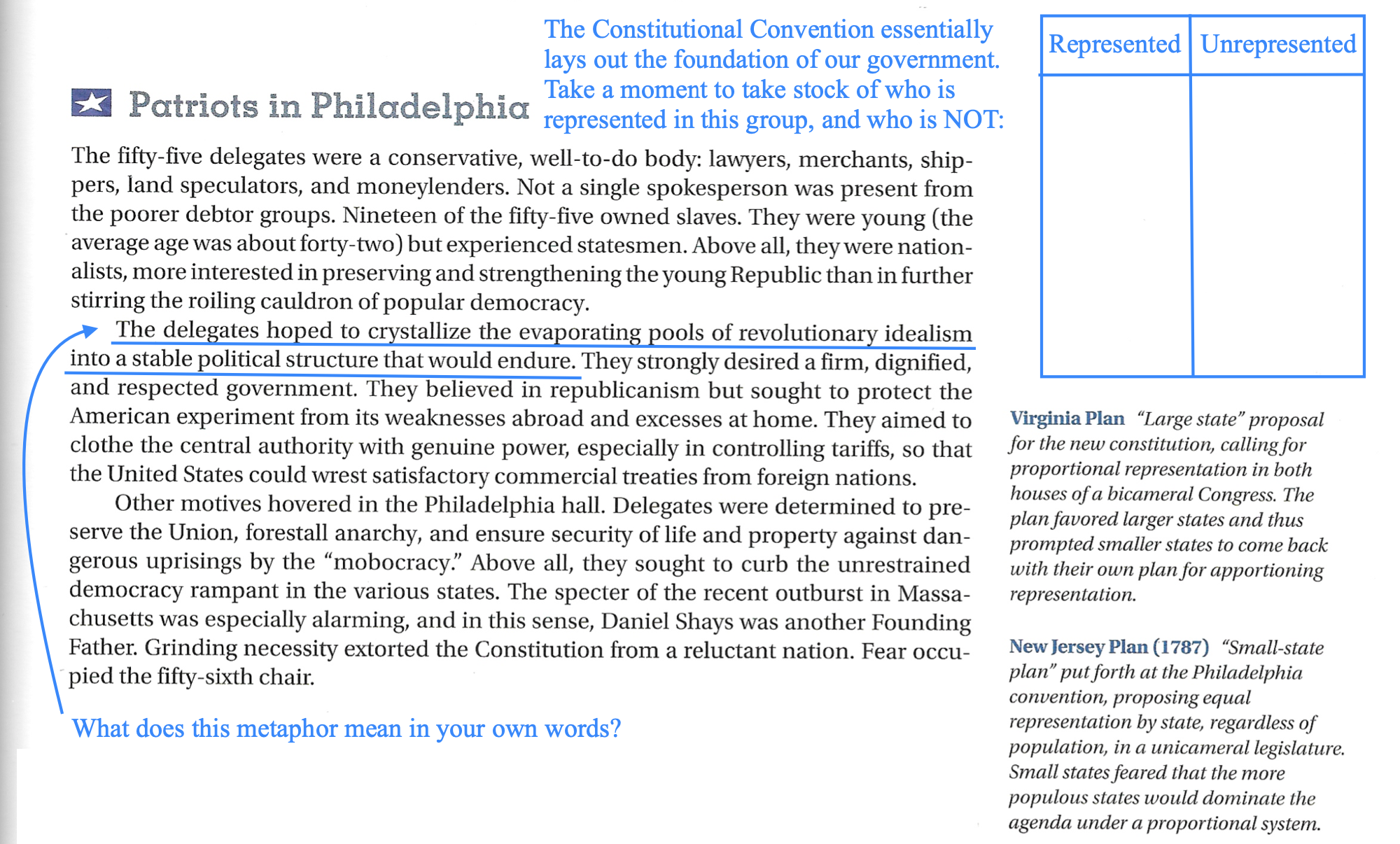
Who in American society was NOT represented in the Constitutional Convention? [Check all that apply]
Slaveowners
Poor Debtors
Working Professionals
The Enslaved
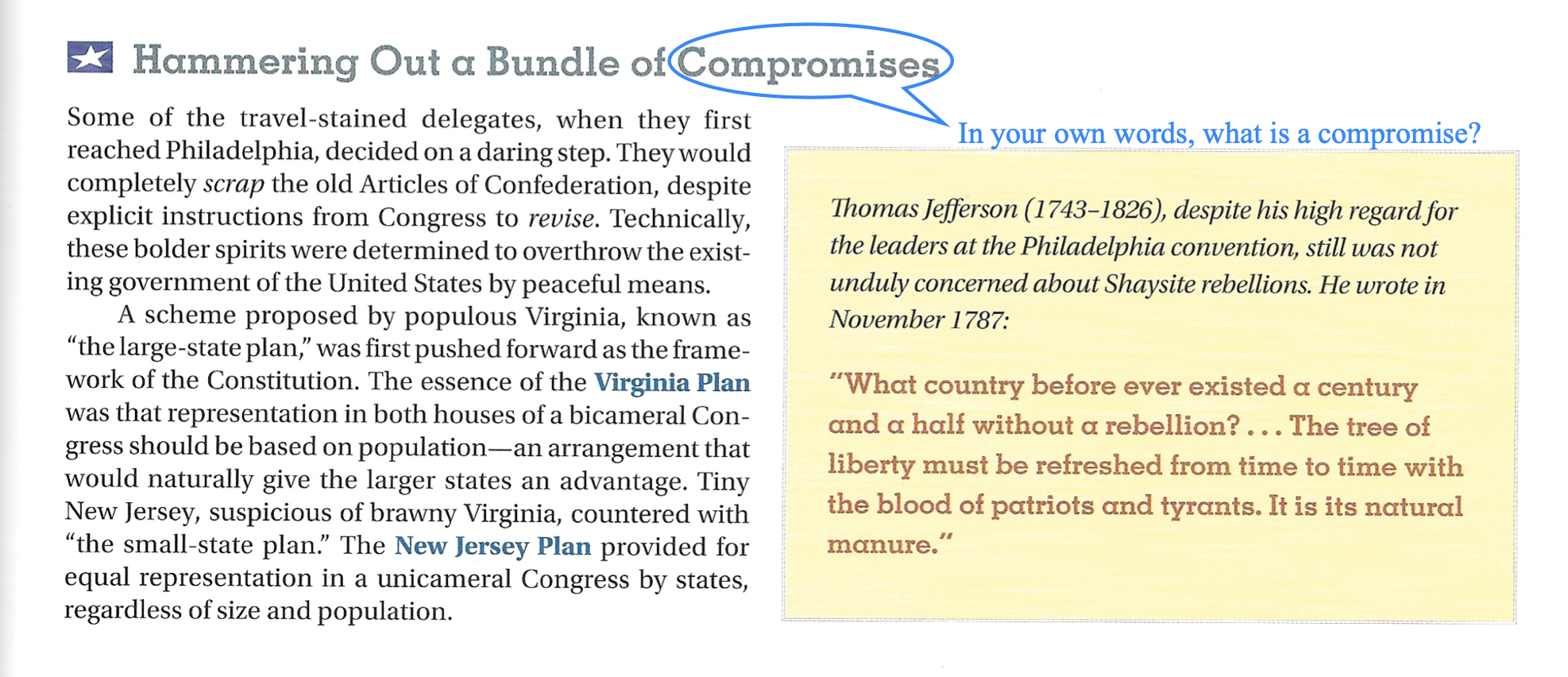
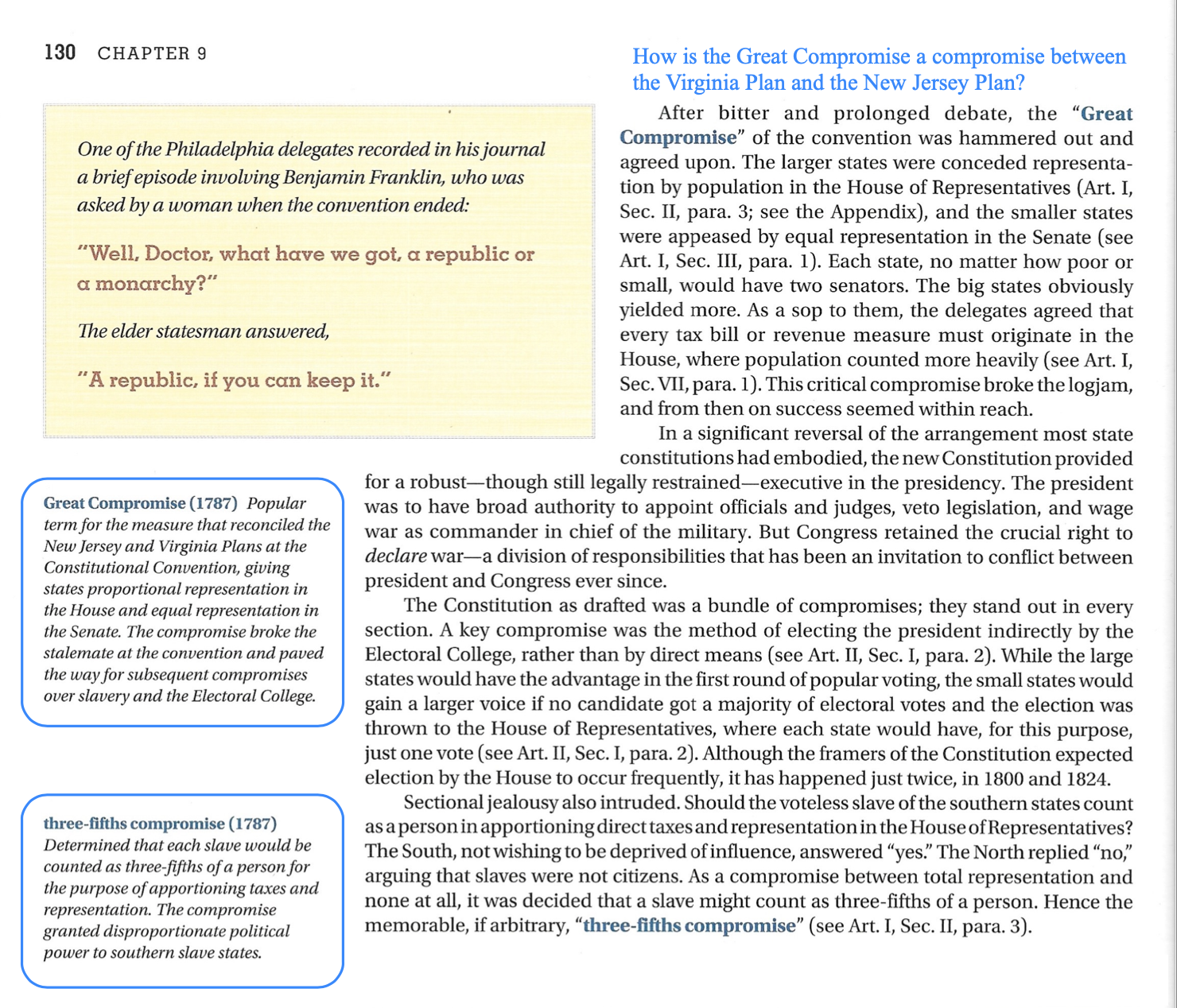
The "large-state plan," or Virginia Plan, put forward in the Constitutional Convention
uniformly favored southern states over northern states.
uniformly favored rural states over urban states.
ultimately provided the final congressional framework of the Constitution.
based representation in the House and Senate on population.
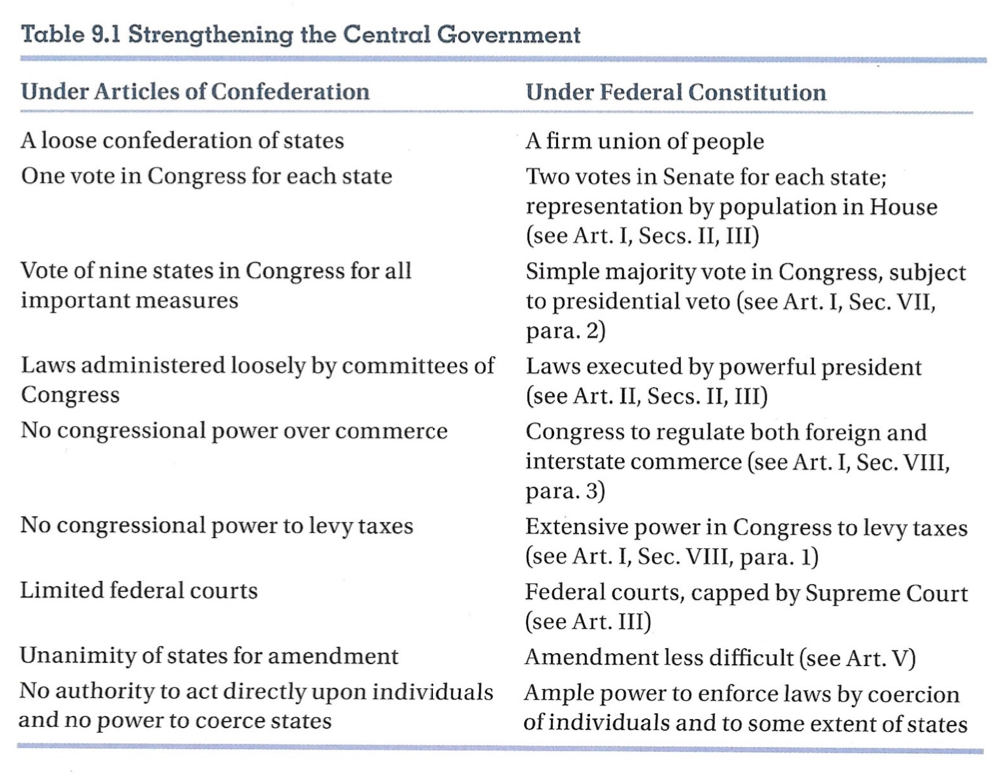
What issue did the three-fifths compromise address?
How many future new states could be slaveholding areas
How many states were required to ratify Constitutional amendments
How many delegates would have to sign the Constitution to propose it for ratification
Whether and how to include slaves when apportioning representation based on population
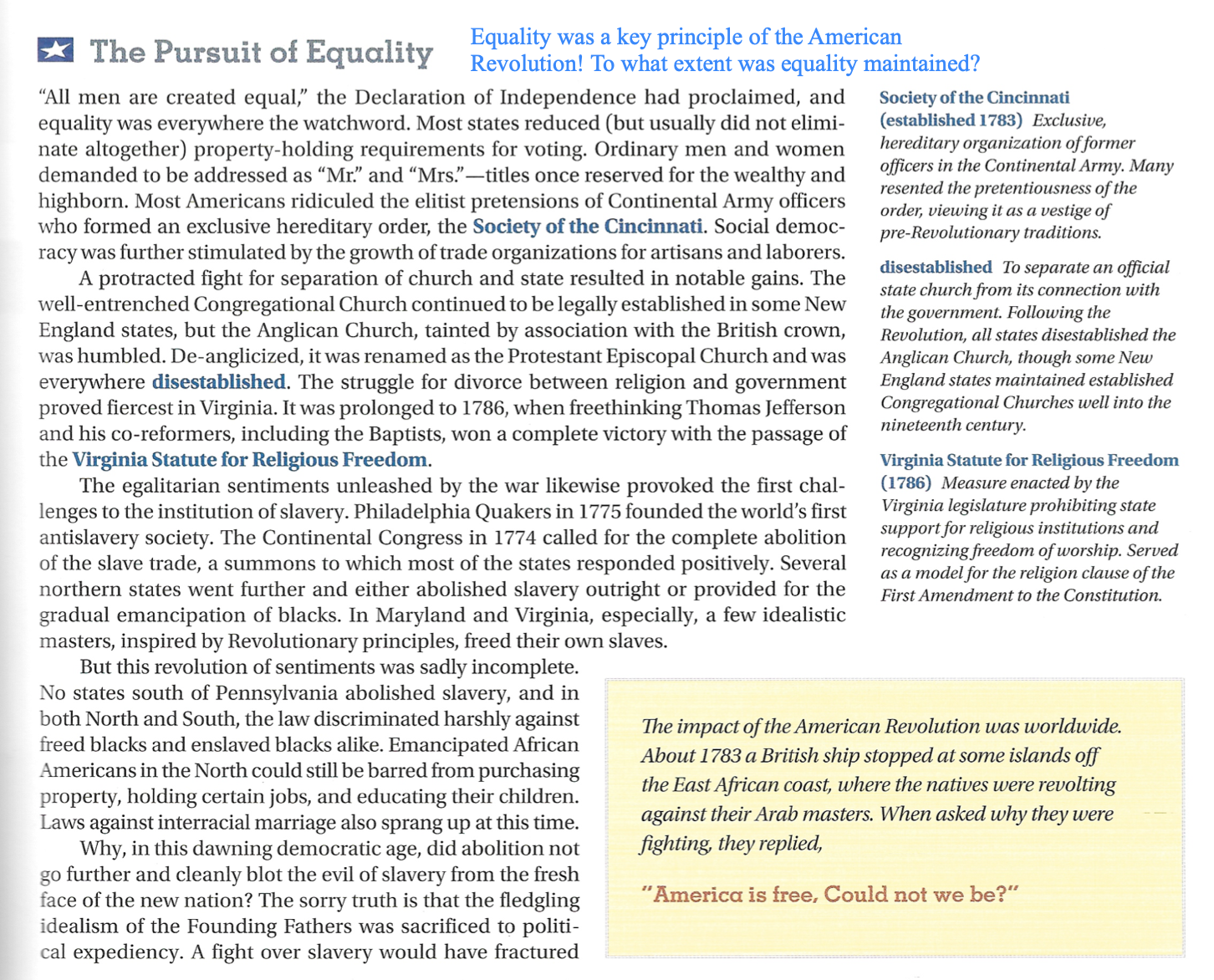
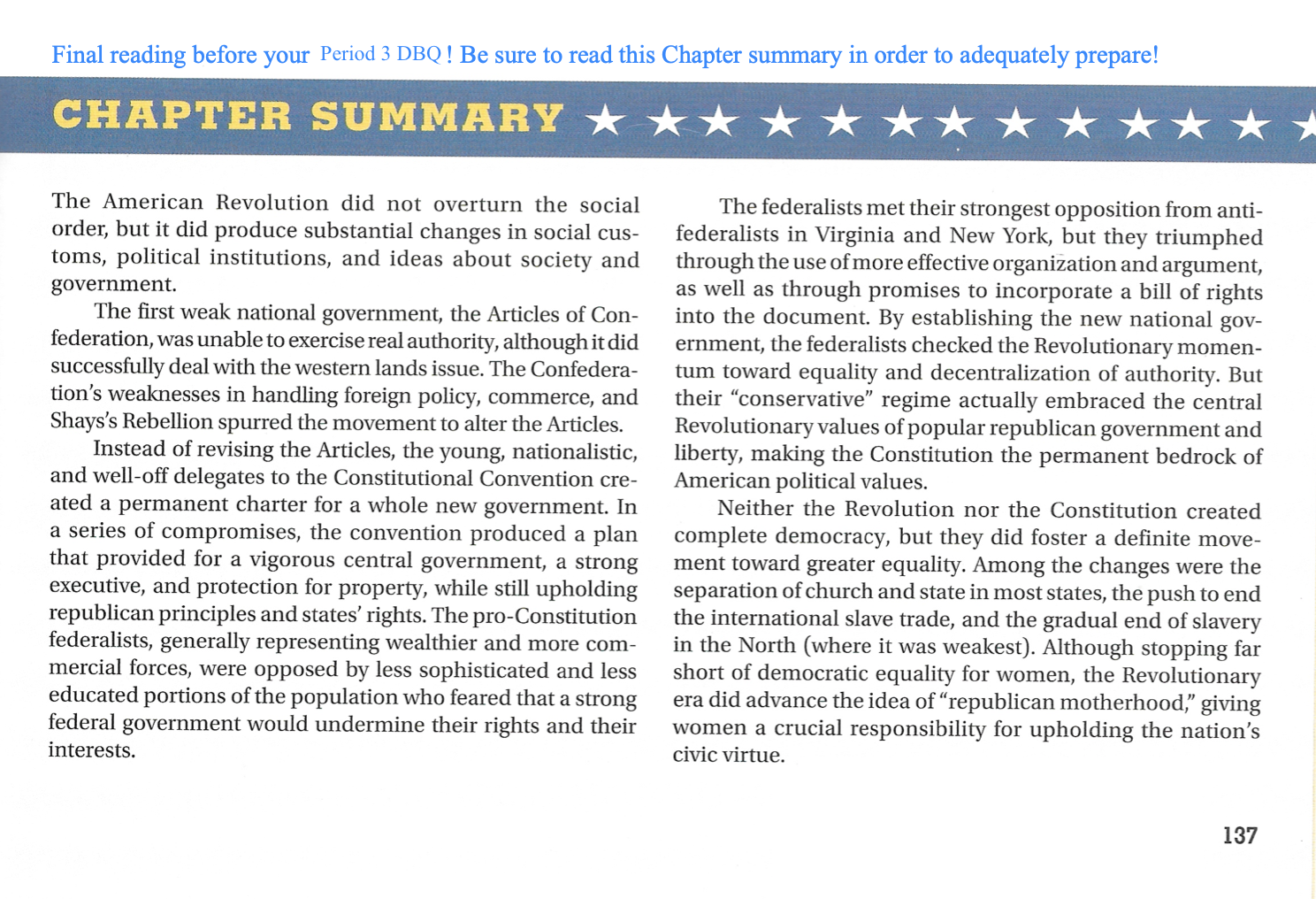
Why did the Founders largely avoid addressing the question of whether to end slavery?
They were more concerned with securing equality for white men and women.
They expected that the North would come to rely more heavily on slave labor.
They feared a fight over slavery might destroy national unity.
They did not see it as a crucial issue for their new democracy.
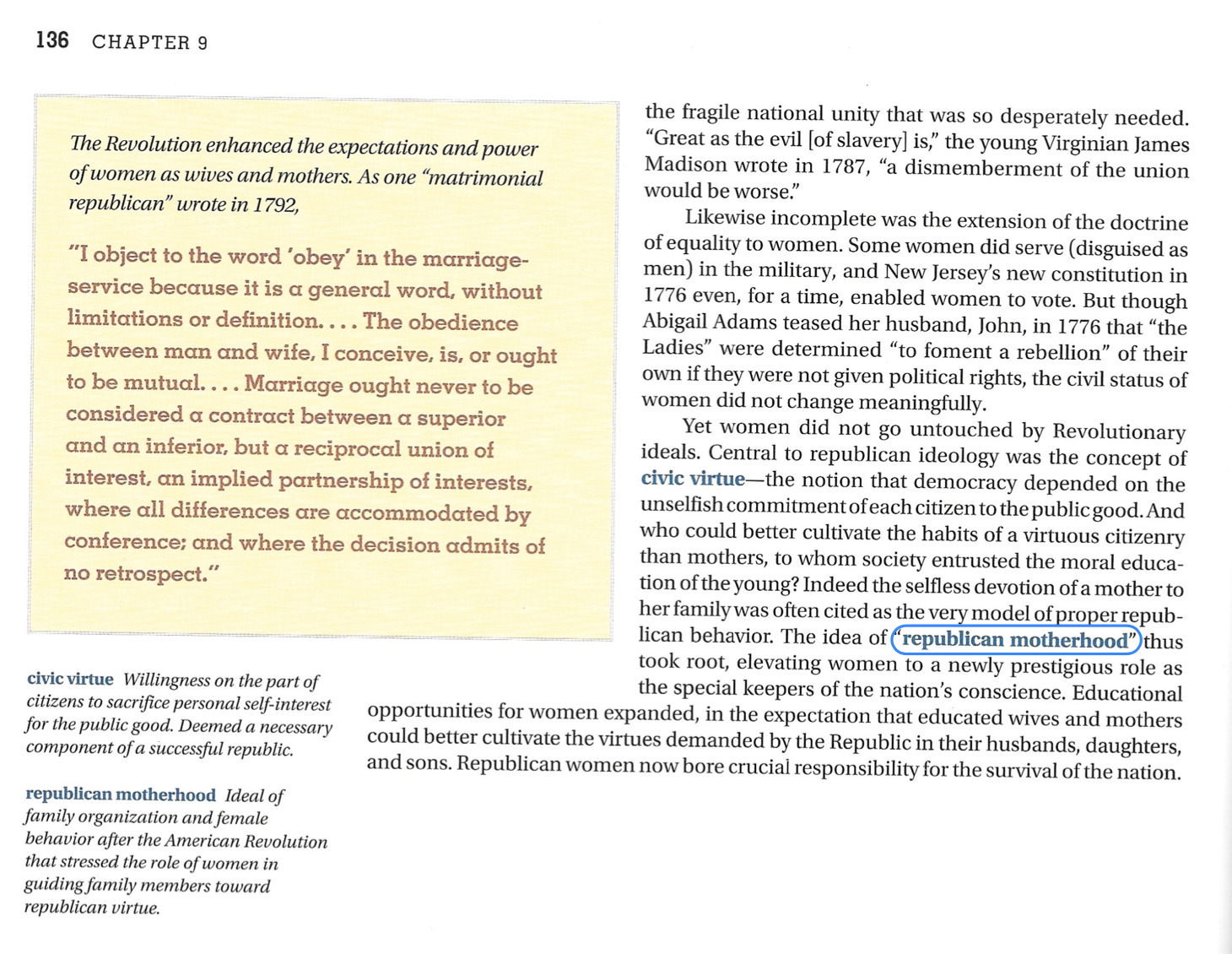
The republican motherhood, was one of the most important outcomes of the Revolution for white women because they were
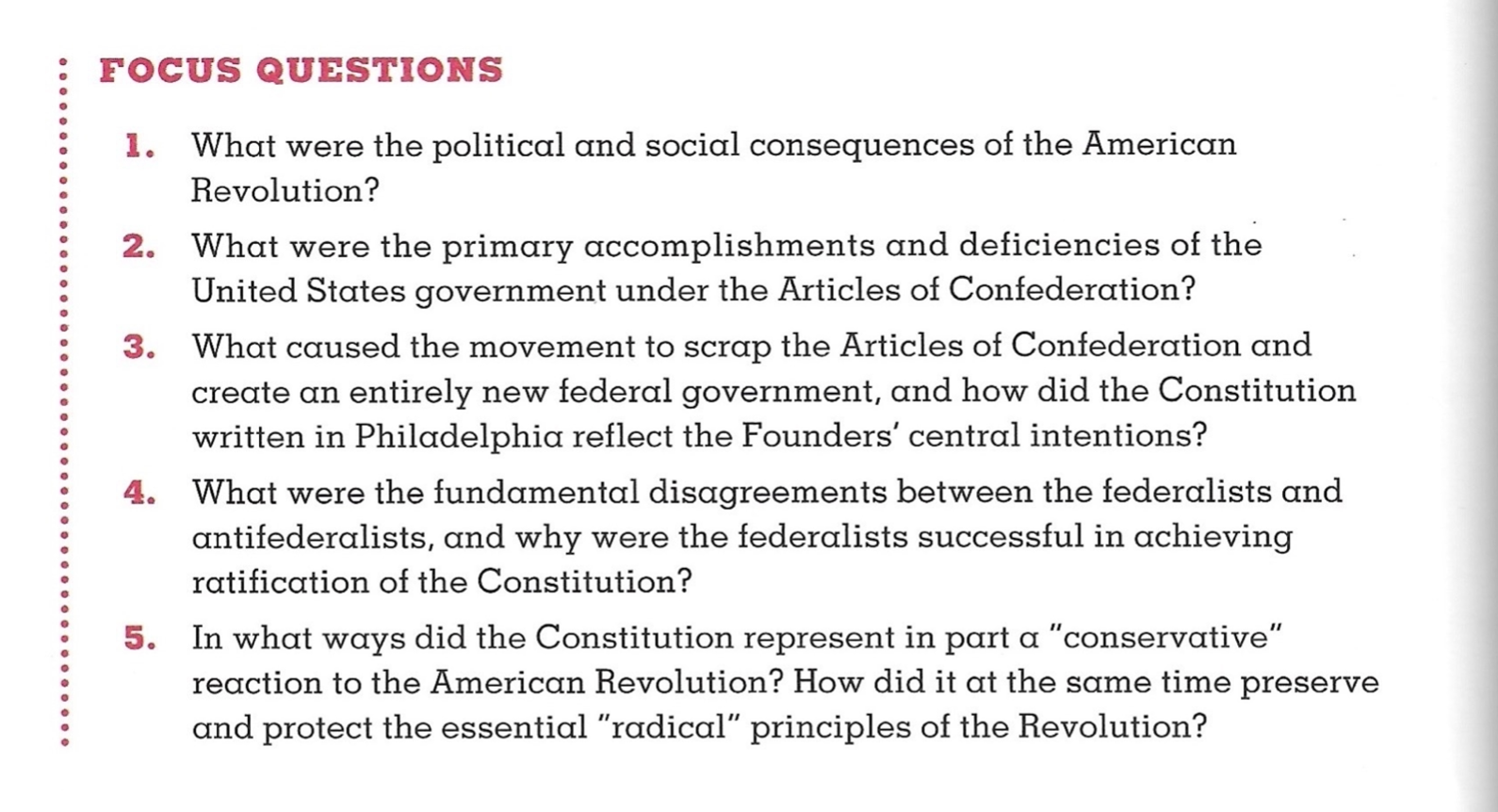
elevated to a prestigious role as keepers of the nation's conscience.
permanently gained the right to vote.
allowed to serve in the national legislature.
able to enter a wide range of professions.