1
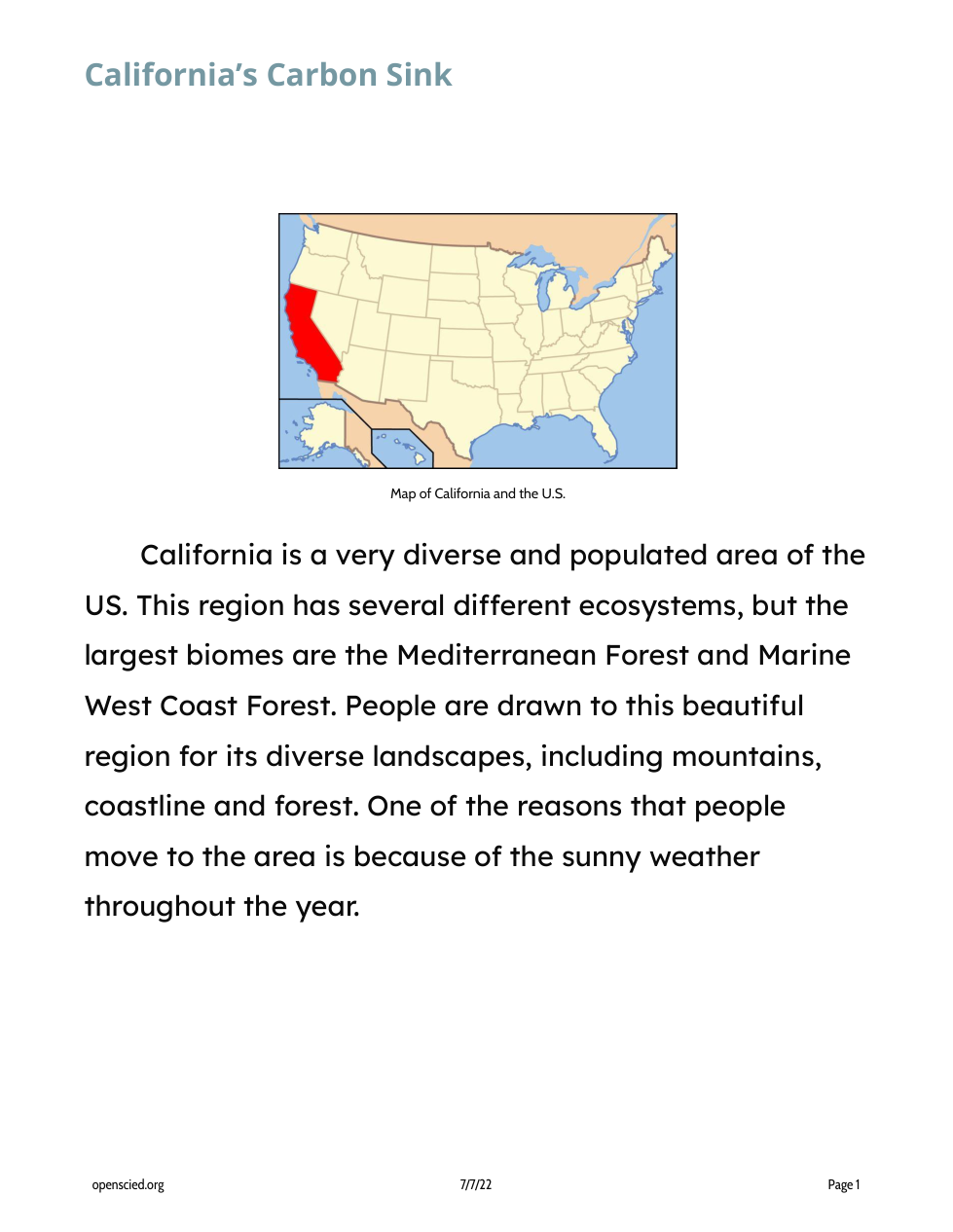
What two biomes are found in California?
What two biomes are found in California?
Draw an initial model to explain What is making this ecosystem more likely to burn?
include: trees, animals, people, environmental conditions. You can draw on paper or on the computer
What two biomes are found in California?
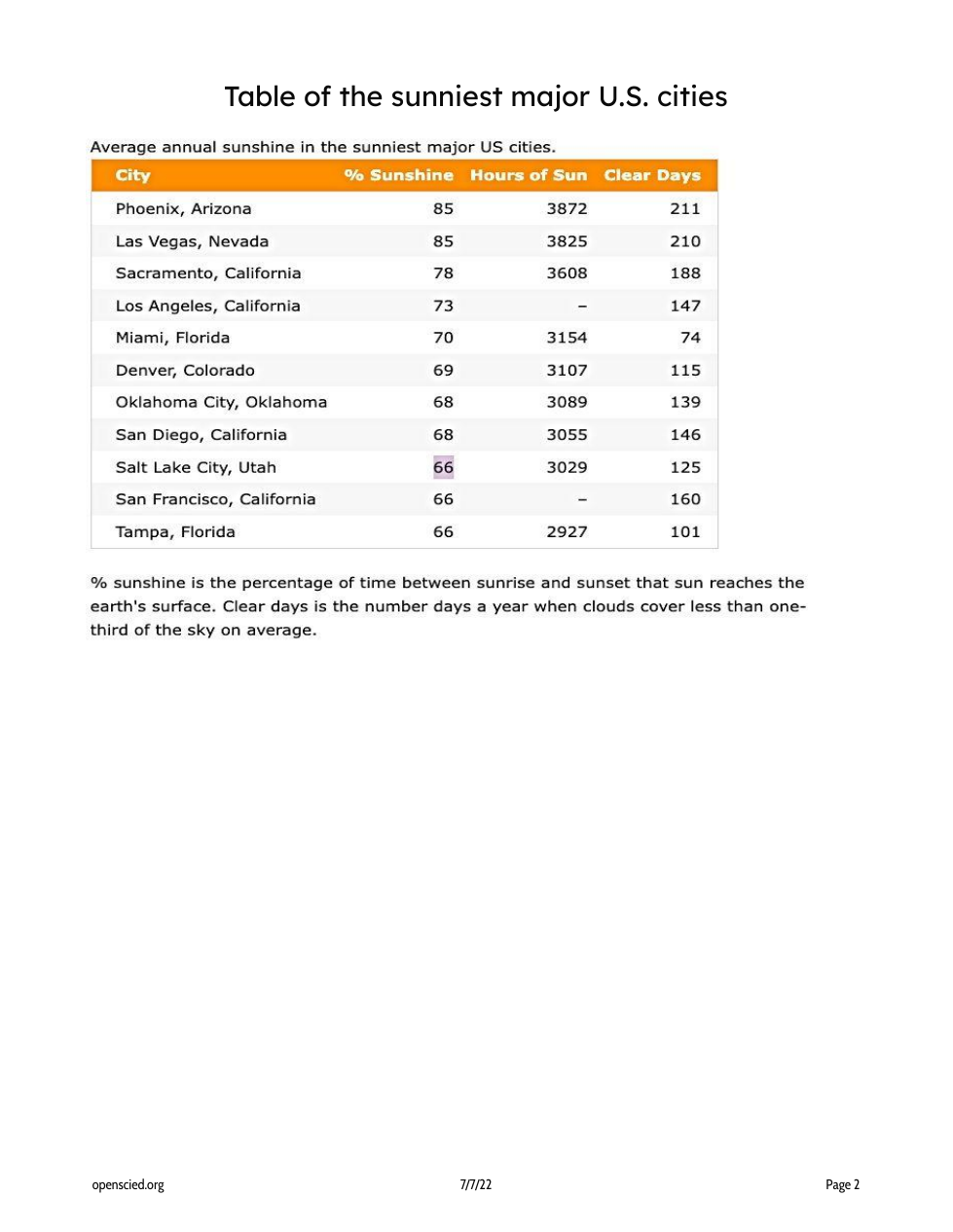
Make TWO notices about the Table of the sunniest major US cities
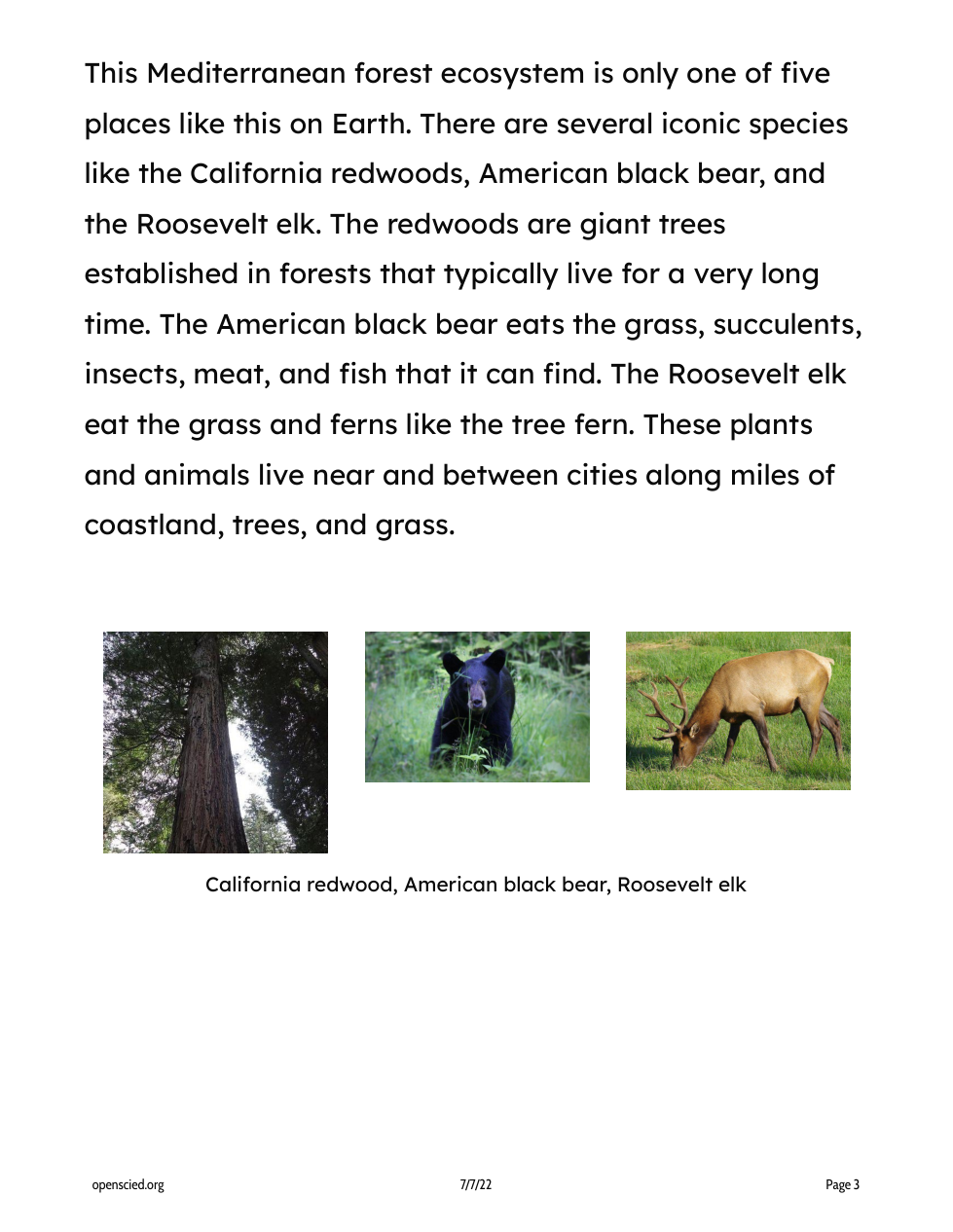
Name one iconic species that is found in the Mediterranean forest
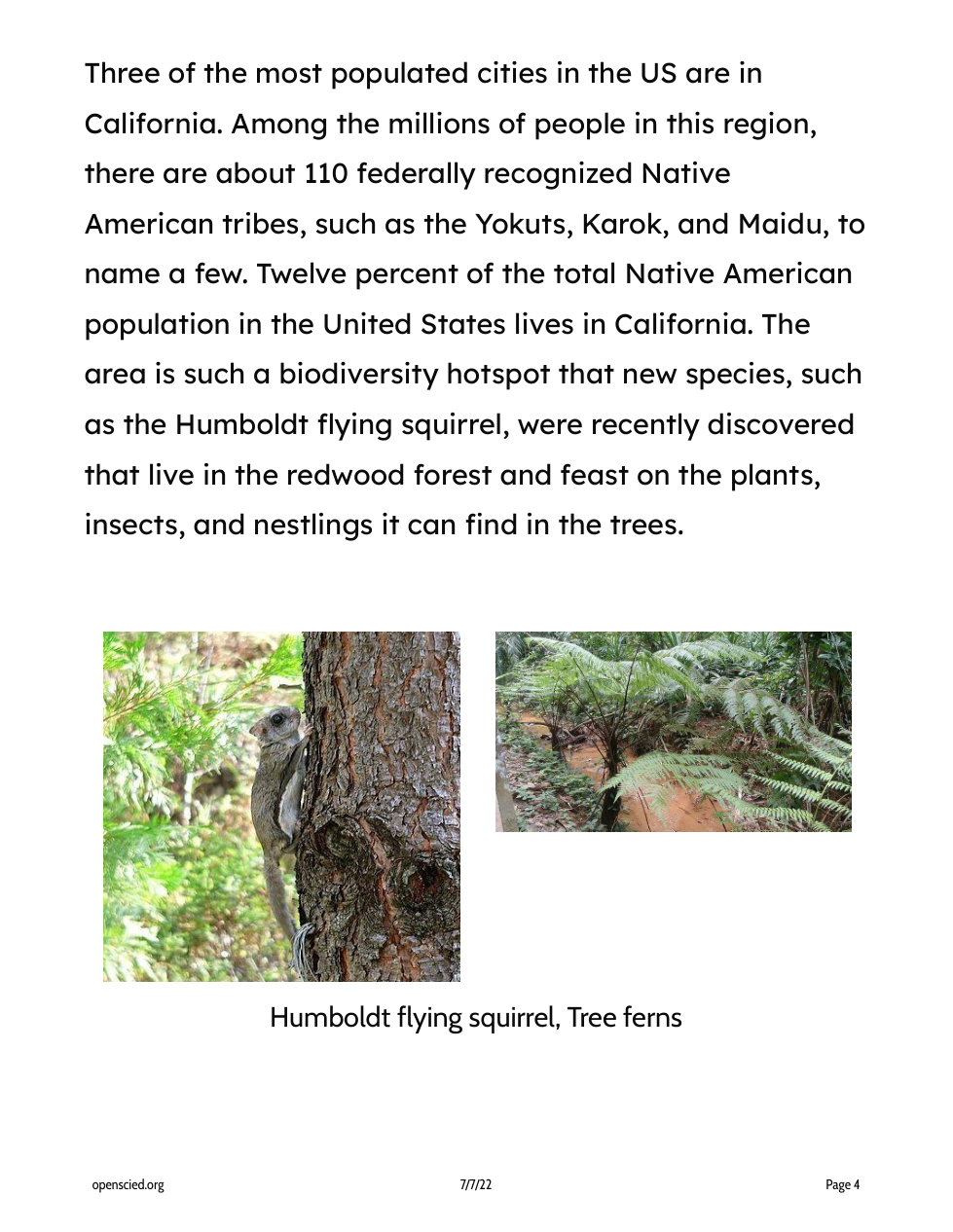
Three of the most populated cities in the US are in California.
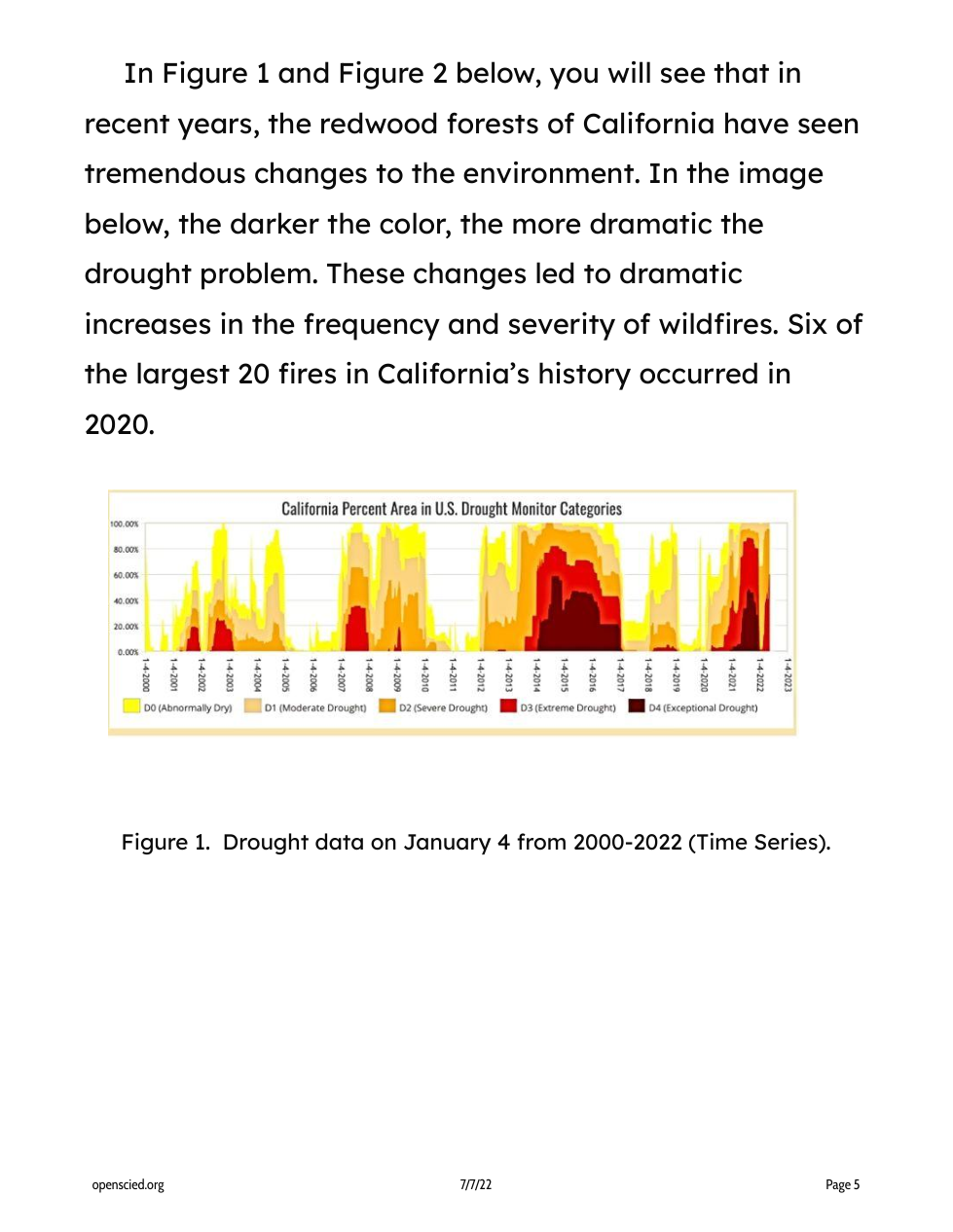
One change in the environment that has lead to an increase in wildfires in California is
State one fire suppression policy that has made forests more vulnerable to fire.
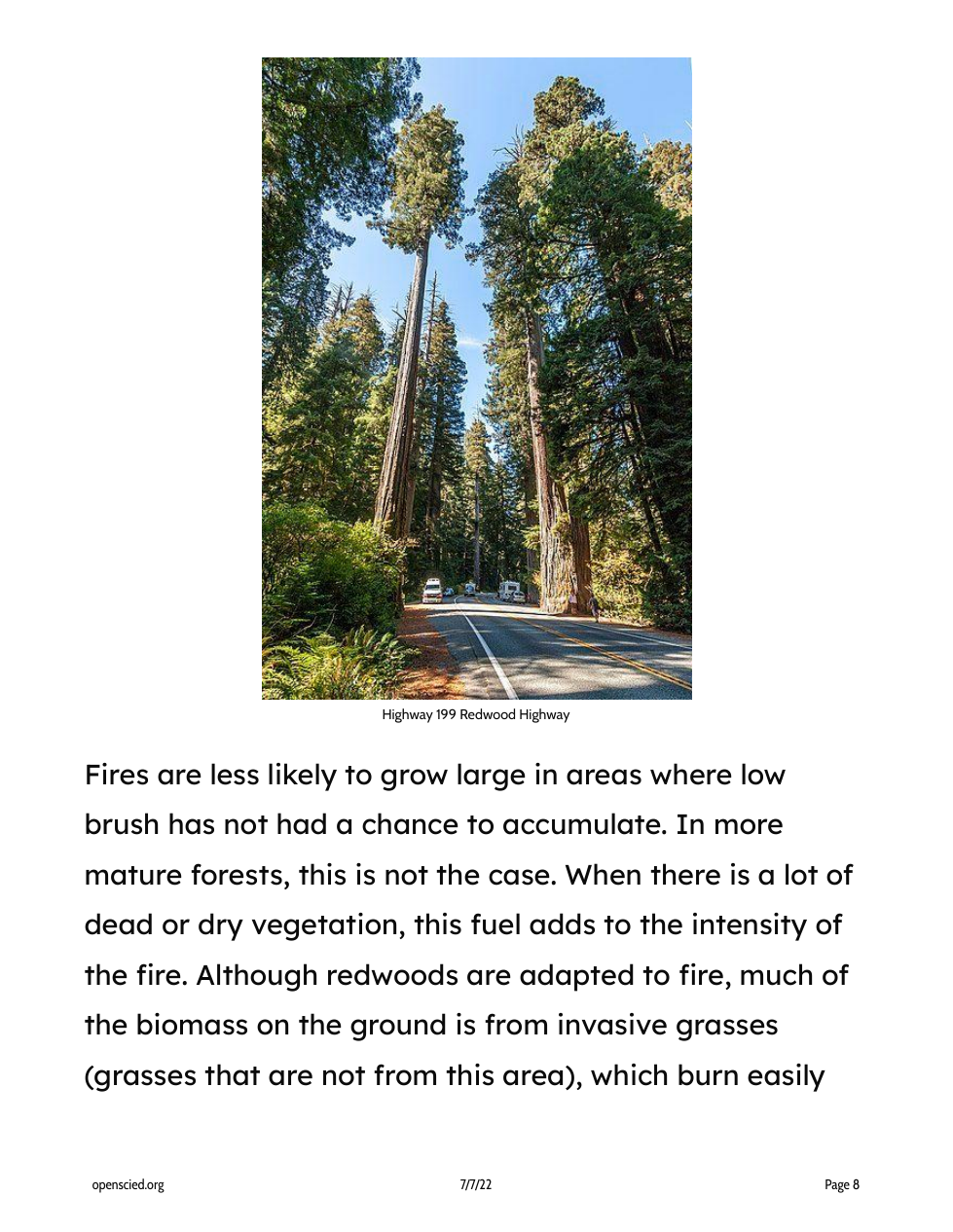
Highway 199 created an added risk for accidental fires to occur in the forest.
Fires are less likely to grow large in areas
Are redwood trees adapted to fire?
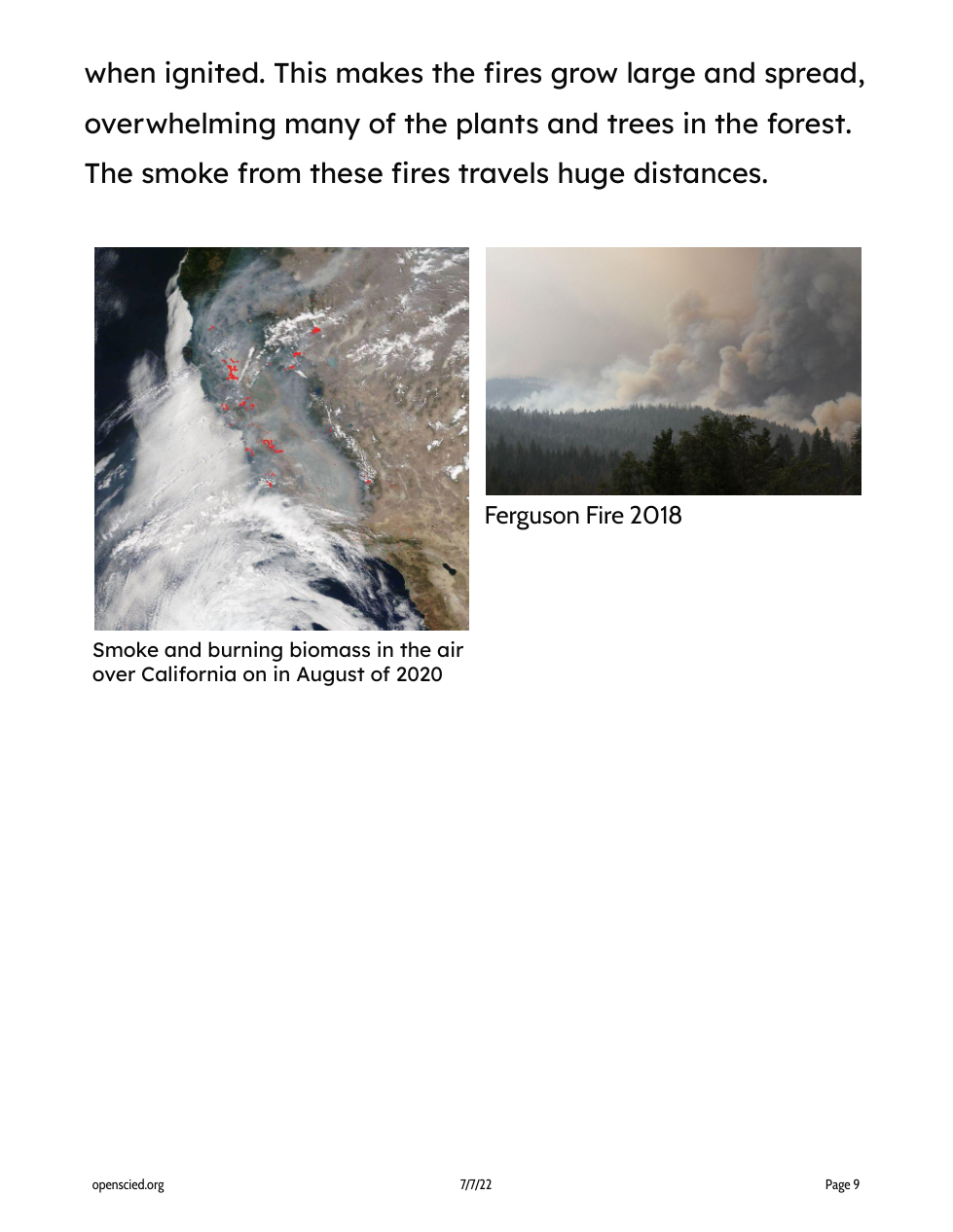
Invasive grasses which burn easily are one reason for the large spread fires in the area
How did the carbon sink form? Use your understanding of photosynthesis.
Redwood trees would be classified as a...?
Redwood trees carry out photosynthesis. What gas is required for photosynthesis?
American black bears eat grass, succlents, insects, meat and fish. Black bears would be classified as a
Roosevelt elk eat grass and ferns. Elk are
Bears and Elk breath in oxygen in order to perform what biological process?
What gas do bears and deer release into the atmosphere when they exhale?
What makes California a carbon sink?
The carbon sink is changing. Use your understanding of cellular respiration to explain how carbon may be leaving the trees.
What will happen to the energy and matter (carbon dioxide) in the system if the carbon sink burns?