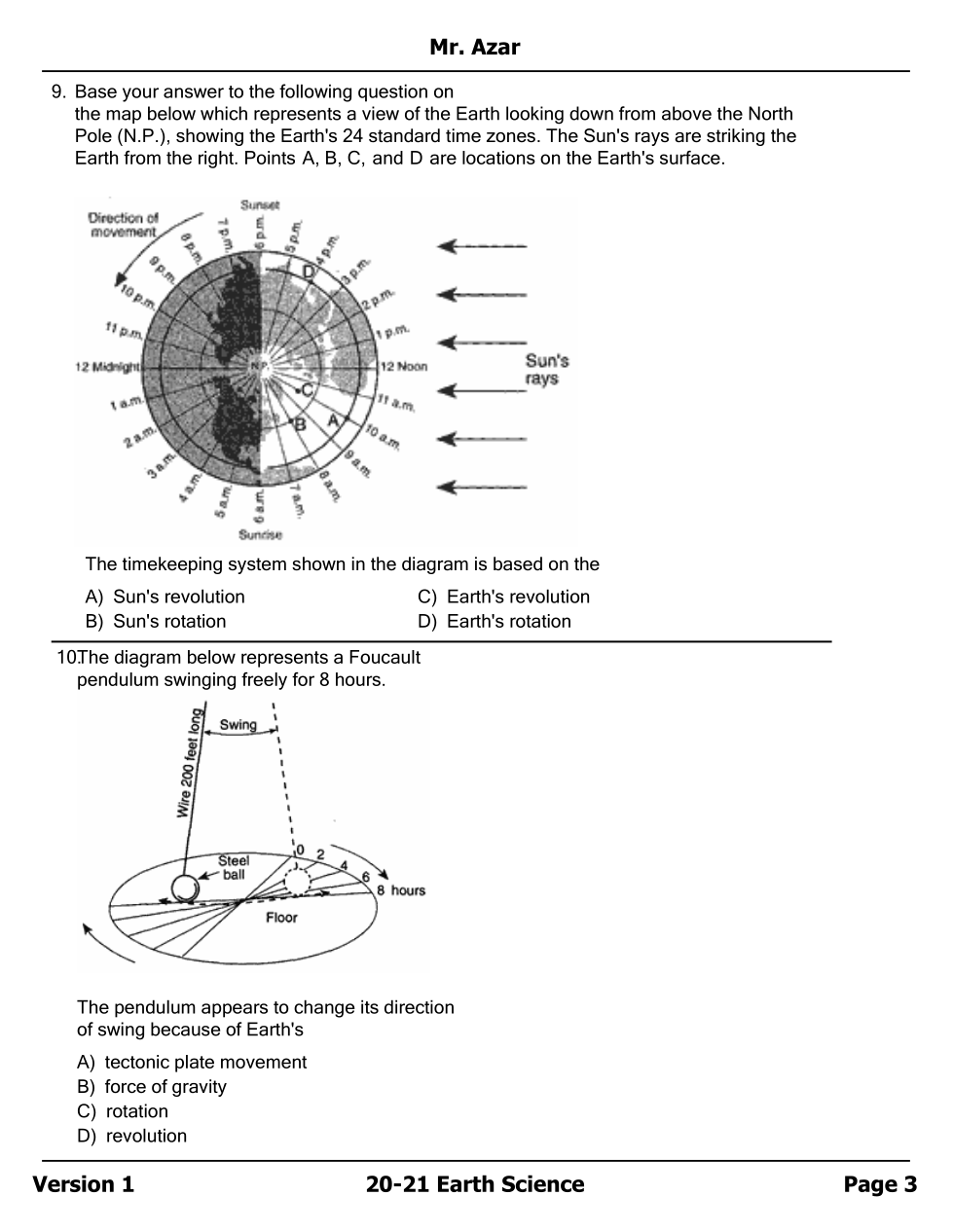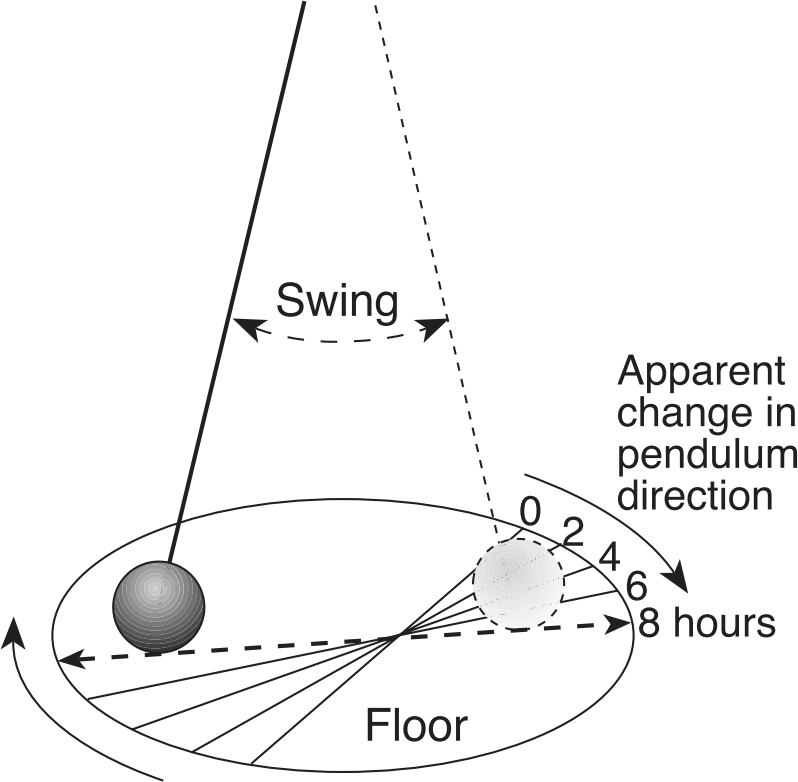
What is the main reason the pendulum appears to change its direction of swing over time?
What is the main reason the pendulum appears to change its direction of swing over time?
Match the motion or observation with the movement of Earth Responsible
Foucault Pendulum
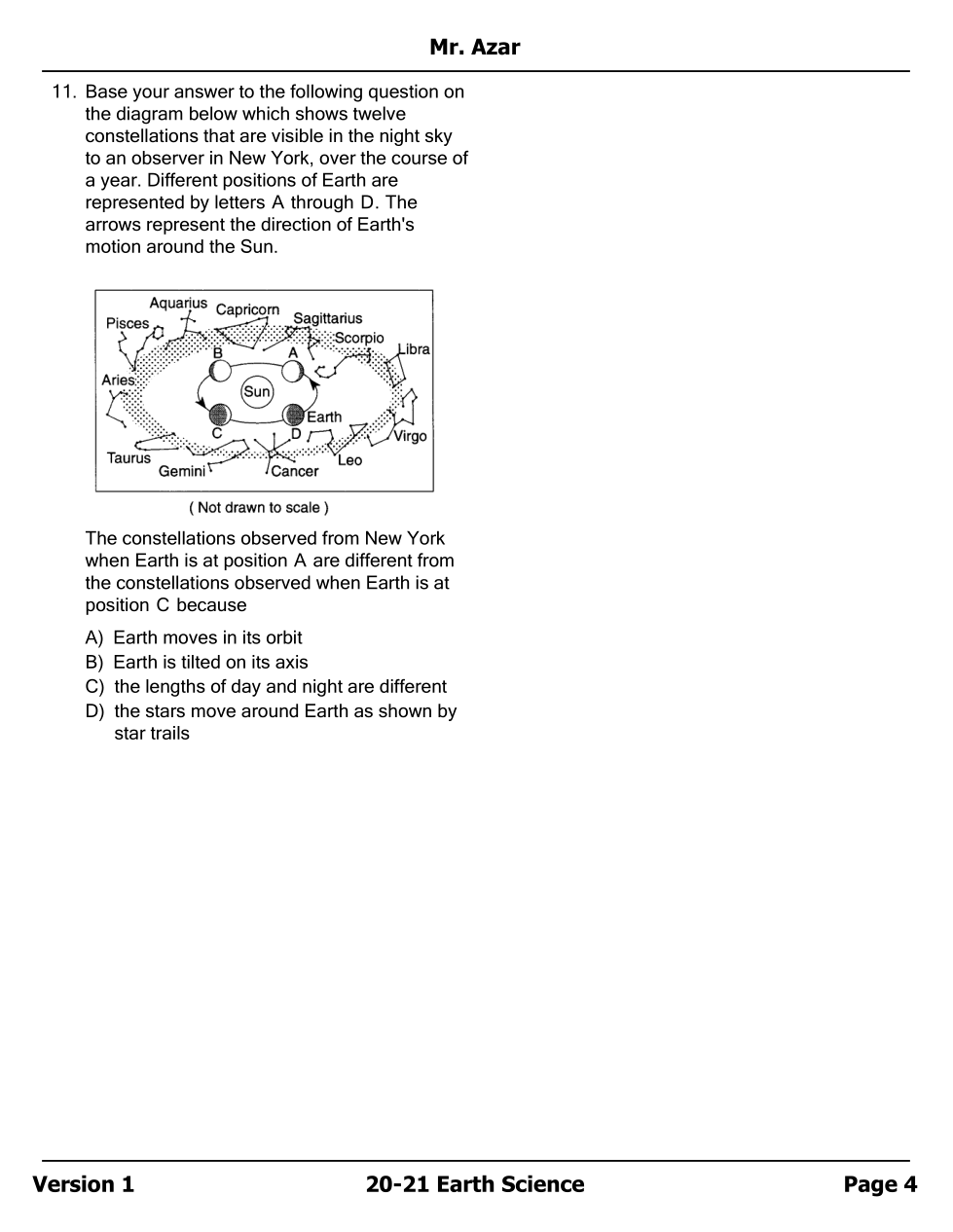
Constellations changing every month
Phases of Venus
Seasons
Sunset
24 hours
Day and night
Coriolis Effect
1°/day (360°/year)
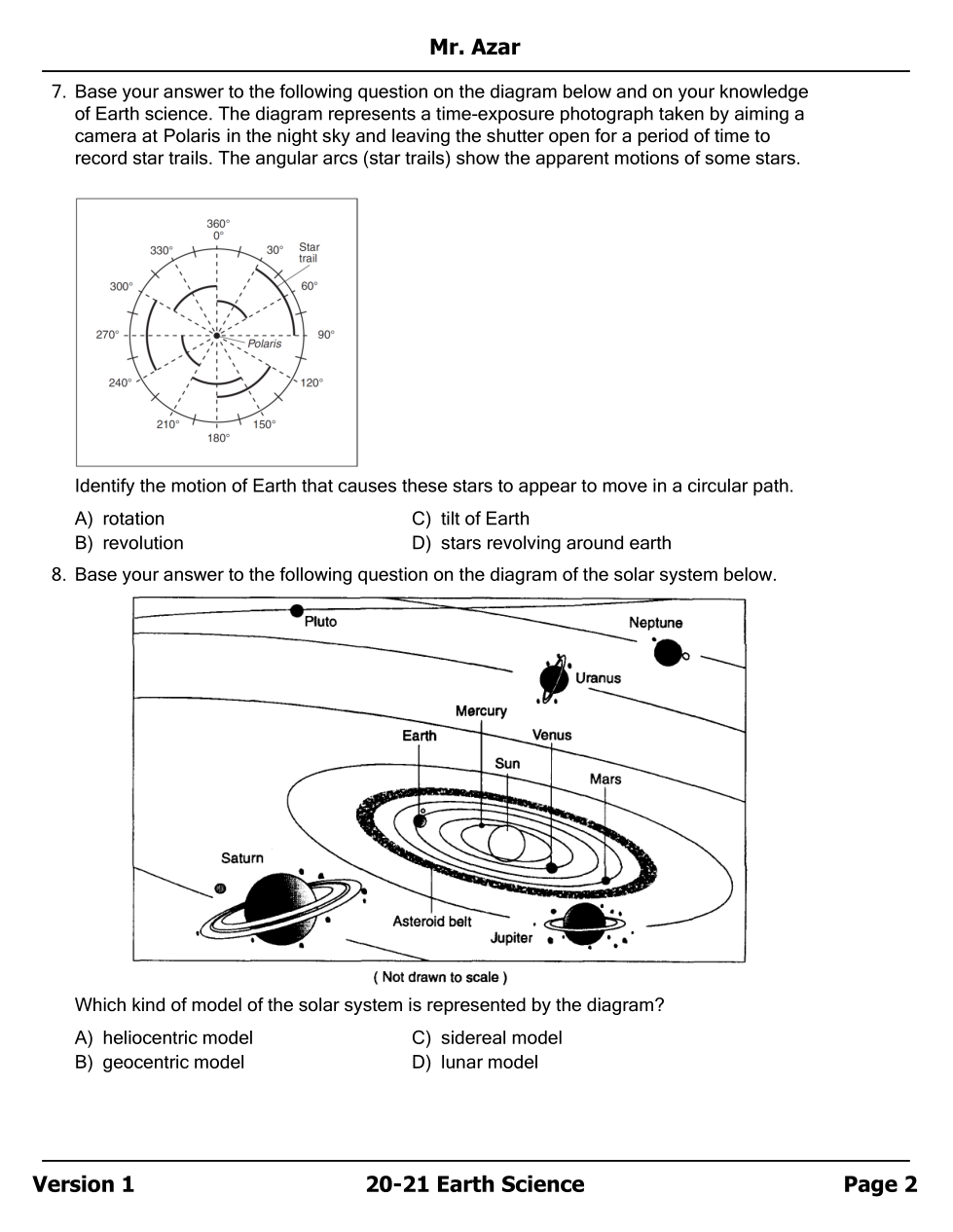
Constellations going across the sky over 4 hours
Sunrise
Rotation
Revolution
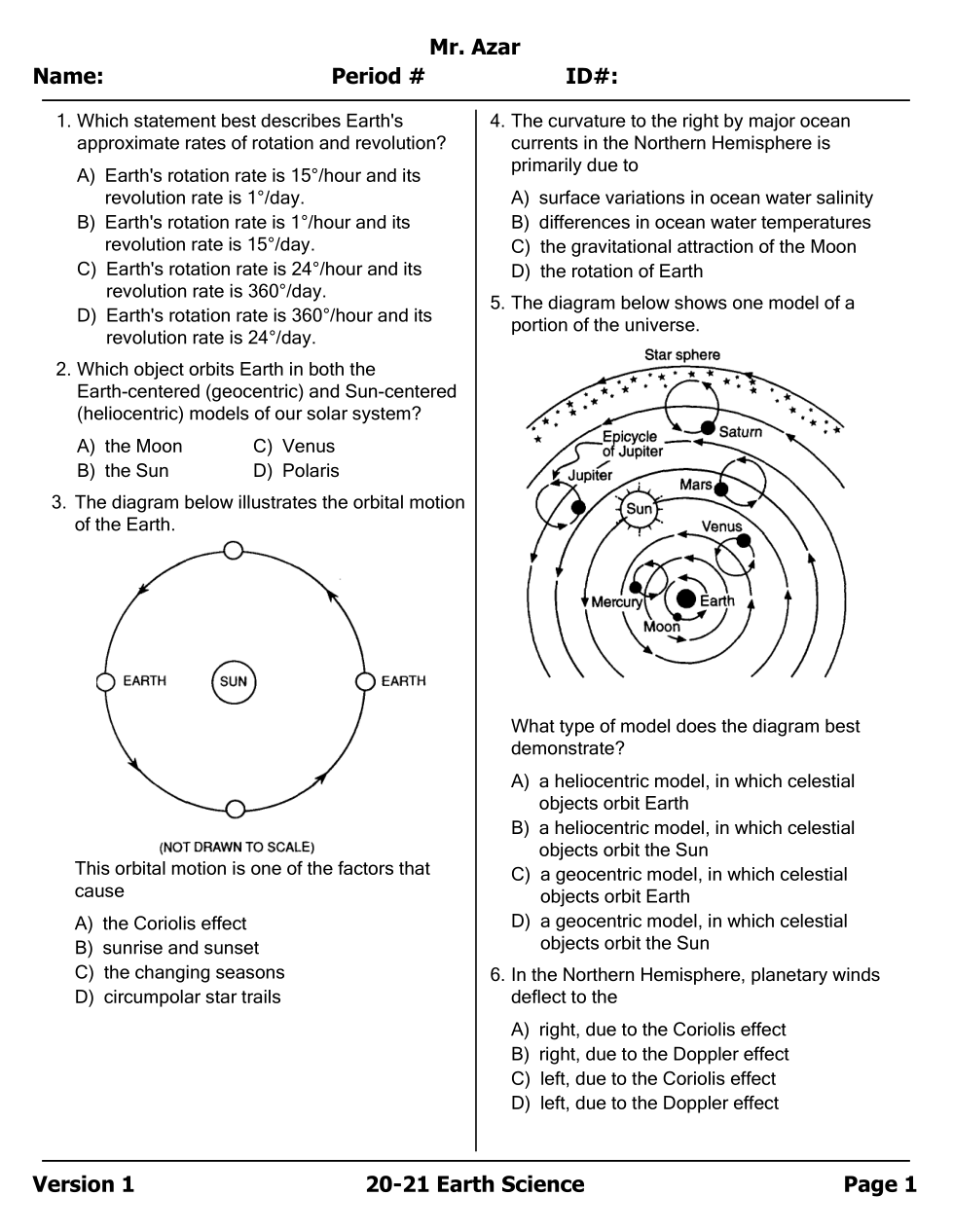
Which model of the Solar System (or the universe at one point) is disproven based on the evidence from question #1?
The diagram below shows 4 arrows with the PROJECTED motion of 4 airplanes.
Next to each arrow, draw the apparent direction of each arrows movement due to the Coriolis Effect.
What is the main reason the pendulum appears to change its direction of swing over time?
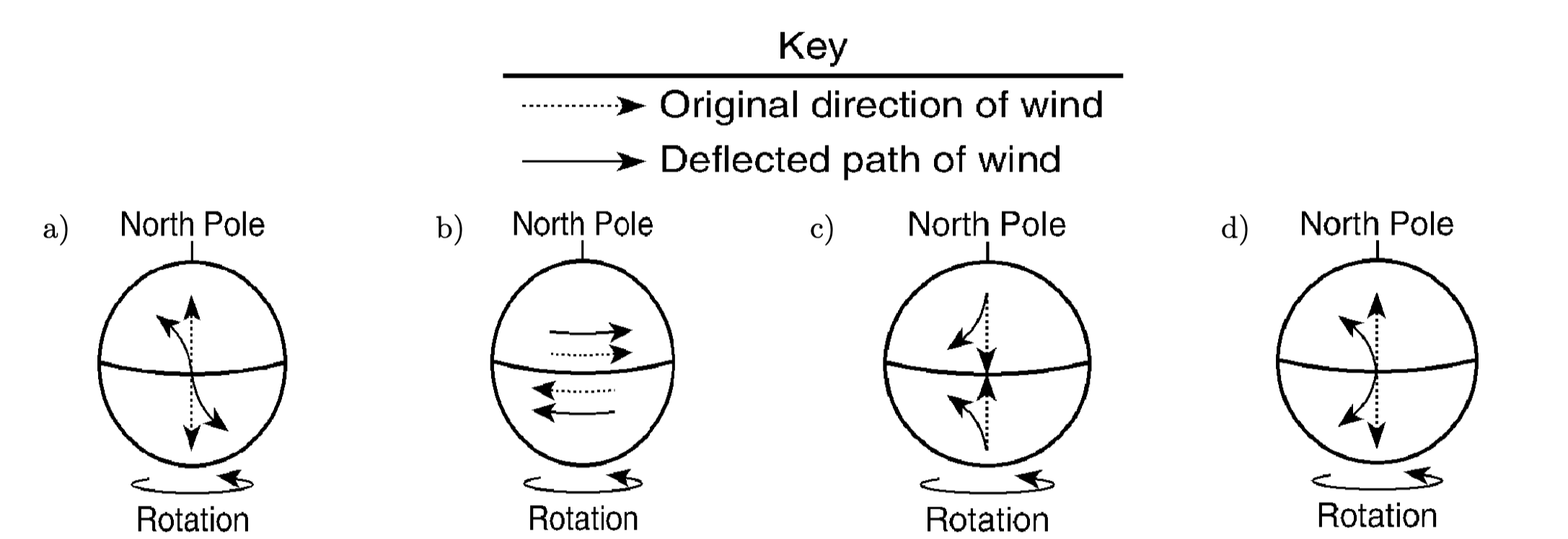
In the diagram above, identify the diagram that's showing the coriolis effect properly.
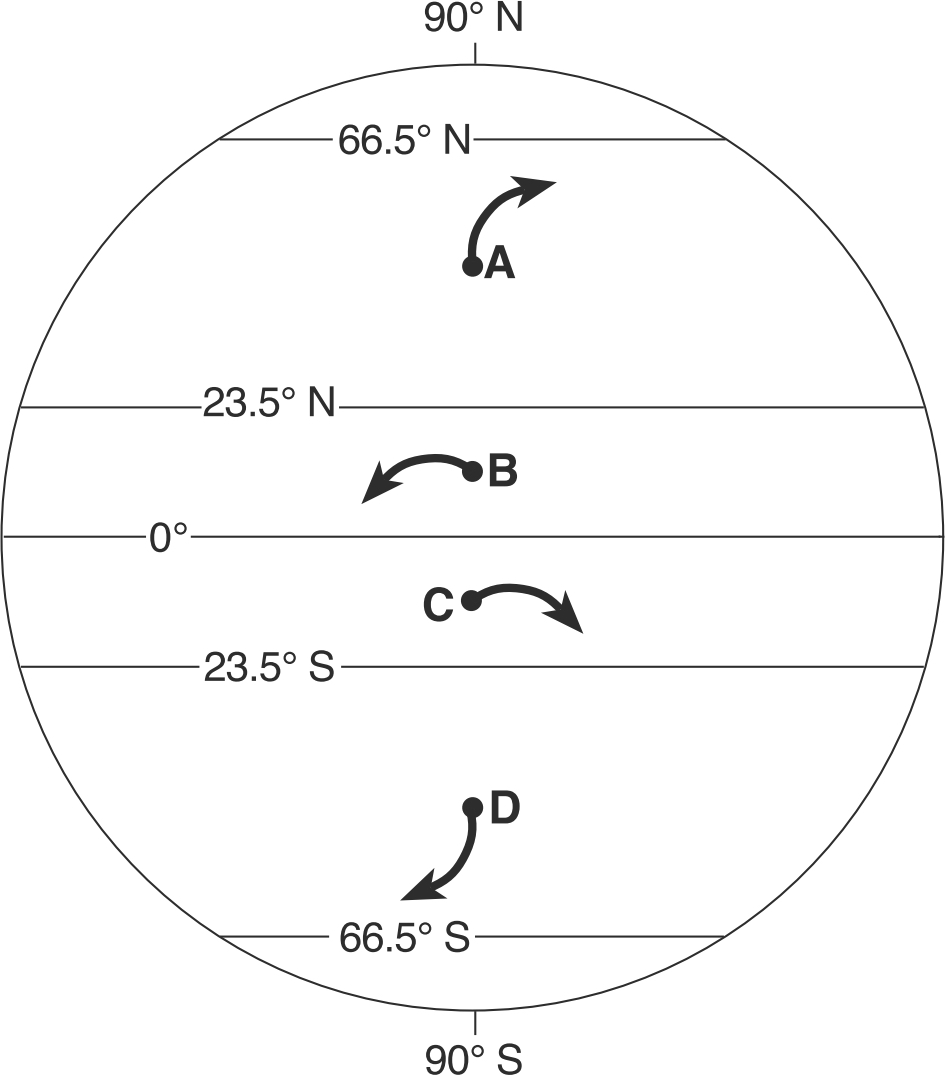
The arrow at which location correctly shows a direction of the wind that could be due to the Coriolis effect?
The arrow on the map below represents the direction a wind is blowing over a land surface in the Northern
Hemisphere without showing the Coriolis effect.
On the diagram, draw an arrow represents how the wind direction will change in Northern Hemisphere due to the Coriolis Effect.