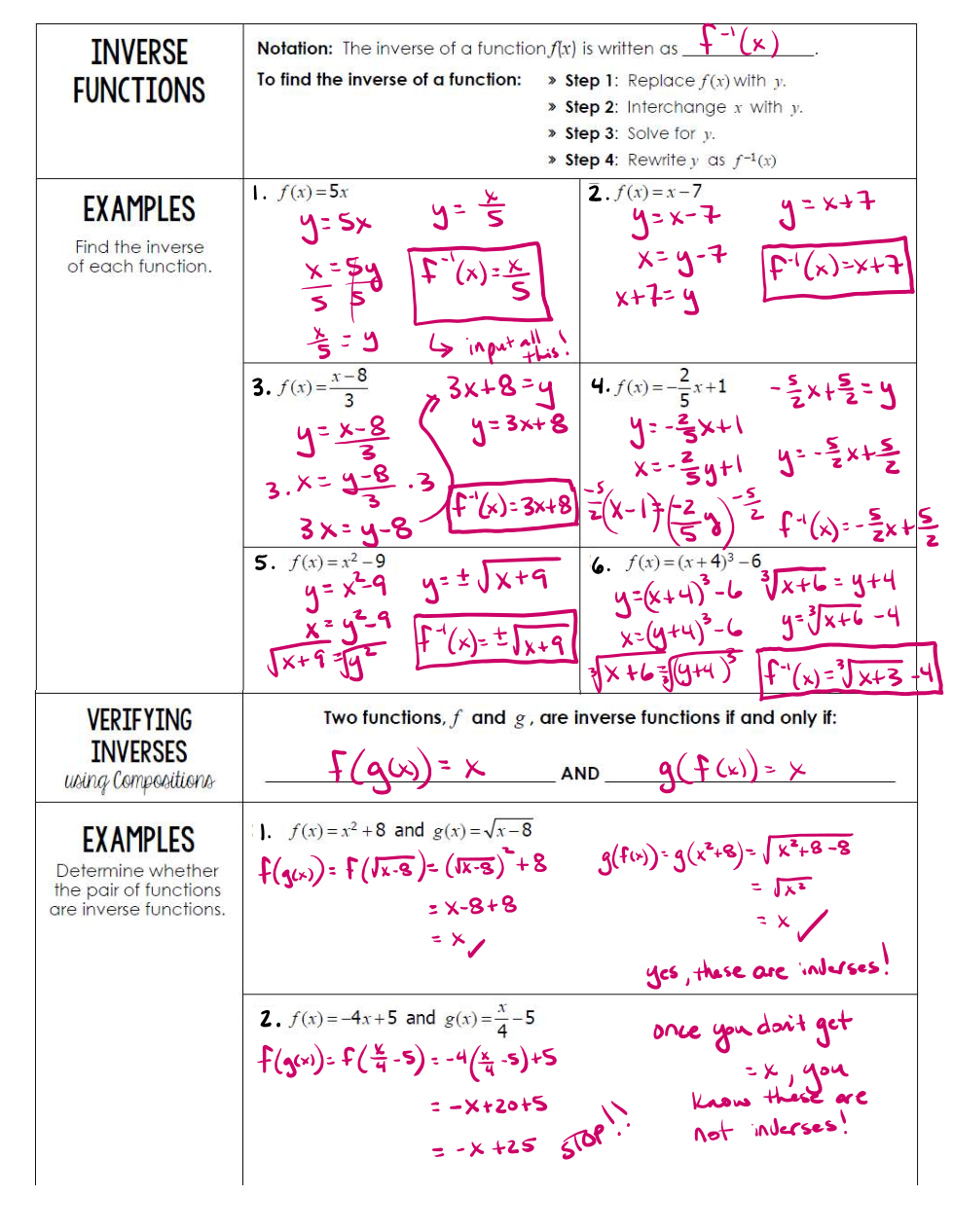
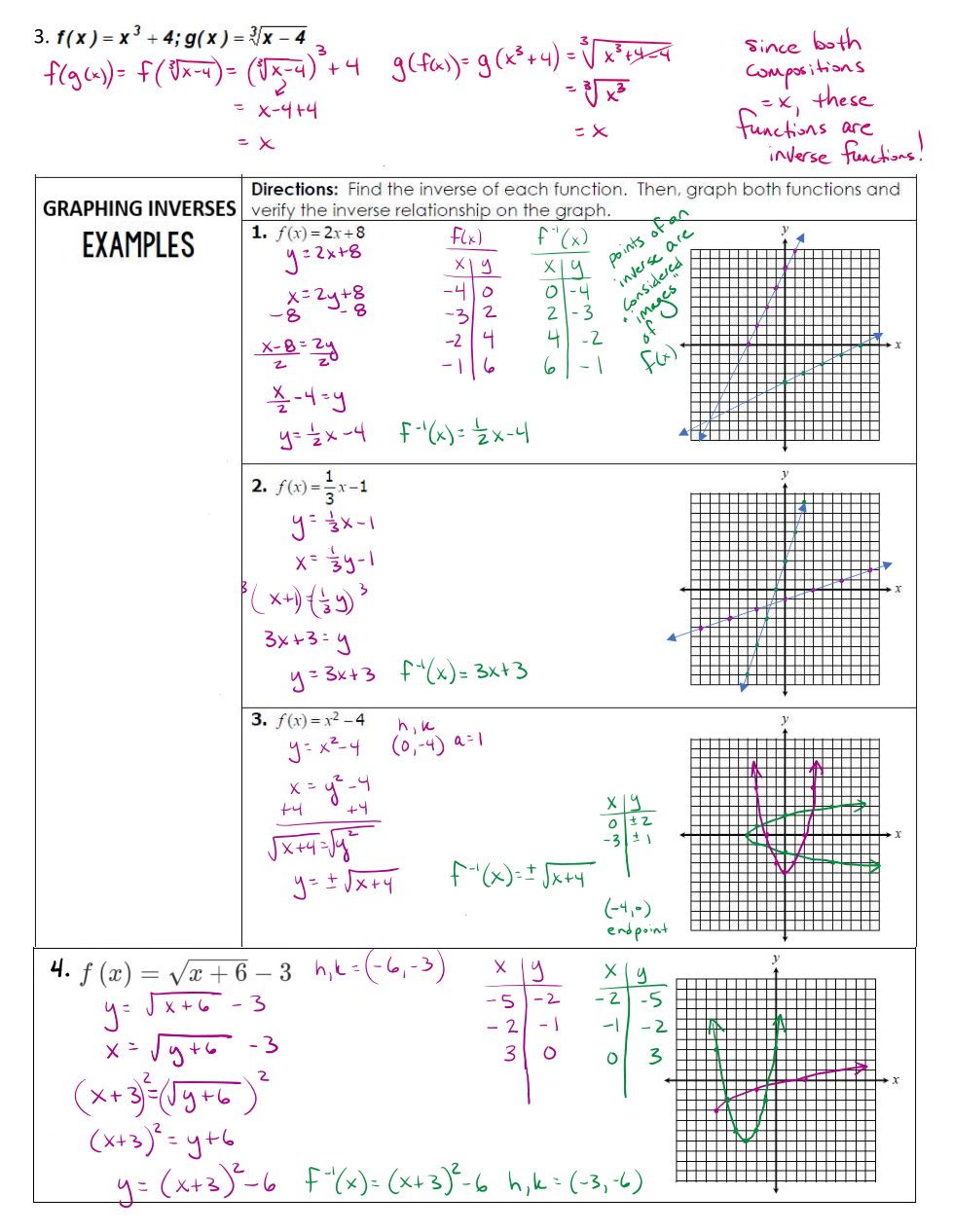
Find the inverse of the function:
Be sure to enter you answer using:
Find the inverse of the function:
Be sure to enter you answer using:
Find the inverse of the function:
Be sure to enter you answer using:
Given:
Perform the following operation (include the operation in your answer):
Given:
Perform the following operation (include the operation in your answer):
Given:
Perform the following operation:
NOTE: just enter your answer...your math editor won't allow you to type in
Given:
Perform the following operation:
NOTE: just enter your answer...your math editor won't allow you to type in
Given the functions:
Find:
(just enter your answer)
Given the functions:
Find
(just enter your answer)
Given your answers for questions 8 & 9, are these functions inverses of each other?
Explain your reasoning for your answer in #10.
Find the inverse of the function:
Be sure to enter you answer using:
Find the inverse of the function:
Be sure to enter you answer using:
Graph the function:
Then graph the inverse on the same set of axes. (the same graph)
Graph the function:
Then graph the inverse on the same set of axes. (the same graph)
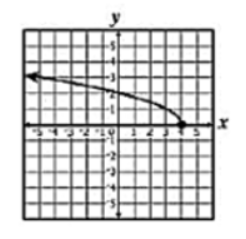
The graph of the function g is shown below:
Which of the following graphs best represents the inverse of g?
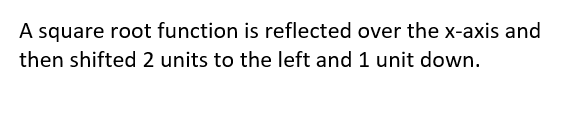
Write the equation of the resulting function. Use
in your answer
Which graph below represents the resulting function after the transformation:
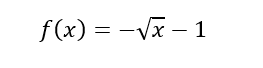
What is the domain for the function at left?
(use set notation { } ...no spaces)
What is the range for the function at left?
(use set notation { } ...no spaces)
Given:
Simplify. Express your answer in simplest radical form.
upload your pages of work here--page 1
upload your pages of work here--page 2
upload your pages of work here--page 3
What is the end behavior:
What is the end behavior: