2.5- Displacement (Motion) - Teacher Paced
star
star
star
star
star
Last updated over 3 years ago
17 Nsɛmmisa

1
1

1
1
1
1
1

1
1

1
1
1
A) What is the fastest thing you have ever seen, heard, or experienced?
B) What is the slowest?
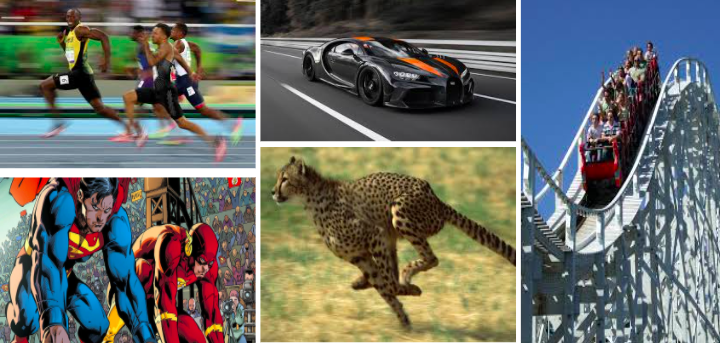
Sentence Starter: The fastest thing I have... The slowest thing I have..
Based on this image, compare and contrast distance vs. displacement. Which Student(s) is/are the most correct?
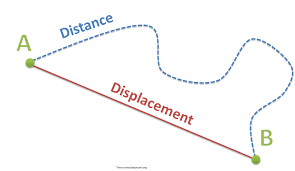
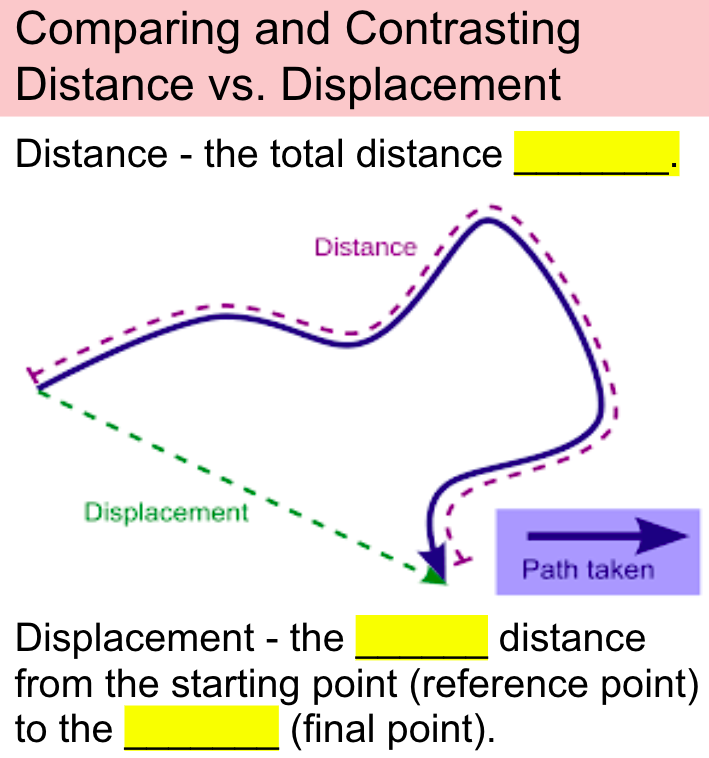
Copy and paste the sentence below and fill in the blanks with words from the word bank.
Distance - the total distance _______.
Displacement - the ______ distance from the starting point (reference point) to the _______ (final point).
Word Bank: mapped traveled total longest shortest time destination past future tense
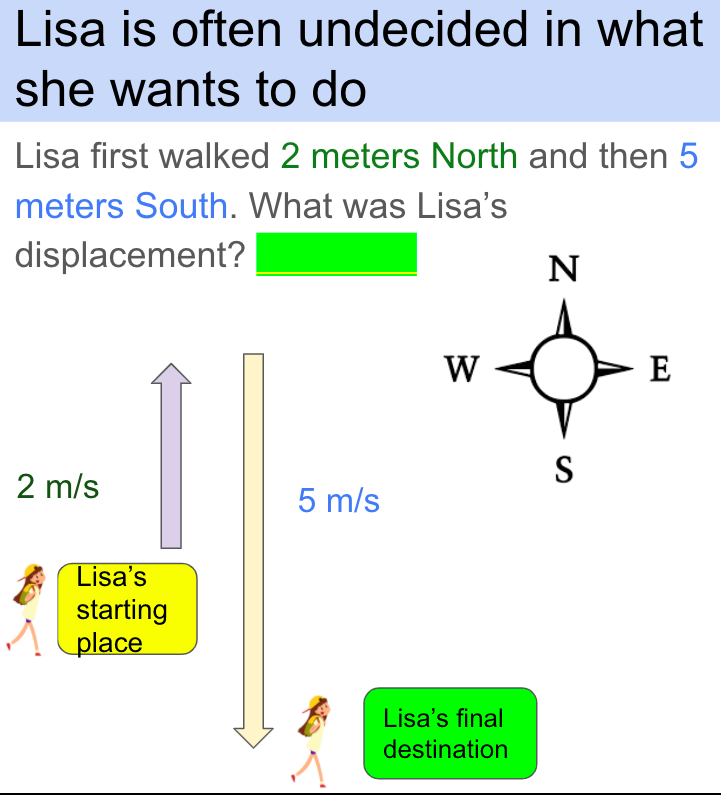
In each of the problems below draw the displacement line from the reference point (starting point) to the destination (final point).
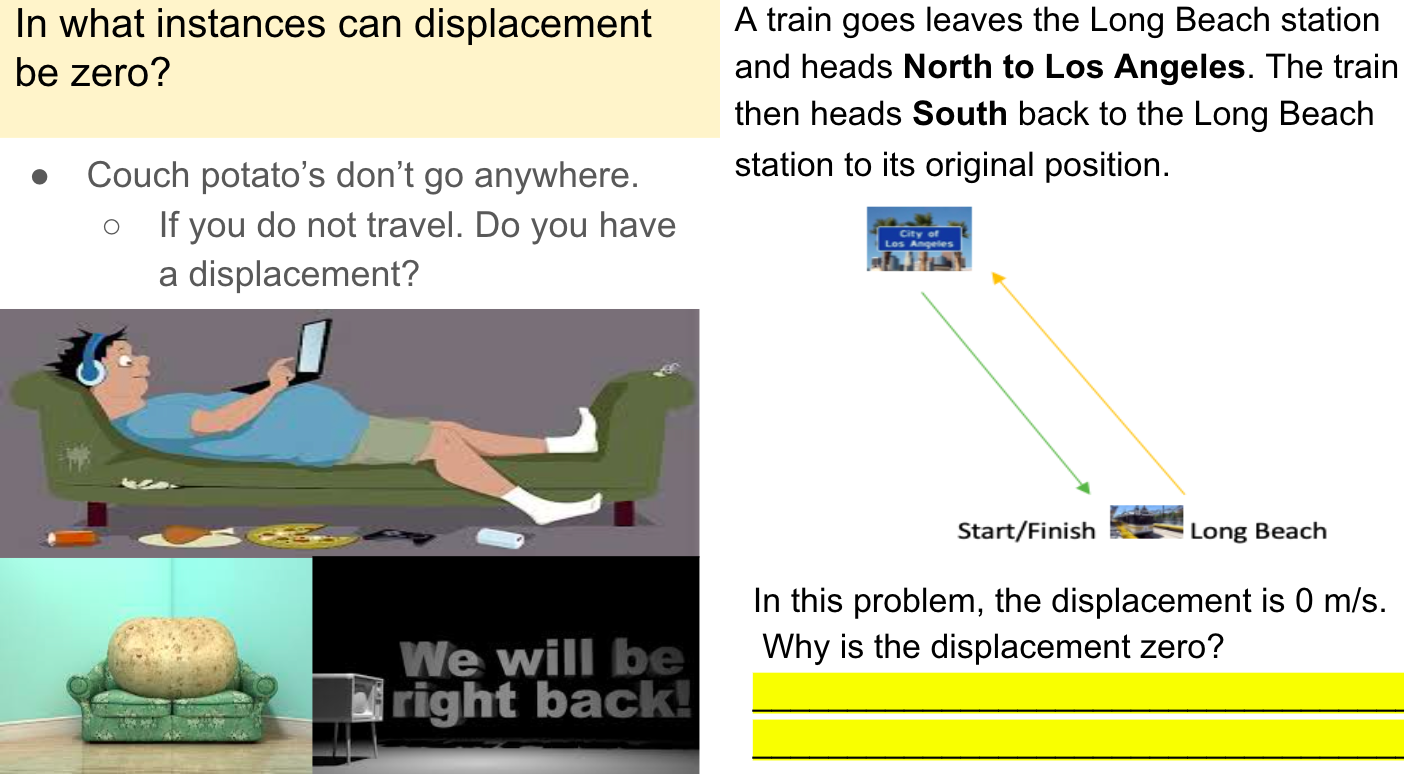
If you do not travel. Do you have a displacement?
Displacements can be subtracted from each other if they are in the opposite direction. This makes it easy to navigate and determine where you are spacially.
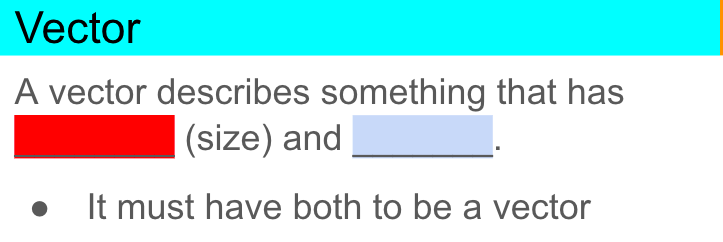
A vector describes something that has ________ (size) and ______.
Which of the following are examples of vectors?
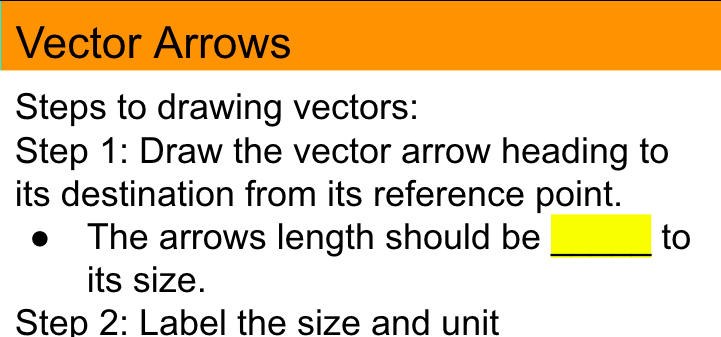
When drawing vectors, the arrows length should be __________ to the magnitude (size) of the vector.
Which of the diagrams best fits the example below?
Example:
Cindy walked 2m/s to the left.
Joseph walked 4m/s to the right.
For each example draw the appropriate vector (in size and direction).
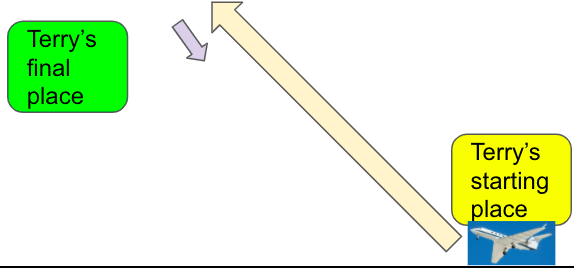
Terry flew 400 miles northwest and then drove 20 miles southeast from that destination. What is Terry’s displacement?
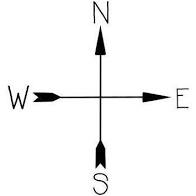
Mark drives 10 m East but forgot his cells phone so he had to drive 10 m back home? What is his displacement?
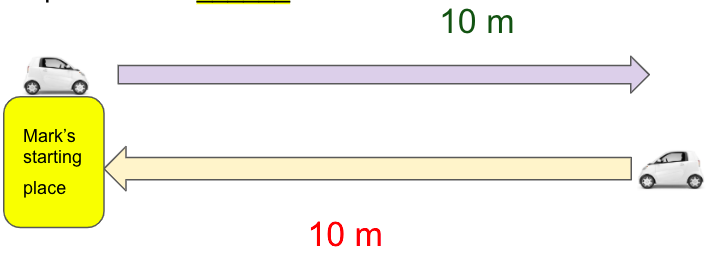
Draw and label the displacement lines!!
Jimmy leaves his house and goes to the grocery store (2 miles). Then jimmy goes to the arcade (4 miles). Then jimmy goes to the park (2 miles). Then jimmy goes home (3.5 miles). What is jimmy’s displacement and explain how you got that answer.
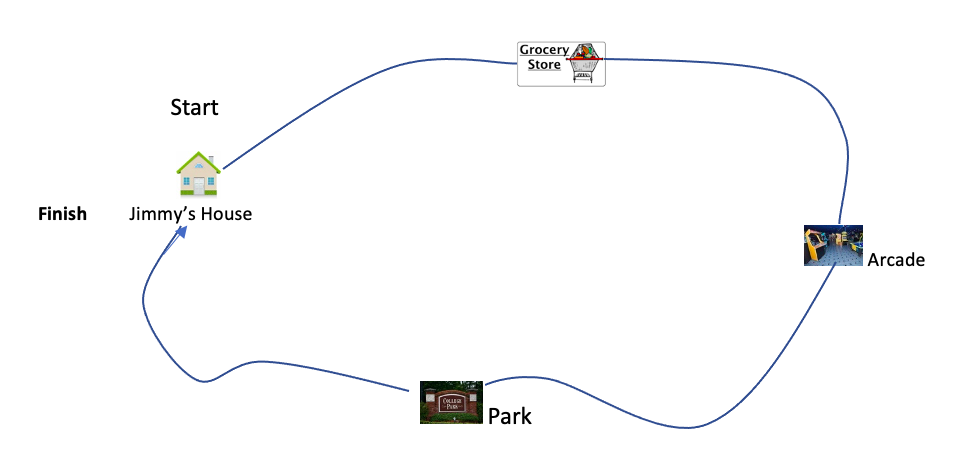
Sentence Starter: Jimmy's displacement is..
Which of these is the most correct expression of the example below?
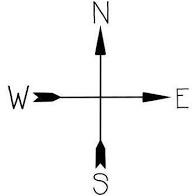
Marcos pushed a car with a force of 200N north and then pushed the car with a force of 600N East.
A train goes leaves the Long Beach station and heads North to Los Angeles. The train then heads South back to the Long Beach station to its original position.
In this problem, the displacement is 0 m/s. Why is the displacement zero?