Unit 2.7 Homework: Indian Residential Schools
star
star
star
star
star
Last updated about 2 years ago
12 Nsɛmmisa
Hyɛ no nsow a efi ɔkyerɛwfo no hɔ:
Ɛhia
1
Ɛhia
1
Ɛhia
1
0
Content Objective: I will be able to determine the true purpose of the Carlisle Indian Industrial School.
Standard Objective: I will be able to evaluate various explanations for actions or events and determine which explanation best accords with textual evidence, acknowledging where the text leaves matters uncertain.
Absent? Just want to review the slides? Click here!
Content Objective: I will be able to determine the true purpose of the Carlisle Indian Industrial School.
Standard Objective: I will be able to evaluate various explanations for actions or events and determine which explanation best accords with textual evidence, acknowledging where the text leaves matters uncertain.
Absent? Just want to review the slides? Click here!
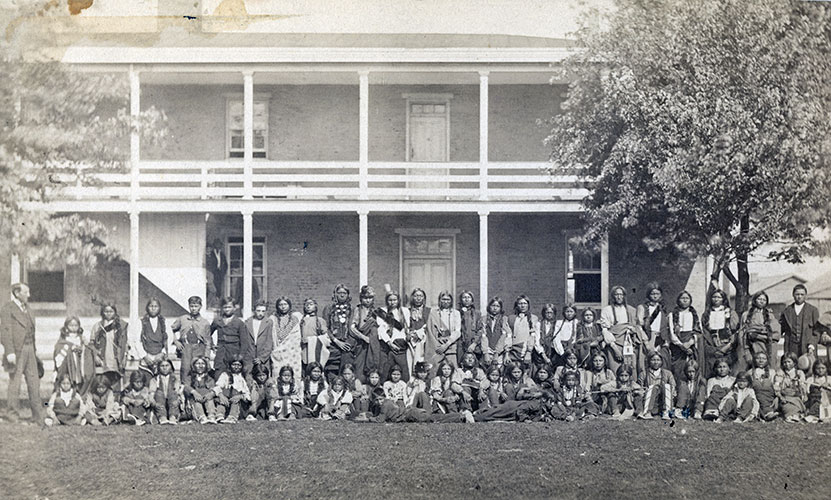
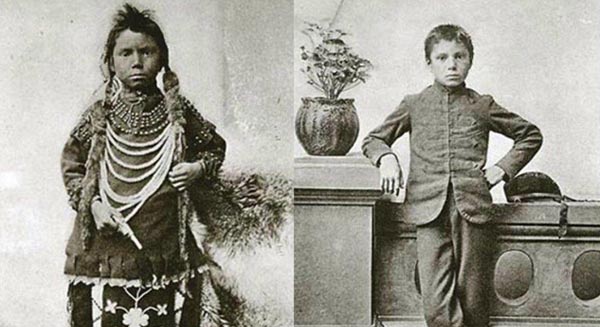
What do you notice about how the Sioux boys look and dress when they first arrived at the Indian Training School at Carlisle barracks in 1897?
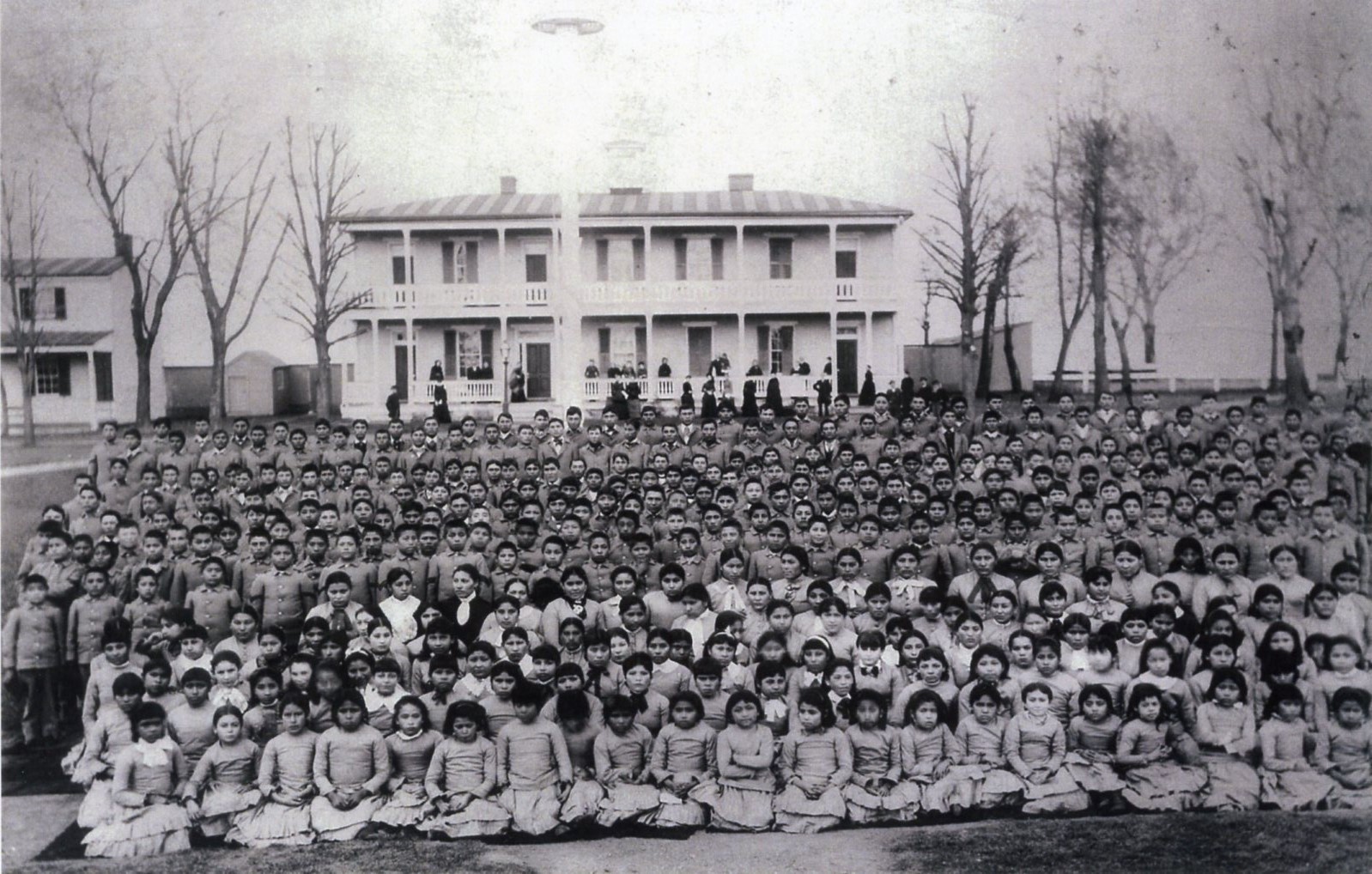
What do you notice about the look and dress of students in the Carlisle class photo in 1900?
Building Knowledge Together: Let's make sure we're all on the same page!
Today, you will be studying the
More than two dozen more off-reservation boarding schools, and churches operated over
The origins of boarding schools can be traced back to the Indian Civilization Fund Act of 1819, which authorized up to $10,000/year for religious groups and interested individuals to live among and “
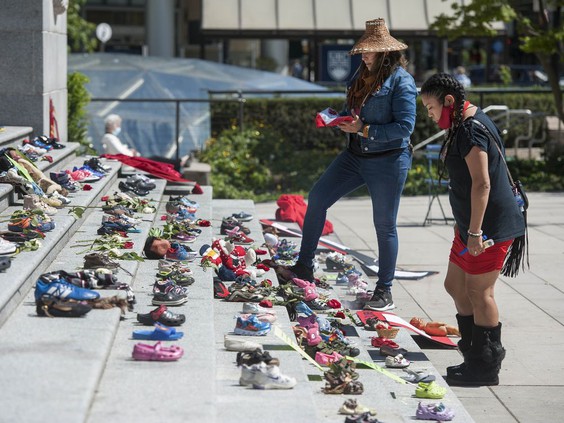
While the Carlisle school was the first of the Indian
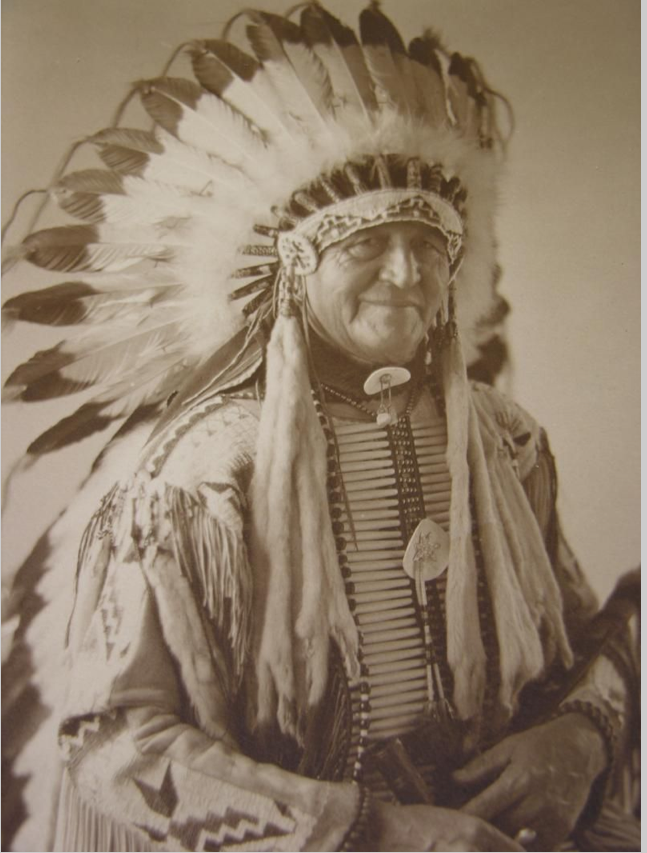
Sourcing: Based on the author and year of the excerpt, we can infer that Luther Standing Bear

As used in line 1, "ancestral" most nearly means
The author uses the phrase "alien world" (line 3) in order to emphasize what he experienced as a new
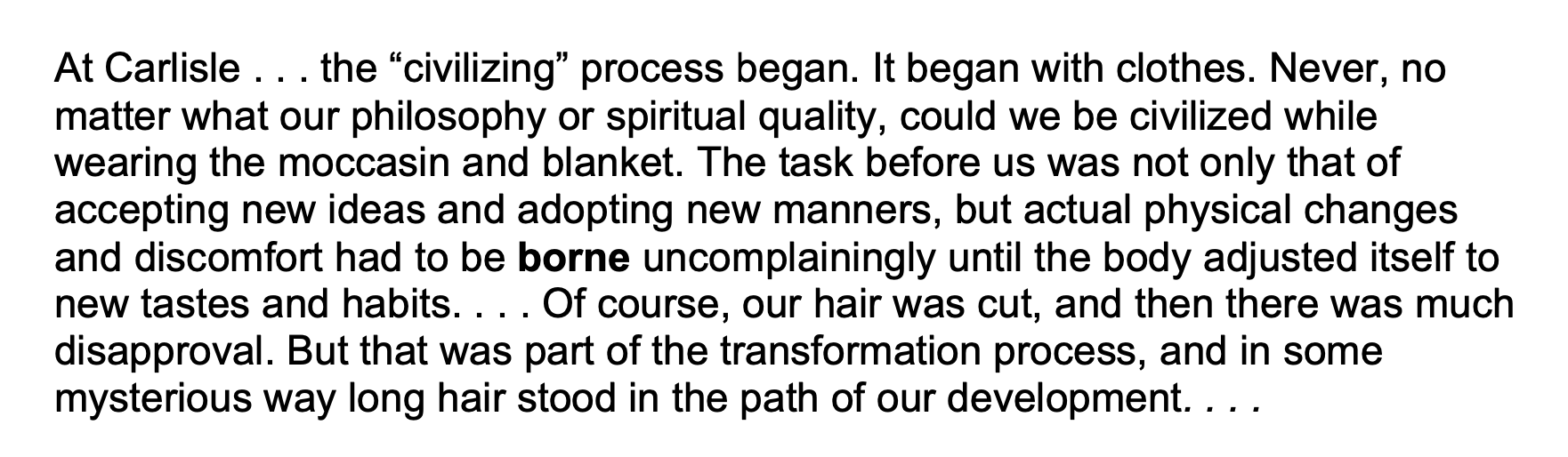
The author compares the physical changes he was forced to make with the behavioral changes in order to
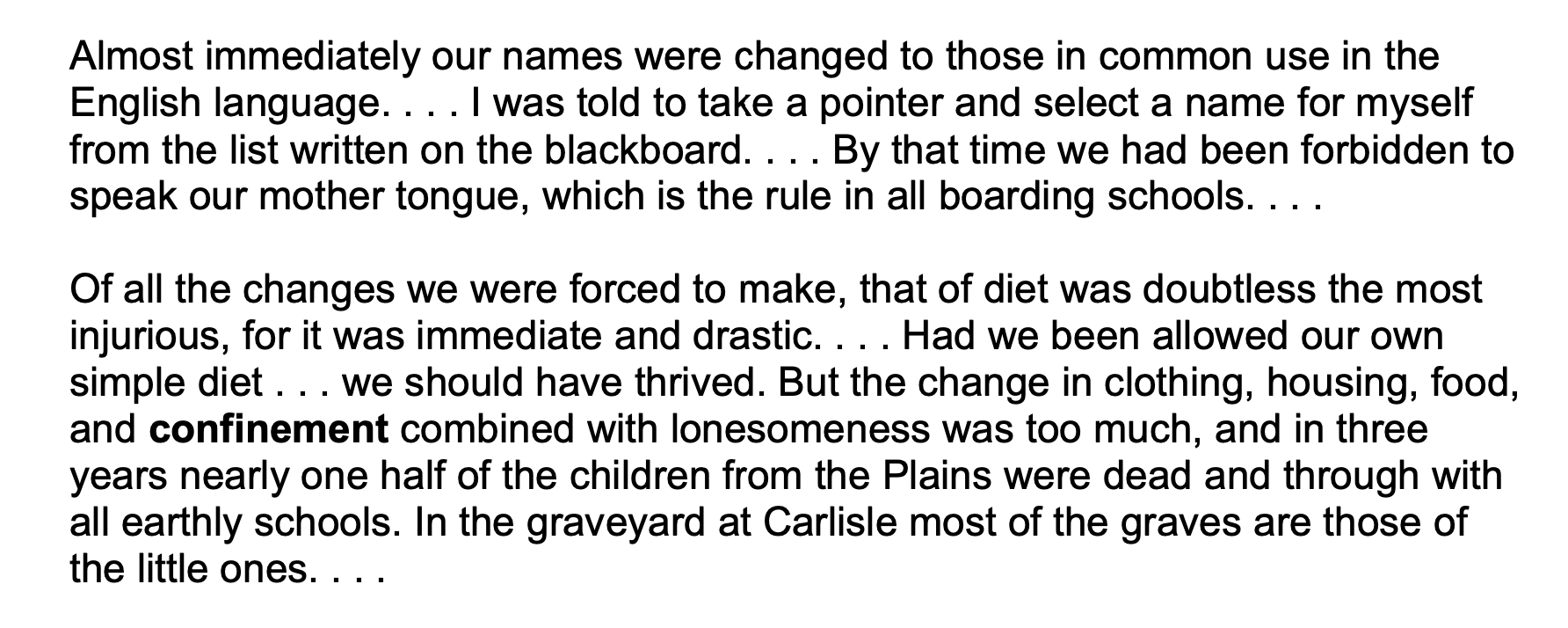
The main purpose of changing names and solely speaking in English was to
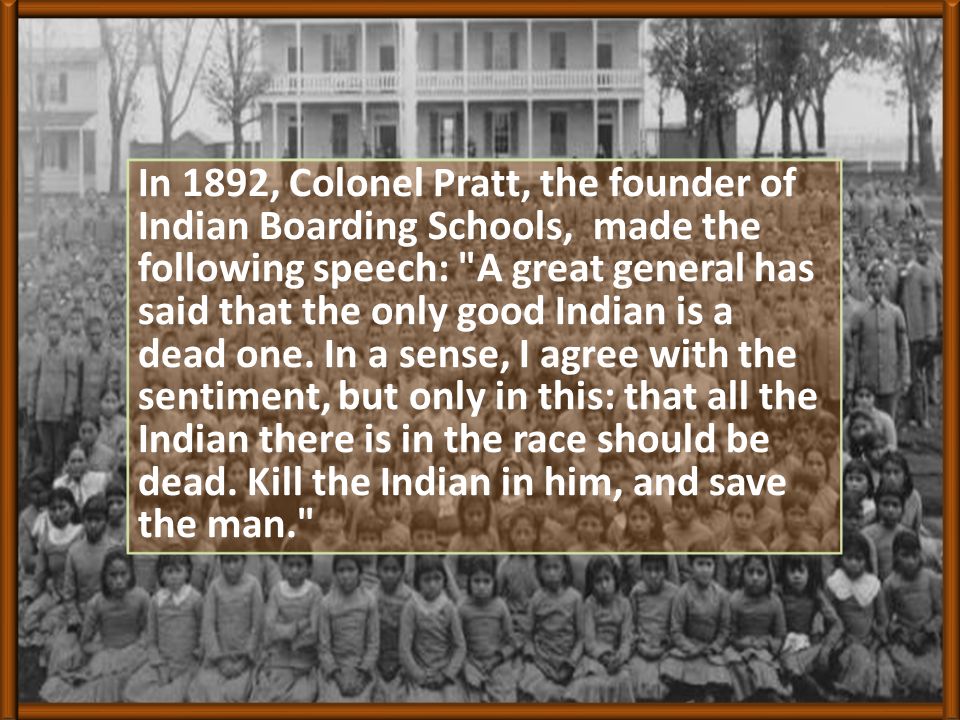
Exit Ticket: When Pratt states, "Kill the Indian in him, and save the man," he is implying that
Under "Show Your Work," please respond to the quote and what it tells you about Pratt's assimilation efforts at the Carslisle school.
Exit Ticket: Please evaluate how well you understood today’s lesson on a scale from 1 to 4.