A7 (Explore): Contradictions of the Enlightenment
star
star
star
star
star
Last updated about 3 years ago
9 questions
Read the following excerpts from an article that questions some of the contradictions of the Enlightenment. Some of the reading is difficult, so please ask for help and take your best guesses! We will discuss the answers as a full class at a later time.
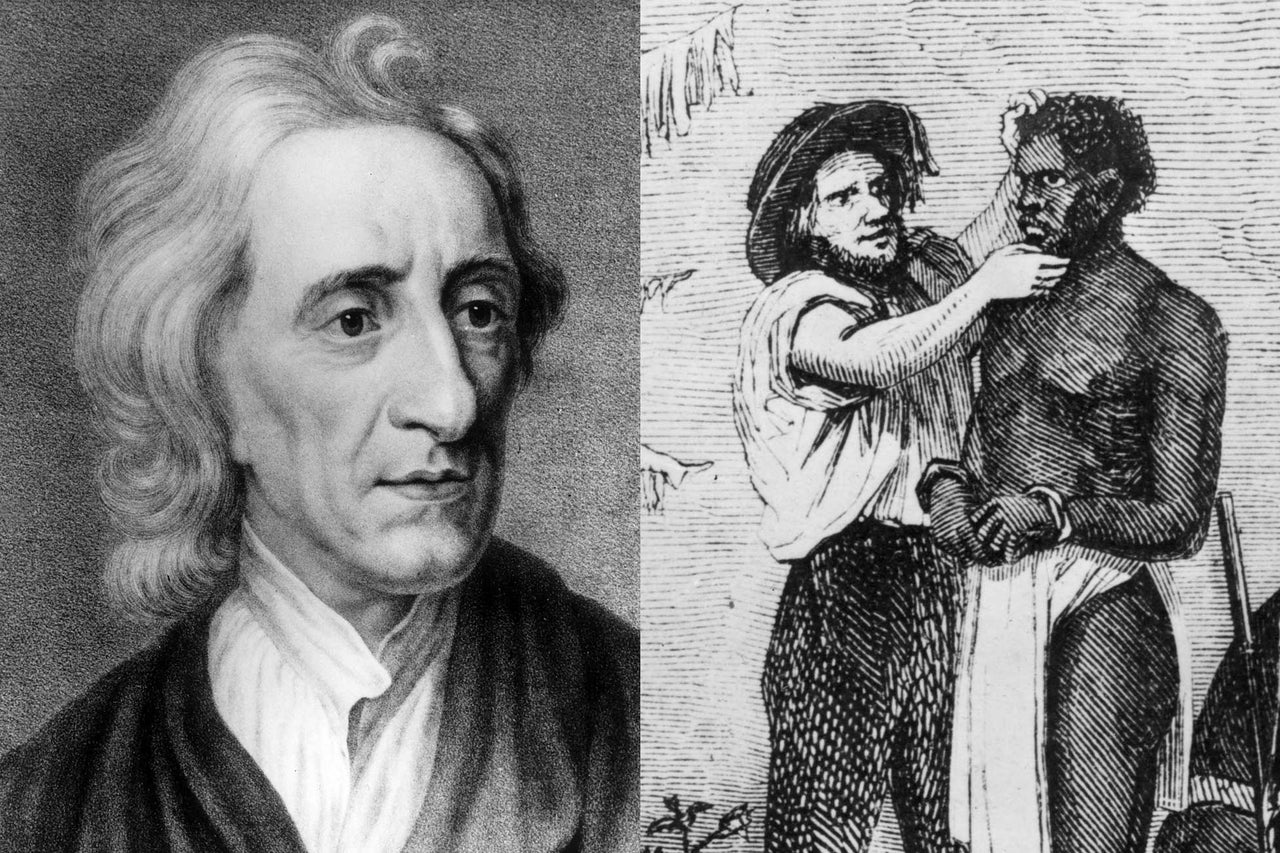
At its heart, the Enlightenment movement contained a paradox: Ideas of human freedom and individual rights took root in nations that held other human beings in bondage and were then in the process of exterminating native populations. Colonial domination and expropriation marched hand in hand with the spread of “liberty,” and liberalism arose alongside our modern notions of race and racism.
Required
1
A "paradox" is a situation that is difficult to understand because it is made up of two opposing ideas.
In your own words, explain why the Enlightenment period was a "paradox."
A "paradox" is a situation that is difficult to understand because it is made up of two opposing ideas.
In your own words, explain why the Enlightenment period was a "paradox."
Race as we understand it—a biological taxonomy that turns physical difference into relations of domination—is a product of the Enlightenment. Racism as we understand it now...developed as an attempt to resolve the fundamental contradiction between professing liberty and upholding slavery.
Required
1
A "taxonomy" is a system of classificiation (a way that we put things into categories).
According to the author of this article, why did people classify and rank different races during the Enlightenment period? Hint: think of the "paradox" that existed during this time period.
A "taxonomy" is a system of classificiation (a way that we put things into categories).
According to the author of this article, why did people classify and rank different races during the Enlightenment period? Hint: think of the "paradox" that existed during this time period.
To say that “race” and “racism” are products of the Enlightenment is not to say that humans never held slaves or otherwise classified each other prior to the 18th century.
But it took the scientific thought of the Enlightenment to create an enduring racial taxonomy and the “color-coded, white-over-black” ideology with which we are familiar. This project, undertaken by the leading thinkers of the time, involved “the setting aside [religion] for a more logical description and classification that [ranked] humankind in terms of [physical] and mental criteria based on observable ‘facts’ and tested evidence,” as historian Ivan Hannaford wrote in Race: The History of an Idea in the West.
Required
1
The Enlightenment period was the first time that humans enslaved or classified each other.
Required
1
Some Enlightenment thinkers explained their racial hierarchies by saying that they were simply based on ______________.
Johann Friedrich Blumenbach’s influential 1776 volume On the Natural Varieties of Mankind posited five divisions of humanity, beginning with “Caucasians.” These frameworks evolved into theories of racial difference... If natural rights are universal...then what is the explanation for enslaved Africans or “savages” in the Americas, who do not seem to act and reason like white Europeans? The answer is biological inferiority, in accordance with those racial classifications.
Required
1
Some Enlightenment thinkers said that people from Africa and the Americas were biologically inferior to white Europeans.
Required
1
Some Enlightenment thinkers believed it was okay to limit a person's rights if they were, in fact, biologicaly inferior.
Immanuel Kant sketched out a more formalized racial hierarchy in his own anthropological work. “In the hot countries the human being matures earlier in all ways but does not reach the perfection of the temperate zones,” Kant wrote. “Humanity exists in its greatest perfection in the white race … The yellow Indians have a smaller amount of Talent. The Negroes are lower and the lowest are a part of the American peoples.” Elsewhere, Kant asserted that “[Whites] contain all the impulses of nature in affects and passions, all talents, all dispositions to culture and civilization and can as readily obey as govern. They are the only ones who always advance to perfection.”
Required
1
According to Enlightenment thinker Immanuel Kant, what factor was important in helping the white race achieve "great perfection"?
...with regard to Native Americans. In Liberalism: A Counter-History, Domenico Losurdo notes how “the Second Treatise makes repeated reference to the ‘wild Indian,’ who moved around ‘insolent and injurious in the woods of America’ or the ‘vacant places of America.’ ” For Locke, “God gave the world to men in common; but since he gave it them for their benefit and for the greatest conveniences of life they could get from it, he can’t have meant it always to remain common and uncultivated.” In the context of English settlement, it’s an argument for theft.
Required
1
Many Enlightenment thinkers believed that indigenous Americans were equal to white Europeans in status and ability.
Required
1
According to John Locke, God gave the world to men for the purpose of __________________________.
