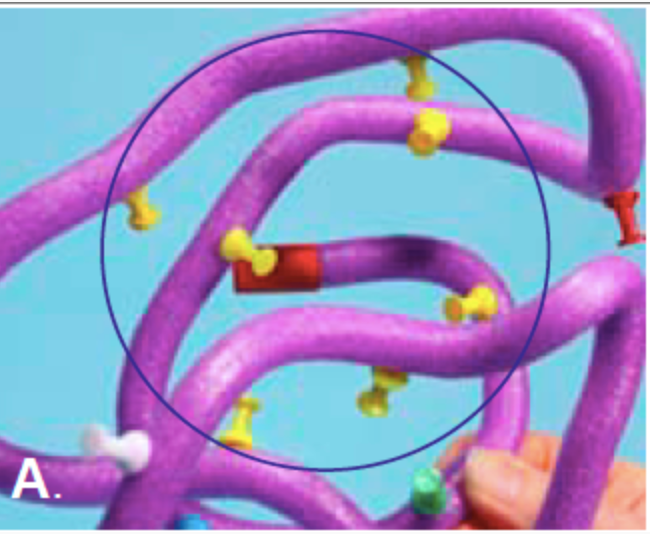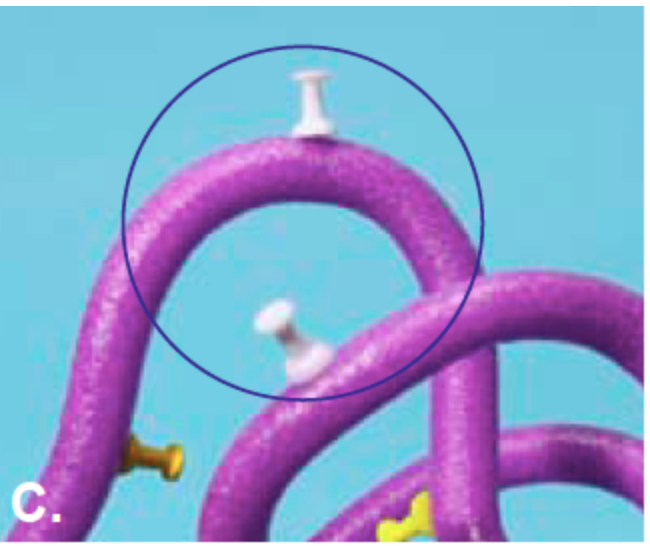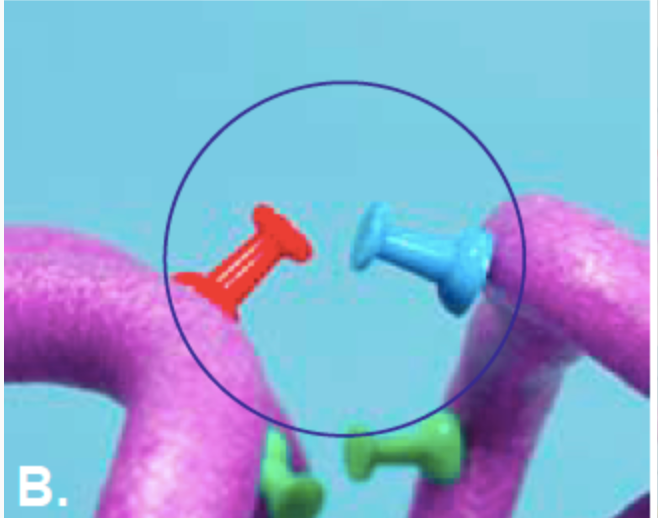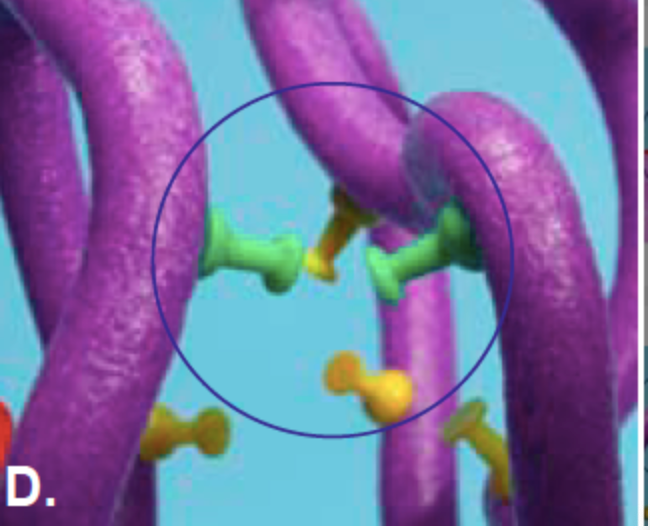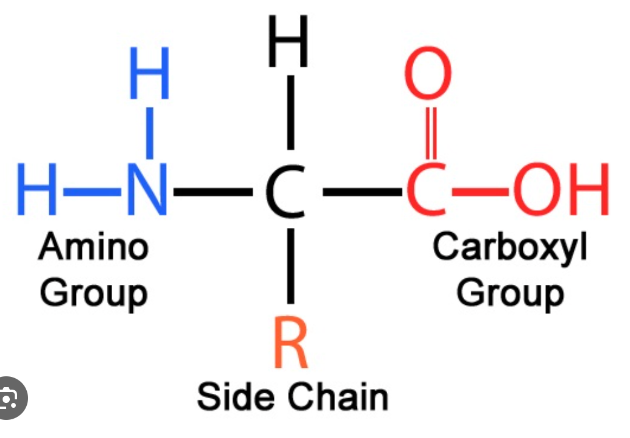
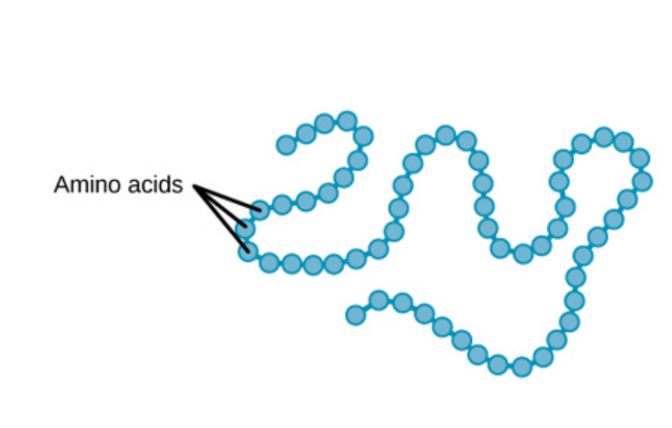
What is this molecule?
What is this molecule?
What is this molecule?
What part of the molecule above has 20 different possible versions?
What part of the above molecule could (if it were hydrophobic) "hide inside" the protein as it folded into its final 3D shape?
Matching - each choice is used once
| Draggable item | arrow_right_alt | Corresponding Item |
|---|---|---|
The sequence of the amino acids in a protein depends on (is determined by) the ... | arrow_right_alt | a molecule made of amino acids that has folded into a specific 3-D shape whose JOB depends on that shape! |
The part of the amino acid that determines how that amino acid interacts with other amino acids and/or water | arrow_right_alt | building block or monomer of proteins |
amino acid | arrow_right_alt | the sequence of bases in the DNA (in a gene) |
protein | arrow_right_alt | the R group |
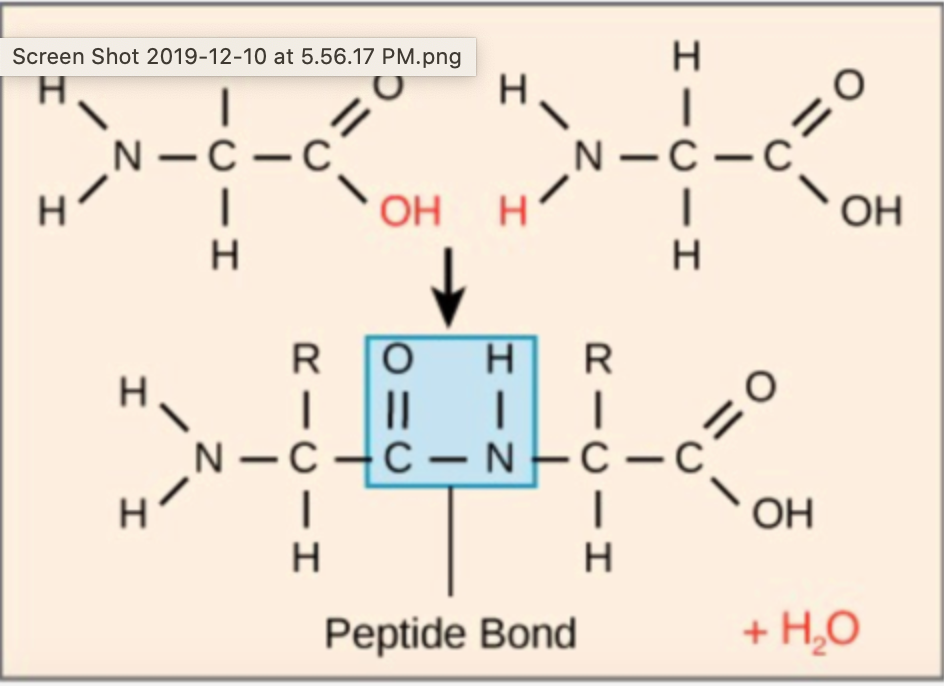
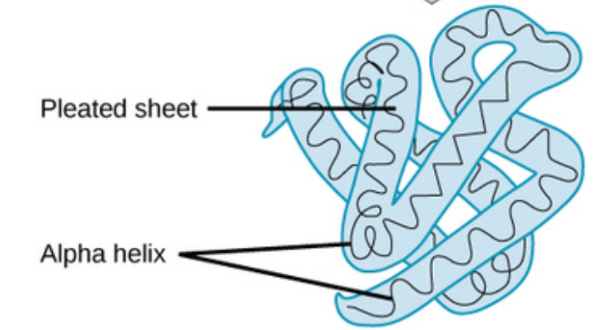
What does this image show? (select more than one choice)
Matching - hint- the colors are the same as we used in class
| Draggable item | arrow_right_alt | Corresponding Item |
|---|---|---|
how cysteine amino acids that form strong cross-links will behave in a folded amino acid | arrow_right_alt | yellow hiding on the inside of the folded protein
|
the positions of hydrophobic amino acids in a folded protein | arrow_right_alt | white facing outward from the protein
|
the positions of hydrophilic amino acids in a folded protein | arrow_right_alt |
|
how oppositely charged amino acids (acidic and basic) will behave in a folded protein | arrow_right_alt |
|
Put the stages of protein folding into their correct order
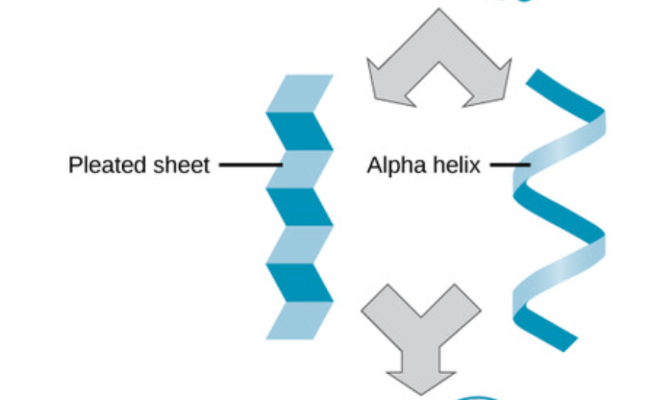
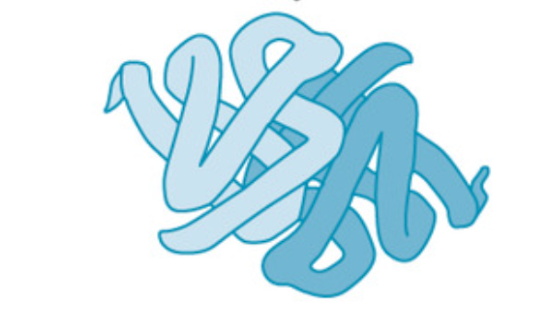
Click on the section that show how the changes in the type of keratin could explain the differences between straight hair and curly hair.
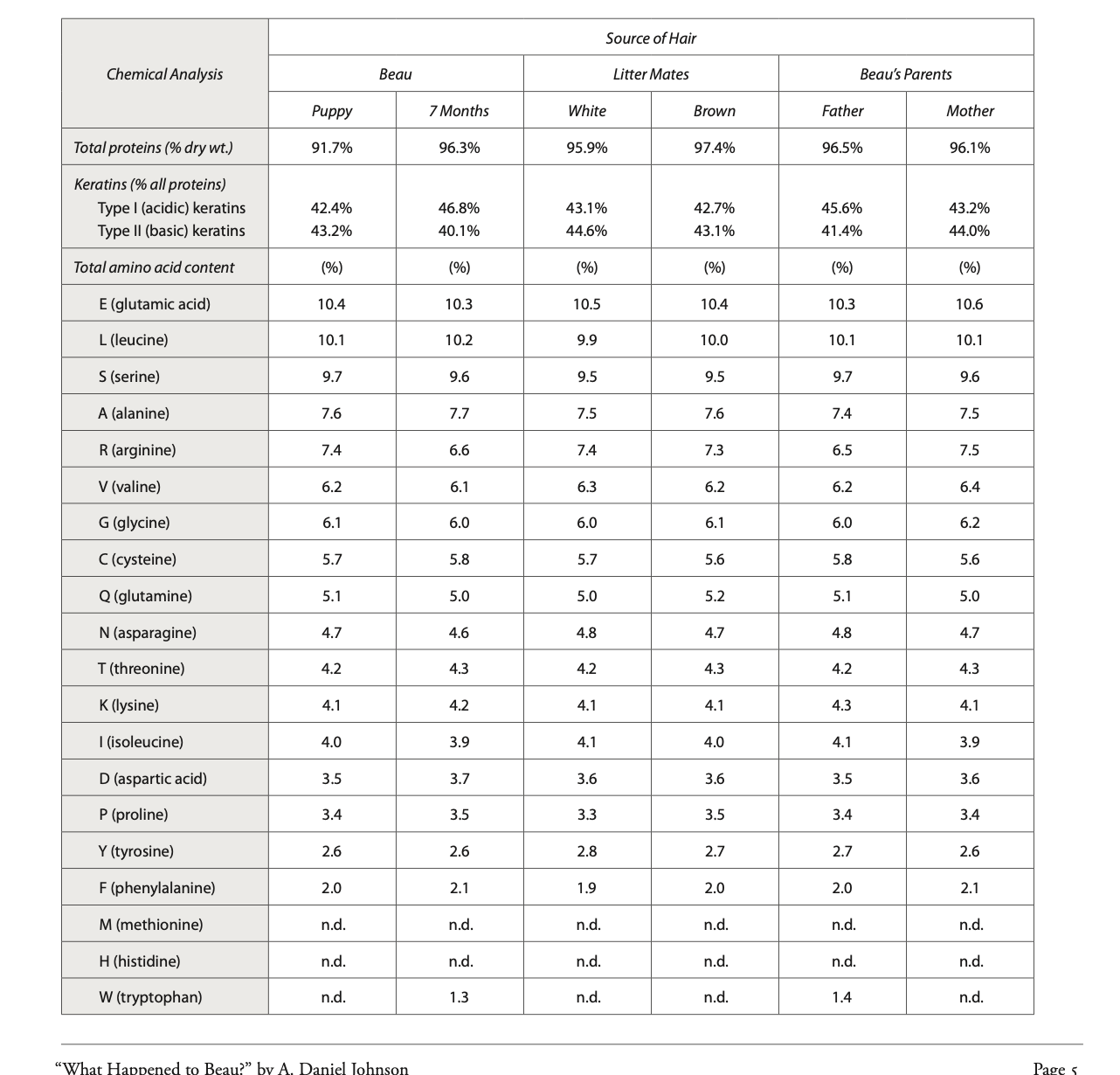
Click on the section that show how a reduction in an specific amino acid could help explain how straight hair could become curly hair
Click on the section that shows how an increase in an amino acid could help explain how straight hair could become curly hair.
Choose all descriptions that would help explain the cause of the differences in the shape of cross sections of 2 types of hair
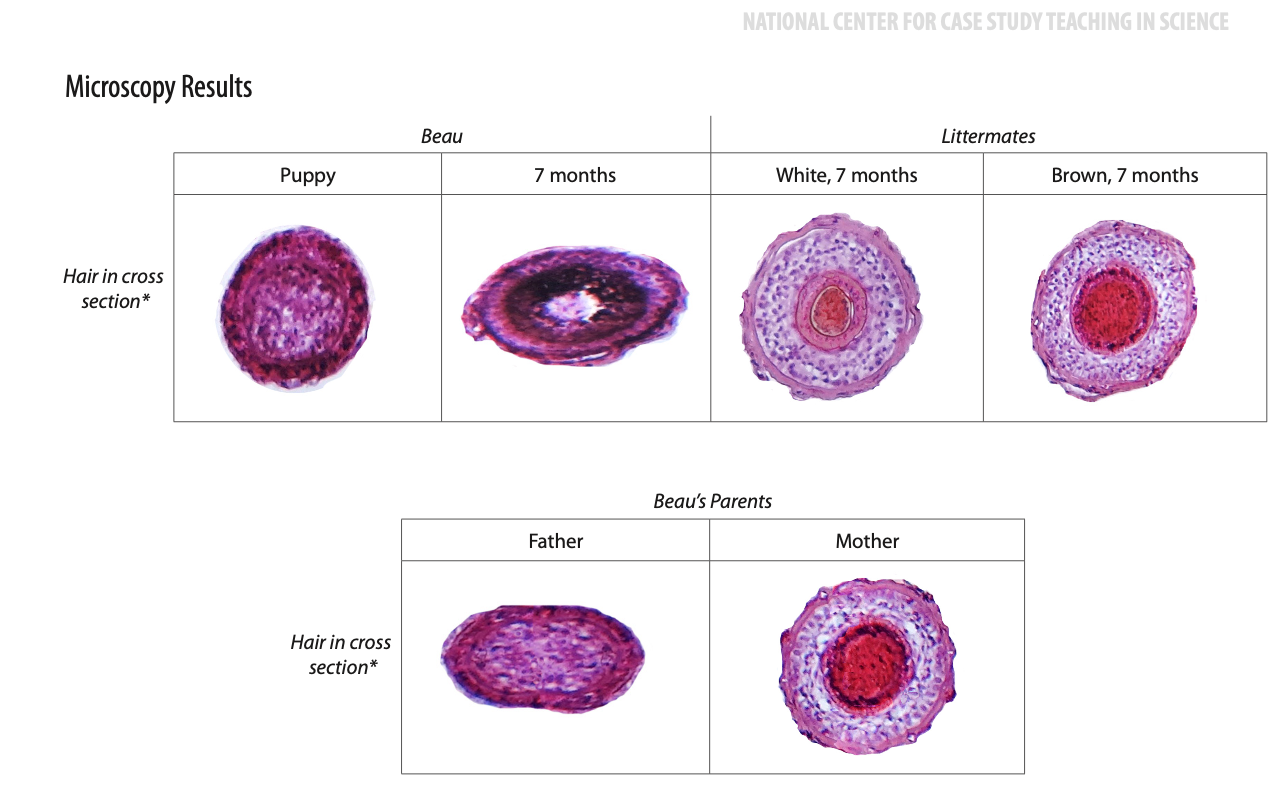
Click on all the hair cross sections that would have a ss (2 little s's) genotype (genes from the 2 parents)
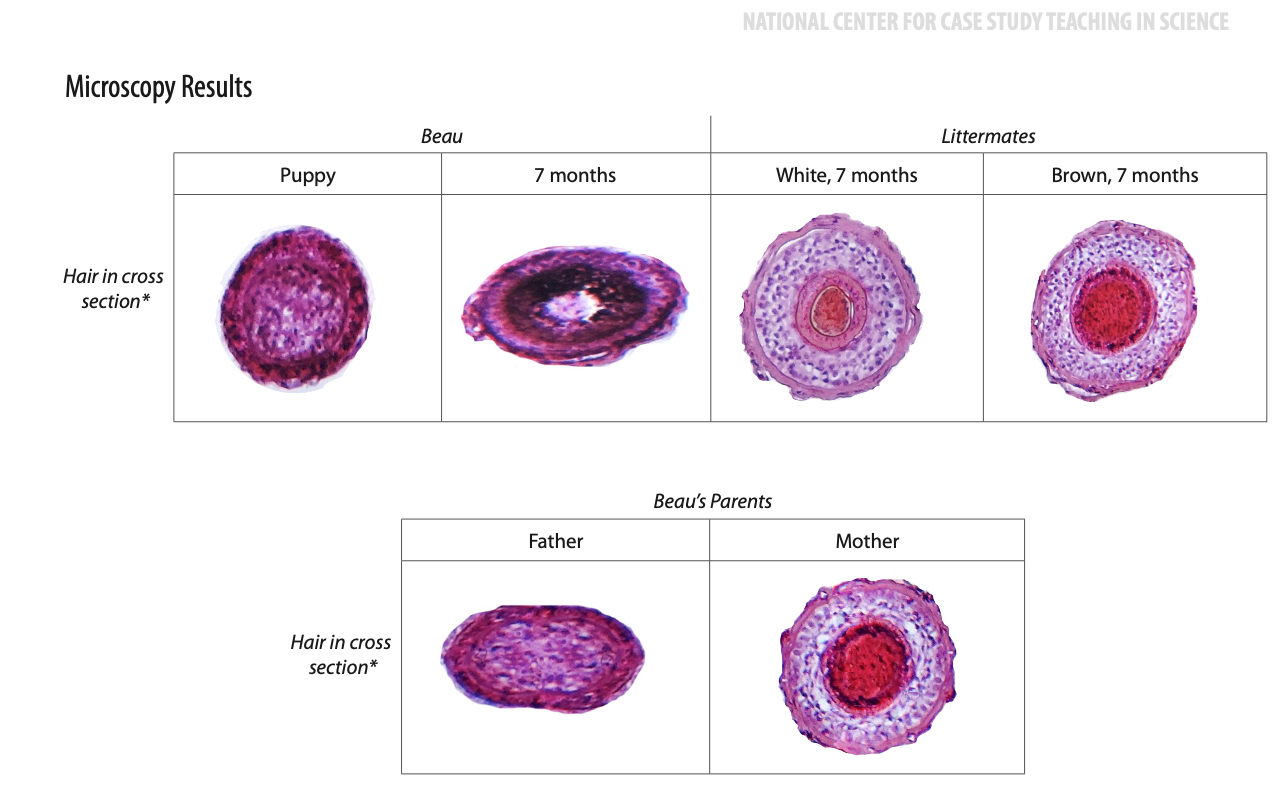
Click on all the hairs that would have a SS (2 big s's) or a Ss (one big S and one little s) genotype (genes from the 2 parents)
Go to this link - once on the web page - scroll down the left side to find this section
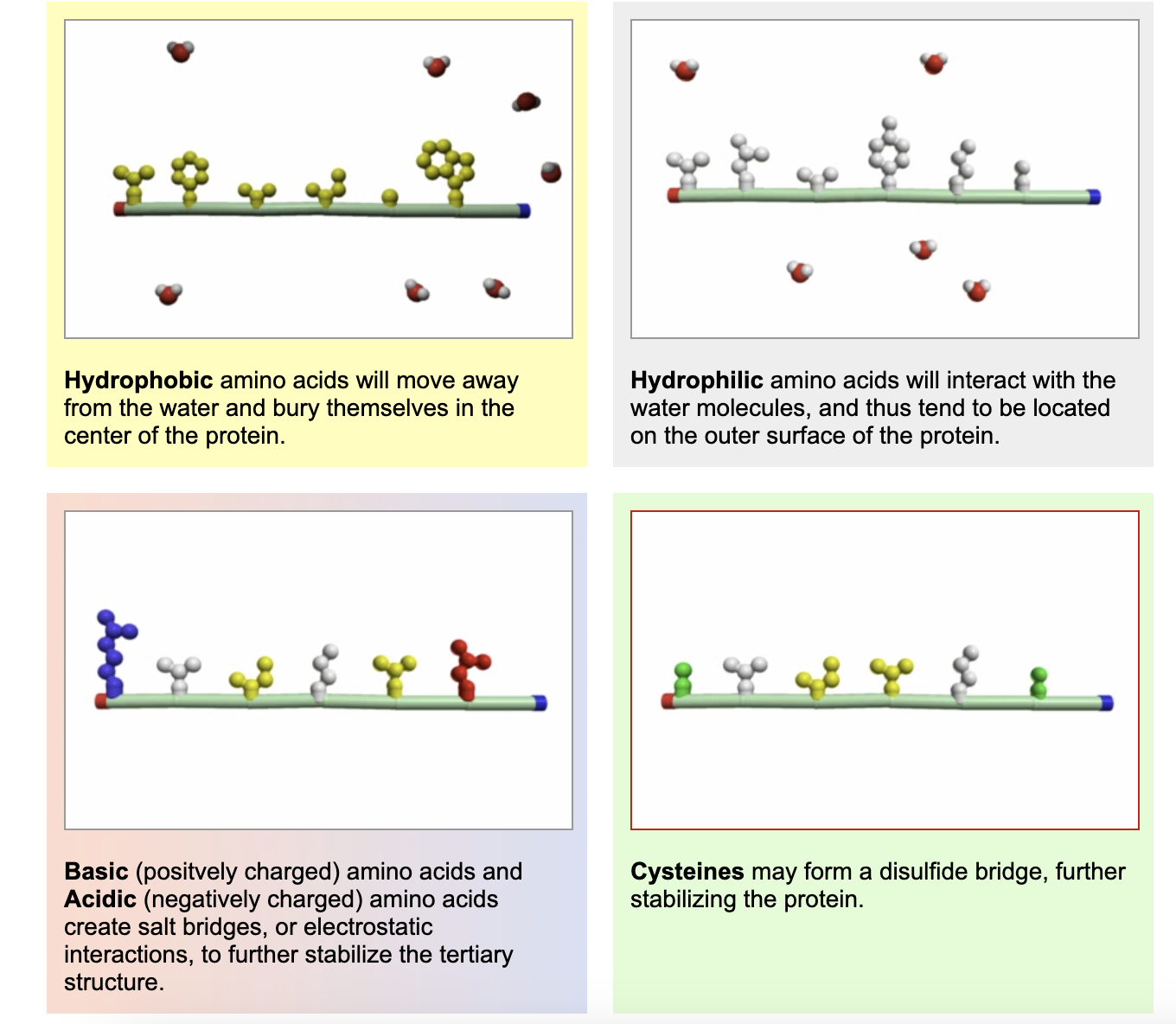
Click on the upper left box and watch the animation and then look at the protein to the right in the display box .... Explain what happens to the hydrophobic amino acids when a protein folds
Go to this link - once on the web page - scroll down the left side to find this section
Click on the upper right box and watch the animation and then look at the protein to the right in the display box .... Explain what happens to the hydrophilic amino acids when a protein folds
Go to this link - once on the web page - scroll down the left side to find this section
Click on the lower left box and watch the animation and then look at the protein to the right in the display box .... Explain what happens to the basic and acidic amino acids when a protein folds
Go to this link - once on the web page - scroll down the left side to find this section
Click on the lower right box and watch the animation and then look at the protein to the right in the display box .... Explain what happens to cysteine amino acids when a protein folds
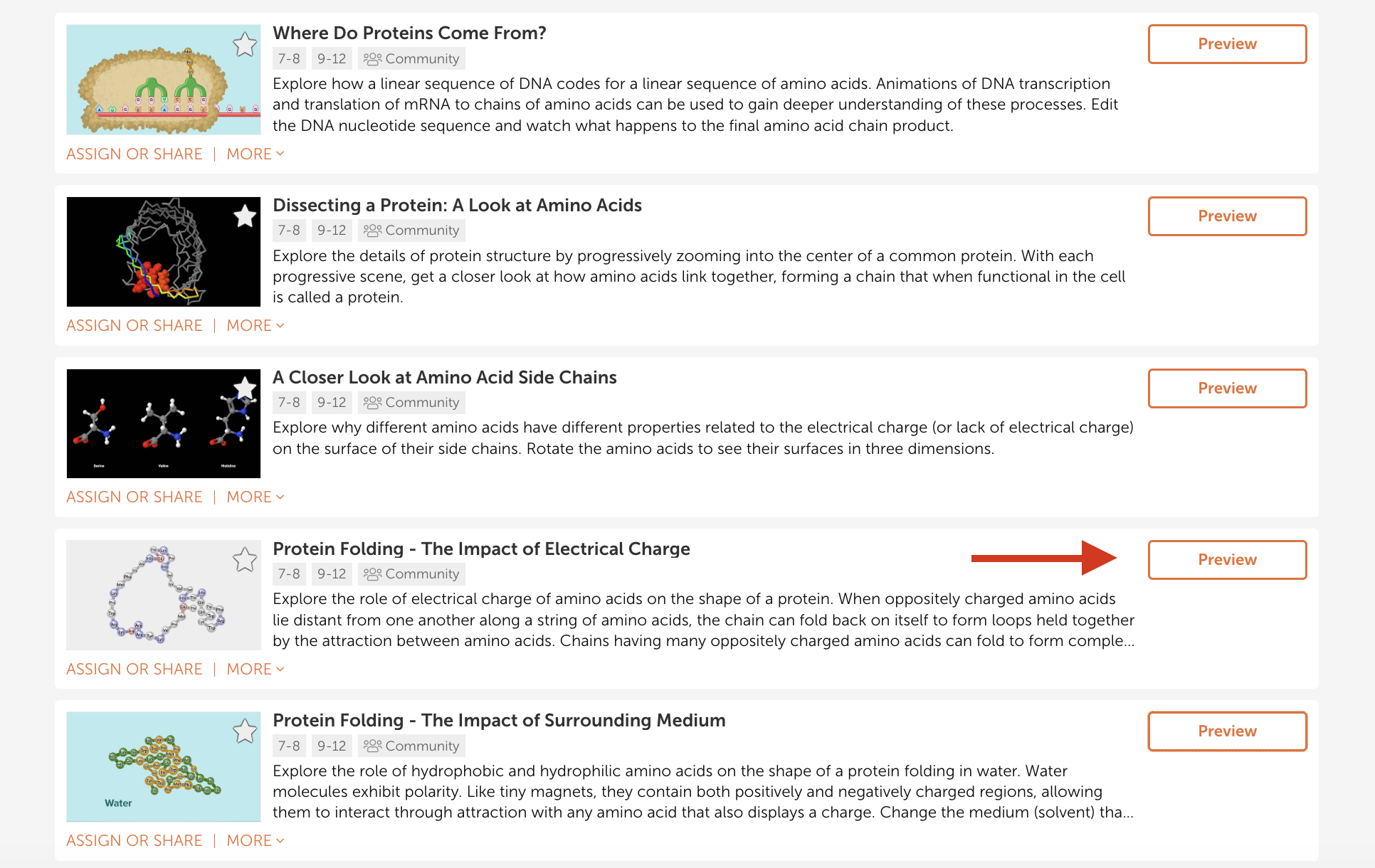
Click on this link ... scroll down to you see this interactive and click on the 4th box down (see red arrow) to "preview" the interactive
Set up the following...
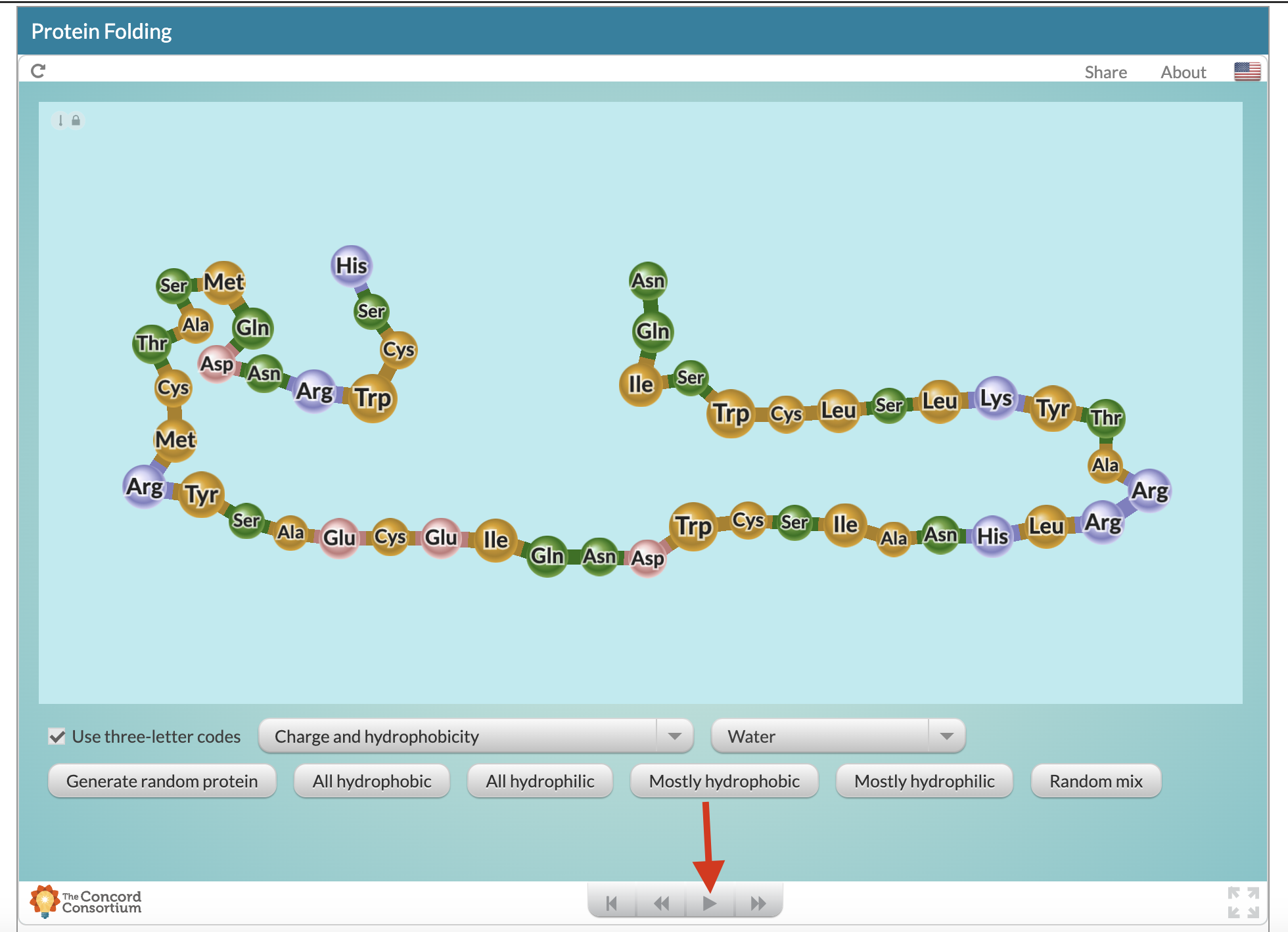
Then hit the play button - see red arrow - once the protein folds, pause the animation and answer the questions below...
Where did the TRP amino acid(s) end up in the final folded protein? . Why did the TRP amino acid(s) end up in this part of the protein? . Where did the
Where did amino acids like GLU or GLN end up? Why?
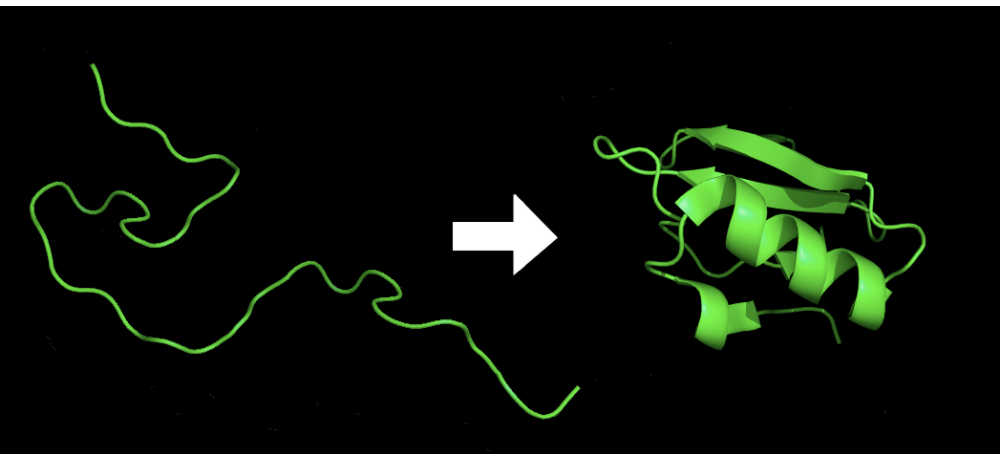
Describe the process (shown below) of how the unfolded chain of amino acids goes through its folding process to become the final folded protein seen to the right of the arrow.
Make sure to include and describe the 4 rules of protein folding.
Summarize WHY a PROTEIN'S structure (how it is made) DETERMINES how that PROTEIN functions (what it does)
Explain how the shape of a protein could be changed? What are the possible effects (3) on protein function if the shape of a protein is changed?