Log in
Sign up for FREE
arrow_back
Library

The 7 Principles of the Constitution

star
star
star
star
star
Last updated about 3 years ago
31 questions
Required
7
Required
3
Question 1
1.

Which section of the text is the best summary of the principle of limited government?

The idea of Limited Government can be traced in English history back to the Magna Carta, when the nobles first restricted the power of the king in 1215. When the Framers wrote the Constitution they recognized the need to say that the government’s powers were limited. Government leaders could not abuse their powers; they were not above the law.
Required
8
Required
9
Required
6
Question 4
4.

Which two sections of the text explain the role of the people?

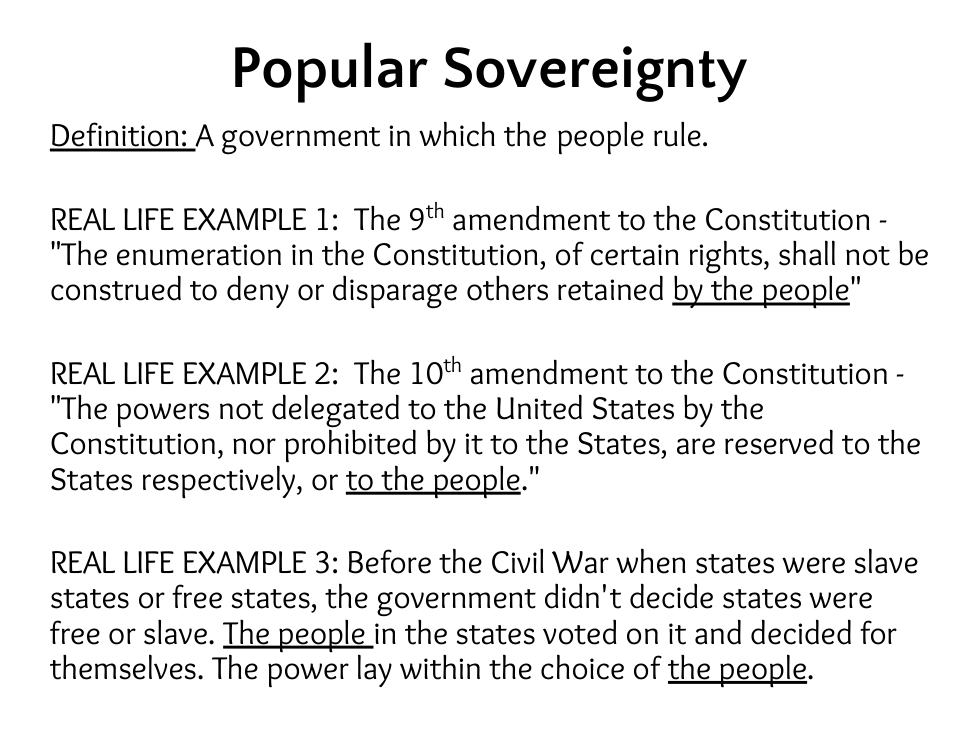
We the People…” Our Constitution begins with the idea of popular sovereignty. The Framers began the U.S. Constitution with this important principle, which means that power begins with the people. Popular sovereignty is the idea that average citizens can be trusted to make important decisions that affect their lives and the lives of other Americans. Throughout American history, more and more citizens were permitted to participate in the democratic process. The idea that power can begin from the ground up; that a group of people can exercise that power and change their society for the better is an exciting idea in human history.
Required
6
Question 5
5.

Which two sections of the text can best help us remember the meaning of Republicanism?

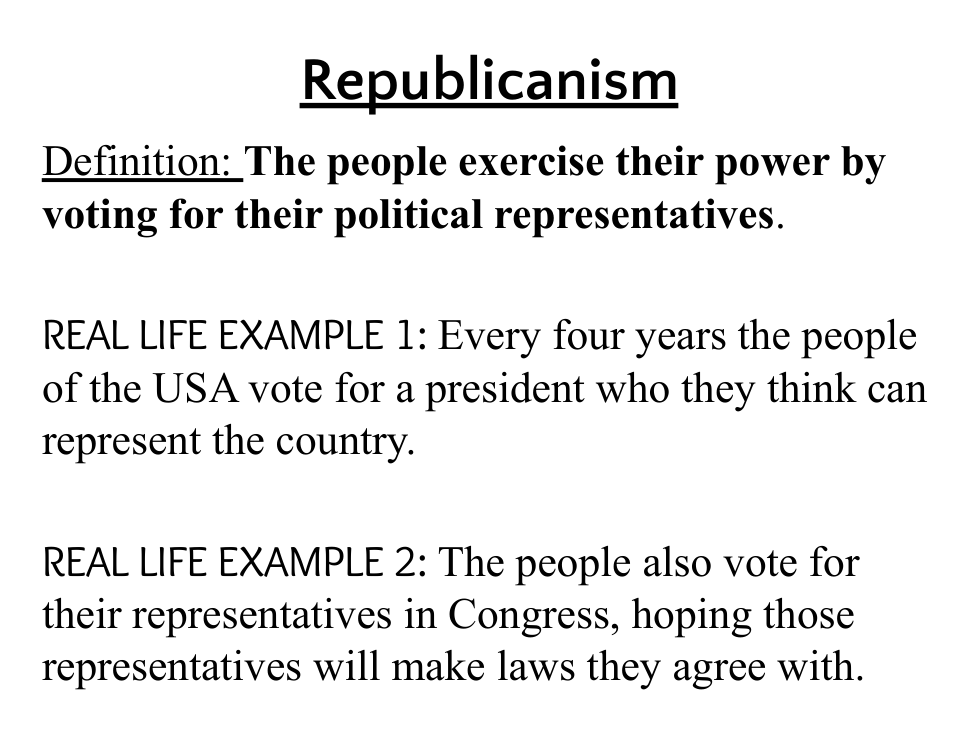
Citizens should be able to elect their leaders. In a republic, the citizens vote for what or whom they think will be best for the general public good. This principle of the Constitution is not to be confused with the Republican political party, which shares a similar name. To help you remember what republicanism means, take the first 3 letters of the word, R-E-P and use it to remind yourself of the word REPRESENTATIVE.
Required
2
Question 6
6.

Which section of the text best shows the relationship of federalism?

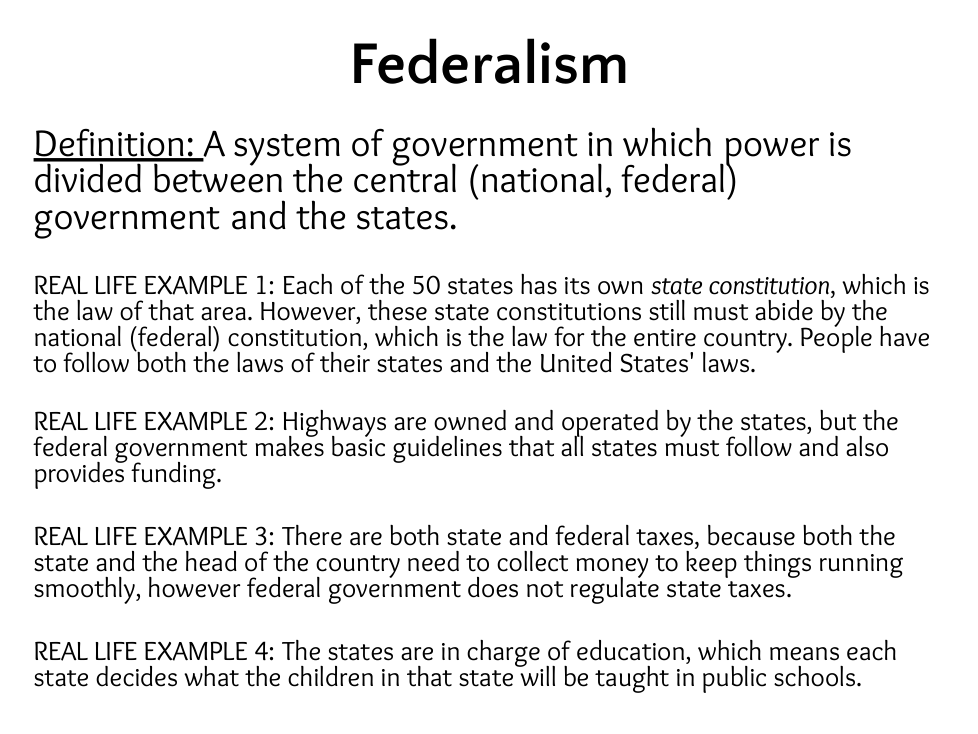
The Founders looked to their state governments to best govern over their local needs. But they recognized the need for a strong, national government that would protect them and help regulate trade/commerce. The solution was the balance of federalism. Federalism is the sharing of powers between the state governments and the national government. When the Founders wrote the Constitution, one of their challenges was creating a strong national government, which at the same time respected the rights of the state governments. How did they ensure that one did not trample onto the other? The Constitution states that the federal government has specific powers such as coining money or defending the country. At the same time, the state governments also have powers that are reserved to them, such as creating schools. Finally there are powers they share such as the power to tax.
Required
2
Question 7
7.

Which section of the text shows that the Framers were concerned about tyranny?

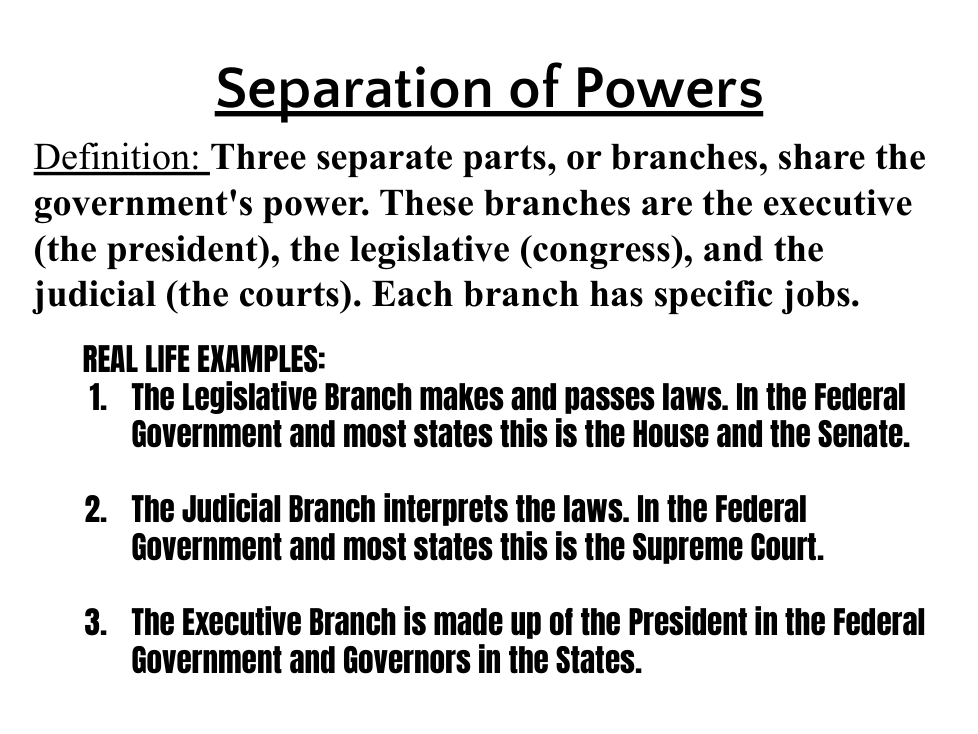
This principle of the U.S. Constitution divides powers into three separate groups or branches of government. The reason the Framers chose this was because they wanted to ensure that no one person or group of people had too much power. The U.S. Constitution divides power into the executive branch, the legislative branch and the judicial branch. Each branch has its own unique responsibilities and powers, including powers over the other branches.
Required
2
Question 8
8.

Which section of the text explains how this principle limits the government and protects individual rights?

This principle of the Constitution is closely connected with Separation of Powers. The Founding Fathers wanted to make sure that the three different branches of government, the legislative, executive and judicial, would be able to limit each other’s powers. For example, the President can appoint ambassadors or federal judges, but only with the approval of the Senate, the upper house of Congress. This is a very important way to protect the citizens’ liberties and ensure that no one group of people becomes too powerful. Each branch always has the other two branches looking over their shoulder.
Required
4
Question 9
9.

Which two sections of the text explain where in the Constitution this right is found?

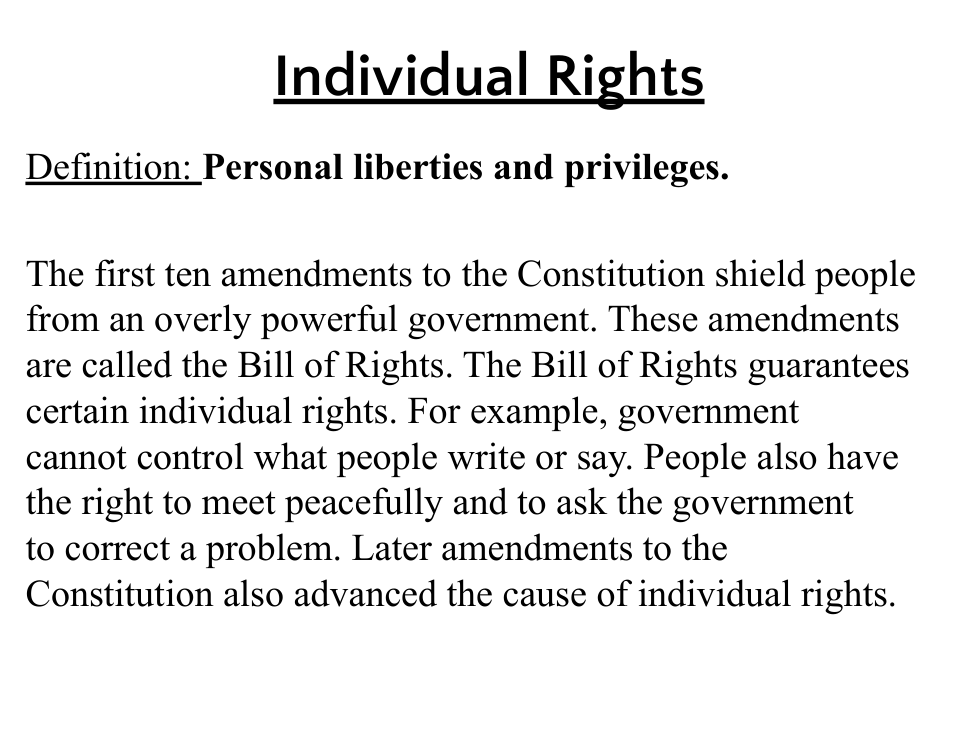
In the Preamble of the Constitution it states “…to secure the blessings of liberty to ourselves and our posterity…” This principle guarantees that citizens possess basic rights and liberties. This idea can be traced back to Thomas Jefferson’s quote “life, liberty and the pursuit of happiness…” in the Declaration of Independence, borrowed from the philosopher John Locke. Locke had argued that all human beings were born with three natural rights, life, liberty and property and the purpose of government was to protect those rights. The Founders debated the best way to do that, but in the end the Constitution was amended to include the protection of certain rights, which can be found in the Bill of Rights.
Question 10
10.
Draggable itemarrow_right_altCorresponding Item
Individual rights
arrow_right_alt
people power - we, the people
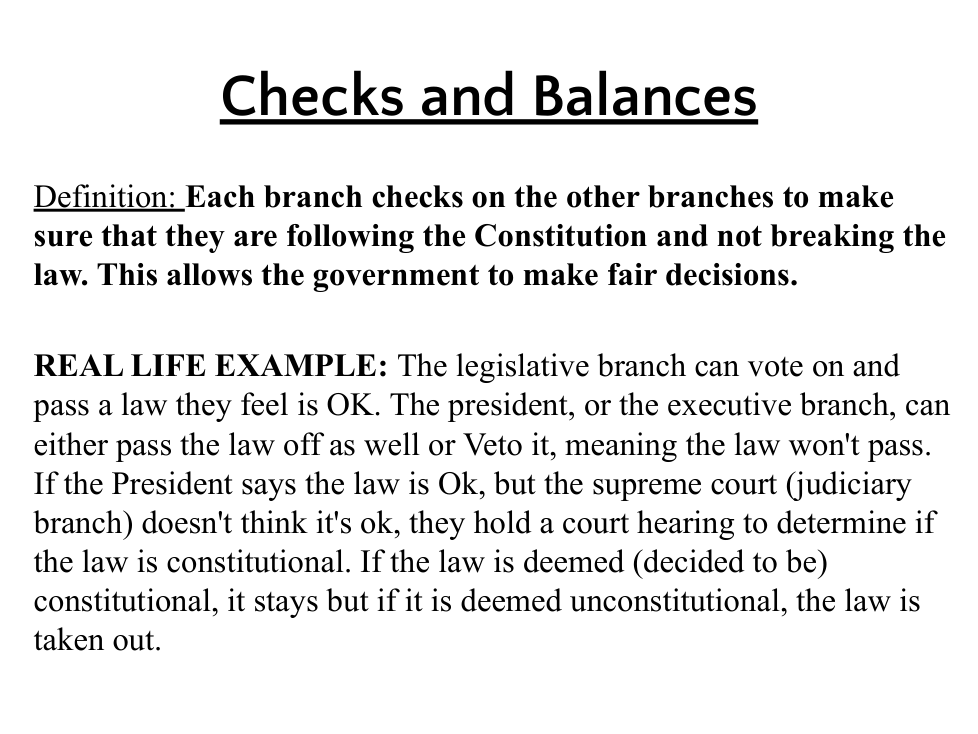
Checks and balances
arrow_right_alt
electing representatives to represent you
Popular sovereignty
arrow_right_alt
each branch of government controls the others
Separation of powers
arrow_right_alt
the freedoms each person has are protected
Limited government
arrow_right_alt
power is split between the states and federal government
Federalism
arrow_right_alt
government power is divided among three main groups
Republicanism
arrow_right_alt
no one is above the law
Required
2
Question 11
11.

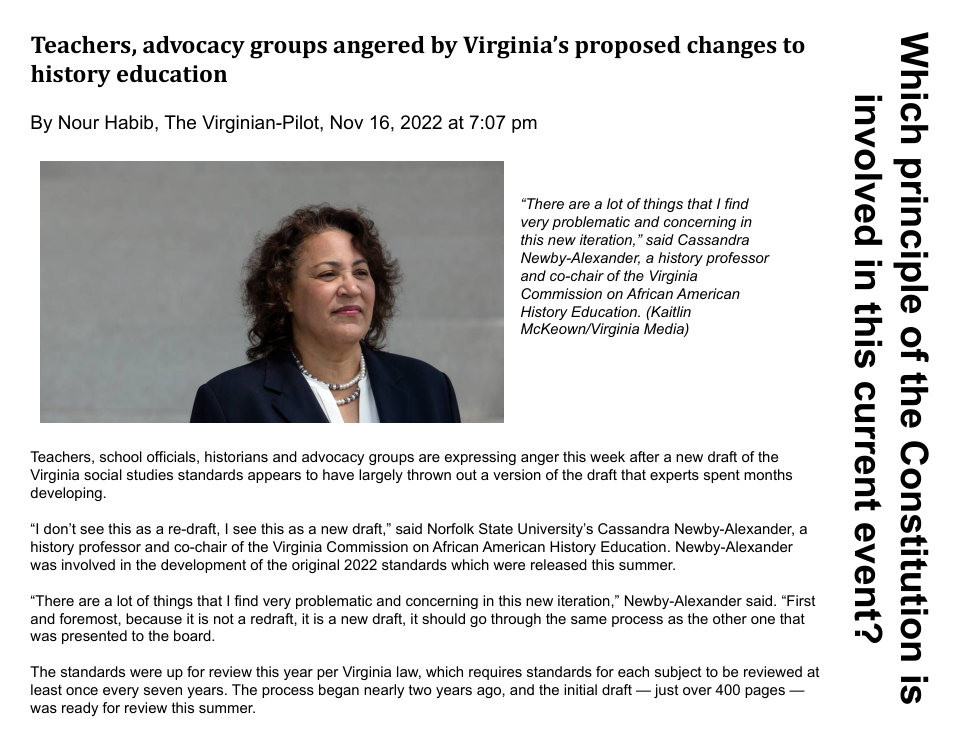
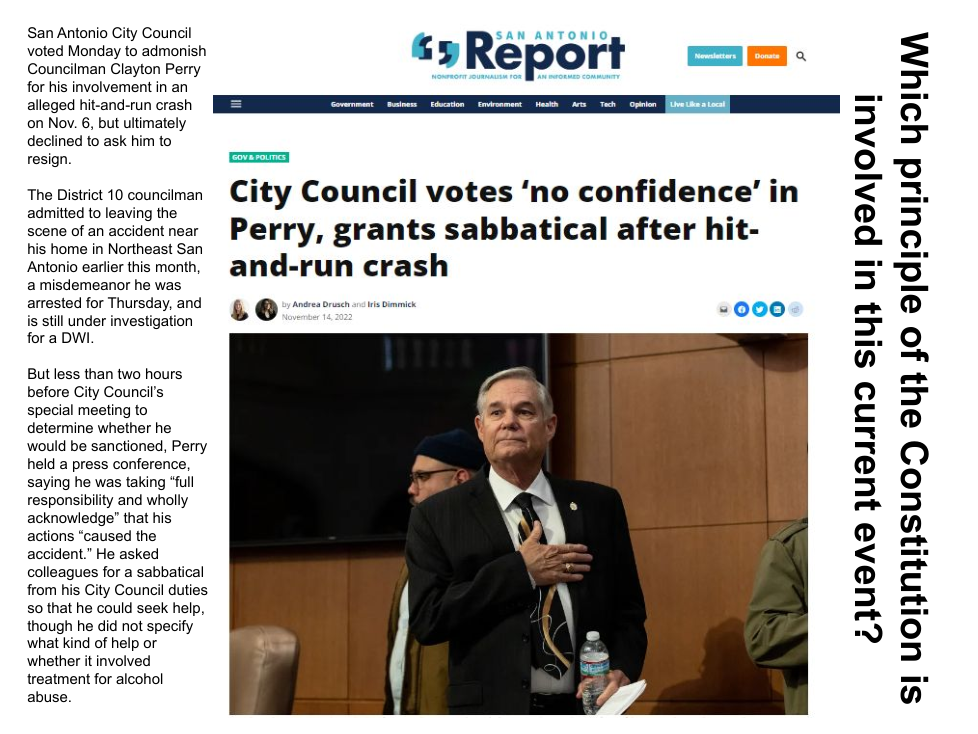
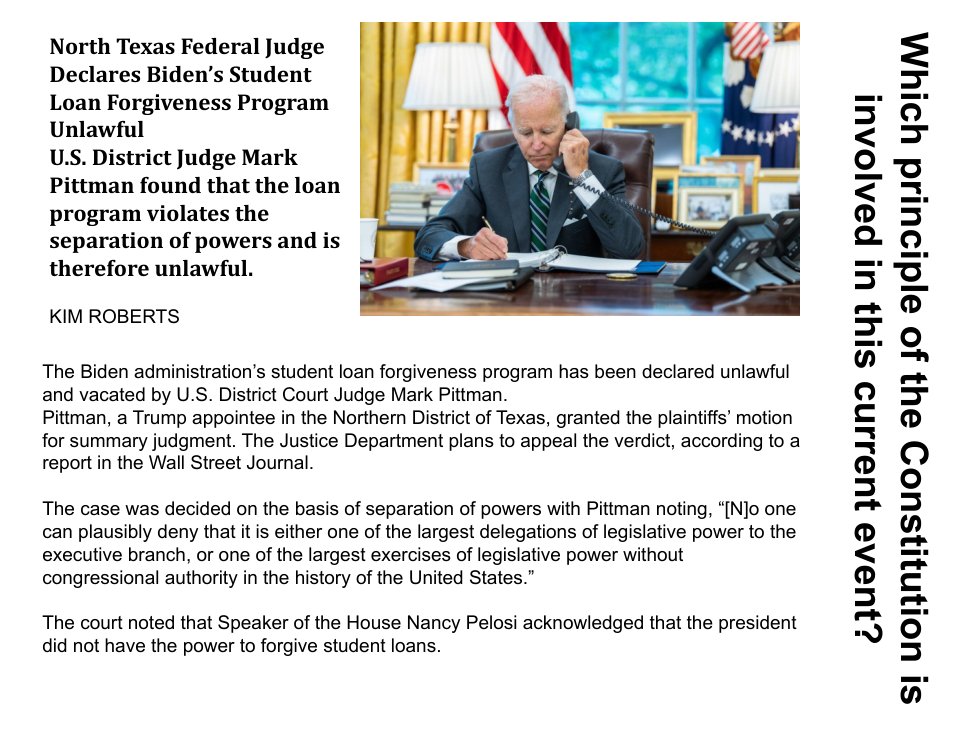
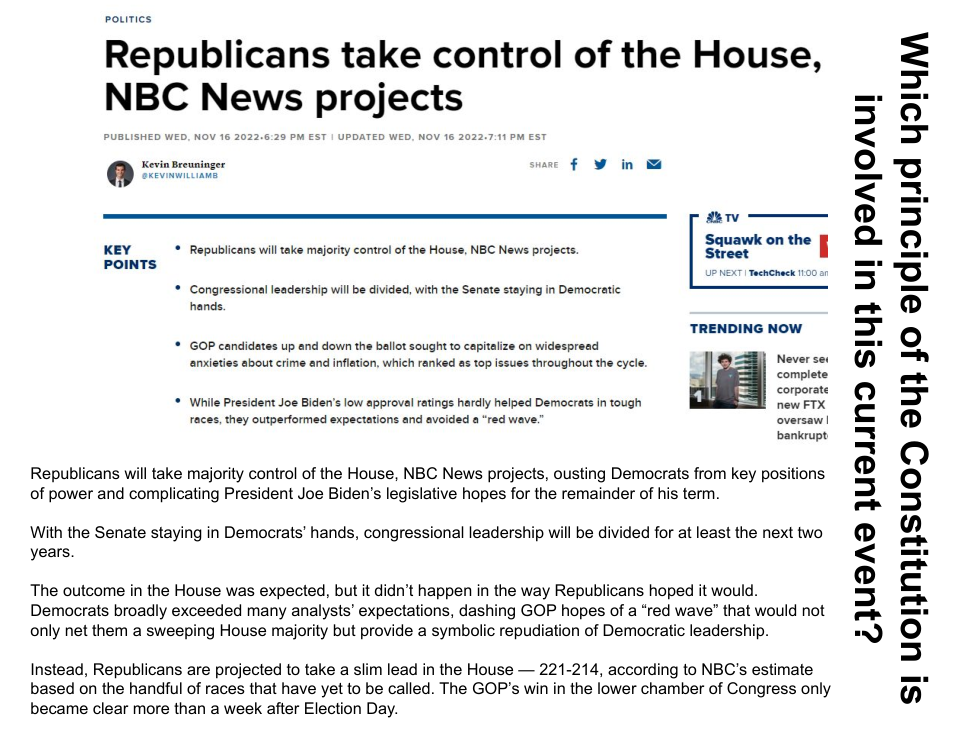
Which constitutional principle is illustrated by this article?

Required
2
Question 12
12.

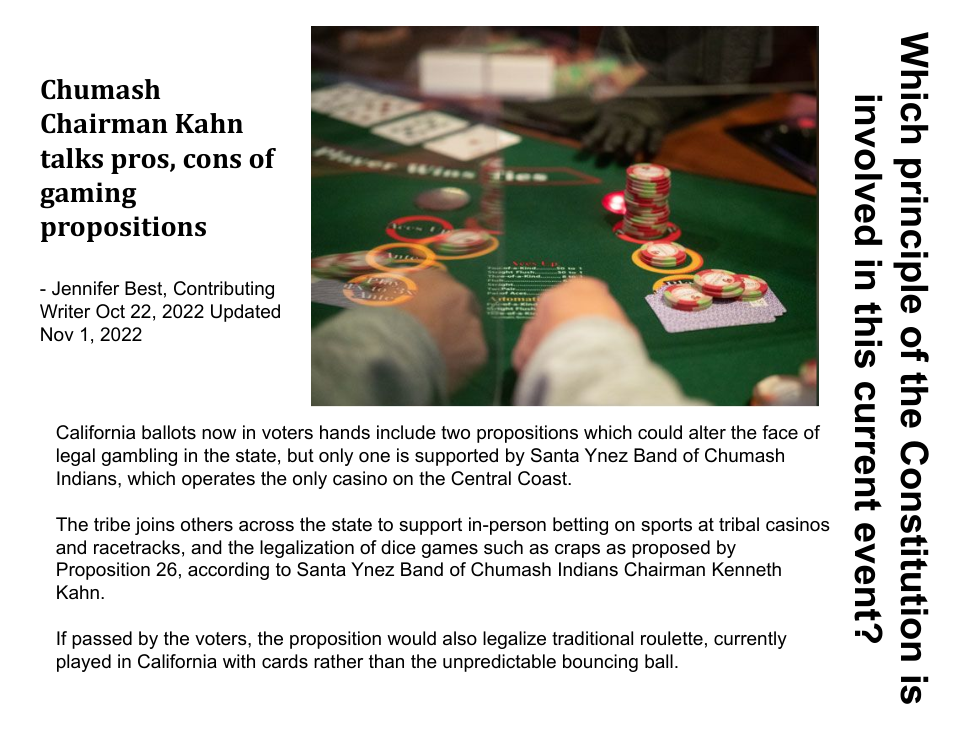
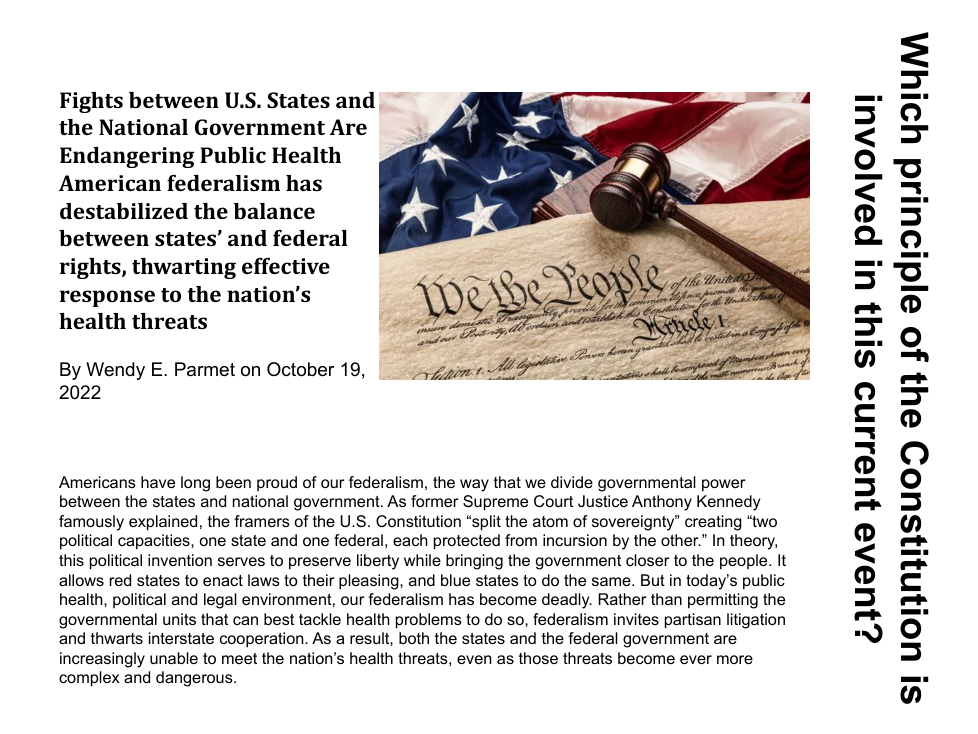
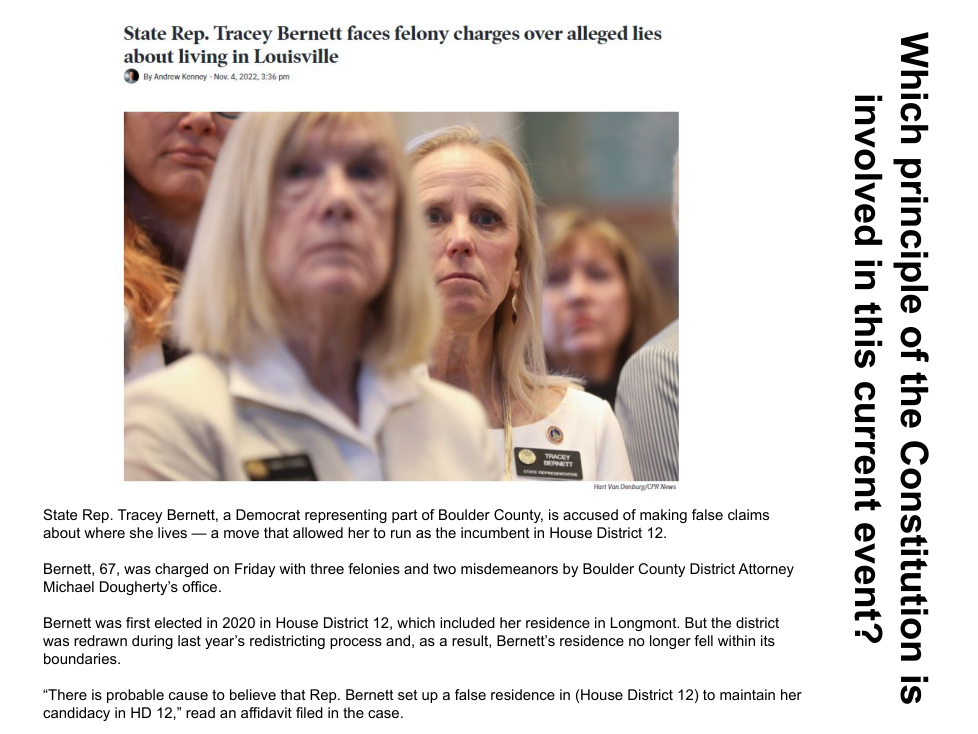
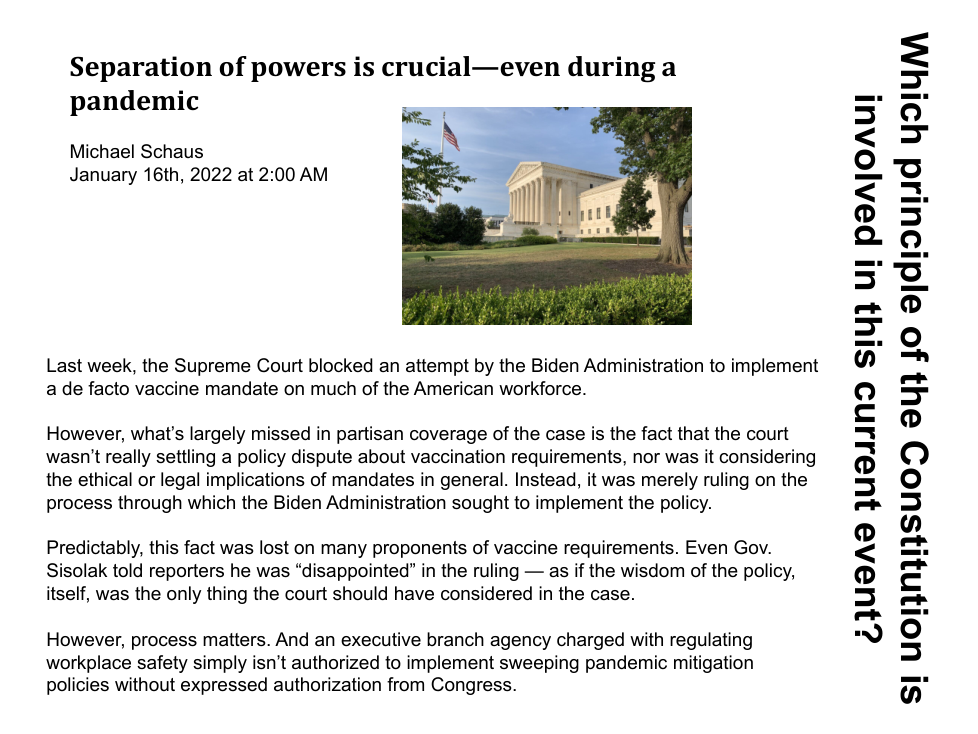
Which constitutional principle is illustrated by this article?

Required
2
Question 13
13.

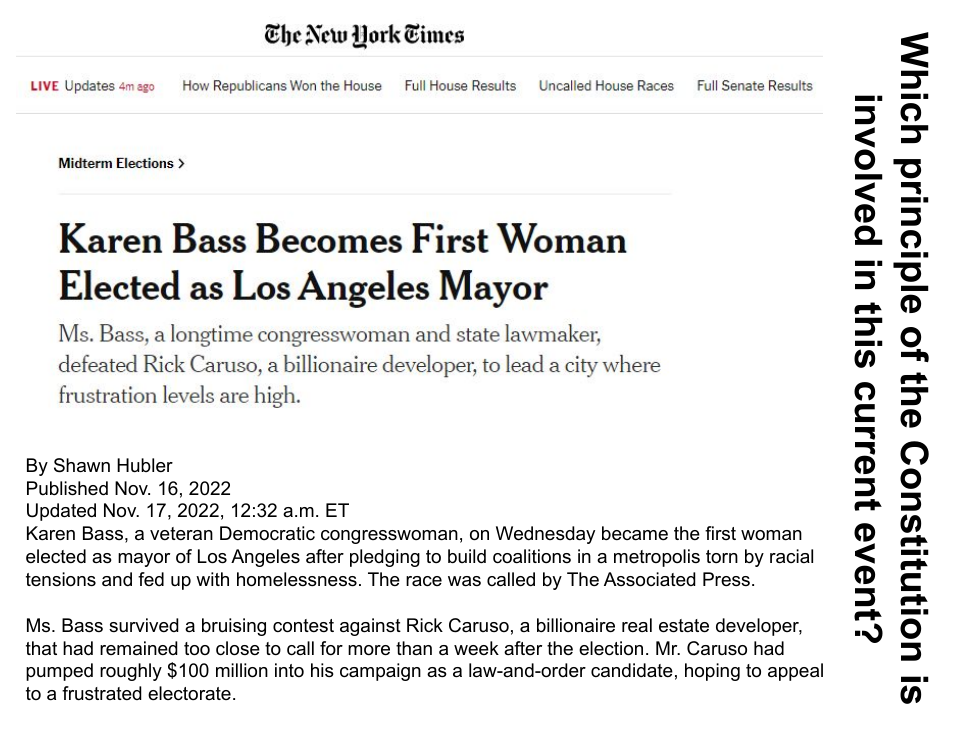
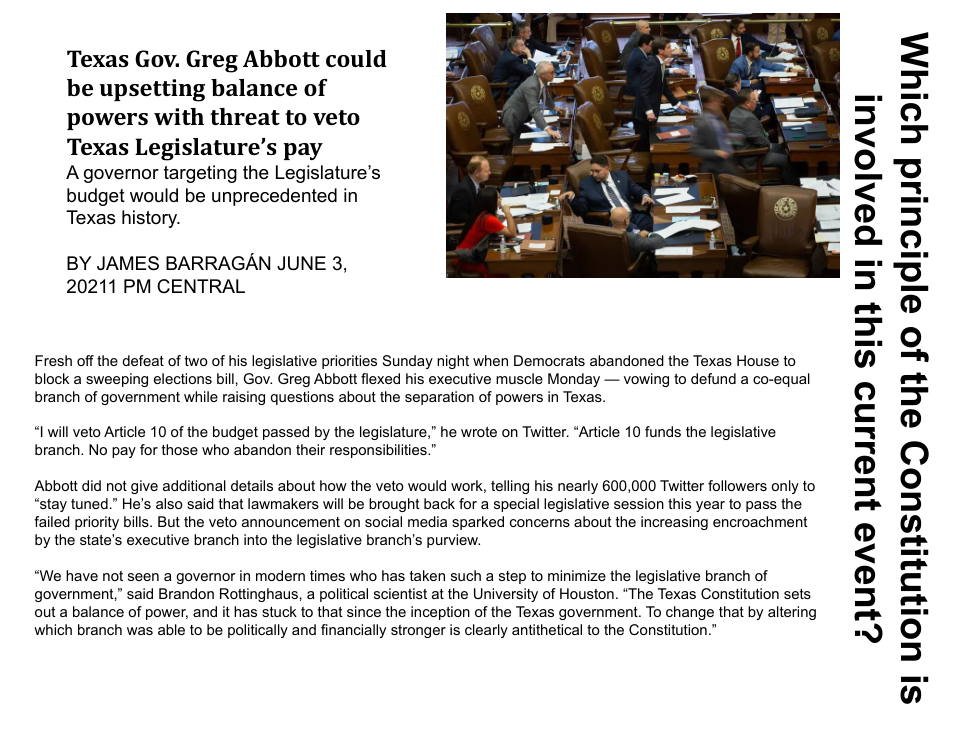
Which constitutional principle is illustrated by this article?

Required
2
Question 14
14.

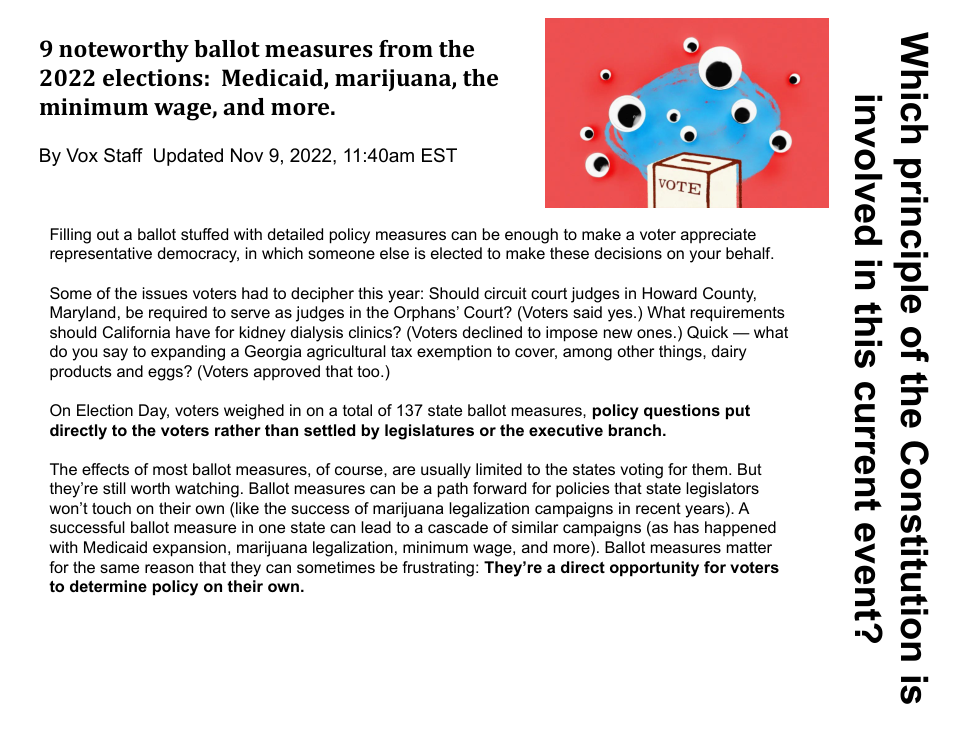
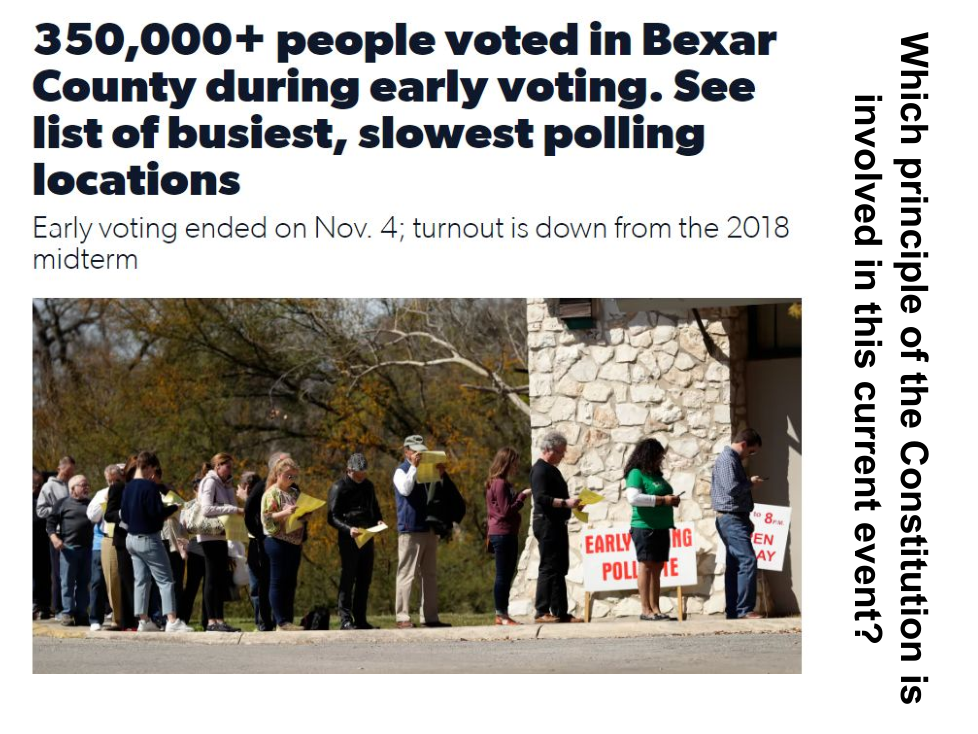
Which constitutional principle is illustrated by this article?

Required
2
Question 15
15.

Which constitutional principle is illustrated by this article?

Required
2
Question 16
16.

Which constitutional principle is illustrated by this article?

Required
2
Question 17
17.

Which constitutional principle is illustrated by this article?

Required
2
Question 18
18.

Which constitutional principle is illustrated by this article?

Required
2
Question 19
19.

Which constitutional principle is illustrated by this article?

Required
2
Question 20
20.

Which constitutional principle is illustrated by this article?

Required
2
Question 21
21.

Which constitutional principle is illustrated by this article?

Required
2
Question 22
22.

Which constitutional principle is illustrated by this article?

Required
3
Question 23
23.

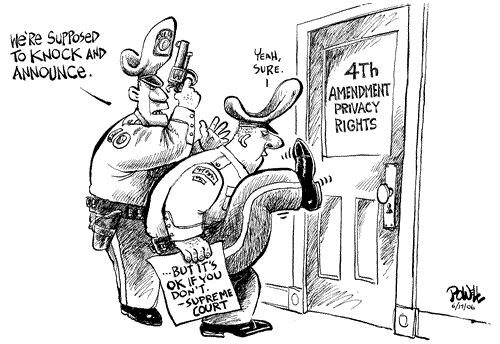
What constitutional principle is being shown in this political cartoon?

Required
3
Question 24
24.

What constitutional principle is being shown in this political cartoon?

Required
3
Question 25
25.

What constitutional principle is being shown in this political cartoon?

Required
3
Question 26
26.

What constitutional principle is being shown in this political cartoon?

Required
3
Question 27
27.

What constitutional principle is being shown in this political cartoon?

Required
3
Question 28
28.

What constitutional principle is being shown in this political cartoon?

Required
3
Question 29
29.

What constitutional principle is being shown in this political cartoon?

Required
3
Question 30
30.

What constitutional principle is being shown in this political cartoon?

Required
3
Question 31
31.

What constitutional principle is being shown in this political cartoon?

Question 2
2.

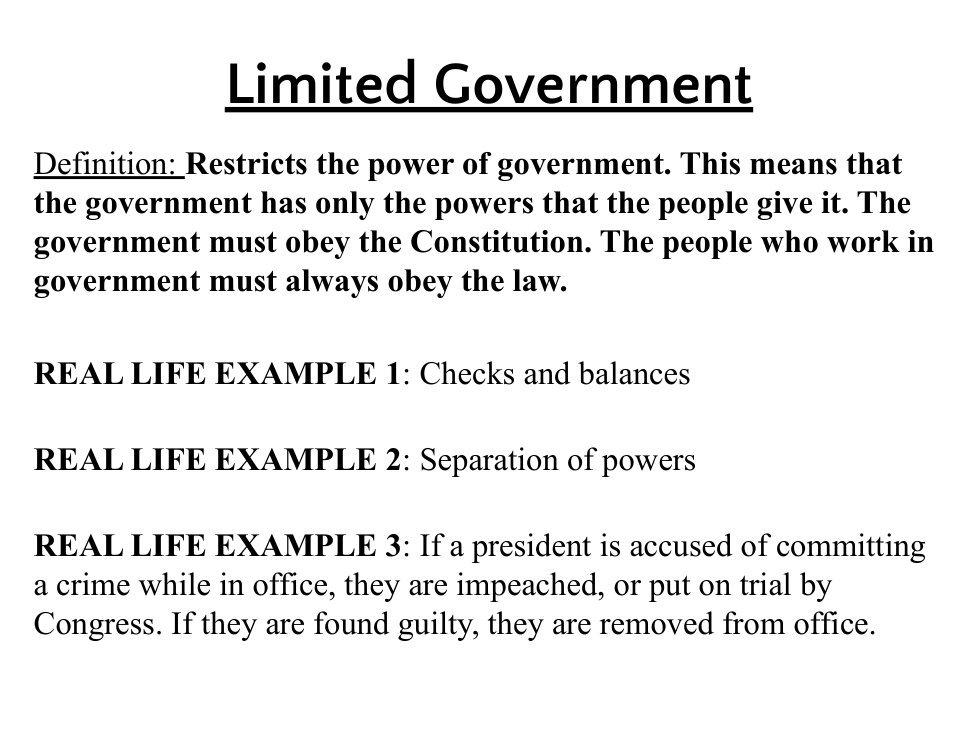
For the scenario, put the events in the correct order.

  1. They are found guilty.
  2. They are removed from office.
  3. A president is accused of breaking the law.
  4. They are impeached (put on trial) by Congress.
Question 3
3.

This principle is found in Articles I, II, and III which means it applies to: