Unit 4 Study Guide
star
star
star
star
star
Last updated over 3 years ago
40 Nsɛmmisa
1
HS-ESS2-2
HS-ESS2-5
1
HS-ESS2-2
HS-ESS3-4
1
HS-ESS2-4
HS-ESS3-2
5
5
5
5
5
1
1
1
1
1
10
10
10
10
1
1
1
1
1
1
1
1
1
2
1
1
1
1
EEn.2.3.1
1
EEn.2.3.1
1
1
1
1
1
1
1
1
The water cycle is continually moving
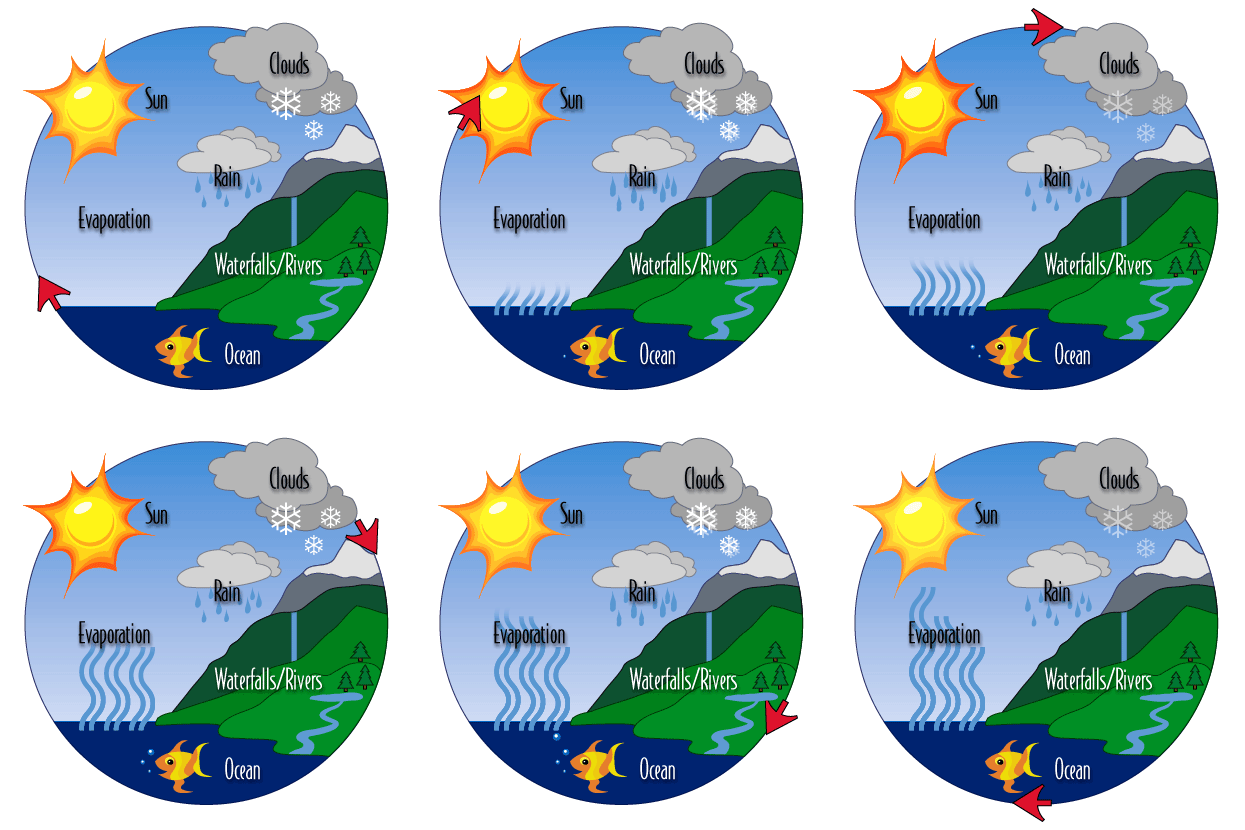
What does evaporation change water to?

What does condensation

change water to?
What are two ways that water enters the atmosphere to become water vapor?
During which process of the water cycle does water vapor cool in the air to form clouds?
When run-off water seeps through porous soil, it becomes ________.
In which part of the water cycle do plants release excess water vapor into the atmosphere?
What are the two driving forces behind the water cycle?
What percent of the Earth's water
is fresh water?

The largest reservoir of freshwater that is available to humans is ____________.
Approximately ____________ percent of Earth's area is represented by oceans and marginal seas.
Most freshwater on Earth exists in:
Most of the water on Earth exists primarily in which of the following locations?
What is the process by which water enters the small pore spaces between particles in soil or rocks?
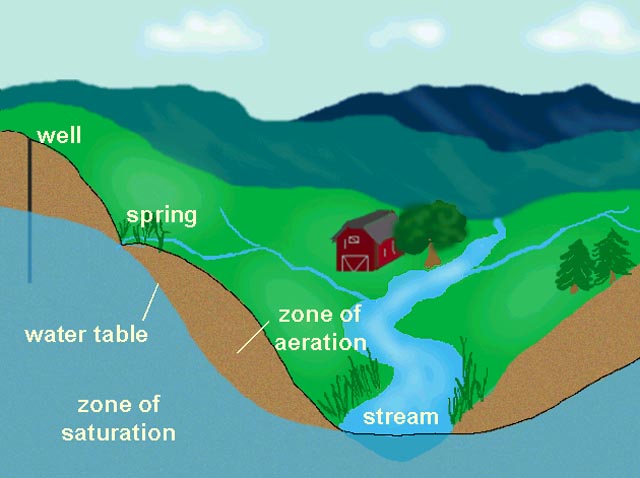
Look at the image above. What is the difference between the saturated and the unsaturated zones of ground water?
The boundary between the saturated zone and the unsaturated zone is called the _____.
Ground water is:
Rain and precipitation causes the water table line to move:
Drought or lack of rain causes the water table line to move:
Match the type of pollution with its cause.
| Draggable item | arrow_right_alt | Corresponding Item |
|---|---|---|
Mercury or Heavy Metals | arrow_right_alt | bacteria from mammal waste |
Plastic | arrow_right_alt | can enter the water as part of acid mine drainage or as metals leach into water over time. |
PCBs | arrow_right_alt | Can enter the water as fertilizer, soaps, or detergents enter waterways. |
Sediment | arrow_right_alt | a group of chemicals that don't easily break down that was manufactured to produce patins, plastics, and electrical equipment. |
Coliform Bacteria | arrow_right_alt | washes into rivers due to runoff, makes the river more turbid or cloudy. |
Nutrients | arrow_right_alt | breaks down into smaller and smaller pieces, often accumulates in the ocean in the middle of major ocean gyres; can be harmful to marine wildlife. |
Which type of pollution can you easily identify the source?
Which is an example of non-point source pollution?
Match the stage of wastewater treatment with what it removes:
| Draggable item | arrow_right_alt | Corresponding Item |
|---|---|---|
Secondary | arrow_right_alt | lets most remaining solids and oils settle after large items have already been removed from the wastewater. |
Tertiary | arrow_right_alt | adds bacteria and oxygen to help remove any dissolved organic matter in the water; after this stage bacteria are killed usually with chlorine. |
Primary | arrow_right_alt | any additional treatment is done at this stage, like removal of nitrogen and phosphate nutrients. |
Match the disaster with the correct description:
| Draggable item | arrow_right_alt | Corresponding Item |
|---|---|---|
Deepwater Horizon Disaster | arrow_right_alt | occured when an oil tanker ran aground in Alaska in 1989, led to legislation that required oil tankers at sea to have an inner and outer hull |
Exxon Valdez Disaster | arrow_right_alt | occured when an oil rig experienced a blowout that was unable to be capped for four months in the Gulf of Mexico |
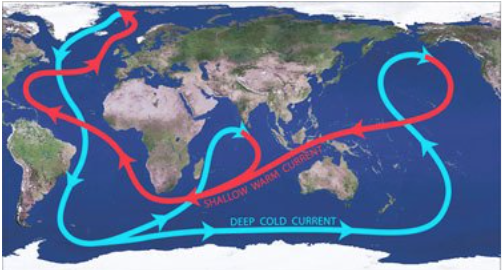
What do we call the constantly moving system of deep-ocean circulation driven by differences in temperature and salinity?
Salt water is _____________ fresh water.
As the temperature of ocean water changes from 10 to 30 degrees C, how does the density change?
What factors create deep ocean currents?

Which of the following drives global thermohaline (conveyor belt) circulation?
What is the upward movement of cold water from the ocean depths called?
what is density?
The energy that drives surface ocean currents comes from ____.
Ocean currents tend to move warm water where?
Ocean currents tend to move cold water where?
Ocean currents that are warm tend to cause what type of change to the climate of an area?
Ocean currents that are cold tend to cause what type of change to the climate of an area?
What is the name of the current that makes Western Europe and the East Coast of North America slightly warmer?
What process brings cold water that is nutrient rich towards the surface?
Where can upwelling occur?
Match the type of shoreline feature to the proper term.
| Draggable item | arrow_right_alt | Corresponding Item |
|---|---|---|
Beach Nourishment | arrow_right_alt | large piles of boulders or concrete built on either side of a coastal inlet to let a channel stay open for boats; built to prevent rivermouths or streams from meandering naturally; they completely disrupt and redirect the longshore current. |
Barrier Island | arrow_right_alt | a shorline structure made of wood or boalders, concrete, or steel; designed to interrupt the longshore current eroding away the beach; causes more erosion on one side of the structure and less on the other side. |
Sea walls | arrow_right_alt | islands along the coast of a continent that are long, narrow offshore desposts of sand or sediment that parallel the coastline. |
Jetty | arrow_right_alt | a strcture meant to stop the nautral movement of sand by the waves that crash on the shore; temporarily hold back the ocean; built of concrete, wood, or steel and is a large wall that runs parallel to the beach. |
Groin | arrow_right_alt | adding sand back to the beach as a replacement for all the sand that was lost due to erosion. |