2) Double-check that you have answered all parts to each question
3) You got this!
Weather Conditions and Pitch Speed
At each level of organized baseball, there are rules in place about what type of bat and ball can be used. These rules help ensure the game play remains competitive, fair, and fun. The type of bat and ball are the two major factors that game organizers can control. But there are a lot of other factors that people claim also have a big impact on game play that cannot be controlled, such as weather conditions, location of the stadium, and the strength of the players.
Weather Conditions and Pitch Speed
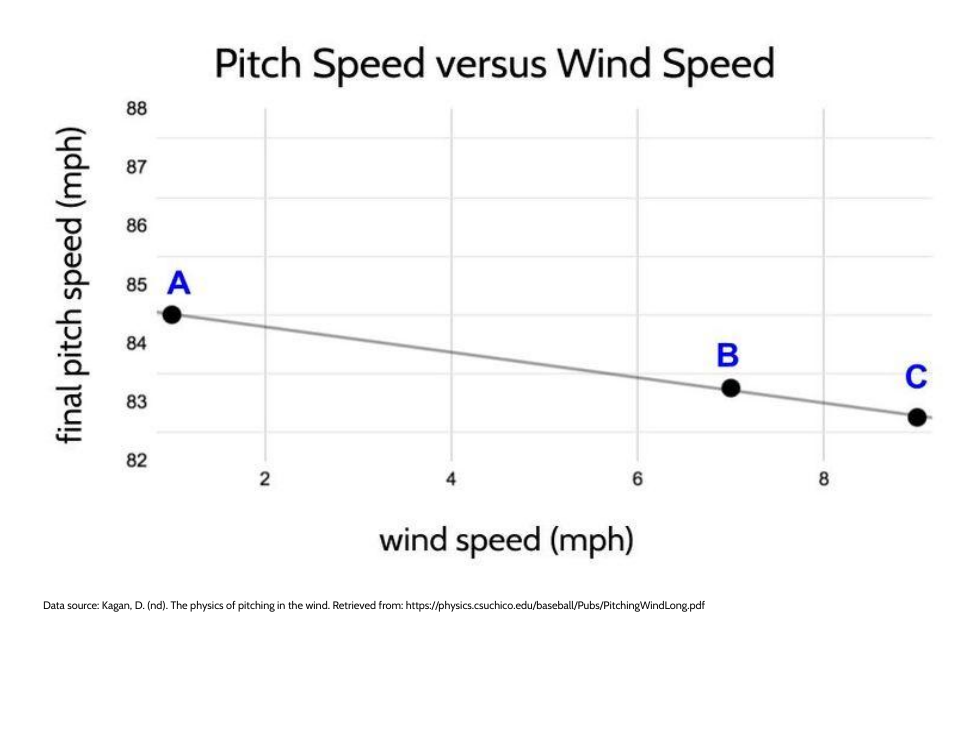
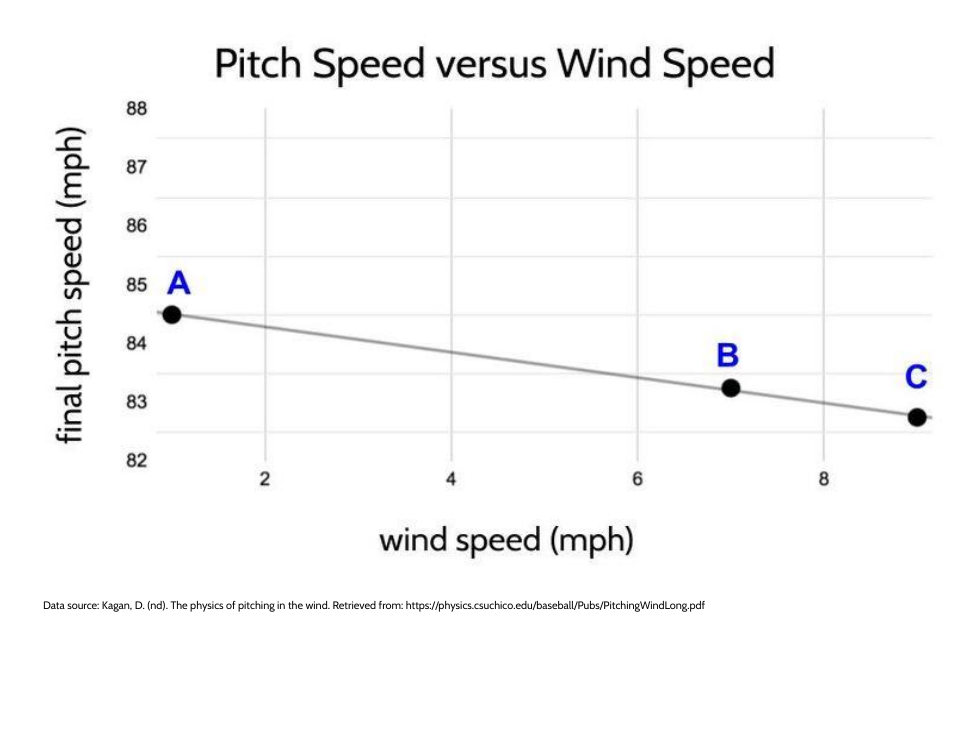
Shown is a graph that shows how pitch speed is affected by wind speed. The line on the graph shows the general relationship between wind speed and pitch speed. Points A, B, and C represent three of the same type of fast pitch all thrown at the same initial speed from a pitcher’s fingertips, but under different wind conditions.
Required
2 points
2
Question 1
1.
Draw three different free body diagrams (A, B, and C), one for each point marked on the graph. In each free body diagram, show all the contact forces on the ball after the ball has left the pitcher’s hand. Draw arrows to show the relative strength of forces on the ball. Make sure to include the relative strength and direction of the forces on the ball due to its interaction with the air.
Required
2 points
2
Question 2
2.
If all three pitches (A, B, and C) had equal amounts of KE when they left the pitcher's hand, would they all have the same amount of KE when they reach home plate? Why or why not? (Use your force diagrams from question 1 to help you)
How would you design an investigation using materials we have used in class to collect evidence for all 3 pitches to support or refute your claim for question 2? List the items and objects you will use in your investigation. Then describe the procedures for setting up and carrying out your investigation. (Think of the investigations we have done with the carts and other items. Plan an investigation using those same materials to test whether the pitches in different wind speeds would have the same amount of KE when they get to the catcher. Adding a few materials is fine if you need to.)
Required
0 points
0
Question 3
3.
What classroom materials could you use to represent these items?
Bat: _______
Pitcher: _______
Ball: _______
Wind: _______
Required
3 points
3
Question 4
4.
My plan for setting up and carrying out my investigation: (Be sure to explain how you will make sure it is a fair test, how you will get the different wind speeds while keeping the same initial KE, and what data you will collect).
Required
1 point
1
Question 5
5.
In your scenario above, what is the independent variable (the thing you change on purpose in the investigation)?
Required
1 point
1
Question 6
6.
In your scenario above, what is the dependent variable (the thing that changes as a result of what you changed; the outcome)?
Required
1 point
1
Question 7
7.
In your scenario above, what are the controlled variables (the things you keep the same to make it a fair test)?
Representing and Explaining the Relationships between Bat Speed and Bat Mass
Required
1 point
1
Question 8
8.
Increase mass or increase speed of the bat?
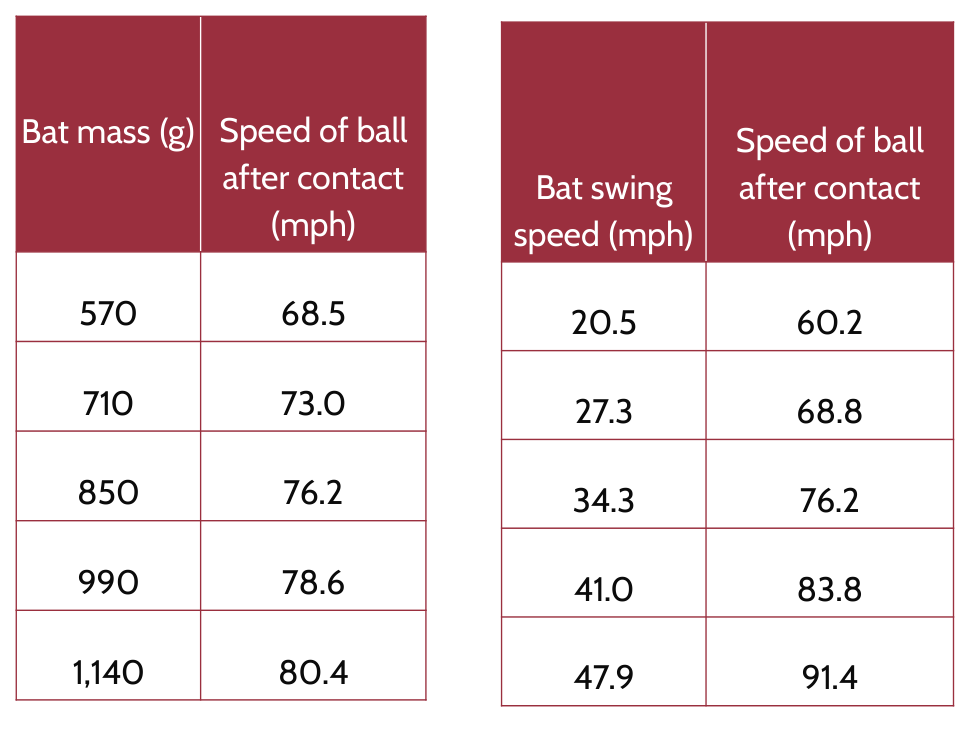
Use the data from the tables to determine which has a bigger effect on speed of the ball after it is hit; increases in the mass of a bat or increases in the swing speed of the bat. You may want to use calculations or graphing to determine which has a bigger effect. (Remember when we doubled or tripled the mass of the cart and graphed the resulting change in KE? and when we doubled or tripled the speed of the cart and graphed the resulting change in KE? What patterns can you find in this bat data, using the same approach?)
Does the type of bat affect the amount of kinetic energy in the bat and ball?
Some people think it’s important to have rules about the type of bats that players can use. For example, in major league baseball, players are only allowed to use wooden bats, while in NCAA baseball, bats made from metal and other composite materials are allowed. Titanium bats, however, are banned in most baseball clubs.
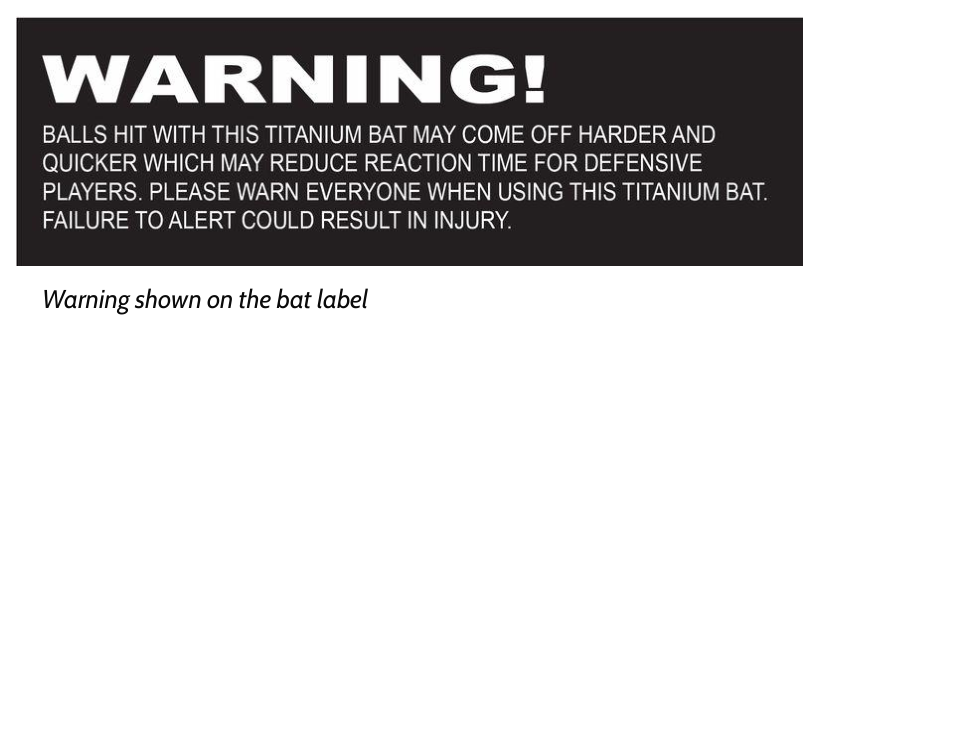
A coach argues that the reason for this is that the material the bat is made of causes it to produce higher peak forces in a collision than other bats because it deforms less in a collision.
Required
1 point
1
Question 9
9.
Does the warning on the bat label shown above support both parts of the coach’s argument about forces and deformation?
Middle School Success
Required
0 points
0
Question 10
10.
Are you happy with your first quarter grades?
Required
1 point
1
Question 11
11.
What advice would you give a friend with the same grades you have?