Label each of the compositional and structural layers of Earth.
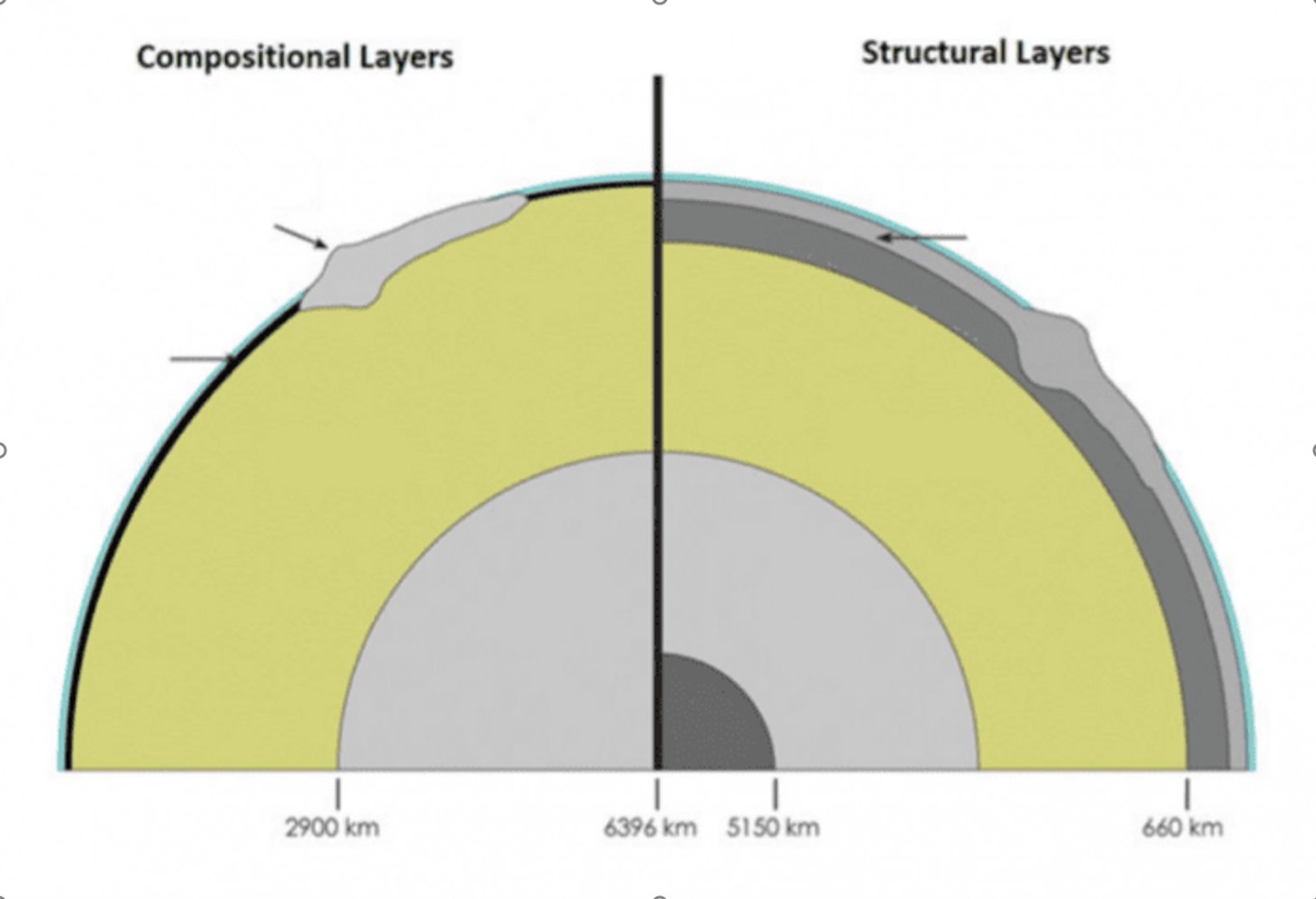
Mmuae Afoforo a Wobɛpaw:
Mesosphere
Outer Core
Aesthenosphere
Oceanic Crust
Mantle
Core
inner core
Continental Crust
Lithosphere
Label each of the compositional and structural layers of Earth.
Which statement best describes Earth's core?
Which minerals make up most of the lithosphere?
Convection occurs in the mesosphere layer of Earth.
Which statement best explains why Earth's lithosphere is broken into tectonic plates?
Most tectonic plates contain
Categorize the following statements to their respective section.
This plate interaction created the San Andreas Fault.
One of the features is a Rift Valley.
This plate interaction created The Himalayas.
Compressional force is the primary force.
Crust is neither made nor destroyed.
Extensional force is the primary force.
Convergent Boundary
Divergent Boundary
Transform Boundary
What is a byproduct of subduction?
A geologist is studying the Fransiscan assemblage in northern California, a melange of sediments that originally formed in the ocean. How might this unit most likely have formed?
Much of the evidence of early supercontinents was destroyed as the continents collided and were broken apart or is buried under hundreds of kilometers of rock.
Read the following passage and select the sentence that best supports the following:
Most trenches in the world are located at the perimeter of the Pacific Ocean.
Which of the following most completely defines volcano?
List the four main lava types in order of increasing silica content.
mafic
andesitic
ultramafic
rhyolitic
A hot spot is a relatively stationary plume of magma that can melt through the Earth's lithosphere.
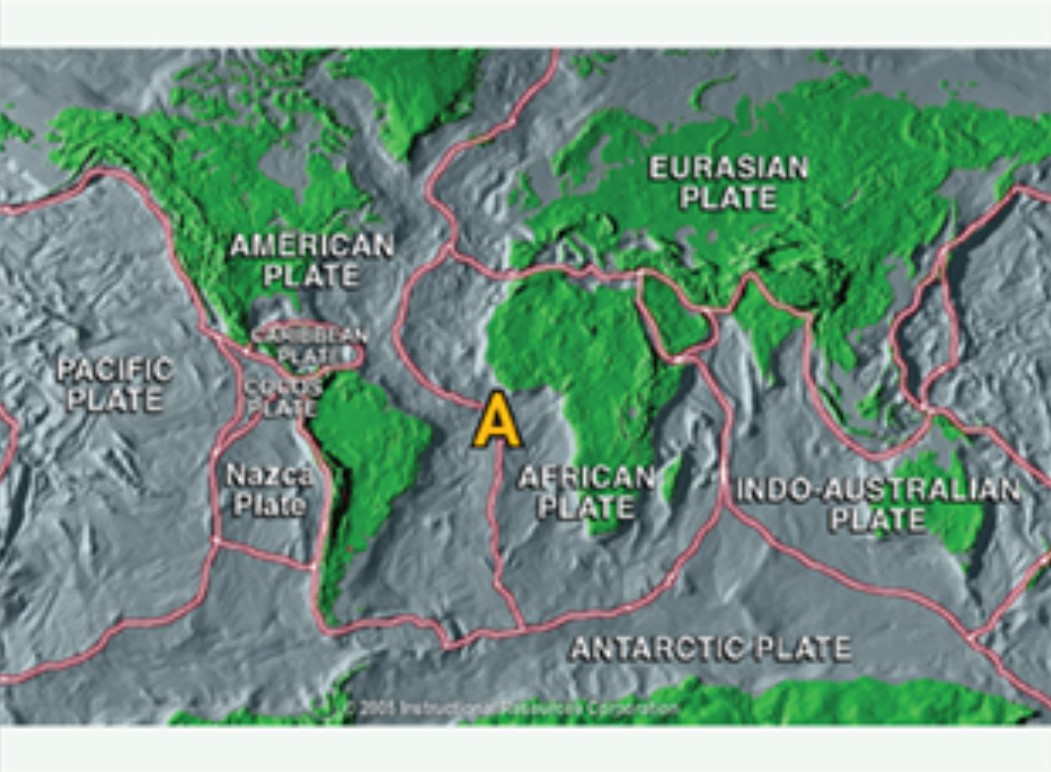
Which kind of volcanism is most likely to occur at location A in the following map?
Match your volcano type with the correct description.
| Draggable item | arrow_right_alt | Corresponding Item |
|---|---|---|
Calderas | arrow_right_alt | large, gently sloped volcanoes that result from the eruption of basaltic lava |
Shield Volcanoes | arrow_right_alt | large, steeply sided cones that form from alternating layers of pyroclastic material and lava flows. |
Composite Volcanoes (Stratovolcanoes) | arrow_right_alt | small, cone-shaped volcanoes that result from pyroclastic material that falls close to the volcanic vent. |
Cinder Cone Volcanoes | arrow_right_alt | Large, collapsed craters over a volcano's empty magma chamber and are formed after extremely explosive eruptions. |