12/12/2022-HW Natural Logs & Pert
star
star
star
star
star
Last updated about 3 years ago
25 Nsɛmmisa
Ɛhia
1
Ɛhia
1
Ɛhia
1
Ɛhia
1
Ɛhia
1
Ɛhia
1
Ɛhia
1
Ɛhia
1
Ɛhia
1
Ɛhia
1
Ɛhia
1
Ɛhia
1
Ɛhia
1
Ɛhia
1
Ɛhia
1
1
1
1
1
Ɛhia
1
Ɛhia
1
1
1
1
1
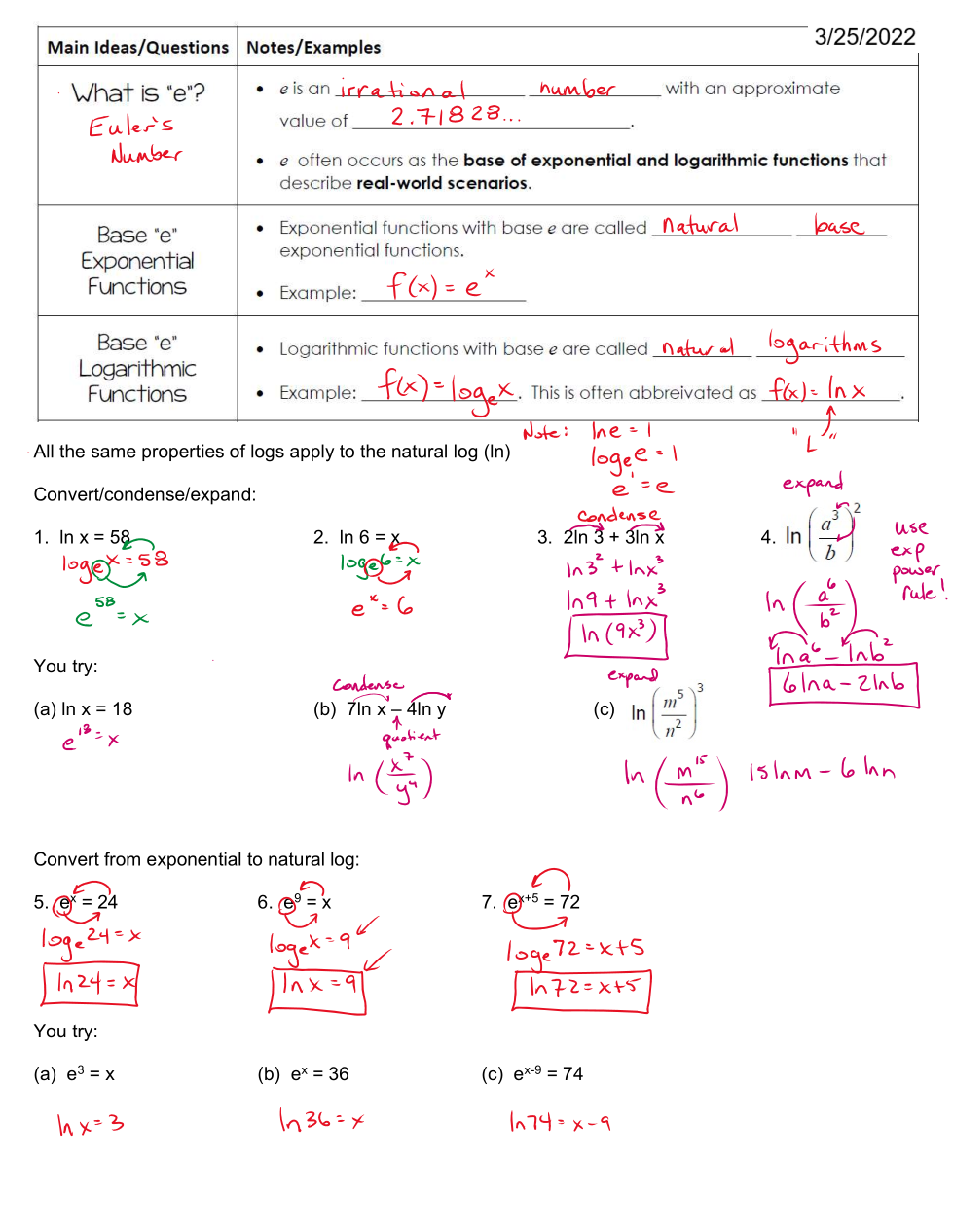
Write each equation in logarithmic form.
Write each equation in logarithmic form.
Write each equation in exponential form.
Write each equation in exponential form.
Condense into a single expression.
Condense into a single expression.
Expand each logarithmic expression
Expand each logarithmic expression
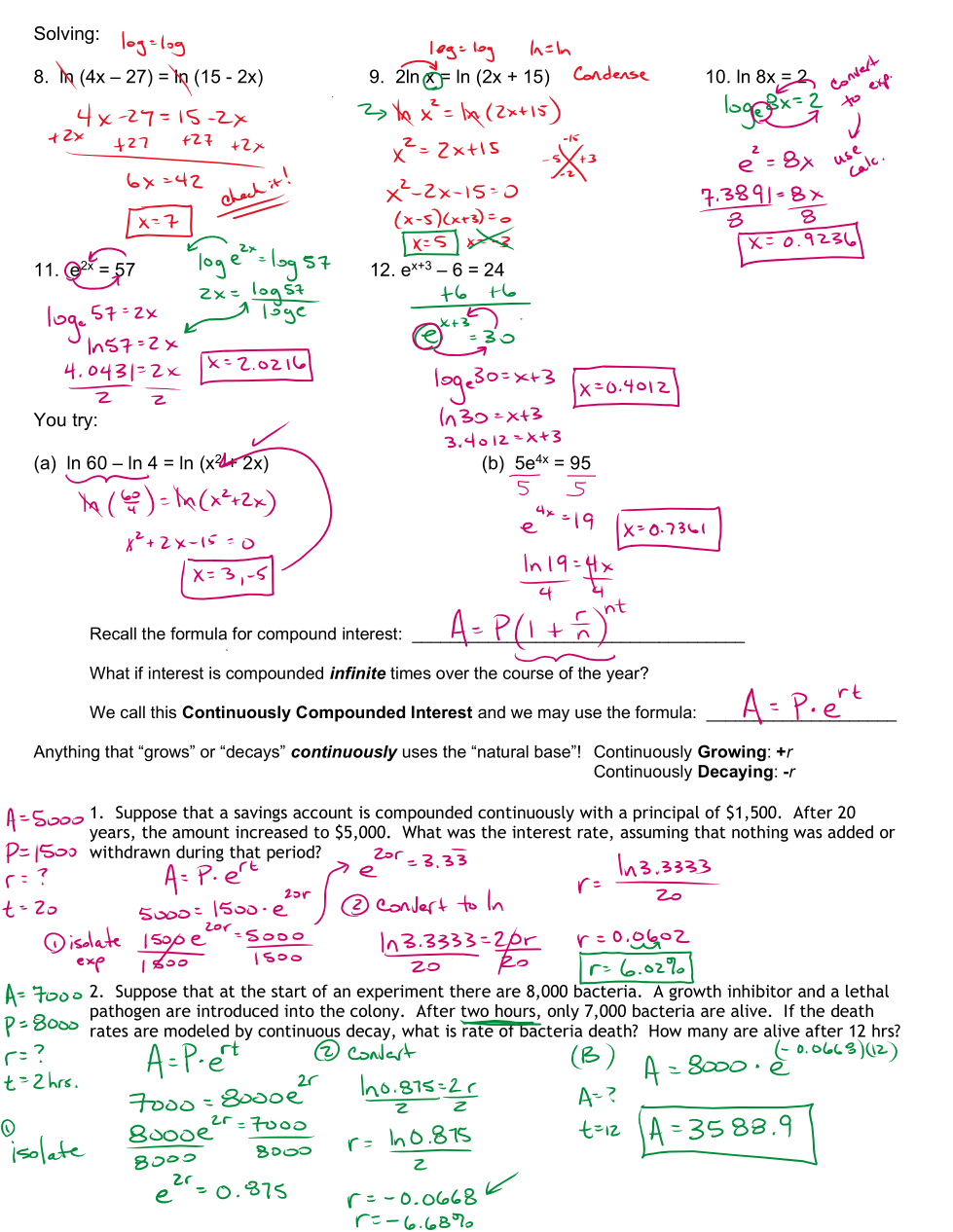
Solve the equation. Be sure to check for extraneous solutions.
express your answer with x= and include a comma in between the solutions if necessary
Solve the equation. Condense to get each 'ln' alone if necessary. Be sure to check for extraneous solutions.
express your answer with x= and include a comma in between the solutions if necessary
Solve the equation. Isolate the exponential. Be sure to check for extraneous solutions.
give your answer rounded to 4 places beyond the decmial.
Solve the equation. Isolate the exponential. Be sure to check for extraneous solutions.
give your answer rounded to 4 places beyond the decmial.
Solve the equation. Isolate the exponential. Be sure to check for extraneous solutions.
give your answer rounded to 4 places beyond the decmial.
In 7 days, a sample of a radioactive substance continuously decreases from the initial value of 200 grams to 40 grams.
Write a function to describe the continous decay where the rate is unknown (your function will include the variable 'r' as in the example in class)
In 7 days, a sample of a radioactive substance continuously decreases from the initial value of 200 grams to 40 grams.
Calculate the rate of decay. Round your answer to the nearest hundreths place.
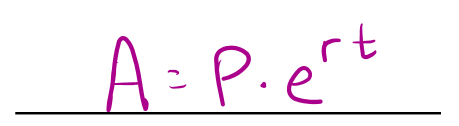
Joe invests $2500 in an account with a rate of 6.5% that is compounded continuously.
How many years will it take for his investment to double (to reach $5000)?
Set up a function using the Pert formula...solve for t. Be sure to convert the rate to a decimal first.
Round your answer to the nearest tenths place.
Joe invests $2500 in an account with a rate of 6.5% that is compounded continuously.
What will his investment in 21 years?
Using the function above and the given values of P, r and t, solve for A. Be sure to convert the rate to a decimal first.
Round your answer to the nearest hundreths place. (answer using dollars and cents)
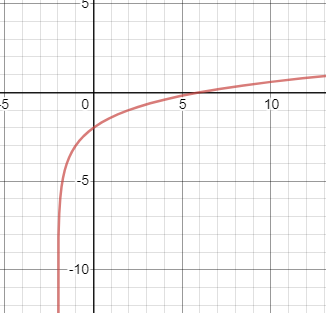
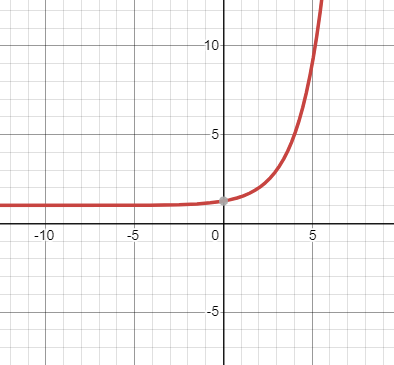
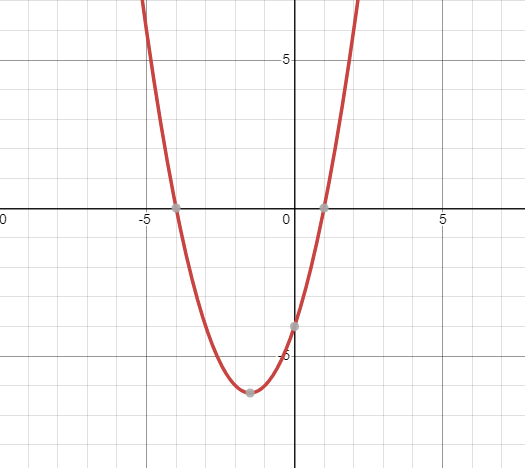
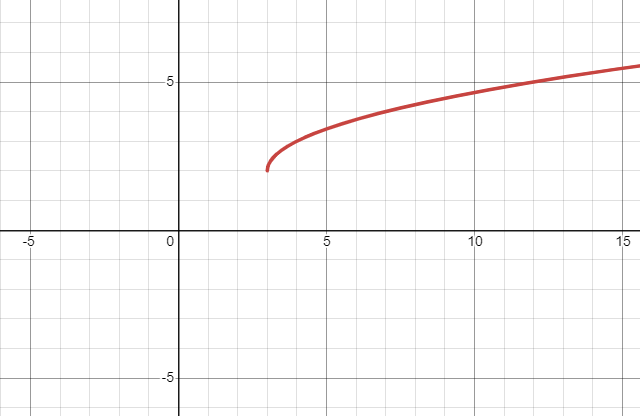
What type of graph is shown?--think about what type of asymptote will occur here..vertical or horizontal?
What type of graph is shown?--think about what type of asymptote will occur here..vertical or horizontal?
What type of graph is shown?
What type of graph is shown?
upload your pages of work here--page 1
upload your pages of work here--page 2
upload your pages of work here--page 3
upload your pages of work here--page 4