A teacher shared this model with her class.
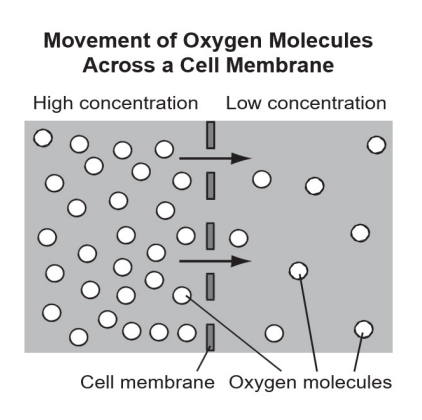
Which statement is best explained by the model?
A teacher shared this model with her class.
Which statement is best explained by the model?
In eukaryotes, the
A cell wall is found only in plant cells and a cell membrane is found only in animal cells.
Larger cells have larger cell membranes, so they are more efficient at moving materials in and out of cells.
Match the cell organelle to its function.
| Draggable item | arrow_right_alt | Corresponding Item |
|---|---|---|
mitochondria | arrow_right_alt | directs cellular activity |
cell wall | arrow_right_alt | powers plant and animal cells |
cell membrane | arrow_right_alt | captures energy for plant cells |
chloroplasts | arrow_right_alt | provides structure, support and protection |
vacuole | arrow_right_alt | regulates what enters and leaves a cell |
golgi apparatus | arrow_right_alt | store food, water and waste material, helps provides support for plant cells |
smooth endoplasmic reticulum | arrow_right_alt | contains substances that help break down and recycle cellular components |
lysosome | arrow_right_alt | packages proteins into small membrane-bound spheres called vesicles in order to transport proteins throughout the cell |
rough endoplasmic reticulum | arrow_right_alt | a weblike organelle that does not have ribosomes attached to it; helps remove harmful substances from the cell |
nucleus | arrow_right_alt | a weblike organelle which has ribosomes attached to it; site of protein production |
What is the difference between a cell wall and a cell membrane?
A teacher shared this model with her class.
Which statement is best explained by the model?
Mark is making a model of a living plant cell. The following objects are available to Mark for his model:
- a cloth bag
- a wire cage
- a solar panel
- a battery with wires
- a zippered sandwich bag (Ziploc)
Mark wants to represent the function of different plant cell parts by using objects that have functions similar to the cell’s parts.
Using a complete sentence, identify three of the above objects Mark can use in his model and describe what part of a plant cell they would represent AND WHY.