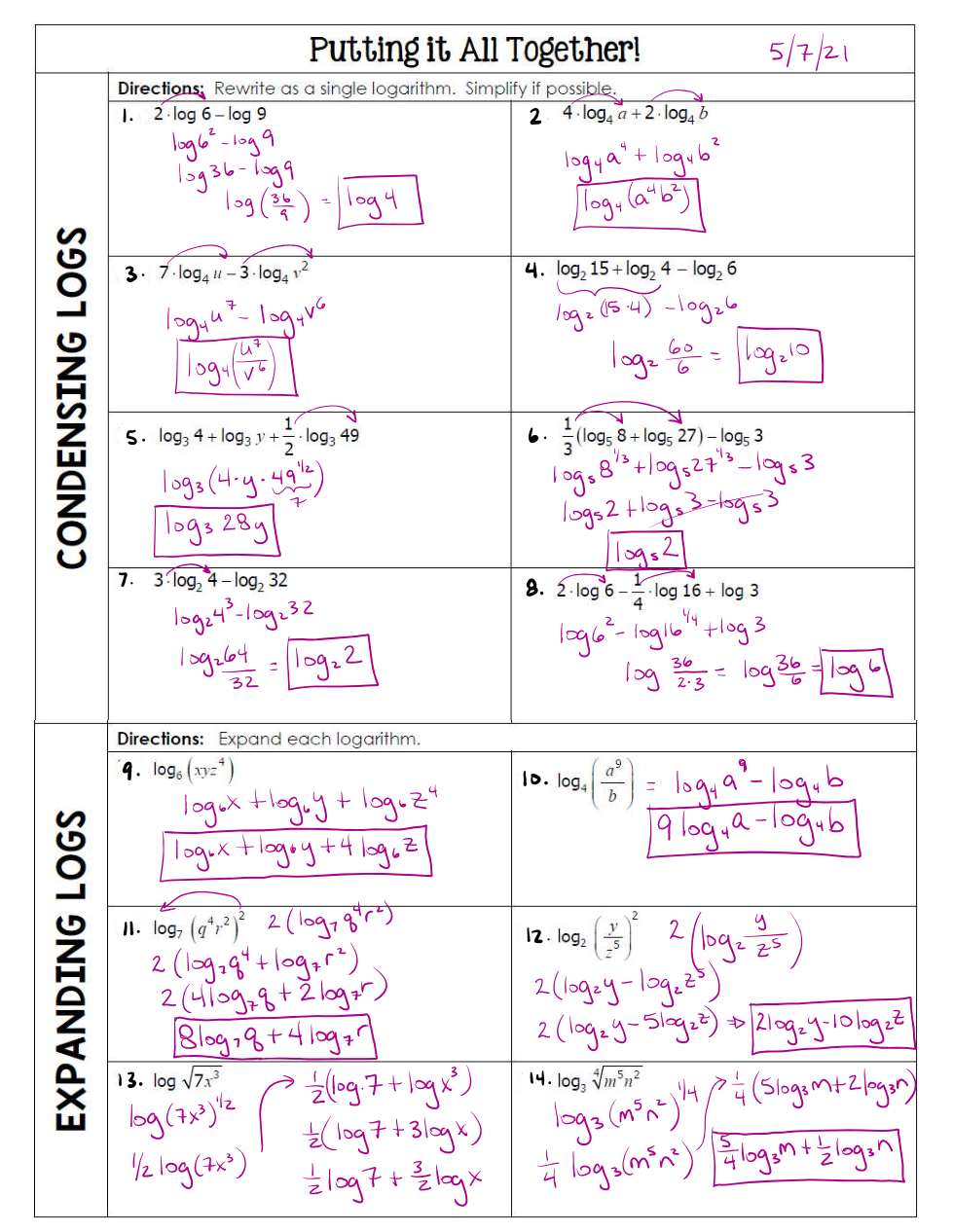
Power first, product second, quotient third!!
Condense the expression into a single logarithm. Simplify if possible.
Power first, product second, quotient third!!
Condense the expression into a single logarithm. Simplify if possible.
Power first, product second, quotient third!!
Condense the expression into a single logarithm. Simplify if possible.
Power first, product second, quotient third!!
Condense the expression into a single logarithm. Simplify if possible.
(condense the subtraction process inside the parentheses first using the quotient property, then condense the 1/2 power..will make this much easier...think order of operations this time)
Condense the expression into a single logarithm. Simplify if possible.
Expand each expression.
Expand each expression.
Expand each expression.
Expand each expression.
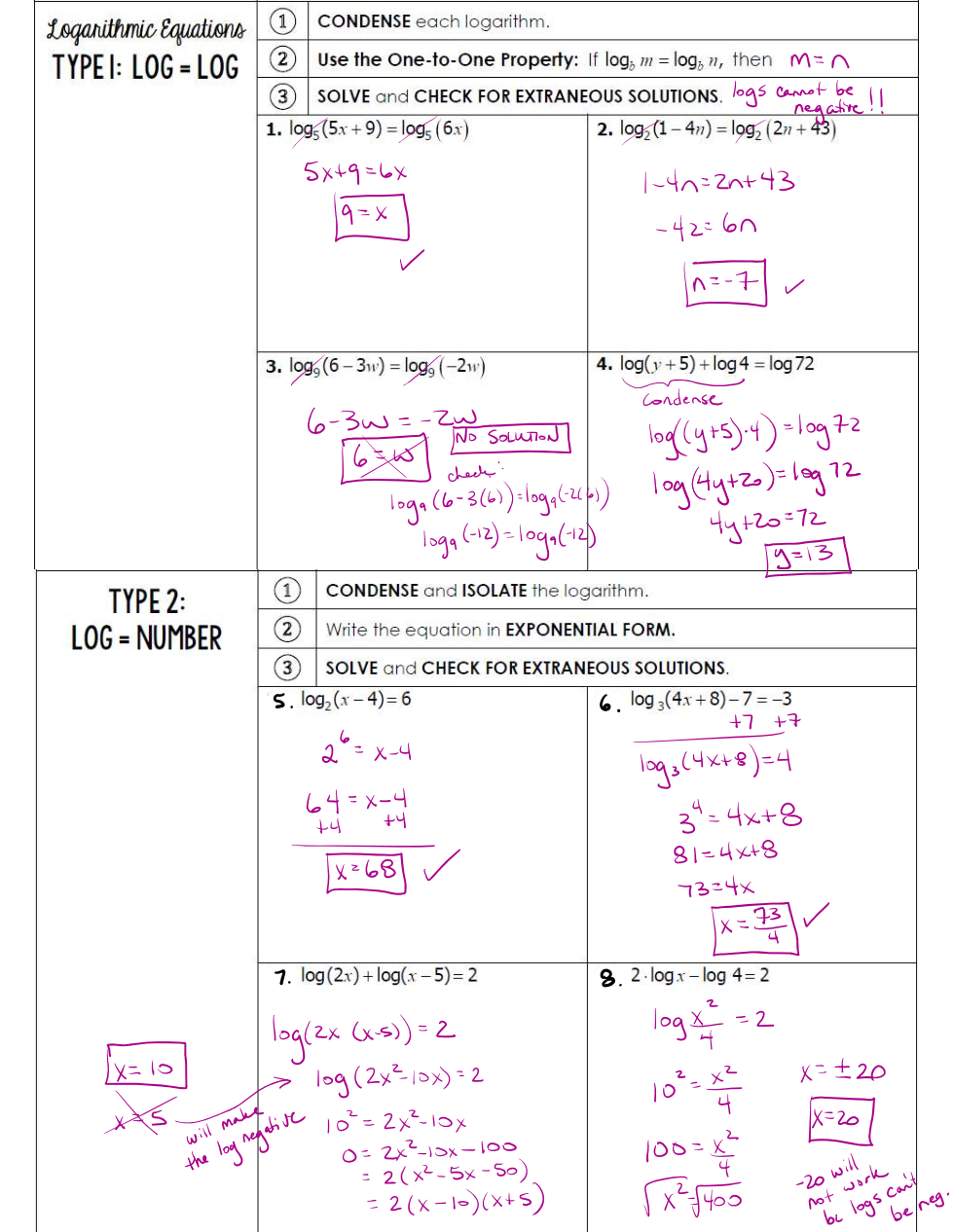
Solve each equation. Check for extraneous solutions.
use x= in your answer
Solve each equation. Check for extraneous solutions.
use x= in your answer
Condense and Solve each equation. Check for extraneous solutions.
use x= in your answer
Condense and Solve. Check for extraneous solutions.
use x= in your answer
Condense and Solve. Check for extraneous solutions.
use x= in your answer
Solve each equation. Check for extraneous solutions.
use x= in your answer (use a comma to separate your answers)
Condense and Solve. Check for extraneous solutions.
use x= in your answer
Solve each equation. Check for extraneous solutions.
use x= in your answer
Solve each equation. Be sure to isolate the log first. Check for extraneous solutions.
use x= in your answer
Condense and Solve each equation. Check for extraneous solutions.
use x= in your answer
Convert the exponential to a logarithm.
this means to input your answer as a logarithm using:
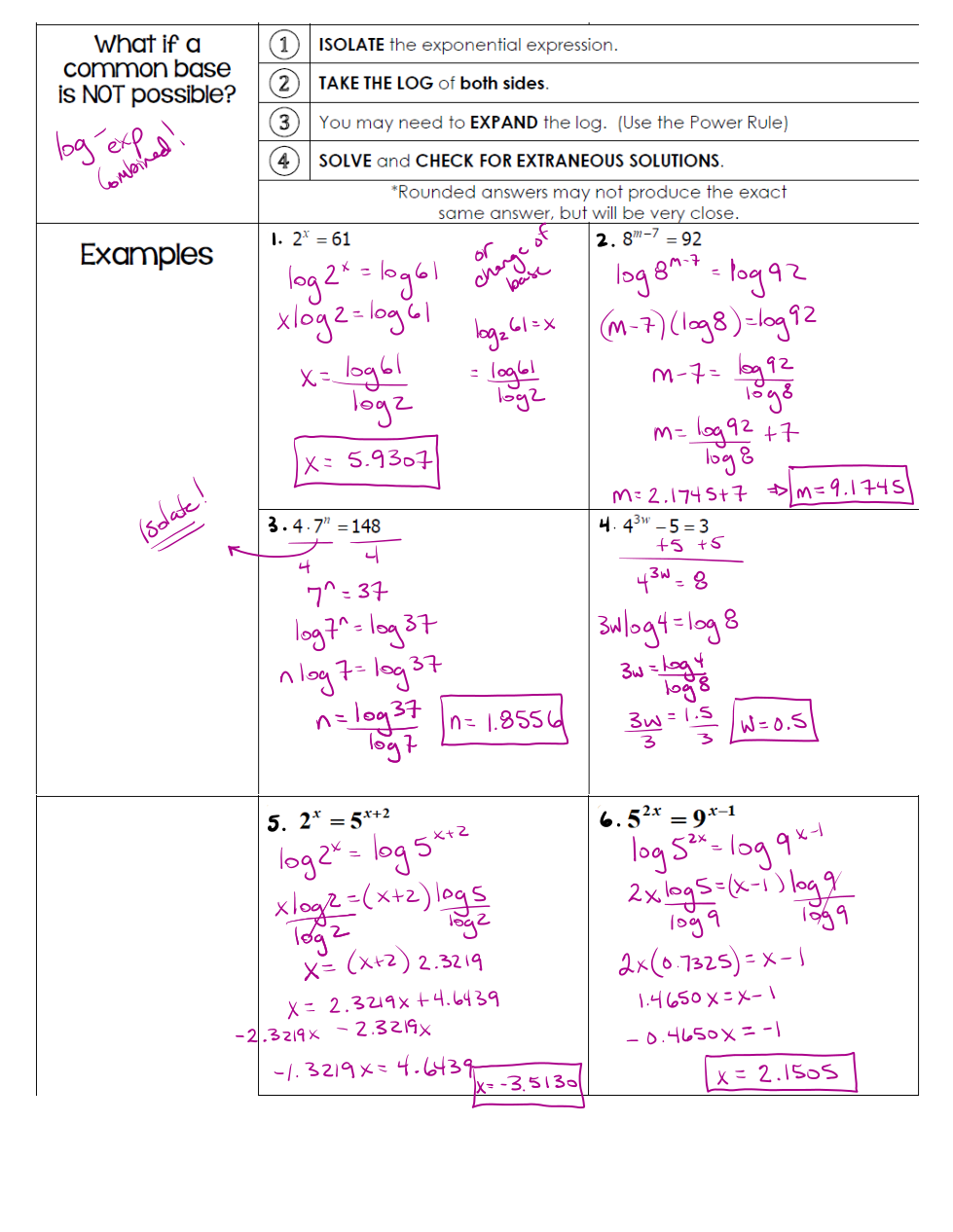
Use the converstion you found in #20 and find x using change of base (see notes from 3/15).
Round your answers to 4 places beyond the decimal (if necessary).
use x= in your answer
Given the function:
What is h?
Given the function:
What is k?
Given the function:
What is a?
Given the function:
What is b?
Graph the function:
Given the function:
What is the domain? (in interval form)
Given the function:
What is the range? (in interval form)
Given the function:
If the function increasing or decreasing?
Given the function:
What is the end behavior?
Given the function:
What is the end behavior?
Solve:
use x= in your answer
Solve:
use x= in your answer
upload your pages of work here--page 1
upload your pages of work here--page 2
upload your pages of work here--page 3
upload your pages of work here--page 4