1
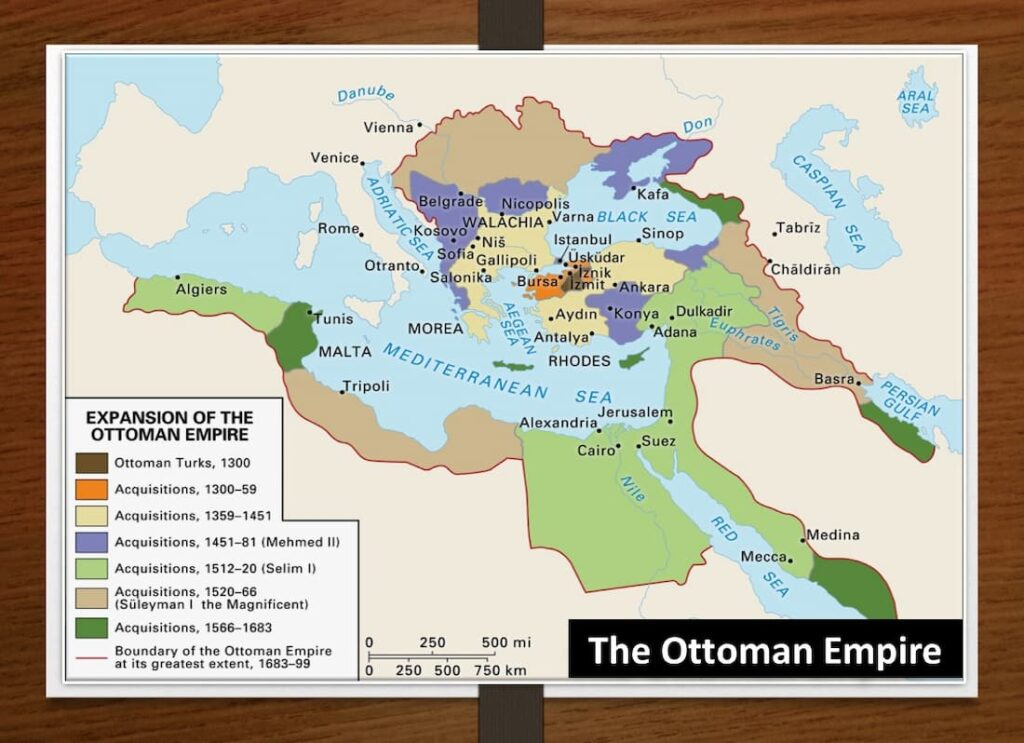
Why was the Ottoman Empire so powerful?
Why was the Ottoman Empire so powerful?
1
Match each religion to its founder
Brahma is the creator, but not the founder of this religion
Founder is Jesus
Founder is Muhammad
Founder is Abraham
Founder is Siddhartha Guatama
Founder is Confucius
Hinduism
Buddhism
Confucianism
Judaism
Christianity
Islam
Match each religion to its location
India
Starts in the Middle East, spreads to Europe and Americas
Middle East, country is Israel
Middle East, is the dominant religion in many countries
Starts in India spreads to East Asia
China
Hinduism
Buddhism
Confuianism
Judaism
Christianity
Islam
Match each line to the correct religion
Oldest monotheistic religion
Eightfold Path, Four Noble Truths
Bible
Koran
Torah
Caste system
Five Pilllars
Stresses importance of key relationships
Jesus was the son of God, is the savior
Muhammad was the last and greatest prophet of Allah
Hinduism
Buddhism
Confuianism
Judaism
Christianity
Islam
Comparing Muslim Empires
Mostly Muslim population
Mostly Hindu population
Rulers charged non-Muslims a tax, but allowed them to practice their faith
Rulers practiced religious tolerance in the early years, but later on persecuted the non-Muslims which lead to conflict between religious groups
India
Middle East
Ottoman Empire
Mughal Empire
Why was the Ottoman Empire so powerful?
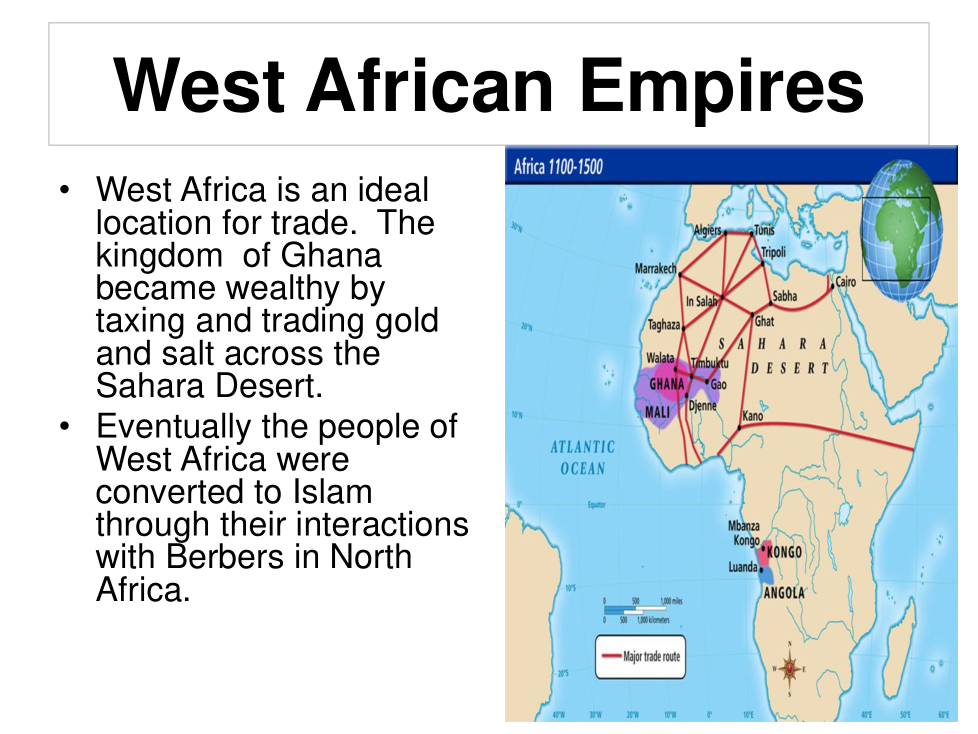
What trade items brought wealth to West Africa?
Which of the following was a result of African merchants trading with people in the Middle East prior to the 1500s?
Mansa Musa, the Mali leader, established control in this Saharan trading town and it became a center for Muslim learning and culture in Africa:

The plague had the same effect on all parts of Europe.

True | False | |
|---|---|---|
Every town in Europe lost over half of its population. | ||
European women gained rights | ||
Asian women gained rights | ||
Lords took more land from peasants and built stronger armies |

Consider Western European society after the plague. What happened to their power?
| Draggable item | arrow_right_alt | Corresponding Item |
|---|---|---|
Lords | arrow_right_alt | Built standing armies and became more powerful. |
Women | arrow_right_alt | No longer controlled private armies, lost power to the kings and middle class. |
Serfs | arrow_right_alt | In Western Europe laws changed that allowed them own property and operate businesess on their own. |
Peasants | arrow_right_alt | Became wealthier, moved to cities and gained power and influence with the kings. |
Kings | arrow_right_alt | In Western Europe many were able to move up to the middle class and become skilled laborers. |
Middle Class | arrow_right_alt | In Eastern Europe this group was still under the control of local lords and were considered property through the late 1800s. |
Match the terms to their definition.
| Draggable item | arrow_right_alt | Corresponding Item |
|---|---|---|
Secularism | arrow_right_alt | Wealthy wanted to set themselves separate from masses Encouraged pride in individual success |
Humanism | arrow_right_alt | Focus of attention from religious to worldly affairs Saw life as opportunity for glory and pleasure Man is the measure of all things |
Individualism | arrow_right_alt | -emphasized the importance of humans and their values (as opposed to scholasticism or following the teachings of the Catholic Church |
How did the values of humanism, individualism and secularism contribute to the Age of Exploration?
Match the following statements about religion and Europe
| Draggable item | arrow_right_alt | Corresponding Item |
|---|---|---|
After the Protestant Reformation | arrow_right_alt | Catholic Church was the most powerful instiution in Europe, it even had power over the kings. |
Middle Ages | arrow_right_alt | Movement started by Martin Luther, who wanted to fix problems he saw in the Catholic Church - This movement led to a number of new Christian denominations |
Protestant Reformation | arrow_right_alt | The power of the Catholic Church was weakened, and there was no longer religous unity in Europe |
What motivated European exploration?
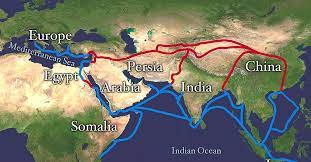
What is the red route on the map commonly called?
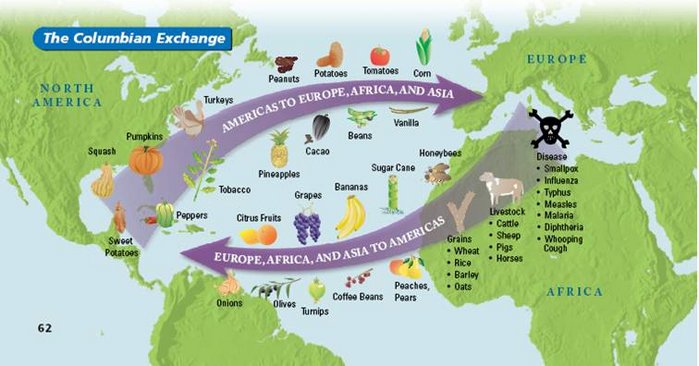
Match the item to its place of origin.
Peaches
Turkey
Measles
pigs
Tobacco
Sugar Cane
Potato
Tomato
Smallpox
Old World to New World
New World to Old World
Who benefited the most from the Colombian Exchange?

Which country was the first to purchase slaves to transport to the Americas?
How did some African leaders profit off of the slave trade?
The Atlantic Slave Trade - Crash Course World History
The above link goes to the Atlantic Slave Trade video from Crash Course.
There is a transcript on the page to help you.
Use the video to answer the questions.
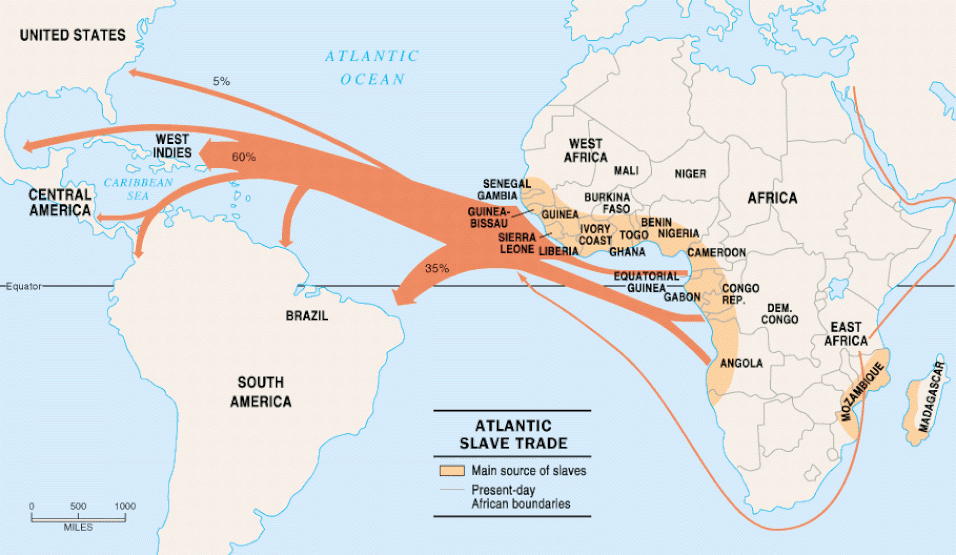
Match the areas that slaves went to with the percentage of slaves that the region received overall.
| Draggable item | arrow_right_alt | Corresponding Item |
|---|---|---|
Brazil | arrow_right_alt | 60% |
US | arrow_right_alt | 35% |
West Indies | arrow_right_alt | 5% |
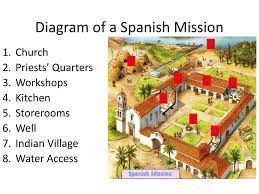
Consider the diagram.
What kind of treatment did Native Americans face under Spanish control?
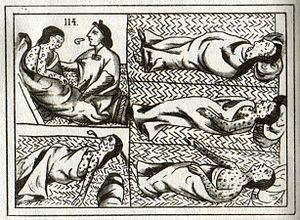
What happened to bring down the population of Native Americans in the early years of European exploration?
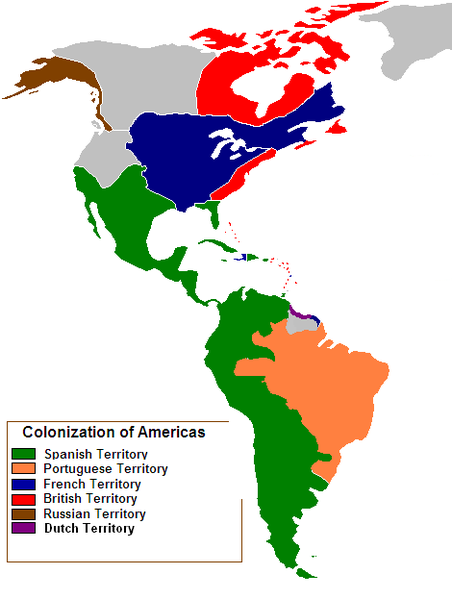
Where did they build their colonies?
| Draggable item | arrow_right_alt | Corresponding Item |
|---|---|---|
England | arrow_right_alt | North America (Canada and Louisiana area) |
Spain | arrow_right_alt | North America (East Coast 13 Colonies) |
France | arrow_right_alt | Central and South America, plus Florida |
What was their economy built on?
| Draggable item | arrow_right_alt | Corresponding Item |
|---|---|---|
Spain | arrow_right_alt | Fur trade |
France | arrow_right_alt | Cash crops like tobacco, indigo and rice |
England | arrow_right_alt | Gold and Silver in Central and South America |
What happened to Ottoman power and wealth after the Europeans found other ways to trade with Asia?
Which 2 empires are highlighted in pink and purple on this map?
Mark if the statement about the Silk Road is true or false. Road.
True | False | |
|---|---|---|
Allowed people to trade from the Americas to China. | ||
Allowed people to trade good from China to Europe. | ||
Was a network of roads , not just a single road. | ||
It was one single road. | ||
Goods like salt, gold and silver were the primary sources of wealth on this road. | ||
Silk and spices were among the most valuable items traded. |
What sort of people where in their colonies?
| Draggable item | arrow_right_alt | Corresponding Item |
|---|---|---|
England | arrow_right_alt | Small number of colonists , they moved around a lot because of the fur trade |
Spain | arrow_right_alt | Large numbers of men and women moved to the colonies for and created permanent settlements |
France | arrow_right_alt | men had children with Native women and African slaves, creating new social and ethnic groups |