
1
Which issue contributed most to the need for this permanent sanitation group?
Which issue contributed most to the need for this permanent sanitation group?
During the Gilded Age there was a notable increase in federal support for
Read the excerpt and select the portion of text that describes an increased sense of nativism and anti-immigrant attitudes in the United States.
—Chinese Exclusion Act, 1882
Explain the relationship between the development of factories and the growth of urbanization.
Which benefit resulted from the introduction of the Bessemer steel process?
Nineteenth-century nativist organizations advocated —
Which issue contributed most to the need for this permanent sanitation group?
Escape from religious persecution
Hope for freedom and equality
Hope for better economic conditions
Escape from political turmoil and war
A high school teacher wrote these bullet points on the whiteboard. What was the most likely topic of discussion?

Why were people like those shown in this image hopeful about their future?
How did Andrew Carnegie contribute to civic and social life in the United States?

This cover from a nineteenth-century periodical helps illustrate that the United States was beginning to change from —
The affected the United States during the late 1800s by contributing to the rapid settlement and growth of towns in the

most likely inspired the creation of this 1893 cartoon.
Read the excerpt and answer the question that follows.
Other industrialists, including John D. Rockefeller, merged the operations of many large companies to form a trust. Rockefeller’s Standard Oil Trust came to monopolize 90% of the industry. . . .
—“The Industrial Revolution in the United States,” Library of Congress, www.loc.gov (accessed August 25, 2017)
What was one DIRECT effect of the business practice discussed in this excerpt?
Select two portions of text below that best describe how political machines justified corruption.
My
Match the description with the proper title.
Nativists | Entrepreneurs | Party Bosses | |
|---|---|---|---|
Corrupt Politicians | |||
Anti-Immigrant | |||
Created Businesses |
Select the correct "hot spot" on the map that shows Angel Island, the point of entry for Chinese immigrants coming to the United States.
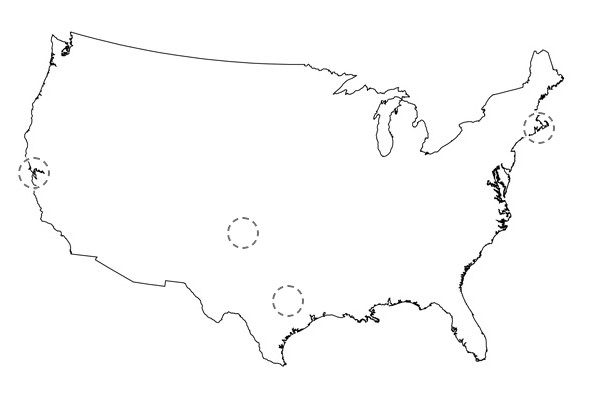
Provide two causes of immigration to the United States in the late nineteenth century. In your response, include one push factor and one pull factor that contributed to this shift.
During the late nineteenth century, many
immigrants were discriminated against for being Roman catholics.
Select the two portions of the quote below by Andrew Carnegie that best explains why he funded philanthropic projects such as the building of libraries and parks.
"The best means of
A homesteader had only to be the head of a household or at least 21 years of age to claim a 160-acre parcel of land. Settlers from all walks of life including newly arrived immigrants, farmers without land of their own from the East, single women and former slaves came to meet the challenge of “proving up” and keeping this “free land.” Each homesteader had to live on the land, build a home, make improvements and farm for 5 years before they were eligible to “prove up.” A total filing fee of $18 was the only money required. . . .
—National Park Service, www.nps.gov (accessed November 14, 2013)
The process described in the excerpt led to —
Drag and drop the answer choices in their proper places to accurately complete the sentences below.
As a result of the of 1862, the were opened, allowing for the growth of farming communities.
To reduce competition for with immigrants, Congress passed the in 1882. In order to promote the cultural of Native Americans, Congress passed the in 1887.

Which development made it possible to construct this type of building?
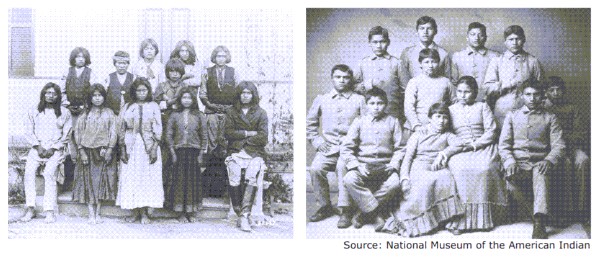
These photographs provide evidence that one goal of the Carlisle Indian School was to —
📷Use the map and identify the "hot spot" that shows the location of Promontory Point, where the Transcontinental Railroad was completed.
CLEAR ALL

___________?__________
Built sod houses
Used steel plows
Developed dry farming techniques
What is the best title for this list?