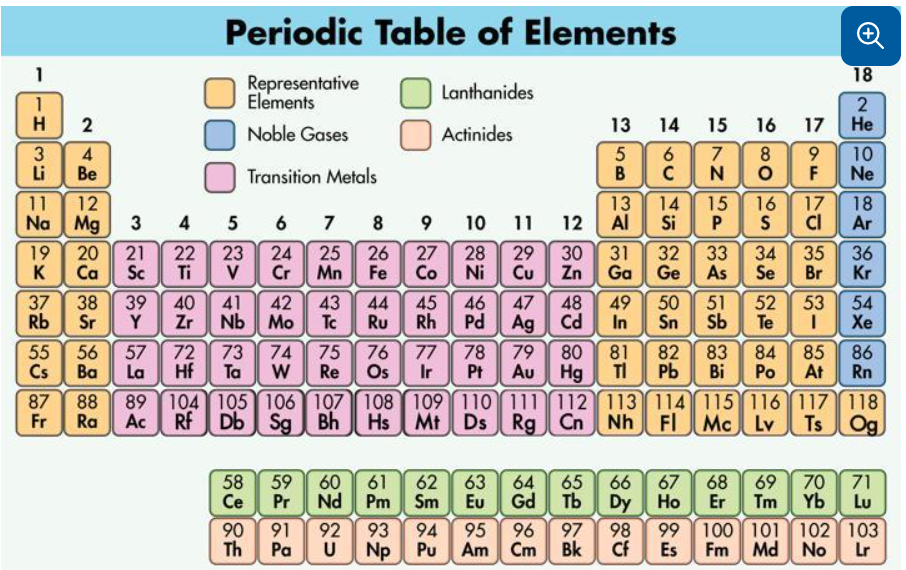
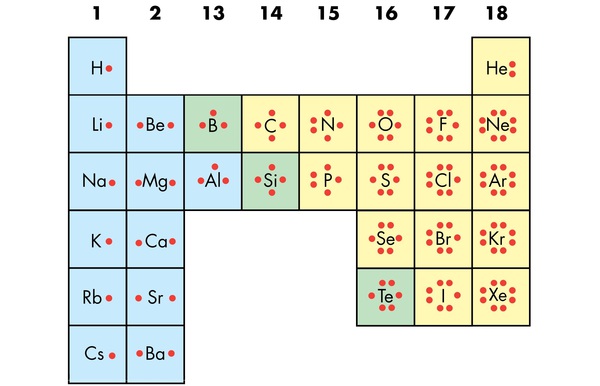
How are electron arrangements described by Lewis structures, orbital diagrams, and electron configurations? (What do I already know)
Required
1 point
1
Question 2
2.
The color an element produces depends on the _______ of light it emits while burning.
Required
1 point
1
Question 3
3.
White light is produced when all the visible wavelengths are (radiated) emitted. These range from _______ nm to _______ nm
Required
3 points
3
Question 4
4.
The valence electrons, electrons in the atom’s _______ shell, determine how the element will react to other elements. These electrons can be represented by an _______ and/or _______ diagram.
Required
1 point
1
Question 5
5.
Where are the electrons found in a neon atom? Use the drawing tools to show.
Required
4 points
4
Question 6
6.
Match the following terms or processes with the best definition.
Draggable item
arrow_right_alt
Corresponding Item
proton
arrow_right_alt
subatomic particle with a negative charge
energy level
arrow_right_alt
subatomic particle with a positive charge
atom
arrow_right_alt
smallest particle of matter that retains its identity in a chemical reaction
electron
arrow_right_alt
region around a nucleus where electrons are likely to be found
Required
5 points
5
Question 7
7.
Classify SOME of the following as characteristics of either carbon or oxygen by dragging them to the correct column.
4 valence electrons
6 valence electrons
8 valence electrons
Contains 6 protons
Contains 12 protons
1s22s22p2
1s22s22p4
Carbon
Oxygen
Explore 1
Required
1 point
1
Question 8
8.
What Is the Configuration of Electrons Within an Atom? (Type what you already know)
Required
6 points
6
Question 9
9.
To study the _______ of an element, scientists consider where the electrons are located within an atom. _______ theory uses specific _______ to describe the locations of the electrons. Scientists must know how to write electron configurations to apply these rules. They use a _______ method to describe the configurations, using a system of quantum numbers. The system uses the _______ quantum number (n) and the _______ quantum number (l) to describe the configuration of electrons in an atom.
Required
1 point
1
Question 10
10.
We can think of the electron orbitals as patterns of electron density surrounding an atom’s nucleus. The letters (in order) are ______________ and represent different types of orbitals.
f
p
s
d
Required
1 point
1
Question 11
11.
What shape is the first energy level (1s orbital aka 'shell')?
Required
1 point
1
Question 12
12.
Lithium has 3 electrons distributed over 2 orbital shells. What shape is the 2nd energy level (orbital)?
Required
1 point
1
Question 13
13.
Which electrons actually are involved in chemical reactions?
Required
6 points
6
Question 14
14.
Each energy level can take a limited number of electrons. Match the maximum electron numbers to the correct energy levels.
2
8
18
32
1st
2nd
3rd
4th
5th
6th
Writing Electron Configurations
Each orbital in an atom can hold up to two electrons. According to the Pauli exclusion principle, no two electrons can have exactly the same quantum number. In other words, no two electrons can be in the same place at the same time. Two electrons can occupy the same orbital, but each electron is assigned a “spin” so that it can be identified individually.
In electron configuration notation, the first electron added to an orbital is denoted with the up arrow (↑), and the second has a down arrow (↓). The direction of the arrows reflects the spin of each electron. The spins of the two electrons in an orbital are always opposite one another.
Some other basic rules apply to electron configuration notation. First, as the atomic number increases, the number of orbitals required for the electrons increases. Also, all the orbitals of one type (s, p, d, or f) within an energy level (1, 2, 3, etc.) must be completely filled before an electron can occupy the next highest orbital. Finally, Hund’s rule states that all the orbitals of the same energy will be filled with one electron before any of the orbitals take on a second electron. This rule means that electrons in nitrogen, for example, are placed in each of the three p orbitals before any two electrons can share an orbital.
Required
1 point
1
Question 15
15.
You can have up to 2 electrons in an orbital, but they can't be at the same place at the same time. To identify each individually, each electron is assigned a _______ .
Required
1 point
1
Question 16
16.
The direction of the arrows reflects the spin of each electron. The spins of the two electrons in an orbital are always _______ one another.
Required
1 point
1
Question 17
17.
What does the Pauli exclusion principle state?
Required
1 point
1
Question 18
18.
The orbitals of one type (s, p, d, or f) within an energy level (1, 2, 3, etc.) can be partially filled before an electron can occupy the next highest orbital.
Required
1 point
1
Question 19
19.
What does Hund's rule state?
Required
1 point
1
Question 20
20.
What does the first quantum number, 'n' represent?
Required
1 point
1
Question 21
21.
The second quantum number is represented by what letter?
Required
1 point
1
Question 22
22.
What does the second quantum number represent?
Required
1 point
1
Question 23
23.
There are 4 orbital shapes represented by letters. What are those letters in order from lowest energy to highest energy?
Required
1 point
1
Question 24
24.
What letter represents the 3rd quantum number and what does it represent?
Required
1 point
1
Question 25
25.
What letter signifies the 4th quantum number and what does it represent?
Required
3 points
3
Question 26
26.
According to the video 'Magnetic and Spin Quantum Numbers', what are the possible values for 'm'?
Watch video in DiscoveryEducation_Chem_2.3_Exp1

Required
2 points
2
Question 27
27.
According to the video 'Magnetic and Spin Quantum Numbers', what are the possible values for 's'?
Watch video in DiscoveryEducation_Chem_2.3_Exp1
Required
1 point
1
Question 28
28.
According to the video 'Pauli Exclusion Principle', two electrons can't be at the same place at the same time in an orbital. Which of the quantum numbers would we have to change if they were to share an orbital?
Required
4 points
4
Question 29
29.
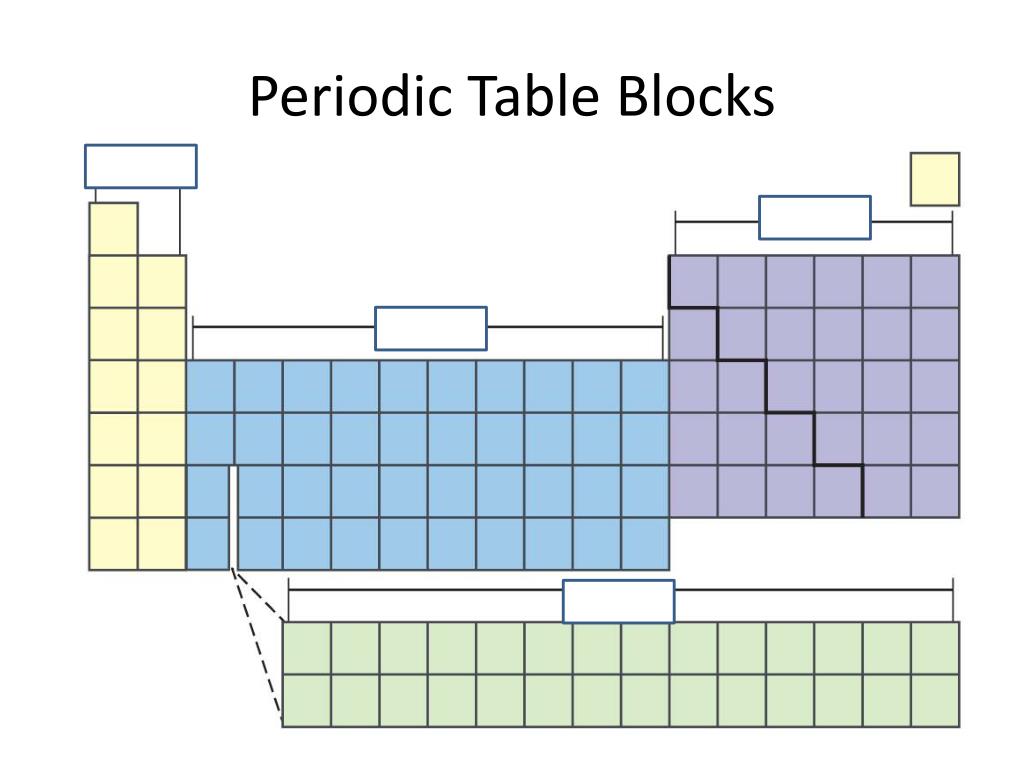
Label the sub-orbital blocks s, p, d, and f
Other Answer Choices:
s block
d block
p block
f block
Required
1 point
1
Question 30
30.
What kind of notation is this: [Ne]3s1 ?
4 points
4
Question 31
31.
Use the periodic table to match each element with its correct electron configuration shown. Notice that noble gas configurations are used.
Draggable item
arrow_right_alt
Corresponding Item
gold
arrow_right_alt
[Ne]3s23p5
cobalt
arrow_right_alt
[Ar]4s23d7
chlorine
arrow_right_alt
[He]2s2
beryllium
arrow_right_alt
[Xe]4f145d106s1
Molybdenum
arrow_right_alt
[Kr]4d55s1
Explore #2: How is an Orbital Diagram Created
Required
3 points
3
Question 32
32.
An Orbital diagram is used to illustrate the configuration of _______ within the orbitals in an atom; electrons are represented by _______ pointing up or down (denoting each electron's spin) in a box representing each _______
Required
1 point
1
Question 33
33.
The closer an orbital is to the atomic nucleus, the higher its energy.
Required
1 point
1
Question 34
34.
Within an energy level, the higher the _______quantum number, the more energy in the orbital. The 2p orbitals (azimuthal number 1) are slightly _______ in energy than the 2s orbitals (azimuthal number 0). Quantum numbers are a unique set of numbers that describes the location of each electron in an atom or ion and include the _______ , azimuthal, magnetic orbital, and magnetic spin quantum numbers.
Required
1 point
1
Question 35
35.
Electrons fill the orbitals in the following order:
Explore #3: How Are Valence Electrons Represented Within a Lewis Structure?
Required
3 points
3
Question 36
36.
In most elements, electrons in the outermost energy level of an atom are _______ electrons. They reside in the _______ occupied energy level of the atom. The number of valence electrons in an atom can be determined from the electron configuration of the element. The total number of electrons at the highest energy level dictates the number of valence electrons. For example, carbon (C) has four electrons in its outermost energy level: two in the 2s orbital and two in the 2p orbital. Carbon, therefore, has _______ valence electrons.
Required
2 points
2
Question 37
37.
Lewis structures follow trends in the Periodic Table. Moving across a period, a dot is _______ for each additional electron in an atom of the element. The number and pattern of dots is the same moving _______ a group, making Lewis structures convenient representations of both the elements and their valence electrons.
Required
4 points
4
Question 38
38.
Lewis structures can also be used to represent molecules. In molecules, valence electrons involved in covalent bonds are shown as __________. Valence electrons that are not involved in bonding, however, are still represented as __________. These dots are often referred to as __________ electrons, to differentiate them from __________ electrons.
Explain #4: How Does the Octet Rule Describe the Arrangement of Electrons in Noble Gases?
Required
4 points
4
Question 39
39.
Gilbert Lewis studied the electron configurations of the various elements in the periodic table and derived the _______ rule. The octet rule states that atoms react with one another in ways that make their electron configurations the same as that of a _______ gas. In a noble gas, orbitals within an energy level are _______ filled. In other elements, filling an energy level _______ the arrangement of the electrons.
Required
4 points
4
Question 40
40.
Consider the halogens, the elements in Group 17. They have _______ valence electrons and are one short of the noble gas configuration. Halogens readily form ions by acquiring an electron from other atoms or molecules. The ions formed in this way, known as halides, have a charge of _______ . This charge is indicated by a superscript minus sign next to an atomic symbol, such as F–. Similarly, the Group 1 alkali metals have _______ valence electron. If an atom of sodium loses its valence electron, it forms a sodium ion, Na+, with a _______ charge.