Ɛhia
3
Ɛhia
3
Ɛhia
3
Ɛhia
3
Ɛhia
3
Ɛhia
3
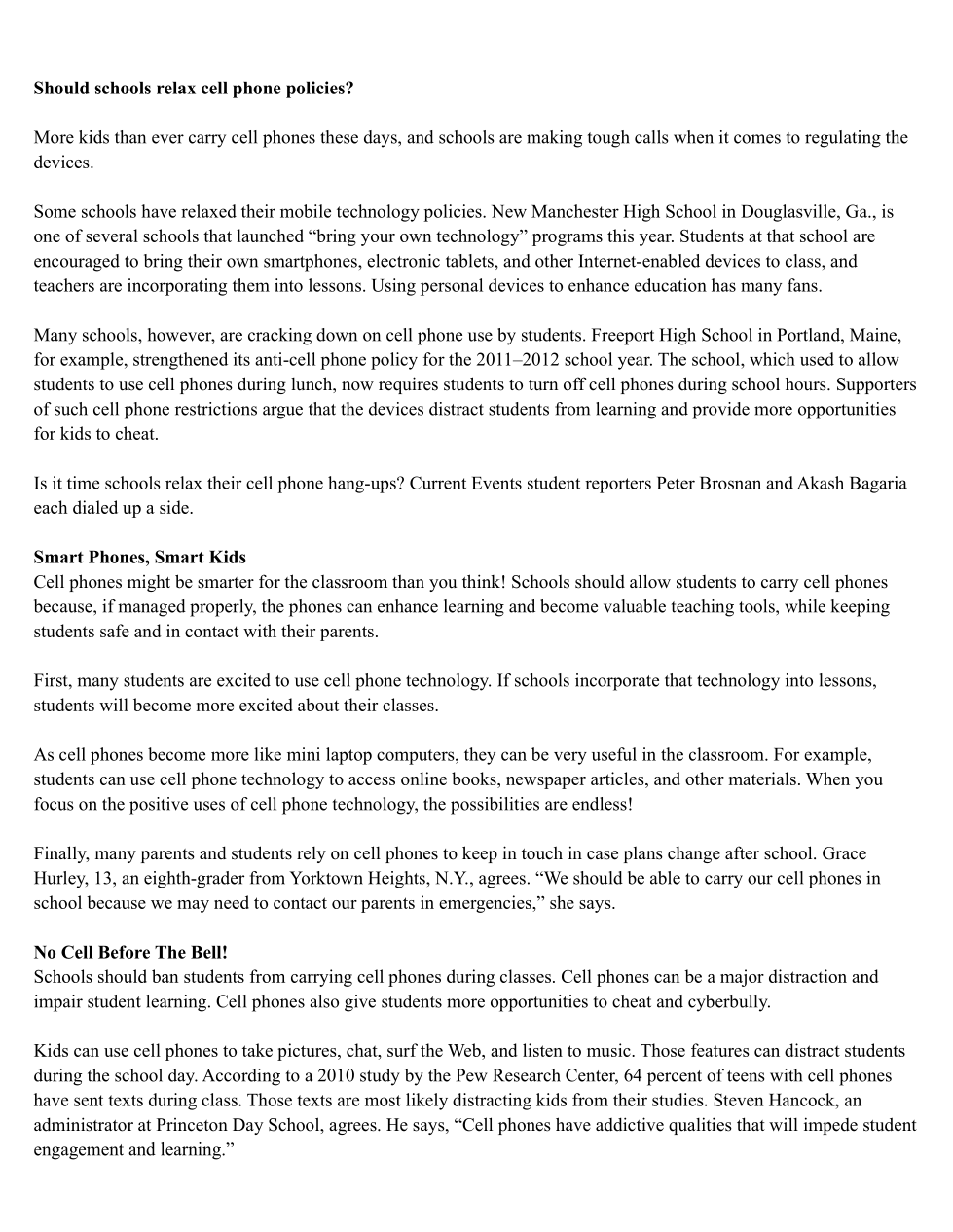
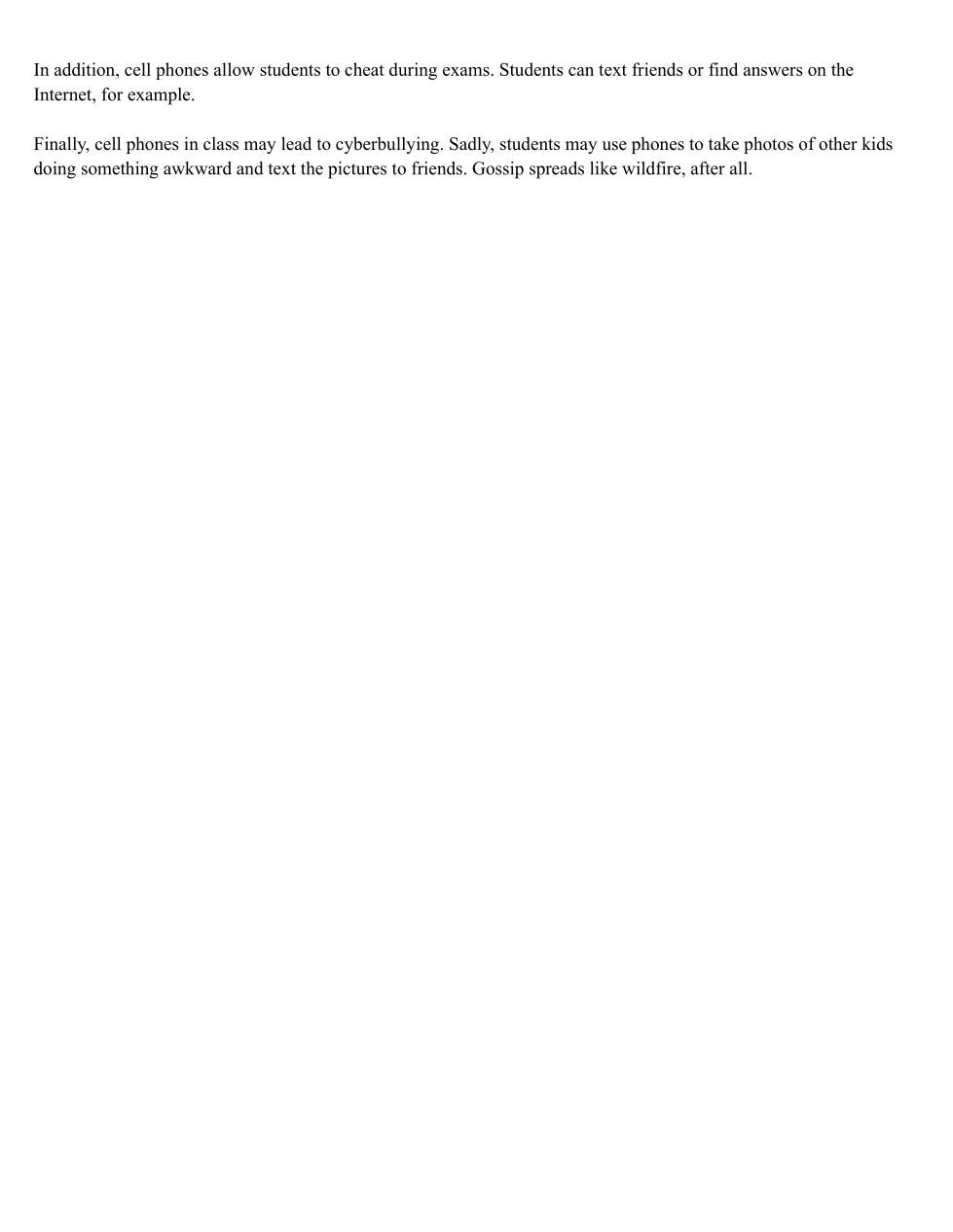
Which piece of textual evidence shows the article intends to argue multiple points?
Based on the information contained in the survey, what impact does including the percentage of teens with cell phones have on the argument as a whole?
What inference can you make about the writer’s position on the topic based on the title of the section “No Cell Before the Bell!”?
What evidence from the article BEST supports the idea that cell phones should not be used in the classroom?
Using context clues, what does the word “impede” mean?
What is the purpose of the headings in the article?

What two types of crushes are discussed in detail in the article?
What does the article recommend parents do when their teenager develops a crush?
Why do parents fear their children developing identity crushes on certain peers?
Which of the options below best summarize paragraph 5?
Who is the intended audience of this passage?
What is the best synonym of “compelling” as found in paragraph 2?
What is the central idea of the article?
Which piece of textual evidence best supports the central idea?
Which piece of evidence supports the doctor’s explanation that Johnsy’s illness isn’t just pneumonia?
Sue and the reader know Johnsy’s chance of recovery, while Johnsy does not. This is an example of which type of irony?
“Doctor’s called him Pneumonia. On the east side of the city he hurried, touching many people; but in the narrow streets of Greenwich Village he did not move so quickly.” This quotation is an example of what type of figurative language?
What does the last leaf symbolize at the end of the text?
Which quotation BEST illustrates Sue’s optimism?
What type of conflict is the main conflict in the text?
Even though Behrman refers to Johnsy as being “foolish” and “stupid,” he still paints the last leaf. What does this action reveal about his true character?
What is ironic about the end of the text?
What can you infer about Greenwich Village based on the hobbies of the three characters?
What is a possible theme of the text?
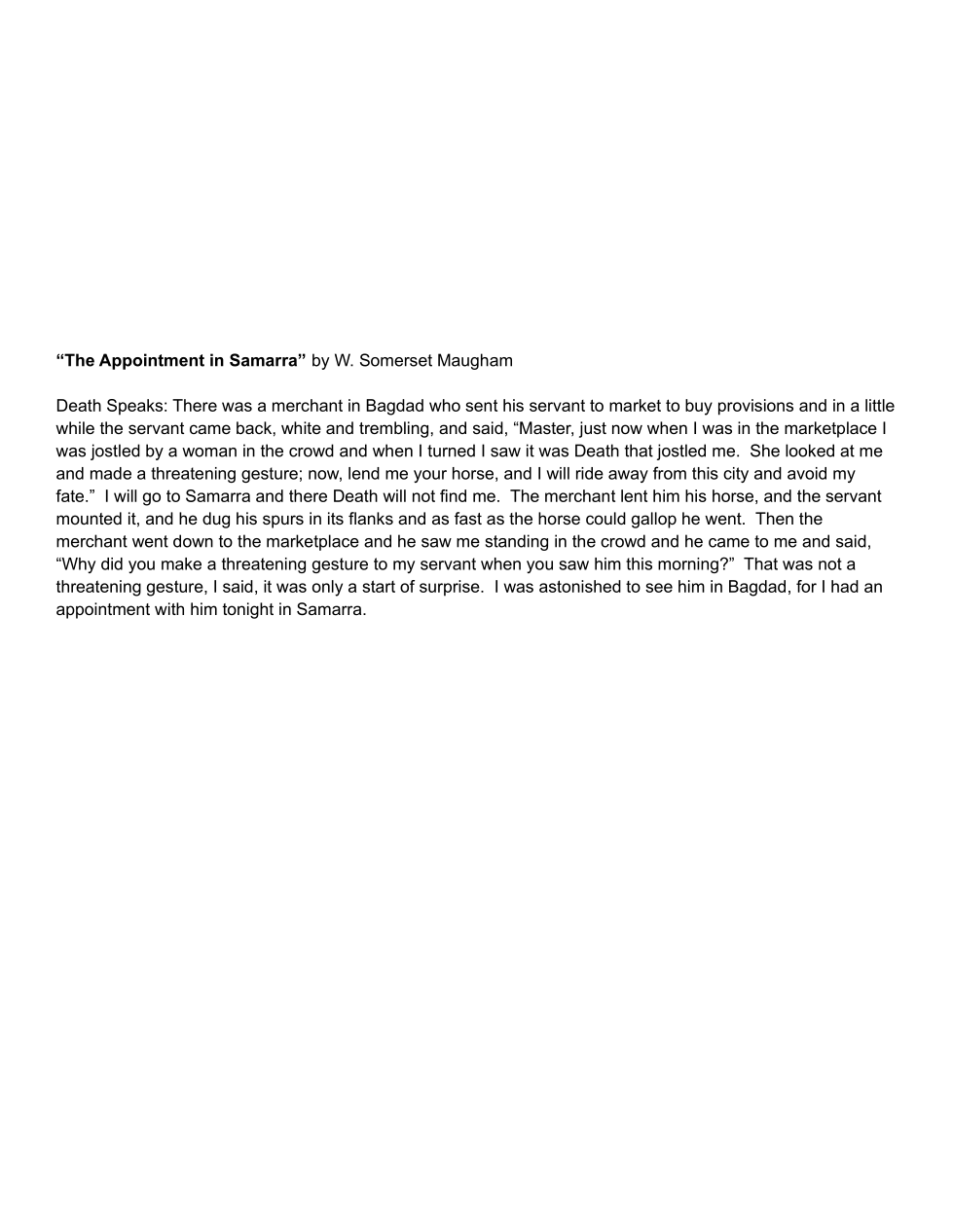
From whose point of view is the story being told?
Which of the following words best defines ‘jostled’ as it is used in context of the story?
What is the overall tone of this passage?
How is the last line of the text ironic?
What can the reader infer from the servant choosing to go to Samarra?
What is the overall tone of this poem?
What is the effect of the teacher’s explanation of the Spanish Inquisition?
According to the fifth stanza, develop a theme.
How does Collins’ reference to the teacher’s walk home “past flower beds and white picket fences” illuminate and characterize the teacher and his perspective towards educating his students?
What can the reader infer about the history teacher based on the lessons he presents to his students?
Which of the following is the best theme for the poem as a whole?
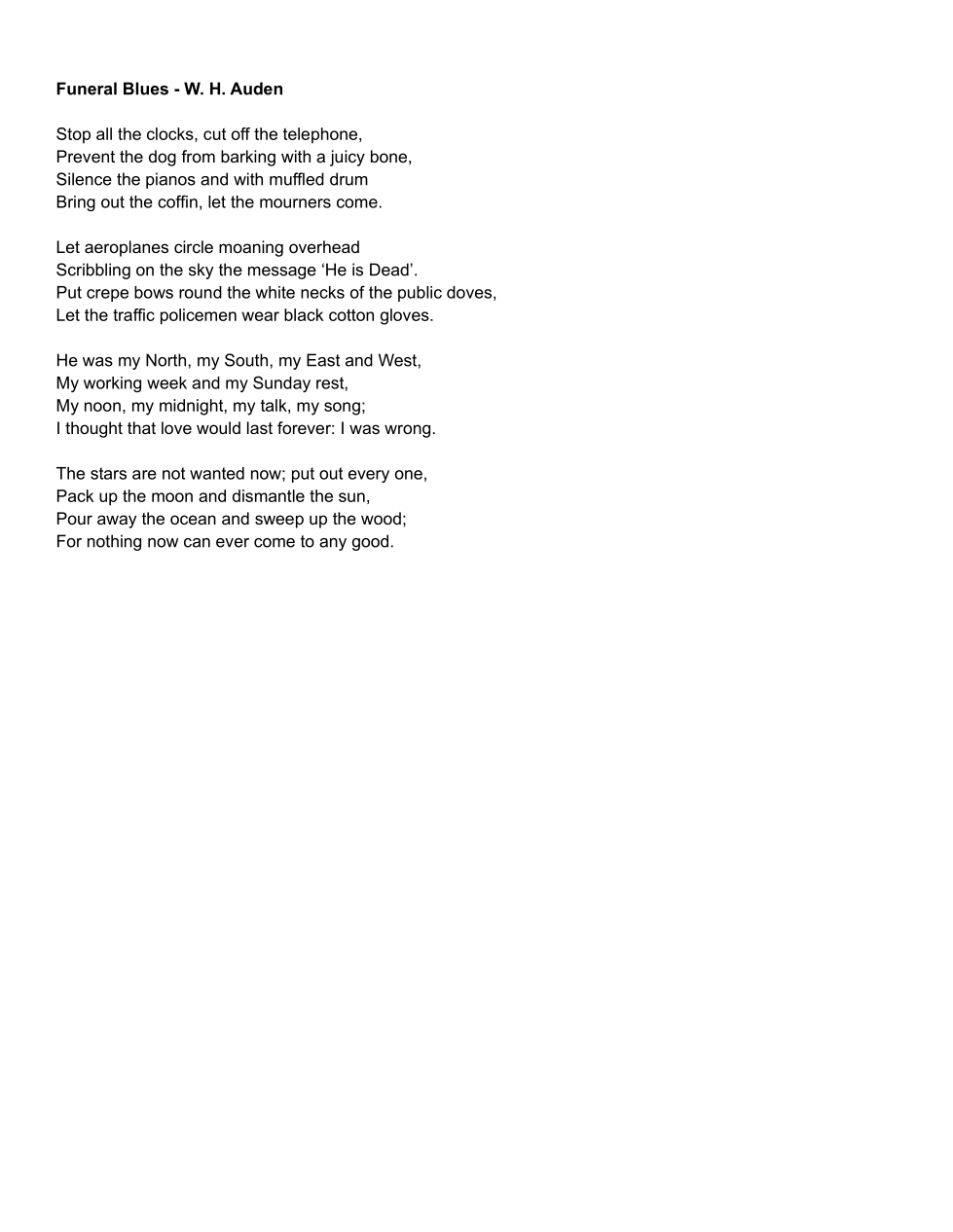
Which of the following lines from the poem portrays personification?
What is the overall tone of the poem?
Which line best helps support the theme of the poem?
Which line from the poem best captures the speaker’s relationship with the deceased?
What is the effect of the author’s decision not to identify the deceased by name?