
Ɛhia
1
What do you need to run a race?Construct sentences left to right

Mmuae Afoforo a Wobɛpaw:
I don't sleep or rest
A runner needs energy
to run a race.
Ɛhia
1
What do you need to run a race?Construct sentences left to right
Energy is the ability to do
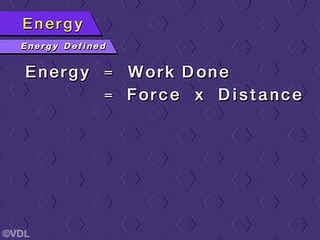
Energy = the ability to do work = a force applied over some distance.
Energy = (F)(D) where the letter 'F' means
Food contains energy.
What type of energy is found in food?
The energy found in food is released to your body through .
Plants are
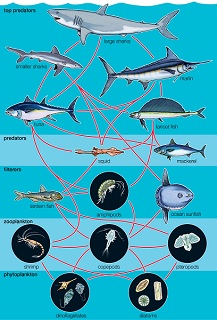
This is an example of a . It is made of many smaller
Group the following macromolecules
glucose
starch
albumin
cholesterol
testosterone
glycogen
fructose
Carbohydrates
other organic molecules
From the video in Discovery Education...

Unit conversions: Which area shows an increase in meters by multiplying by 10 (x10)?
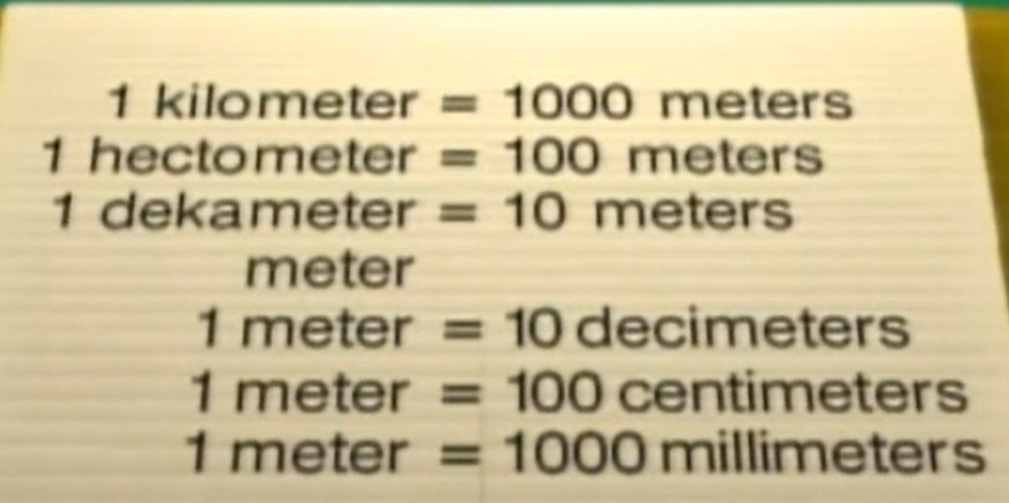
From the video in Discovery Education...
Unit conversions: Which area shows units decreasing by dividing meters by 10 (/10)?
From the video in Discovery Education...
match the following abbreviations with their correct length (unit)
hm
dam
cm
m
km
dm
mm
Kilometer
hectometer
dekameter
meter
decimeter
centimeter
millimeter
All living organisms require energy to perform essential cellular processes. Building larger molecules from smaller ones requires the input of energy; these larger molecules can also be used to store energy for later use. Moving molecules from low to high concentrations requires the input of energy. Without energy, none of the processes of life are possible.
What do all living organisms require to perform essential cellular processes?
What does it mean "Without energy, none of the process of life are possible"?...What processes can you think of?
From Explore #1, paragraph #3: "Defining Energy"...
Energy cannot be created or destroyed, but it can be
According to the video...
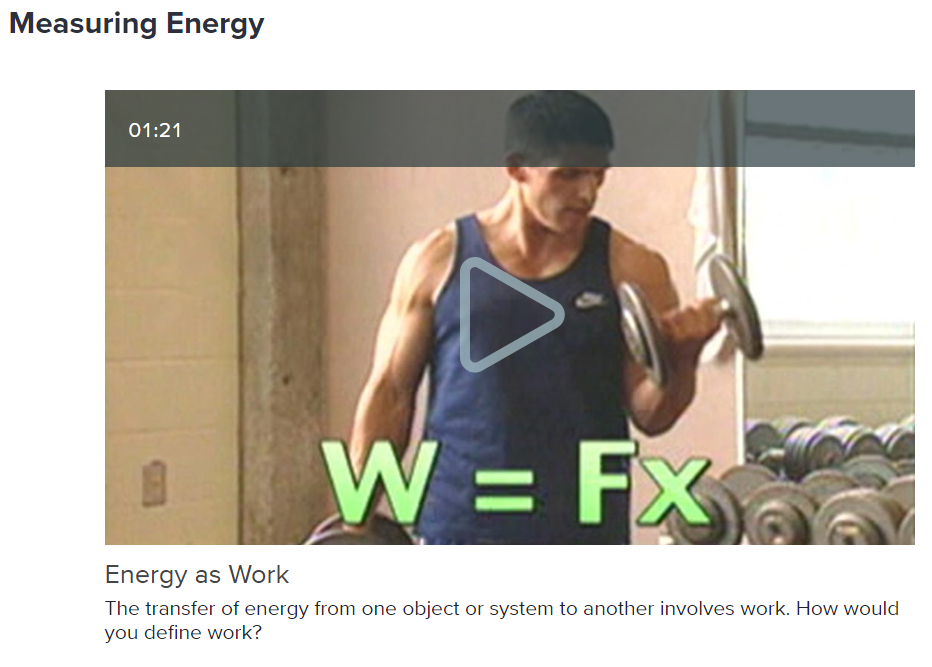
what are two examples of work shown? (select two examples)
Which sentence defines the joule (J)?
Energy can be measured using a number of different techniques.
Which sentence tells us how watts are used?
Energy can be measured using a number of different techniques. Energy is defined as the ability to do work, and work is defined as the force used to move an object for a certain distance (work = force x distance). The standard unit of measurement for energy is the joule (J), which is defined as 1 newton of force used to move an object 1 meter; 1 joule = 1 newton*meter.
Which sentence describes the most commonly used unit of energy in biology.
1 cal=4.184 J1 J=0.239 cal1 erg=10−7 J1 cal=4.184 J1 J=0.239 cal1 erg=10−7 J
Energy exists in a variety of forms of
Potential energy is the amount of energy that is
Which sentences describes what thermal energy is?
Which sentences describes what temperature is?
Potential energy can exist in which of the following forms.
Chemical potential energy or chemical energy is the energy that is stored in the bonds between atoms. Chemical energy is released or absorbed during chemical reactions. When bonds are broken in chemical reactions, energy is absorbed. When bonds are made in a chemical reaction, energy is released. Organisms store energy as chemical energy. Food compounds, like glucose, starch, or fats, contain a lot of chemical energy in their molecules. When cells metabolize food during cellular respiration, they react these compounds in the presence of oxygen. This releases energy. Initially they may store some of the released energy as chemical energy in other “high energy” molecules. One of these molecules is adenosine triphosphate (ATP). This stored chemical energy is then readily available to do work within the cell. Chemical energy is required for all life processes.
According to the first sentence, where is chemical energy stored?
According to the third sentence, when bonds are broken in chemical reactions, energy is . When bonds are made in a chemical reaction, energy is .
A rollercoaster car moves from left to right as shown. The car starts out with high velocity as it is launched at the gate and no additional energy is provided during the part of the roller coaster shown. Determine whether the car is gaining or losing kinetic and potential energy at each part of the rollercoaster.
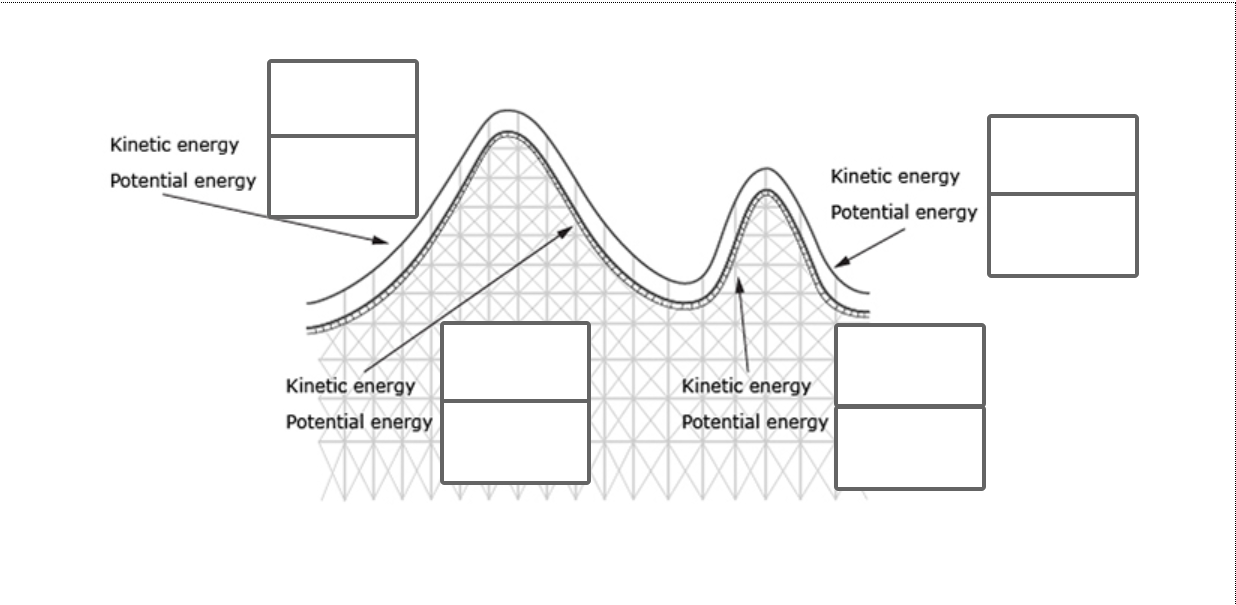
A rollercoaster car moves from left to right as shown. The car starts out with high velocity as it is launched at the gate and no additional energy is provided during the part of the roller coaster shown. Determine whether the car is gaining or losing kinetic and potential energy at each part of the rollercoaster.
The first law of thermodynamics is related to the conservation of energy and is often called the Law of Conservation of Energy. The law states that energy cannot be created or destroyed. The total energy in the universe remains constant. Energy can, however, be transformed from one form into another.
The first law of thermodynamics...what does that mean?...can you give me an example?
The second law of thermodynamics states that the entropy of a system cannot decrease. Entropy is the measure of disorder, or chaos, in a system. Systems increase in disorder until equilibrium is reached. This law of thermodynamics explains why energy cannot be transferred from a colder body to a hotter body and why energy conversions are never 100% efficient. Most of the energy taken in from food is lost as thermal energy. Only a small percent of the energy taken in is used to do work. This thermal energy is why people feel hot when exercising. The conversion of potential energy to kinetic energy releases a lot of thermal energy.
Entropy is the measure of disorder. Which law of thermodynamics states this? What does this mean?
The third law of thermodynamics defines the point at which the thermal energy of molecules is zero. This point is called absolute zero and is defined as 0K (Kelvin); this occurs at -273°C. Absolute zero is the lowest possible temperature because atoms have ceased moving.
The third law of thermodynamics defines the point at which the thermal energy of molecules is zero. What does this mean?
Reactions that take in energy from their surroundings are and reactions that release energy into their surroundings are
Which sentence describes how energy is stored in a redox reaction.
Redox reactions are used to store and release energy in biological systems.
The term redox is a combination of the terms reduction and oxidation. Reduction is the of electrons, which the oxidation state of the atom or ion. In reduction, the energy of electrons is ; this stores energy.
Oxidation is the of electrons, which the oxidation state of the atom or ion. In oxidation, the energy of the electrons is , which energy.
Construct sentences left to right
According to the second sentence, during chemical reactions, energy can be....