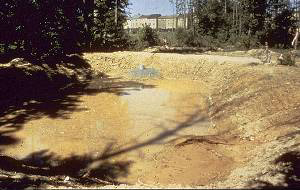
This is an example of a sedimentary
| Draggable item | arrow_right_alt | Corresponding Item |
|---|---|---|
chemical weathering | arrow_right_alt | a type of mechanical weathering caused by scraping and scratching of rocks |
differential weathering | arrow_right_alt | changes to rocks and minerals on Earth due to chemical reactions |
weathering | arrow_right_alt | weathering that occurs at different rates, producing an uneven surface in the rock layers |
abrasion | arrow_right_alt | the process of sediment moving over Earth's surface due to wind, water, ice, gravity, etc... |
deposition | arrow_right_alt | the physical or chemical breakdown of rocks and minerals into smaller pieces on Earth's surface |
erosion | arrow_right_alt | solid material, moved by wind, water and other forces, that settles on land or the bottom of a body of water |
suspension | arrow_right_alt | occurs when eroded sediments are dropped in another location, ending the process of erosion |
sediment | arrow_right_alt | a mixture of moderate sized particles which float (are suspended) in liquid or gas due to buoyancy. |
What are some agents of erosion?
What is detritus?
This is an example of a sedimentary
A prerequisite to erosion is
What is the relationship between weathering and erosion.
Rivers carry their bed load by what three processes?
occurs when water does not have enough energy to pick up the sediment grains. Instead, the water slides and rolls the sediment particles along the riverbed.
occurs when the speed of the water is fast enough to pick up sediment grains and transport them for long distances.
occurs when water has only enough energy to pick up sediment grains and transport them short distances.
involves building walls and other hard structures along a coast.
is the process of replacing eroded sand with new sand from other locations.
involves adding plants and other organic substances to an eroded shoreline.
such as groins, stick out from the shore.