Drag the axes labels to their corresponding locations.
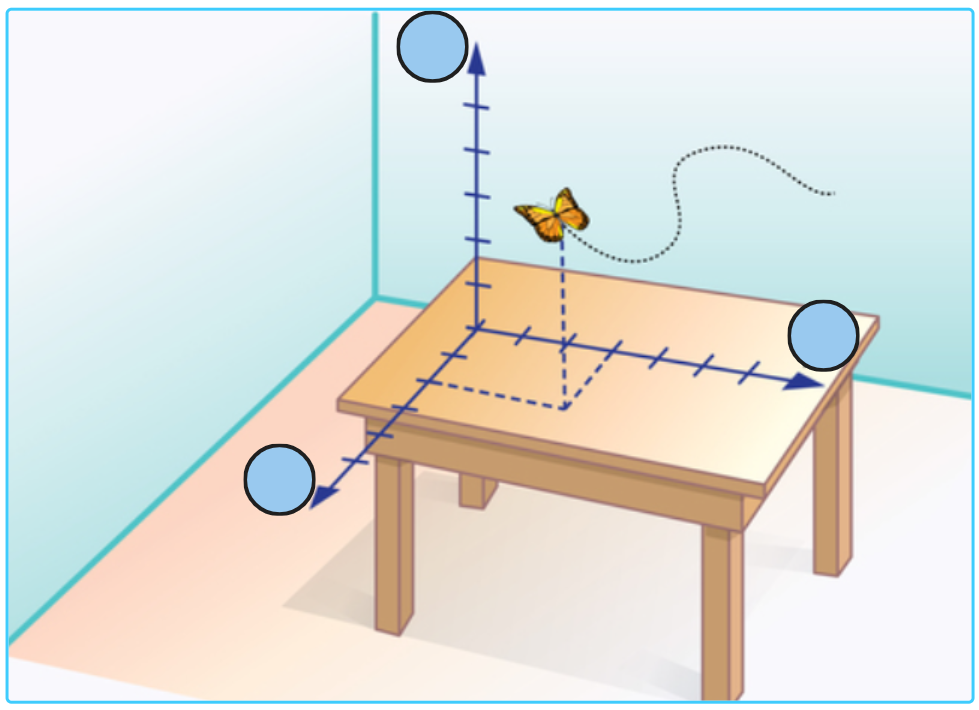
Mmuae Afoforo a Wobɛpaw:
z-axis
y-axis
x-axis
If you are riding in a bus with your friends, it looks like things are moving outside the bus when you look out the window while everyone inside the bus is stationary. To someone outside the bus, standing on the sidewalk, it looks like the bus and everyone inside the bus is moving. These are examples of different what?
Drag the axes labels to their corresponding locations.
If a ball is dropped off the roof of a house, how many dimensions of movement are there and along which axis(-es) does it move?
Along which axes will the arrow travel?

If you are traveling in a train in a straight line and at a constant speed (and you couldn't see outside and the train track was so smooth you couldn't tell you were even moving), you would not be able to even tell you were moving. This is an example of an inertial frame of reference. What would have to change to make this a non-inertial frame of reference?
According to Newton's law of universal gravitation, the force, due to gravity between two bodies is
The closer objects are together, the the gravitational force is between them, according to Newton's law of universal gravitation.
The mass of your body is the same, whether you are standing on Earth or the Moon.
The weight of your body is the same, whether you are standing on Earth or the moon.
Newton’s second law of motion says that any force exerted on an object will cause that object to
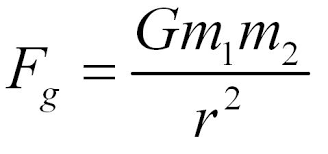
What does 'G' represent in the Force of Gravity equation?
What does m1 and m2 represent in the force of gravitation equation?
What does r2 represent in the force of gravitation equation?
Why is r2 in the denominator position?
Newton's laws are most useful only within frames of reference.
When dealing with very small objects, such as atoms and molecules, Newton's laws of motion do not apply. It is better to use another set of physics laws, known as
As a skydiver with a mass of 54 kg falls toward the Earth, she accelerates at 9.8 m/s2. What is the force of gravity acting upon the skydiver? What must be true about the force of air resistance acting on the skydiver?

If a mass doubles but the force applied remains constant, the acceleration is halved...why? Remember F=ma can be rearranged to a=F/m
In the formula a=F/m, where force is constant, the acceleration is
If two people push a bobsled with a total force of 250 Newtons and the combined mass of the men and the bobsled is 230 kg, the acceleration of the bobsled (ignoring friction) will be
Draw a free body diagram for a car traveling to the left (draw all force vectors and label them)
A 40.0-kilogram boy is lying in an inner tube in a swimming pool when a larger boy with a mass of 80.0 kilograms floats by in his own inner tube. The first boy pushes the second with a force of 60.0 Newtons. Assuming that the mass of each inner tube can be ignored, what is the acceleration of each boy and his inner tube?
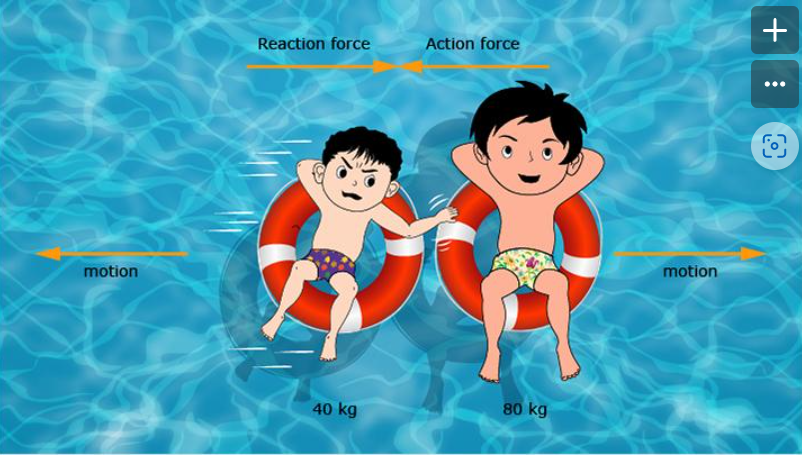
Newton's second law states that objects will accelerate only when a(n) force is acting upon it (that is to say, a net force).
The rate at which an object moves or changes position is defined as
To calculate average speed, you divide the
speed is the speed of an object at a specific point at time
Why is speed considered a scalar quantity?
Velocity is a
Vectors point in the
In the example of the billiard balls (pool table), the balls all move with the same speed. Why do they have different velocities?
The rate of change of velocity is defined as
To calculate
To calculate change in velocity, you divide
Newton's 2nd law of motion, sometimes referred to as the law of inertia, says that an object will only accelerate if there is a net force aka