Log in
Sign up for FREE
arrow_back
Library

DE_CHEM_5.2_Solutions

star
star
star
star
star
Last updated over 2 years ago
27 questions
Pre-Assessment/Background Knowledge
Required
4
Engage
Required
1
Required
3
Required
1
Required
2
Required
2
Explore 1
1
1
1
1
1
4
1
1
1
3
10
1
1
1
6
Question 1
1.

What do I know about solutions?

For the following video, skip to 1:00
Question 2 | 01:34
Question 3 | 02:19
00:00/00:00
Question 2
01:34
keyboard_arrow_down
Required
1
Question 2
2.

What roles do salts play in your body?

Question 3
02:19
keyboard_arrow_down
Required
1
Question 4
4.

Sports drinks have a concentration of electrolytes and water that is close to the same as your body. What are some key electrolytes that you are likely to find?

Question 5
5.
The human body relies on a delicate balance of solutions to function. _______ solutions exist in the blood, stomach, digestive system, and within cells. Gas solutions allow _______ to reach all parts of the body while removing _______ .
Question 6
6.

What type of fluids are designed to help the body achieve equilibrium?

Question 7
7.

Classify the following as either ionic or molecular by dragging each to the correct column.

  • water
  • potassium bromide
  • table salt
  • sugar
  • calcium carbonate
  • carbon dioxide
  • Ionic
  • Molecular
Question 8
8.

Which two of the following correctly describe a solution?

Required
1
Question 9
9.

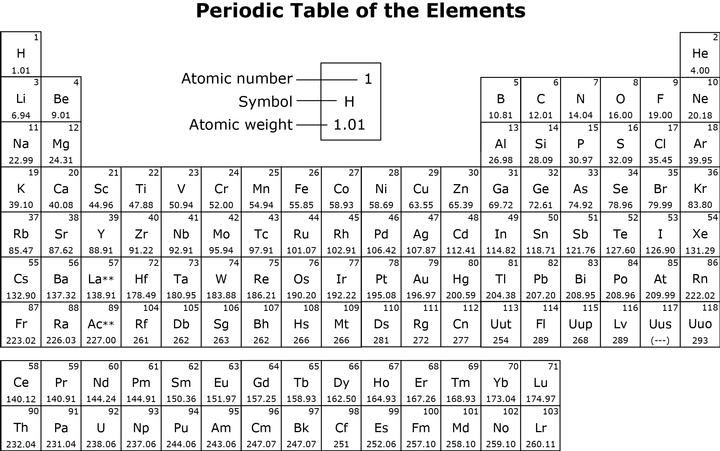
Find the molar mass of Titanium (Ti). Include units.

Required
1
Question 10
10.

Calculate the molar mass for magnesium sulfate (MgSO₄). Include units.

Required
1
Question 11
11.

Calculate the molar mass of oxygen gas (O₂). Include units.
Question 12 | 02:53
00:00/00:00
Question 12
02:53
keyboard_arrow_down
Required
1
Question 12
12.

If you need to weigh out 1 mole of Sodium (Na)...how much would it weight?

Question 13
13.

Is salt water a solution? How could you tell? Explain.

Question 14
14.

What are the two things that a solution requires?

Question 15
15.
Water is often referred to as the universal _______ .
Question 16
16.
A sugar is a(n) __________ because it is __________, contrary to a salt.
Question 17
17.
Other Answer Choices:
solvent
solution
solute
Question 18
18.
A __________ is the substance that is dissolved in a solution. The solvent is the substance that dissolves the solute. Usually, there is __________ solvent than solute in a solution. For example, if you add one spoonful of sugar to a jug of water, the water is the solvent and the sugar is the solute. When two liquids are mixed together, the solute is the substance of the __________ quantity.  For example, rubbing alcohol is a liquid mixture of 70 percent isopropyl alcohol and 30 percent water. In this solution, water is considered the __________.
Question 19
19.

What does it mean to say you have an 'aqueous solution'?

Question 20
20.

Why is water called 'the universal solvent'?

Question 21
21.
The proportion of solute to solvent particles, the composition of the solute, and in concentrated aqueous solutions (high or low pH),particle interactions with the solvent and the particles in solution affect the various properties of solutions (collectively called _______ properties)
Question 22
22.
When a water molecule combines with a hydrogen ion, it forms an ionic substance—the hydronium ion, H3O+. Hydrogen ions exist in aqueous solution as _______ ions. Positively charged hydrogen ions are attracted to the lone pair of electrons of the water molecules. In acid-base theory, the concentration of hydrogen ions is considered, but the actual concentration of hydrogen ions in solution is very _______ . In practice, the hydrogen ion and hydronium ion are functionally _______ .
Question 23
23.
Draggable itemarrow_right_altCorresponding Item
heterogeneous
arrow_right_alt
any substance that dissolves to form free ions, which make the solution electrically conductive.
electrolyte
arrow_right_alt
the amount of a dissolved substance per unit volume of a solution
precipitate
arrow_right_alt
a solution containing a small amount of solute relative to the amount solvent
solvent
arrow_right_alt
to add a solid material to a liquid in such a way that its particles completely disperse into the liquid, usually becoming invisible within the liquid
homogeneous
arrow_right_alt
made up of two or more distinct components; usually refers to a mixture in which individual substances are distinct
dissolve
arrow_right_alt
made up of one uniform component; often used to describe a mixture with a consistent composition and a single phase throughout
solution
arrow_right_alt
solid particles that have been separated from a solution
solute
arrow_right_alt
the substance that is dissolved in another substance
concentration
arrow_right_alt
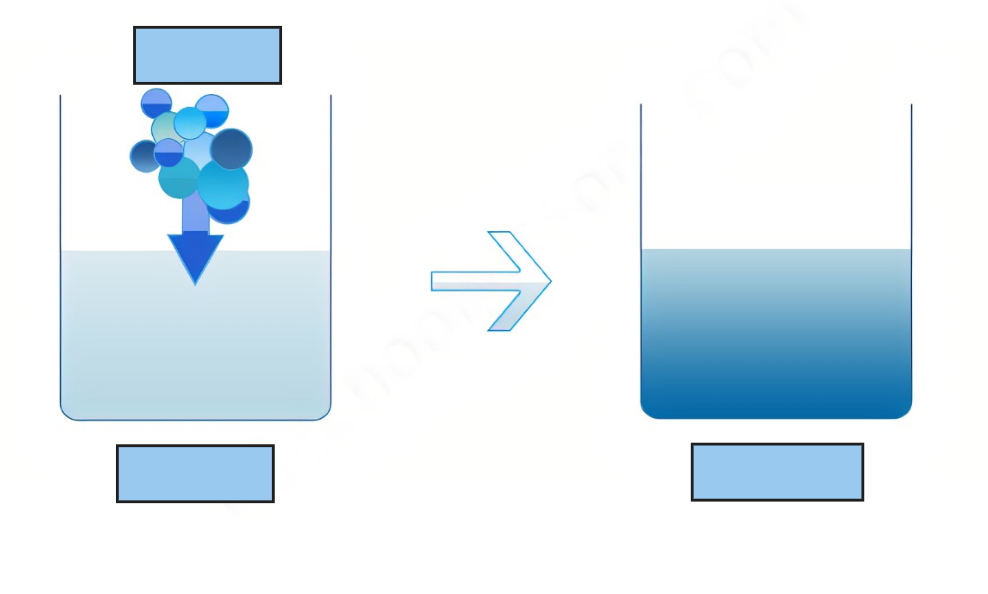
a homogeneous mixture of two substances that appear as only one state of matter
dilute solution
arrow_right_alt
the substance that dissolves another substance
Question 24
24.

What does it mean to say 'sports drinks have a concentration of electrolytes and water that is close to the same as your body'?

Question 25
25.

Often, when we lose a lot of fluids from our body i.e. you finish exercising and sweat a lot, you get sick and lose a lot of fluids from excessive vomiting or diarrhea, we can replenish the minerals we lost such as sodium and potassium by drinking what?

Question 26
26.

Why does a spoonful of sugar dissolve faster than a sugar cube?

Question 27
27.

Which factors affect the solubility of a solute?

Question 3
3.

What happens to salts when placed in water?