1
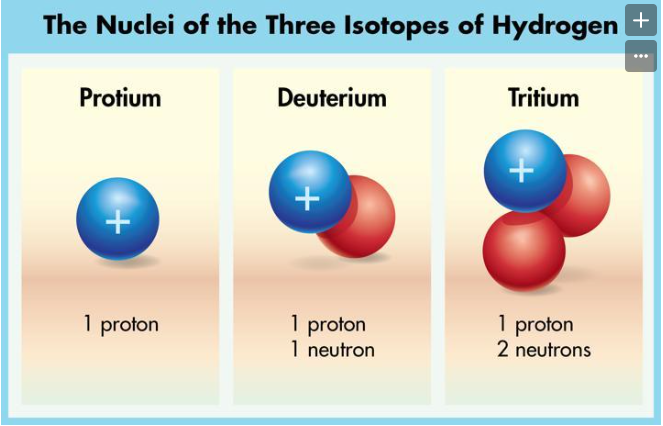
(Explore 1) Pictured are three isotopes of Hydrogen. They differ in the number of
1
(Explore 1) Which of these isotopes is named hydrogen-3 (H-3)?
(Explore 1) Which of these isotopes is named hydrogen-3 (H-3)?
(Engage) Every active star in the universe is generating energy through reactions. The sun is composed of gases, primarily hydrogen and helium, which are compressed into a form of matter called . The of such a large mass of gas causes intense pressure at the core of the sun which, combined with the extreme temperature (15,000,000°C), allows nuclear reactions to occur.
(Explore 1) A
(Explore 1) Different atoms of the same element can have a different number of
(Explore 1) Helium has two stable forms, Helium-3 which has
(Explore 1) Pictured are three isotopes of Hydrogen. They differ in the number of
(Explore 1) Which of these isotopes is named hydrogen-3 (H-3)?
(Explore 1) Which sentence explains why C-12 and C-13 are more prevalent on Earth.

(Explore 1) Some isotopes are unstable. The unstable isotopes will radioactively at a continuous, predictable rate. When unstable isotopes decay, they radioactive particles. Eventually they also transform into different elements.
(Explore 1) Vocabulary: A
(Explore 1) Vocabulary: A
(Explore 2) Inside the nucleus, you would expect all the protons to repel each other...but they don't. This is due to another force acting on them called the
(Explore 2) Select all true attributes of strong nuclear forces
(Explore 2) Many isotopes of elements that are found in nature are
(Explore 2) So far, scientists have found
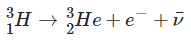
(Explore 2) Based on this nuclear reaction, the hydrogen started with
Radioactive decay of atoms does not happen all at once. It happens and is impossible to predict when and which atoms will decay...it is a process. The only thing that can be determined is the rate of decay, which by isotope. The number of decays is to the number of particles in the sample. The amount of time for half of a sample of a particular isotope to decay is and is known as the half-life of the isotope.