Examine the two waves shown. Which wave has a greater amplitude?
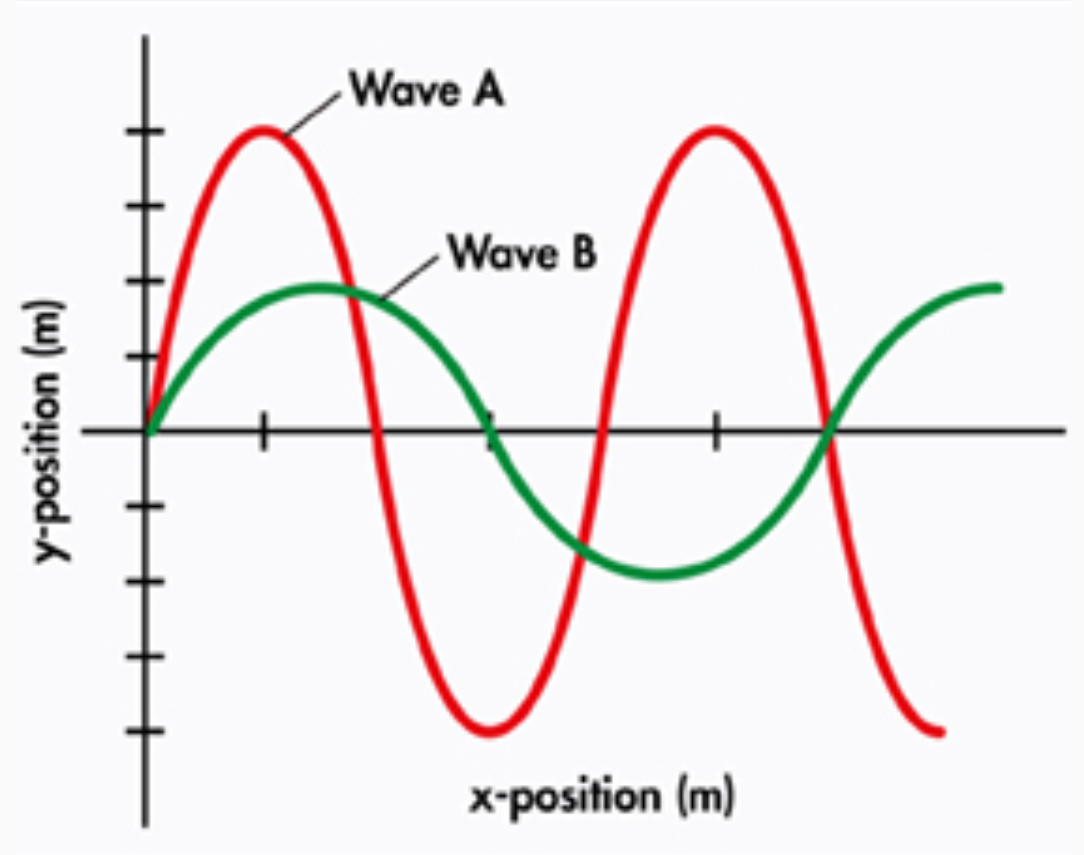
Examine the two waves shown. Which wave has a greater amplitude?
Two sound waves are emitted from identical sources at the same time. They each travel a distance of 10 m, but one wave reaches the destination faster than the other. What can you conclude about the two waves?
A wave emitted from a source has a frequency of 10 Hz and wavelength 2.5 m. How much time will it take to reach a person located 5 m from the source?
Two students are holding opposite ends of a spring in a classroom. One student stands on the left end of the classroom and the other stands at the right end. They shake the spring so that a longitudinal wave travels along the spring. In which directions will the longitudinal wave oscillate?
Examine the two waves shown. Which wave has a greater amplitude?
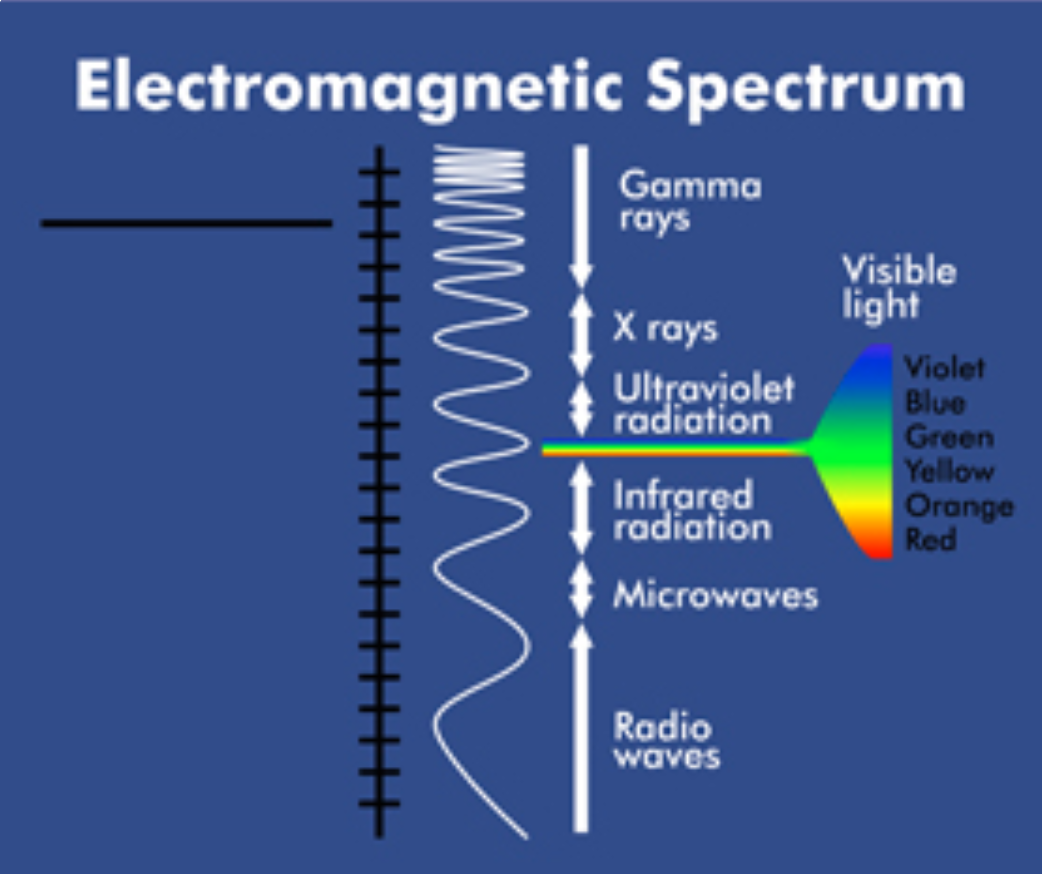
Observe the following diagram of the electromagnetic spectrum. What term should be written in the blank space shown?
Match the following
| Draggable item | arrow_right_alt | Corresponding Item |
|---|---|---|
Interference | arrow_right_alt | occurs when a wave strikes a boundary between two media and bounces back into the medium from which it was originally traveling. |
Reflection | arrow_right_alt | occurs when a wave changes speed. This causes the wave to bend, and it typically occurs when wave moves from one medium to another. |
Refraction | arrow_right_alt | in terms of transverse waves, it describes the orientation of the oscillations relative to the direction in which the wave propagates. |
Diffraction | arrow_right_alt | occurs when two or more waves interact with each other. The new wave is a combination of the original two, with the amplitude equal to the sum of the two waves individual amplitudes. |
Resonance | arrow_right_alt | the spreading out of waves when they encounter a barrier or a narrow opening |
Polarization | arrow_right_alt | the tendency of an object to vibrate with a greater amplitude at a particular frequency, known as the resonant frequency. |
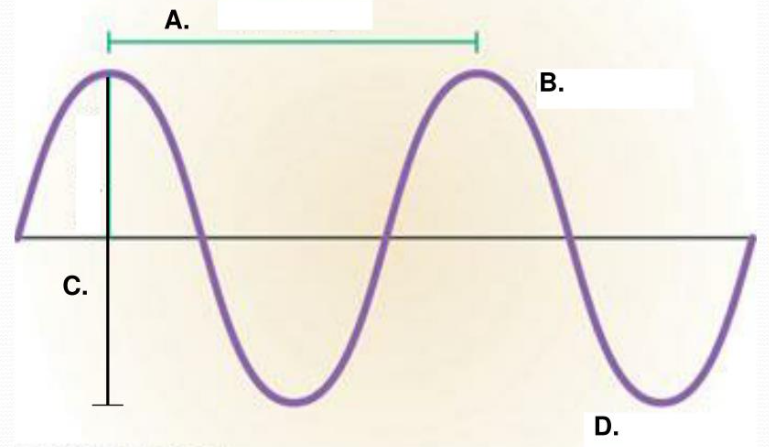
Earthquakes that travels through solid ground in the form of seismic waves. Potential energy builds up as a result of on rocks along cracks in Earth’s crust called . The stress occurs because pieces of Earth’s lithosphere called tectonic plates are in constant motion. This motion causes rock on either side of a fault to , or show strain. Eventually, the stress becomes so great that , moving suddenly along the fault. Earthquakes generate several different types of seismic waves. Some seismic waves travel through Earth’s interior. Geologists refer to these as waves because they move through bodies of rock. Other seismic waves, called waves, travel along the surface of the ground.
waves give scientists information about the structure of Earth's interior layers. Seismic P waves are called waves because they are the first seismic waves felt or recorded following an earthquake. Seismic P waves are also referred to as waves while seismic S waves are referred to as waves. Surface waves are the type of seismic wave, whereas the seismic waves are P waves. To measure earthquake waves, scientists use a . include both P waves and S waves.
Which statement best compares the movement of P waves and S waves?
Why do surface waves arrive last at a seismograph station?
Which statement best explains why seismic waves sometimes deflect when they pass from one type of rock to another?
A seismic zone is an area of the Earth's surface where seismographs P waves and/or S waves from an earthquake. This is due to or structures within the Earth's surface causing the velocity of P waves to and S waves to simply .
is a measurement of the impact of an earthquake in human terms and is measured using the scale.