Answer all 25 questions. Submit your response on the google Classroom once you have finished.
1 point
1
Question 1
1.
HISTORICAL SOURCE
Advice from a Vizier
The Egyptian official Ptah-Hotep served as a vizier to the pharaoh in the Fifth Dynasty of the Old Kingdom. A vizier was a high-ranking official within the Egyptian government. Ptah-Hotep recorded his advice to other young men of his society, particularly those who wished to serve in government, in a collection known as The Precepts of Ptah-Hotep. A precept is a rule that guides behavior.“If you have, as leader, to decide on the conduct of a great number of men, seek the most perfect manner of doing so that your own conduct may be without reproach. Justice is great, invariable, and assured…”
—Ptah-Hotep
from The Precepts of Ptah-Hotep
According to Ptah-Hotep, what is the best way for leaders to ensure good behavior in those who serve under them?
1 point
1
Question 2
2.
Along which river did the Egyptian civilization develop?
1 point
1
Question 3
3.
THE FLOODS OF THE NILE
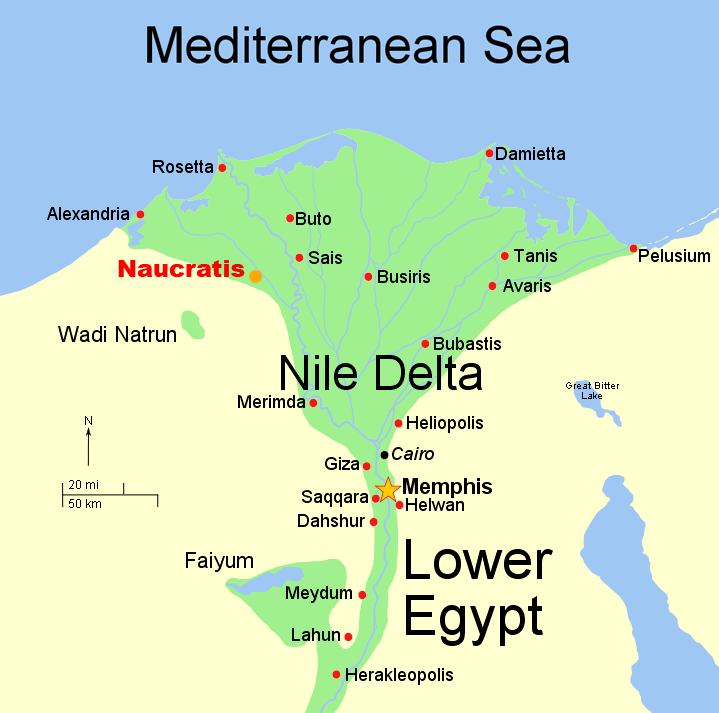
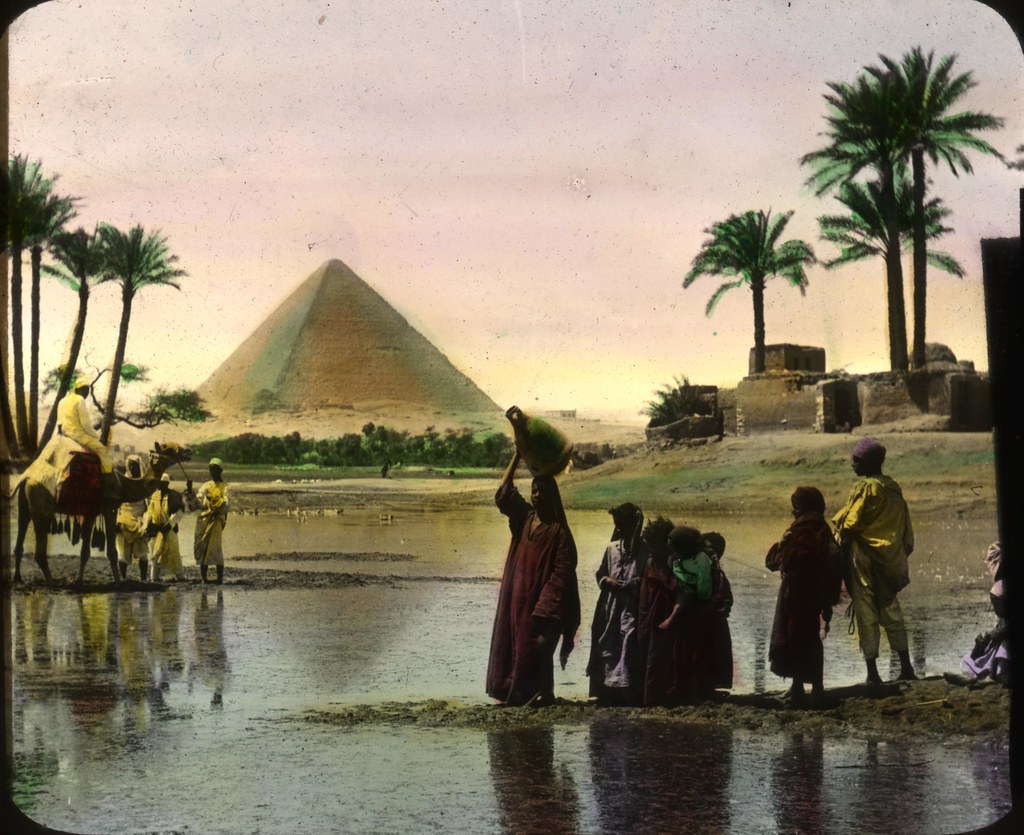
Because little rain fell in the region, most of Egypt was desert. Each year, however, rainfall far to the south of Egypt in the highlands of East Africa caused the Nile to flood. The Nile’s floods were easier to predict than those of the Tigris and Euphrates rivers in Mesopotamia. Almost every year, the Nile flooded Upper Egypt in mid-summer and Lower Egypt in the fall.
Select the answer choice from the list to complete the sentence correctly.
The Nile River would flood its delta every year during the ________________________, which left behind rich soil used for growing crops.
1 point
1
Question 4
4.
In addition to a stable food supply, Egypt’s location offered another advantage. It had natural barriers that made it hard to invade Egypt. The desert to the west was too big and harsh to cross. To the north, the Mediterranean Sea kept many enemies away. More desert lands and the Red Sea to the east provided protection against invasion as well. In addition, cataracts in the Nile made it difficult for invaders to sail in from the south.
Select the answer choice from the answer choices to complete the sentence correctly. The presence of _____________________ allowed the two kingdoms of Egypt to develop with little fear of invasion by other warring nations.
1 point
1
Question 5
5.
How did Egypt’s location affect the development of its civilization?
1 point
1
Question 6
6.
Where was the first capital of a united Egypt?
1 point
1
Question 7
7.
Egyptians believed that the pharaoh acted as a mediator between the people and the gods. This idea provided further reason to justify the pharaoh’s rule. Menes founded Egypt’s first dynasty, or series of rulers from the same family. Under dynasties, rule was generally passed from one generation to the next, which gave them significant political power. Pharaohs used this power to make laws and enforce order.
Select the answer choice from the list to complete the sentence correctly.
The pharaohs of Egypt passed the right to rule to their descendants, creating _________________ that lasted many generations.
1 point
1
Question 8
8.
Which statement best explains why the people of the two river civilizations thought it was necessary to obey every command of their leader?
1 point
1
Question 9
9.
The system they developed was based on the belief that the pharaoh, the ruler of Egypt, was both a king and a god. It was a theocracy, or a government ruled by religious authorities. In a theocracy, all political authority comes from religion. Religious leaders have the power to make, approve, or enforce laws. They look to sacred texts or belief systems to justify their laws and actions. Priests and other religious leaders fill political offices. Individuals must follow religious laws carefully and may not have the right to freely choose what religion to practice.
The Old Kingdom was ruled by a pharaoh, who was considered to be a living god, and supported by ___________________ who controlled many political offices.
1 point
1
Question 10
10.
Which type of government did ancient Egyptians develop during the Old Kingdom?
1 point
1
Question 11
11.
Which statement accurately characterizes the ancient Egyptian religion?
1 point
1
Question 12
12.
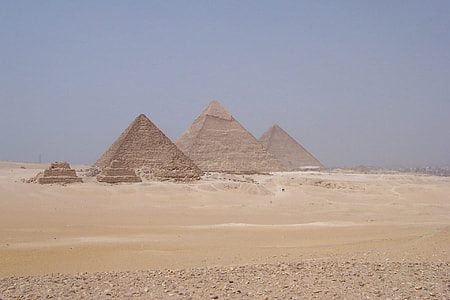
The Great Pyramid at Giza was constructed by Pharaoh _____________.
1 point
1
Question 13
13.
Why were pyramids, such as the Great Pyramid at Giza, usually reserved for the burial of pharaohs?
1 point
1
Question 14
14.
How did the Old Kingdom period end?
1 point
1
Question 15
15.
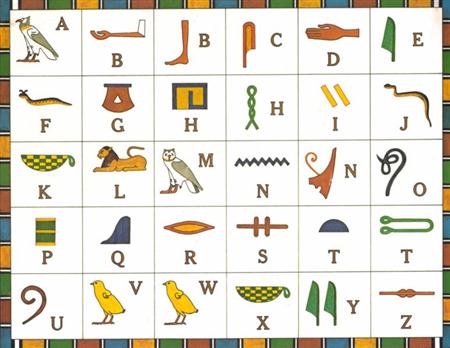
Why was it difficult for modern scholars to understand the meaning of Egyptian hieroglyphics?
1 point
1
Question 16
16.
THE ROSETTA STONE
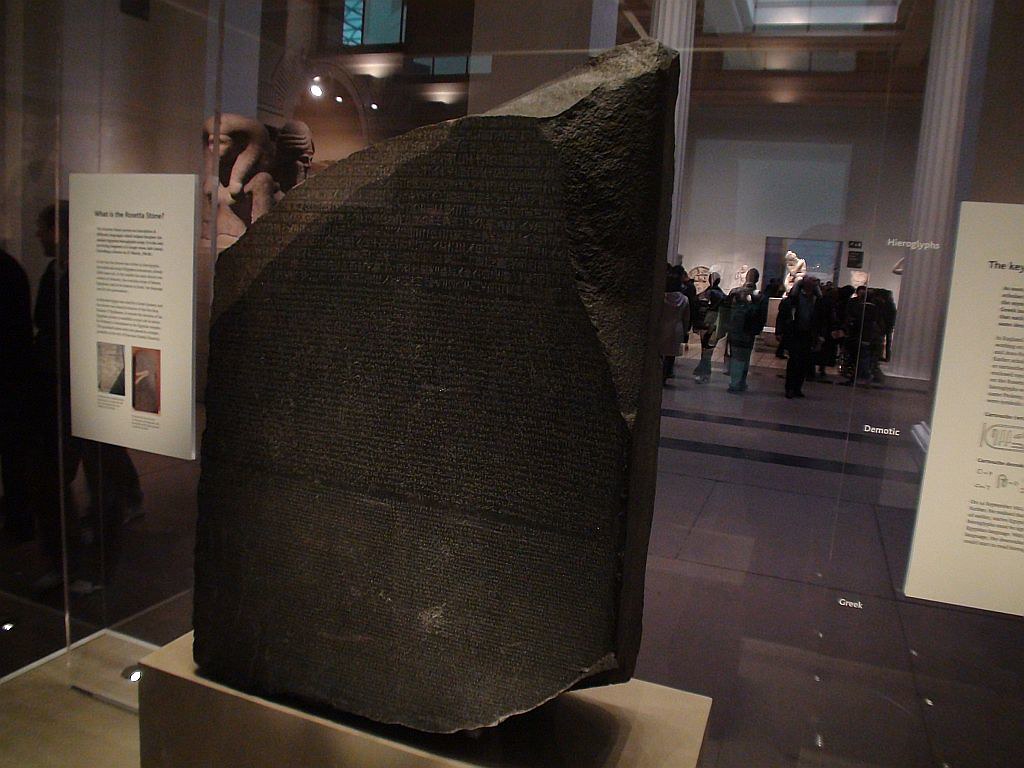
Historians and archeologists have known about hieroglyphic writing for centuries, but for a long time they didn’t know how to read it. In fact, it was not until 1799 when a lucky discovery by a French soldier gave historians the key they needed to read ancient Egyptian writing. That key was the Rosetta Stone. In addition to the hieroglyphics, the Rosetta Stone had text in Greek and a later form of Egyptian. Because the text in all three languages was the same, scholars who knew Greek were able to figure out what the hieroglyphics said.
The key to understanding Egyptian hieroglyphics was provided by the discovery of the Rosetta Stone, which allowed scholars to compare ancient Egyptian writing to _______________ .
1 point
1
Question 17
17.
DOCUMENT-BASED INVESTIGATION
After the Egyptians were conquered, hieroglyphics fell out of use. For thousands of years, no one could read ancient Egyptian writing. In 1798 a French army officer found a black stone near the city of Rosetta in the Nile Delta. The stone was inscribed with a royal decree written in ancient Greek, Egyptian hieroglyphics, and another Egyptian script. Using the Greek text, scholars were eventually able to decode the Egyptian writing systems. The text describes celebrations over the coronation of Ptolemy V.
“It has pleased the priests of all the temples . . . to set up a statue to the immortal King Ptolemy, . . . by which shall be placed the most honored god of the temple, presenting to it the weapon of victory. . . . And to make for King Ptolemy . . . a portable statue and a shrine of gold in each of the temples, and to place them in the sanctuaries with the other shrines; and on the great festivals, when the going forth of the shrines takes place, the shrine . . . shall go out with the others. . . . Upon those days shall be celebrated a feast in the temples of Egypt monthly, and shall be performed in them sacrifices and libations, and the other rites, as in the other festivals, and held in the temples; and also there shall be a feast and a festival to the immortal and beloved by Ptah, King Ptolemy, . . . yearly through the region.”
—from the Rosetta Stone
How does the Rosetta Stone increase our understanding of the value Ancient Egyptians placed on their leaders?
1 point
1
Question 18
18.
Which of the following was ancient Egypt’s largest temple?
1 point
1
Question 19
19.
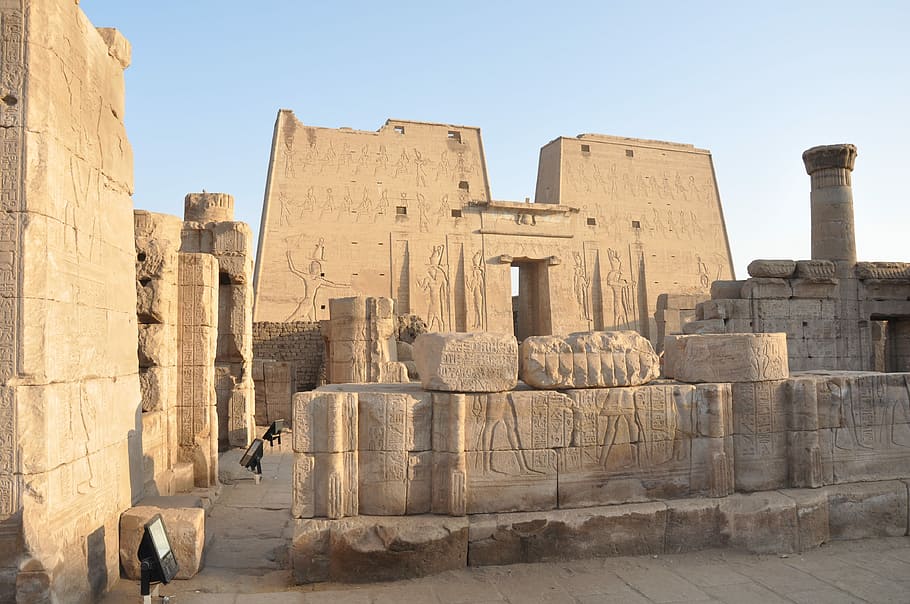
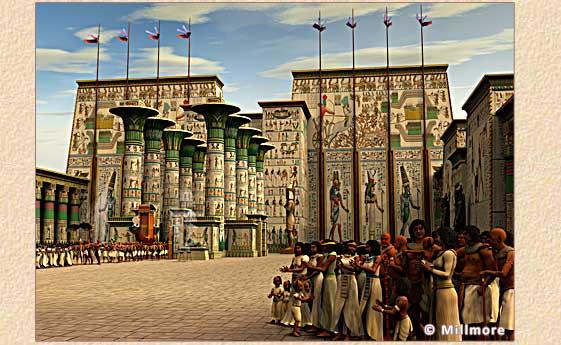
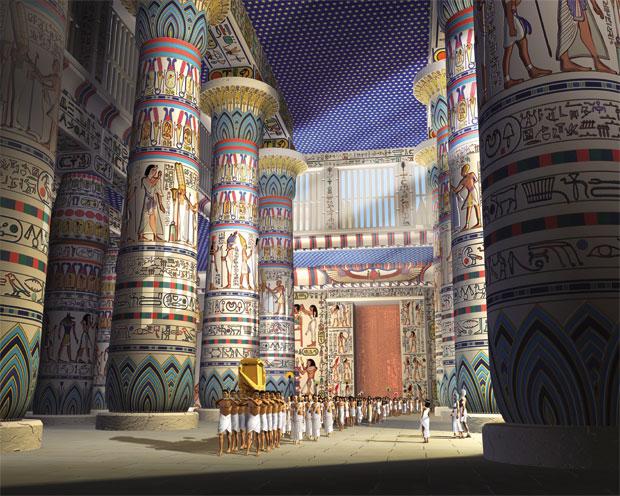
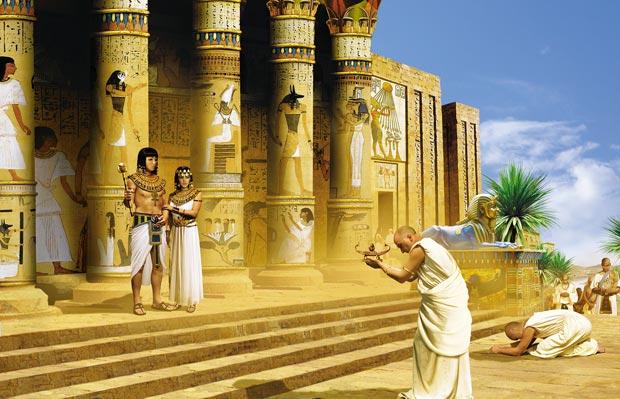
Ancient Egyptian temples had many functions as religious centers and houses for the gods, such as the Temple of Karnak, constructed to honor the sun god, ____________________________.
1 point
1
Question 20
20.
Which statement accurately characterizes ancient Egyptian artwork?
1 point
1
Question 21
21.
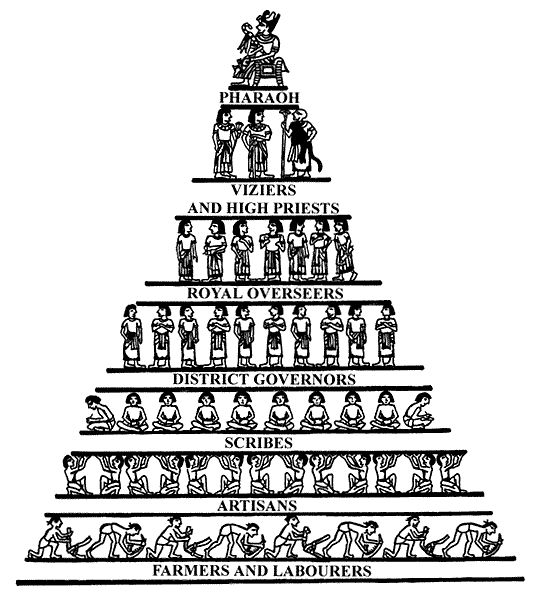
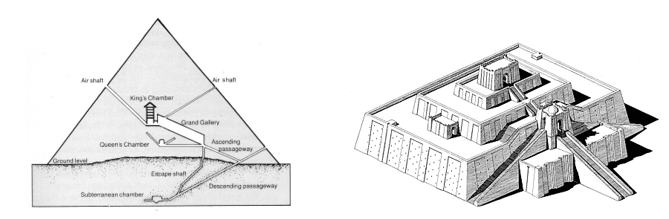
Use your knowledge of social studies and the diagrams below to answer the following questions. The structures below show that the civilizations of ancient Egypt and Mesopotamia both...
1 point
1
Question 22
22.
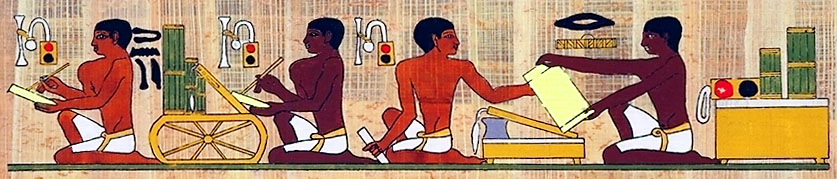
Which privilege was given to ancient Egyptian scribes?
1 point
1
Question 23
23.
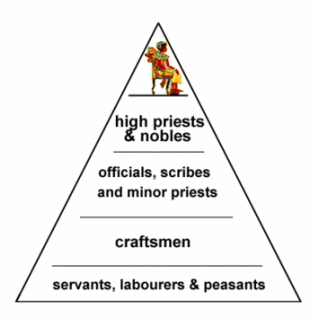
A division of society by rank or class is known as ______________.
1 point
1
Question 24
24.
In 1922, a British archaeologist named Howard Carter discovered the tomb of King Tutankhamun in the Valley of the Kings near Luxor, Egypt. It had taken Carter more than ten years to locate the tomb, and the discovery changed the world. Unlike most Egyptian tombs that had been unearthed, Tutankhamun’s was nearly undisturbed. For more than three thousand years, the four chambers of the tomb had protected the mummified remains of the pharaoh—the first intact mummy ever found—as well as a trove of nearly four thousand objects. The tomb held jewelry, beds, couches, chairs, vases, statues, chariots, thrones, weapons, and shrines. There were musical instruments, lamps, vessels containing ointments and oils, board games, fine clothing, fans, numerous bottles of wine, and food. The discovery of the glories within King Tut’s tomb captured the world’s imagination and sparked widespread interest in ancient Egypt that continues to this day. King Tutankhamun's tomb was not as extravagant as other Pharaohs, but it still contained an extraordinary number of artifacts.
Why was King Tutankhamun buried with so many artifacts?
1 point
1
Question 25
25.
DOCUMENT-BASED INVESTIGATION
HISTORICAL SOURCE
Ramses gained much fame for his military skills. During his time as pharaoh, Ramses greatly increased the size of his kingdom through warfare. Ramses was proud of his leadership skills and had a poem praising himself carved into the wall of five temples. This verse from the poem focuses on Ramses's skill in battle.
“Gracious lord and bravest king,
savior-guard Of Egypt in the battle,
be our ward; Behold we stand alone,
in the hostile Hittite ring,
Save for us the breath of life,
Give deliverance from the strife, Oh! protect us, Ramses Miamun!”