Log in
Sign up for FREE
arrow_back
Library
Period 4.1 (Abridged Chapters 11-13) Quiz: Jefferson & Jacksonian Democracy
By Haiyen Truong
star
star
star
star
star
Share
share
Last updated over 1 year ago
11 questions
Add this activity
Required
1
CCSS.ELA-LITERACY.RH.11-12.6
IICI.01
KC 3.2.II
Required
1
Required
1
Required
1
Required
1
CCSS.ELA-LITERACY.RH.11-12.3
IICI.01
NAT 1.0
Required
1
Required
1
KC 4.3.II
WOR 2.0
0
Question 1
1.
Review:
One of the antifederalists´ major criticisms of the Constitution as drafted in Philadelphia was that it
did not provide a bill of rights to protect individual liberties against a tyrannical government.
did not provide for an adequate separation of powers.
failed to provide suffrage to all citizens regardless of whether or not they owned property.
gave too much power to the Supreme Court and federal judges.
Abridged Chapter 11:
The Triumphs and Travalis of the Jeffersonian Republic (1800-1812)
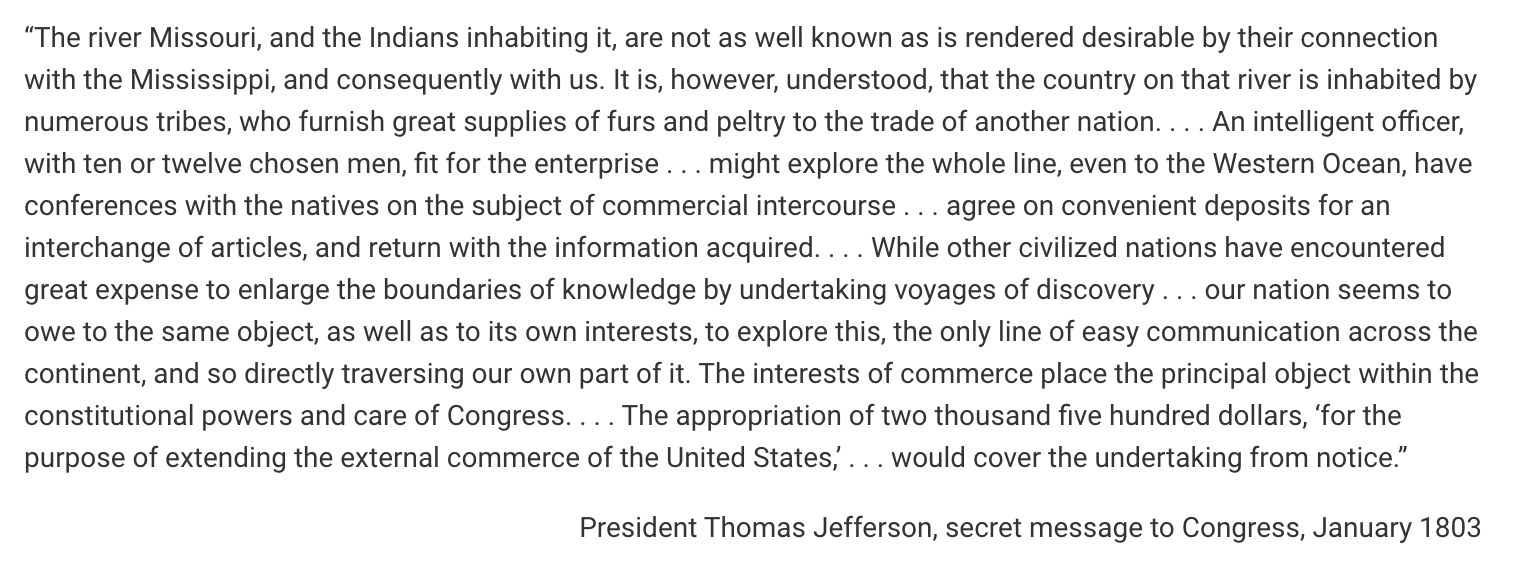
Questions #2-4 refer to the following prompt.
zoom_in
Required
1
Question 2
2.
The immediate diplomatic goal Jefferson sought through his proposal in the excerpt was most likely
warning Americans about the dangers of permanent foreign alliances.
encouraging support for United States annexation of Alaska.
making a case for a federal navy to patrol domestic and international waters.
extending United States influence over North America.
Question 3
3.
Which of the following broader ideas did Jefferson most directly seek to advance through his administration’s policies?
The objective of expanding slavery in the United States
The vision of the United States as an agricultural republic
The hope for the United States to acquire overseas territories
The plan for the United States to develop industry comparable to Britain’s
Question 4
4.
The fulfillment of Jefferson’s proposal in the excerpt would be used to support which of the following executive acts?
The acquisition of Florida from Spain
The purchase of the Louisiana territory from France
The securing of navigation rights on the Mississippi River
The use of federal funds for the building of the National Road
Abridged Chapter 13:
The Rise of a Mass Democracy (1824-1840)
zoom_in
Required
1
CCSS.ELA-LITERACY.RH.11-12.7
KC 4.3.I
SQN.01
Question 6
6.
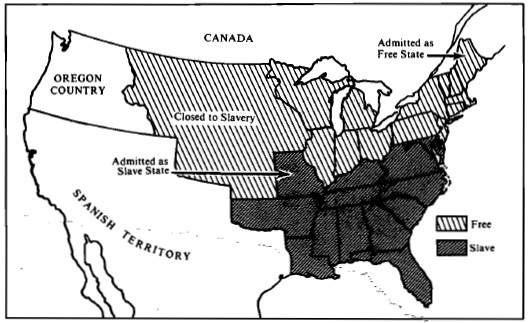
The Missouri Compromise was a victory for antislavery advocates because it
prohibited slavery from future territorial acquisitions.
closed most of the Louisiana Purchase to slavery.
provided for the gradual emancipation of slaves in Missouri.
excluded slavery from all territory north of the Ohio River and east of the Mississippi River.
Question 7
7.
Jacksonian Democracy was distinguished by the belief that
political participation by the common man should be increased.
an aristocracy posed no danger to the Republic.
political rights should be granted to women.
franchise restrictions should be radically neutral.
Question 8
8.
In an effort to accommodate their culture to white American society, the Cherokees took all of these steps
EXCEPT
develop a written legal code and constitution.
develop a Cherokee writing system.
support antislavery reform.
promote education and schools.
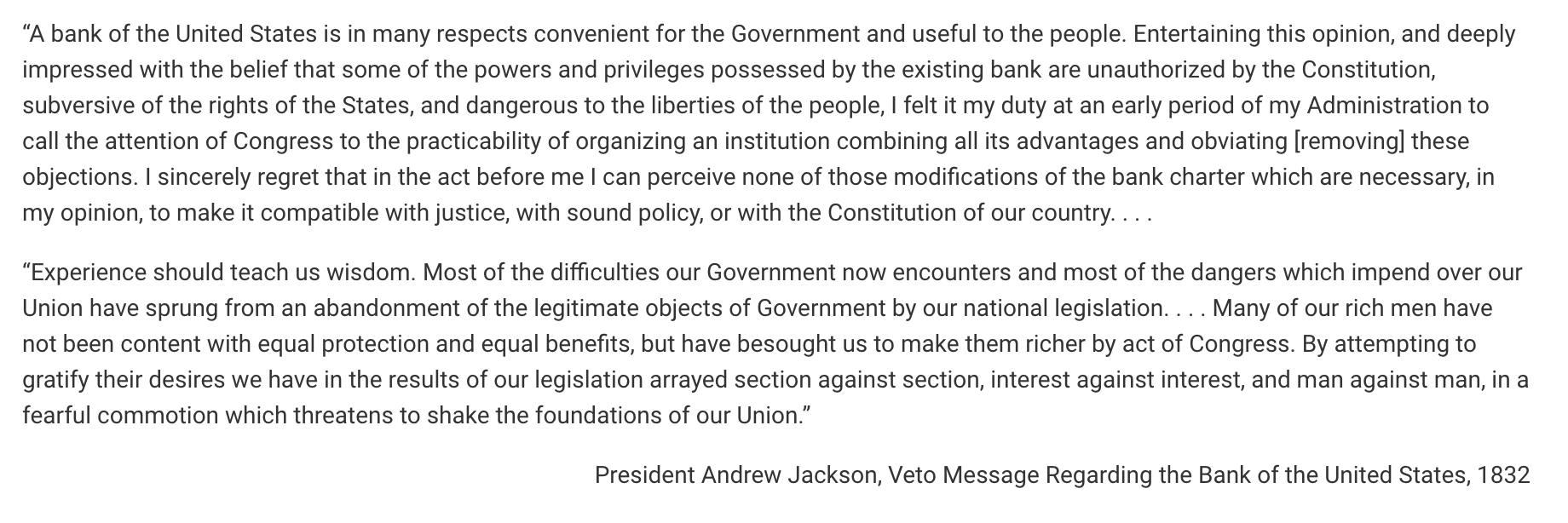
Questions #9-10 refer to the following prompt.
zoom_in
Required
1
CCSS.ELA-LITERACY.RH.11-12.6
RAG.01
Question 10
10.
Which of the following of Jackson’s policies undermined his position as described in the excerpt?
Encouraging individuals to settle west of the Mississippi River
Using federal power to forcibly relocate American Indian groups
Allowing territories to determine whether slavery should be legal within their borders
Rejecting the Supreme Court’s power to determine constitutionality of laws
Question 11
11.
Period 4 (1800-1848) halfway done! How are you feeling about semester 1 of APUSH coming to a close?
Question 5
5.
The map (left) shows the United States immediately following the
passage of the Missouri Compromise.
passage of the Northwest Ordinance.
negotiation of the Louisiana Purchase.
settlement of the Seven Years War.
Question 9
9.
Andrew Jackson vetoed the recharter of the Bank of the United States partly because he believed that the bank
concentrated too much power in the hands of a few people.
planned to create new paper money unsupported by gold or silver.
gave too many loans to assist unstable state and local banks.
was secretly funding the abolitionist movement.