Period 4, Day 6: Women in the Reform Era
star
star
star
star
star
Last updated over 1 year ago
19 questions
Note from the author:
Content Objective: I will be able to contextualize life for American women in the 19th century United States.
Standard Objective: I will be able to determine the meaning of words in context.
Absent? Just want to review the slides? Click here!
Content Objective: I will be able to contextualize life for American women in the 19th century United States.
Standard Objective: I will be able to determine the meaning of words in context.
Absent? Just want to review the slides? Click here!
0
Warm Up: Please rate how well you understood last night's pre-work on a scale from 1 to 4. If you have any questions, drop them in the "Show Your Work" area.
Required
1
Warm Up: In what ways has there been progress in gender equality today? In what ways do we still need to improve as a society?
0
Warm Up: One interesting historical fact I learned from the pre-work is…

Required
1
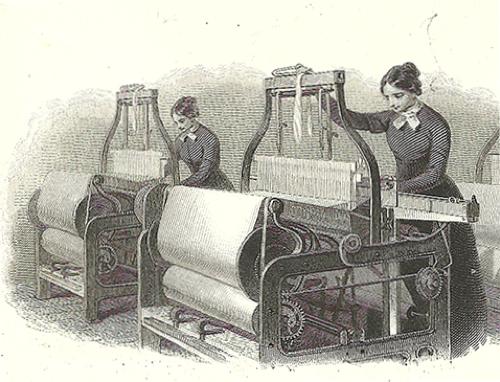
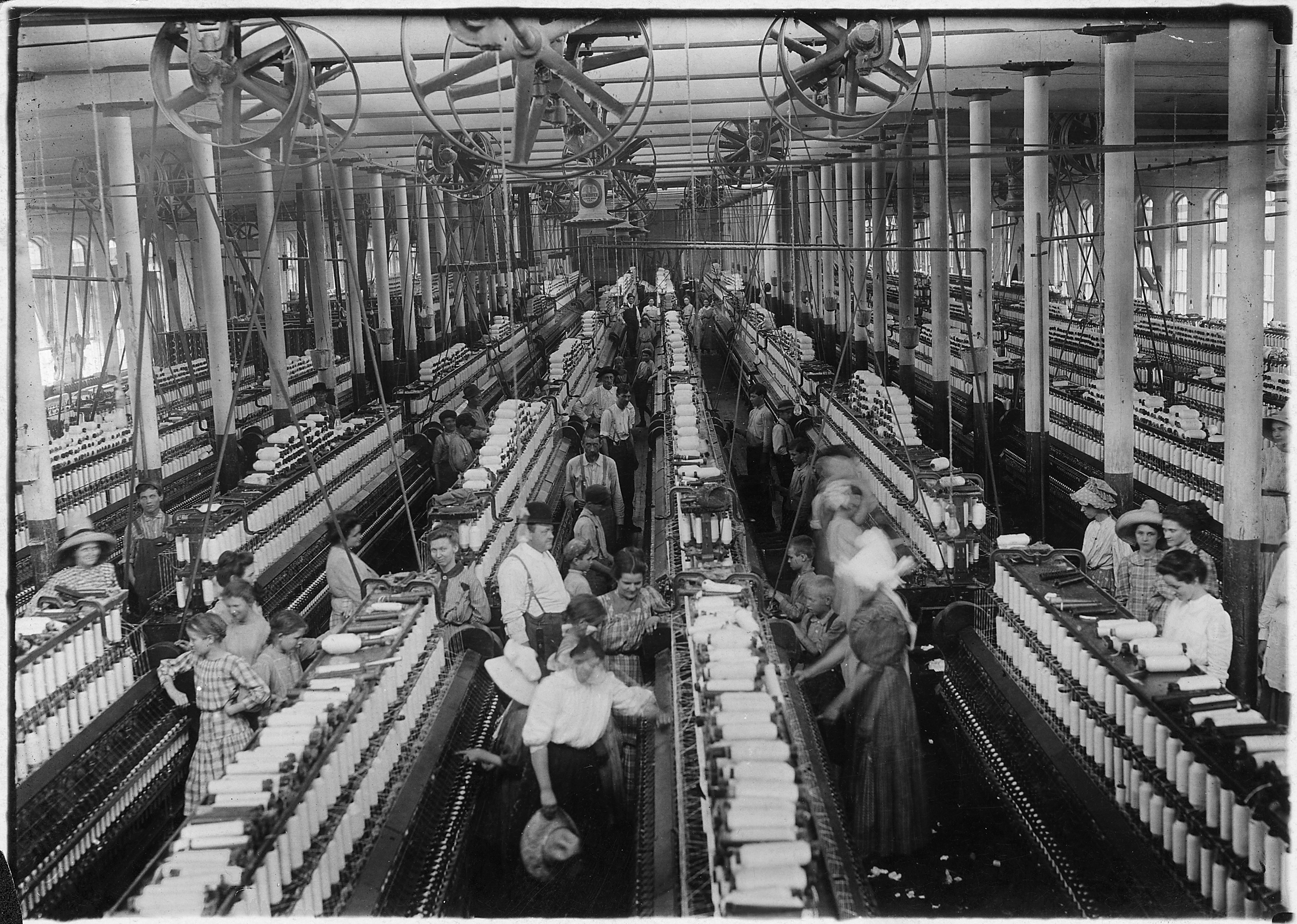
Industrialization in the early 1800s began drawing _______ Northeastern women out of the home and into the _______ and schoolhouse. Particularly notable were the women who worked at the _______ Mills in Massachusetts.
While many (typically younger) women worked for wages, others remained at home and professionalized the job of _______ as part of the 19th century cult of domesticity.
While young men could work at a variety of occupations, textile mills preferred to hire young white women because they had experience with _______ and could be paid _______ because they weren’t viewed as primary breadwinners. While many young New England women enjoyed the _______ that work and a living wage offered, their working conditions were also heavily restricted.
Required
1
Women who worked in textile factories lived in boarding houses to make fabrics spun from _______ to manufacture clothes and sheets. They woke up early and worked a 12-hour day during which talking was forbidden. They could not swear or drink alcohol, and were required to attend church.
They could not leave when they were tired or take breaks other than at designated times. Those who arrived late found their pay _______ ; five minutes’ tardiness could result in several hours’ worth of lost pay. The monotony of repetitive tasks made days feel particularly long.
Overseers kept a _______ eye on the young women’s behavior and oftentimes fired or evicted women for failing to meet quotas. Corporal punishment was common in factories.

Required
1
Enslaved women in the South were _______ of their motherhood identity in order to work the fields of plantations for no wages. Paradoxically, they were still required to do female _______ duties, like cooking and cleaning, as well. Furthermore, women were used to propagate a slaveowner's economic assets by having children that would be _______ into slavery under the slaveowner's jurisdiction. Enslaved women gave birth to their first child at the average age of nineteen; oftentimes their children were fathered by their owner.
Meanwhile, Native American women were pushed westward by the Indian Removal Act of 1830. Native American women had to harvest and produce hides for _______ with encroaching explorers from the East.
Applying Knowledge: Well done! Now that we know what life was like for American women in the 19th century, let's find out what they thought about their lives.
1
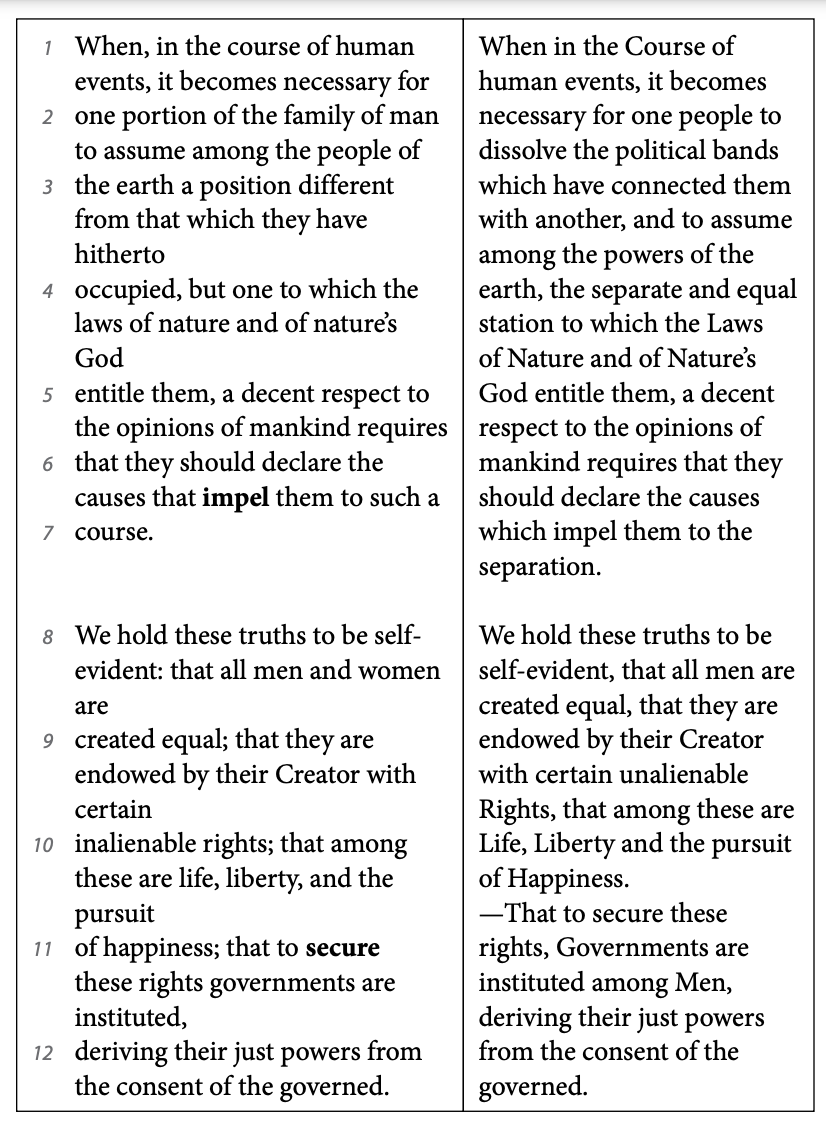
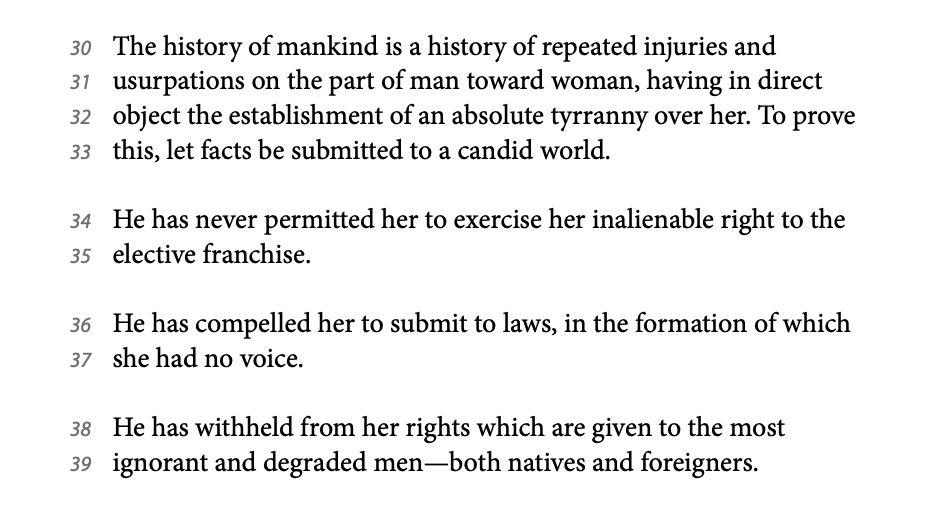
Does the text on the right look familiar?
Required
1
Warm Up: First, let's get on the same page with key vocabulary.
| Draggable item | arrow_right_alt | Corresponding Item |
|---|---|---|
Abolitionism | arrow_right_alt | The right to vote |
Cult of Domesticity | arrow_right_alt | The 18th century belief that women should serve as educators of young men in order to teach them to become productive American citizens and embrace the Enlightenment ideas to help the new Republic after the Revolutionary War. |
Republican Motherhood | arrow_right_alt | The 19th century belief that as the "fairer sex," women should provide religious and moral instruction in the "domestic sphere" but avoid the rough world of politics and business in the larger "public sphere" of society. |
Suffrage | arrow_right_alt | A cause to end something, particularly slavery in APUSH |
1
The Second Great Awakening was a religious _______ that took place after the American Revolution between 1790 and 1840 in an effort to restore a simpler form of _______ . This religious movement was felt nationwide and consisted of small and large gatherings alike. Prior to this, the United States experienced the First Great Awakening in the 1730s and 1740s, in which church became more exciting and _______ . The 2nd Great Awakening was responsible for attracting millions of new members, especially _______ , African Americans, and young people.

1
Women led the charges in many antebellum reforms, from _______ to temperance to abolition. While leading these reforms, women gained the political traction to begin the first wave of US _______ . Ironically, the cult of domesticity—the view that women should remain relegated to the household—played a role in encouraging women’s _______ in public movements.
Feminist appeals of the early 19th century drew heavily on religion, spurred by the spiritual revivals of the Second Great Awakening. But it was work in _______ efforts that served as a springboard for women to take action against gender inequality. Northern women particularly came to the conclusion that they, like enslaved people, were held in shackles in a society dominated by men.

1
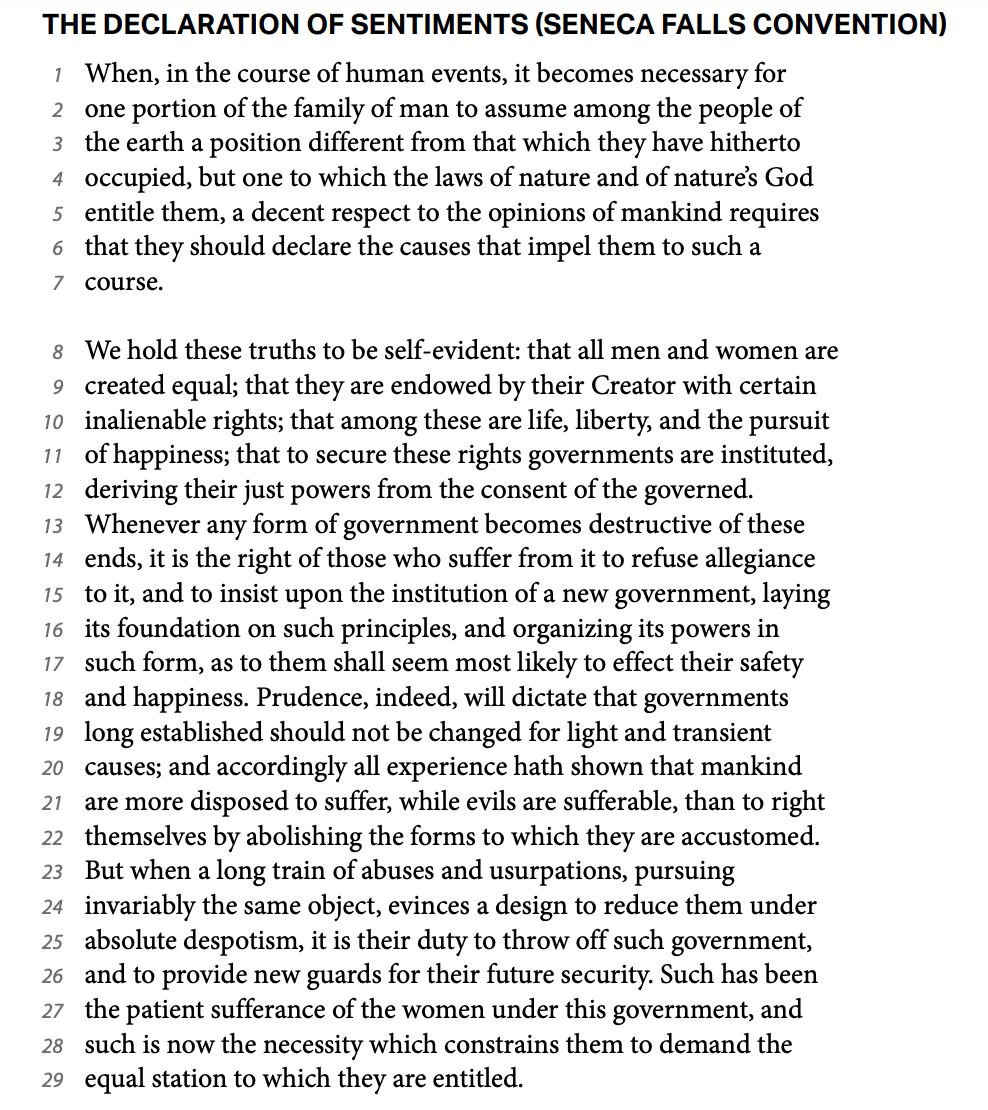
As used in line 6, "impel" most nearly means
1
As used in line 11, "secure" most nearly means

1
It can be reasonably inferred from the passage that American women
1
Which choice provides the best evidence for the answer to the previous questions?
1
The main purpose of the passage is to
1
Exit Ticket: Why did American women feel the need to "revolt" against the expectations that society had of them in the 19th century? Your response should describe any historical developments that may have emboldened women to speak out at this point in U.S. History.
0
Exit Ticket: Please evaluate how well you understood today’s lesson on a scale from 1 to 4:

0
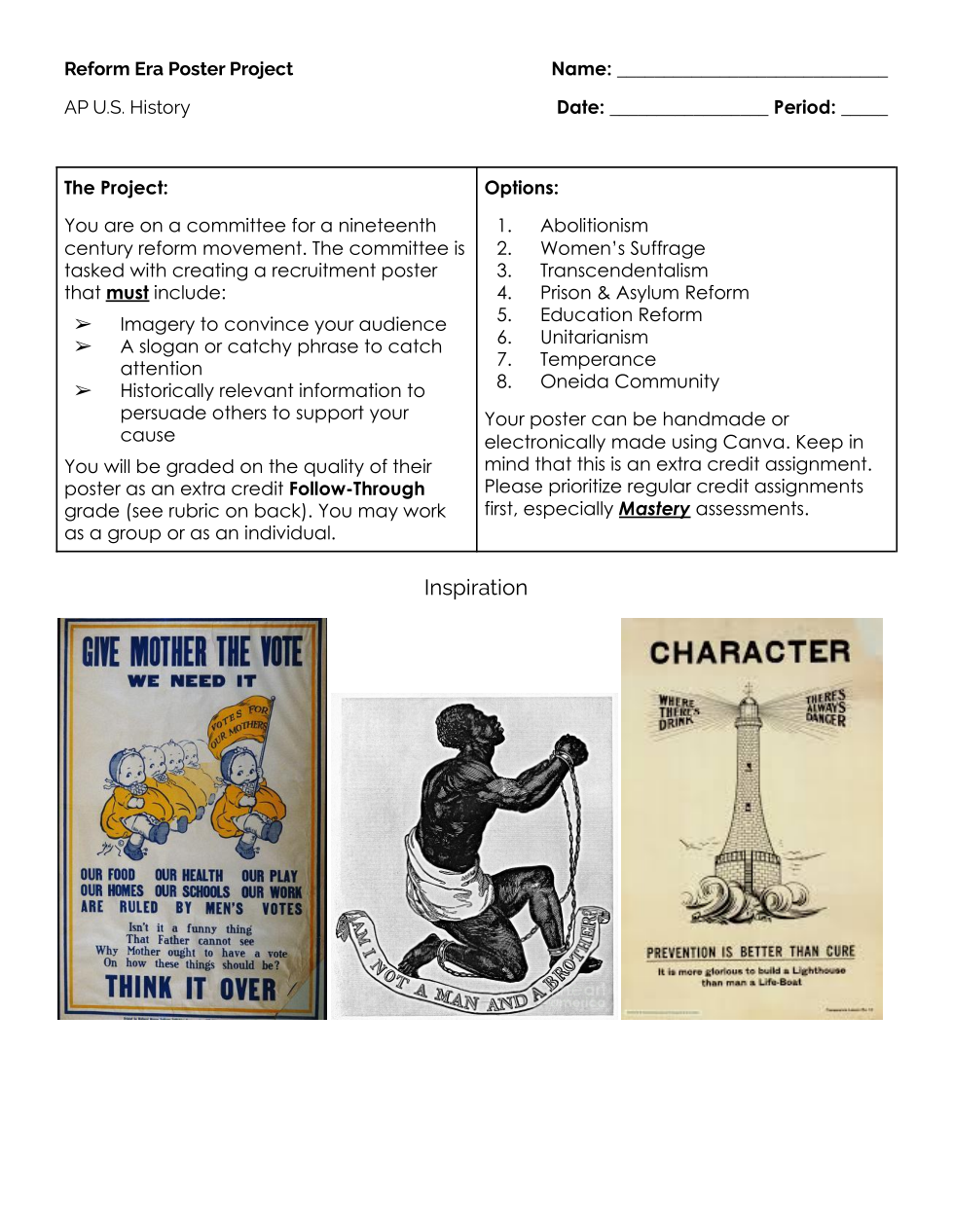
Any questions about the extra credit project on Reform Era Posters?
0
Are you going to work on a Reform Era poster?
If yes, please indicate your topic and any partners in the "Show Your Work" area.- Groups should be 2-4 max.
- Group members should be in your class period.
Are you going to work on a Reform Era poster?
If yes, please indicate your topic and any partners in the "Show Your Work" area.
- Groups should be 2-4 max.
- Group members should be in your class period.