Ɛhia
1
The Indian Removal Act of 1830 was a key feature of Andrew Jackson’s presidency that gave the president power to negotiate removal treaties with Indian tribes living east of the Mississippi.
By the end of the Jackson administration,
Content Objective: I will be able to contextualize the reason for the Trail of Tears and explain one Native American tribe's response.
Standard Objective: I will be able to identify explicitly stated relationships between individuals (e.g. comparison-contrast).
Absent? Just want to review the slides? Click here!
Content Objective: I will be able to contextualize the reason for the Trail of Tears and explain one Native American tribe's response.
Standard Objective: I will be able to identify explicitly stated relationships between individuals (e.g. comparison-contrast).
Absent? Just want to review the slides? Click here!
Warm Up: Please rate how well you understood last night's pre-work on a scale from 1 to 4. If you have any questions, drop them in the "Show Your Work" area.
Warm Up: Should the government have the power to force someone to move out of their home? Explain.
Warm Up: One interesting historical fact I learned from the pre-work is…
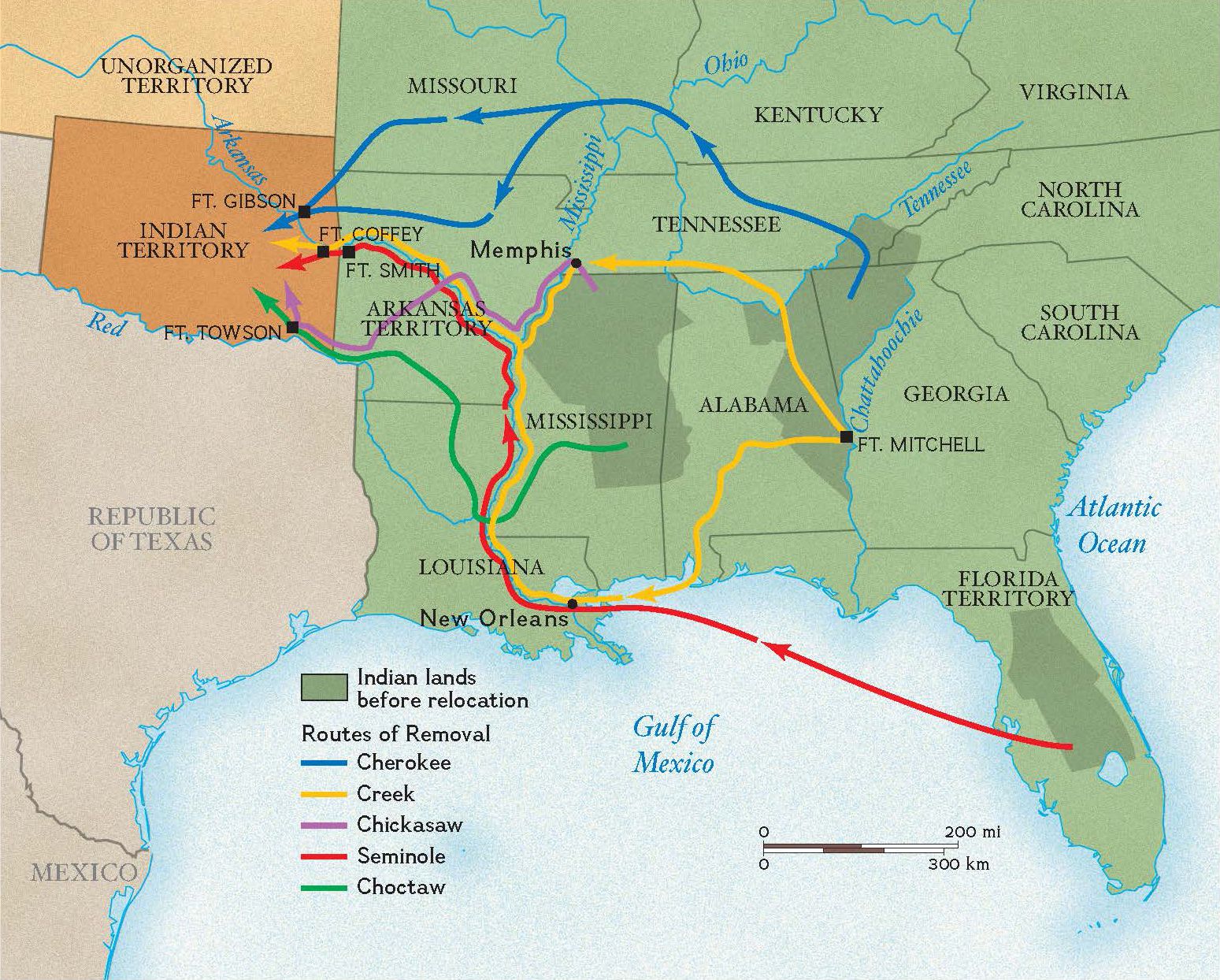
The Indian Removal Act of 1830 was a key feature of Andrew Jackson’s presidency that gave the president power to negotiate removal treaties with Indian tribes living east of the Mississippi.
By the end of the Jackson administration,
According to the map above, which Native American tribe was NOT affected by the Indian Removal Act?
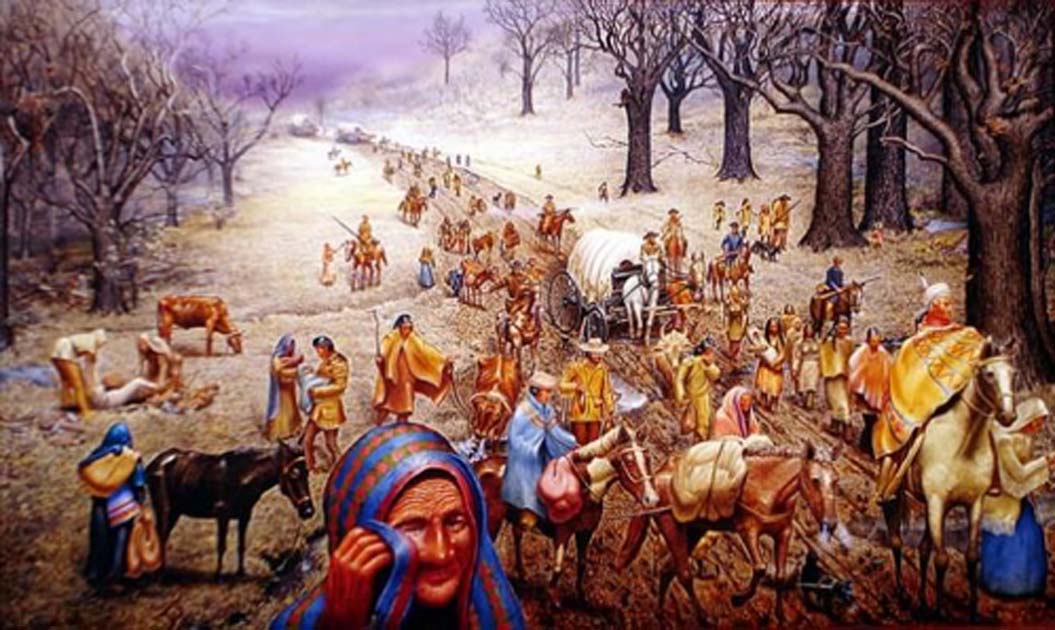
Some tribes
While the affected Native American tribes are diverse and had differing responses, today we will learn about two particular groups:
1) The
2) The
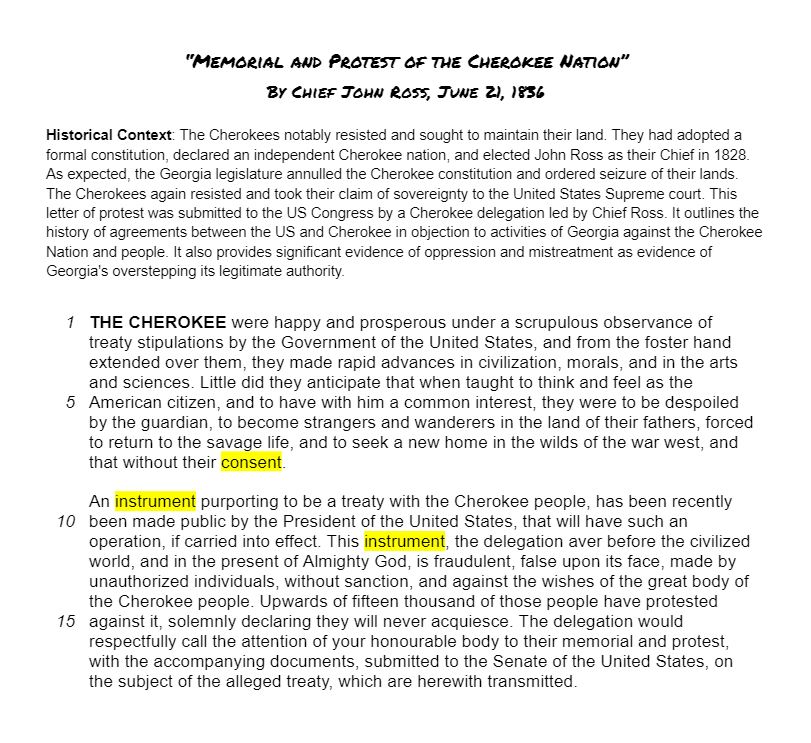
It can be reasonably inferred from the passage that
Which choice provides the best evidence for the answer to the previous question?
Under "Show Your Work," explain this evidence in your own words.
Exit Ticket: Please evaluate how well you understood today’s lesson on a scale from 1 to 4:
As used in line 8, "consent" most nearly means
Under "Show Your Work," share the specific context clue and/or synonym that you used to arrive at this answer.
As used in lines 9 and 11, "instrument" most nearly means
Under "Show Your Work," share the specific context clue and/or synonym that you used to arrive at this answer.