Log in
Sign up for FREE
arrow_back
Library

Period 4, Day 4: Indian Residential Schools

star
star
star
star
star
Last updated almost 2 years ago
15 questions
Note from the author:
0
1
0
Required
1
Required
1
Required
1
0
Content Objective: I will be able to determine the true purpose of the Carlisle Indian Industrial School.

Standard Objective: I will be able to cite the textual evidence that best supports a given claim or point.

Absent? Just want to review the slides? Click here!
Content Objective: I will be able to determine the true purpose of the Carlisle Indian Industrial School.

Standard Objective: I will be able to cite the textual evidence that best supports a given claim or point.

Absent? Just want to review the slides? Click here!
Question 1
1.

Question 2
2.

Warm Up: Have you ever lived away from your family? If so, explain the length, purpose, and challenges of your time away. If not, explain what challenges you may encounter from this experience.

Question 3
3.

Warm Up: One interesting historical fact I learned from the pre-work is…
0
Question 4
4.

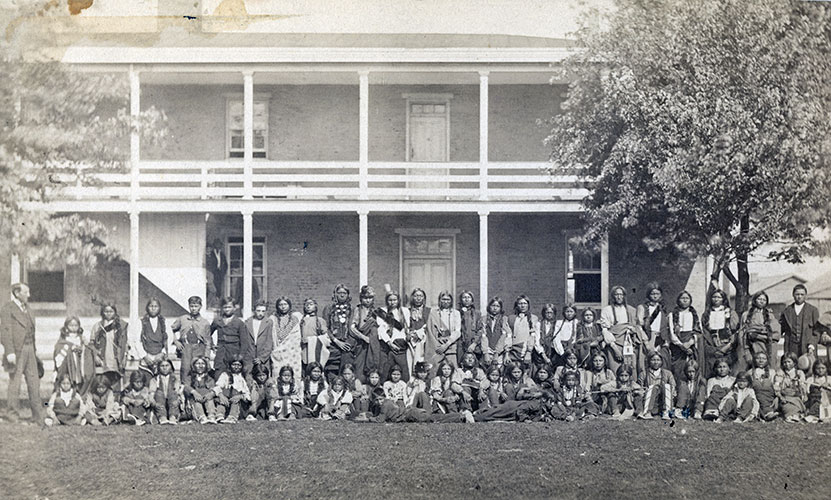
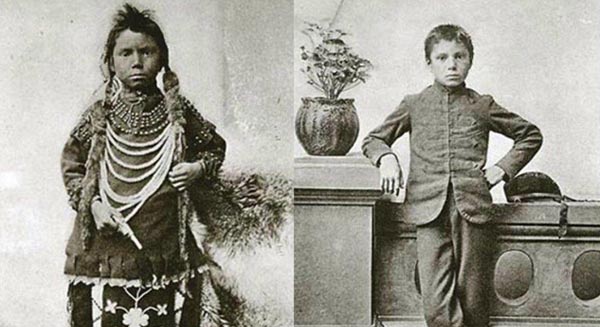
Building Knowledge Together: What do you notice about how the Sioux boys look and dress when they first arrived at the Indian Training School at Carlisle barracks in 1897?
0
Question 5
5.

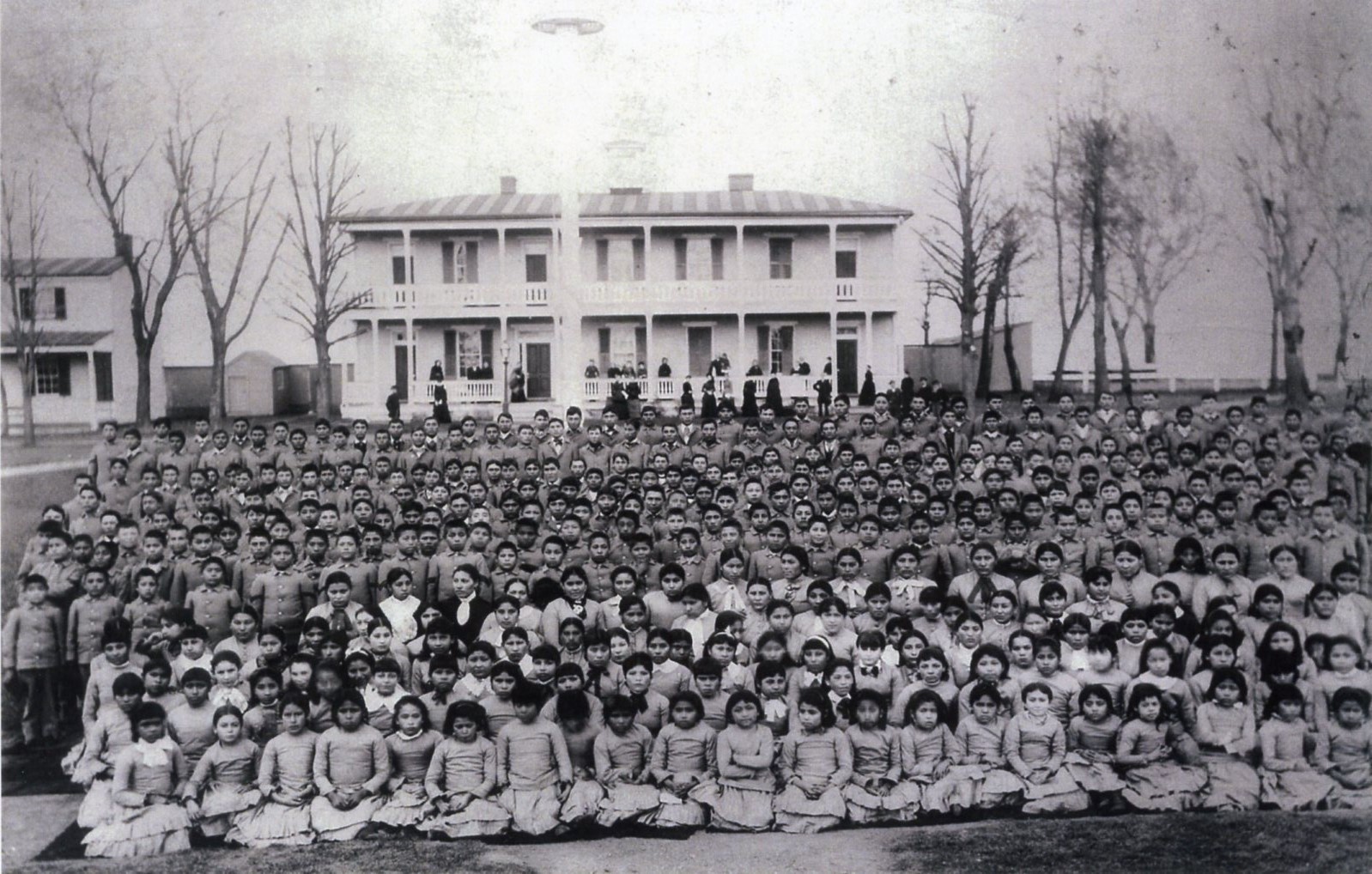
Building Knowledge Together: What do you notice about the look and dress of students in the Carlisle class photo in 1900?

Question 6
6.
Building Knowledge Together: Let's make sure we're all on the same page!

Today, you will be studying the _______ Indian Industrial School. Founded by Richard H. _______ , the Carlisle school was one of the Bureau of Indian Affairs’ leading Native American schools and the first off-reservation boarding school operated by the federal government.

More than two dozen more off-reservation boarding schools, and churches operated over _______ on-reservation schools with government funding. These schools were part of a long series of federal government policies, such as the Indian _______ Act and the Indian Wars, that attempted to push out Native Americans from their _______ .

Assimilation is the process by which the culture of a minority group - including their language, religion, dress, and food - comes to resemble those of the dominant culture.

Question 7
7.
The origins of boarding schools can be traced back to the Indian Civilization Fund Act of 1819, which authorized up to $10,000/year for religious groups and interested individuals to live among and “_______” Native Americans. The goal of Indian boarding schools was to _______ American Indian and Alaska Native children into white, Euro-American society, which led to the systematic destruction of Native _______ and communities.
Required
1
Question 8
8.
While the Carlisle school was the first of the Indian _______ schools, it would not be the last. Between 1869 and the 1960s, hundreds of thousands of Native American children were removed from their homes and families and placed in boarding schools operated by the federal government and the churches. Though we don't know how many children were taken in total, by 1900 there were _______ children in Indian boarding schools, and by 1925 that number had more than _______ .
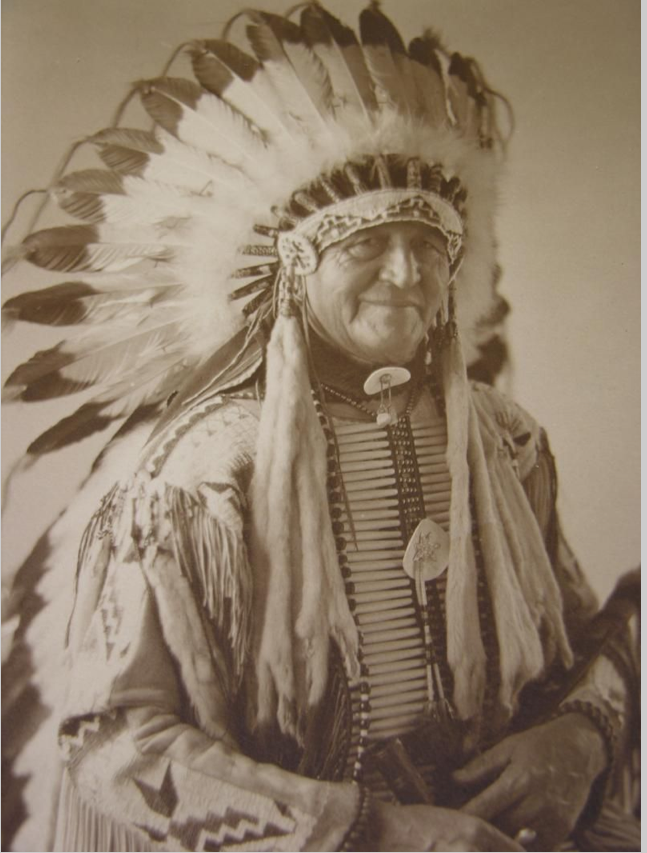
Applying Knowledge: Well done! Let’s now take a critical look at a historical document from the time period.

Required
1
KC 5.3.II
Required
1
CCSS.ELA-LITERACY.RH.11-12.4
IIWD.01
Required
1
CCSS.ELA-LITERACY.RH.11-12.4
RWC.01
Required
1
RTS.02
Required
1
CCSS.ELA-LITERACY.RH.11-12.3
CUL 4.0
…
Question 14
14.

Question 15
15.

Warm Up: Please rate how well you understood last night's pre-work on a scale from 1 to 4. If you have any questions, drop them in the "Show Your Work" area.
0 - I recognize that we have a quiz on Friday and need to get caught up tonight!
1 - I do not understand the pre-work yet.
2 - I need to re-read today in class.
3 - I can understand the pre-work on my own.
4 - I can explain the pre-work to someone else.
Question 9
9.

Question 10
10.

Question 11
11.

Question 12
12.

Question 13
13.

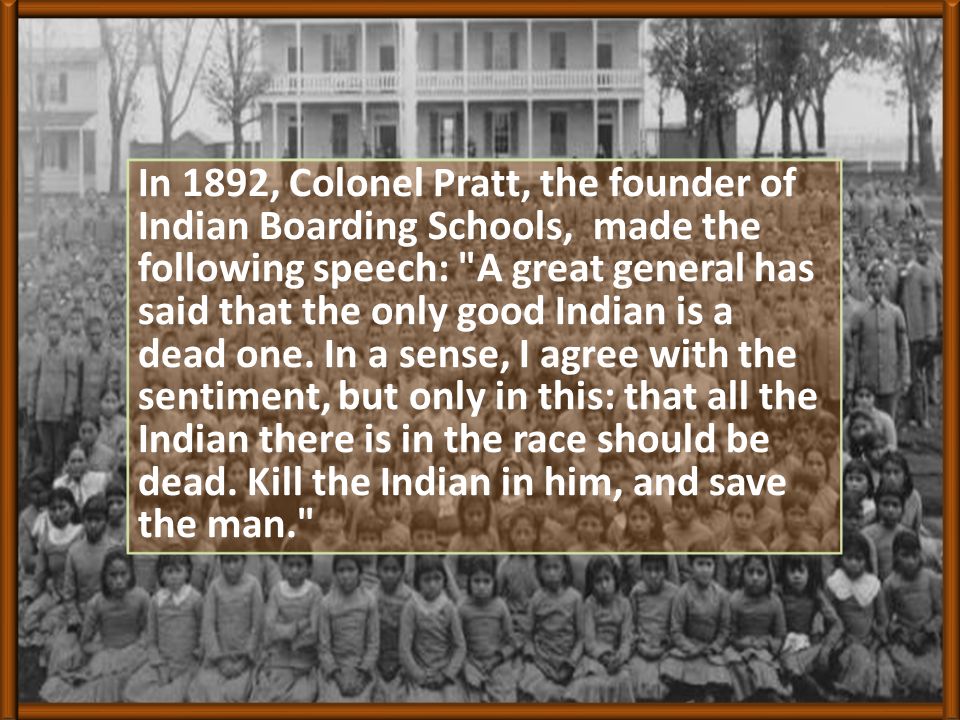
Exit Ticket: When Pratt states, "Kill the Indian in him, and save the man," he is implying that

Under "Show Your Work," please respond to the quote and what it tells you about Pratt's assimilation efforts at the Carslisle school.
Native Americans can be taught to change their "savage ways."
only the smartest Native Americans should survive.
all Native Americans should be killed in order to achieve eternal salvation.
the "civilized" people should be more accepting of Native American culture and traditions.
Exit Ticket: Please evaluate how well you understood today’s lesson on a scale from 1 to 4.
1 - I need to seek out extra help from someone else.
2 - I need to find resources and relearn on my own.
3 - I understood the lesson on my own, and should pass on the knowledge!
4 - I was able to successfully explain and help someone else’s understanding.
Sourcing: Based on the author and year of the excerpt, we can infer that Luther Standing Bear

left his tribe as a young man who hoped assimilate to the White man's culture.
is committed to preserving Native American culture.
was a founder of the Carlisle Indian Industrial School.
had a positive experience at the Carlisle Boarding School.
As used in line 1, "ancestral" most nearly means

Under "Show Your Work," share the specific context clue and/or synonym that you used to arrive at this answer.
hereditary
familial
traditional
inherited
The author uses the phrase "alien world" (line 3) in order to emphasize what he experienced as a new
country.
culture.
job
planet
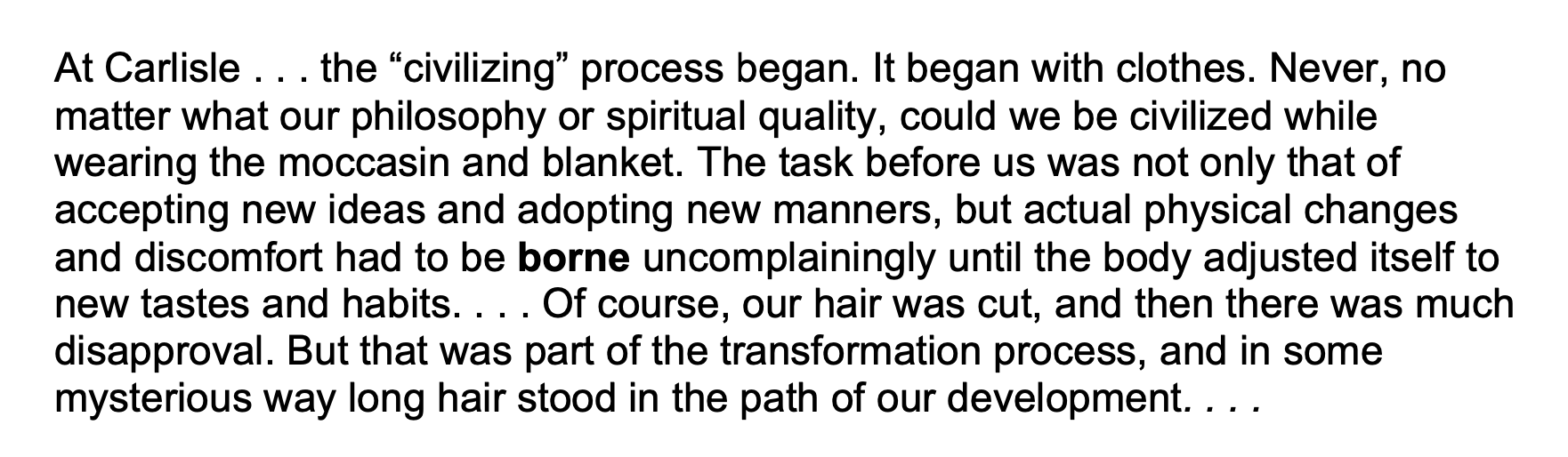
The author compares the physical changes he was forced to make with the behavioral changes in order to
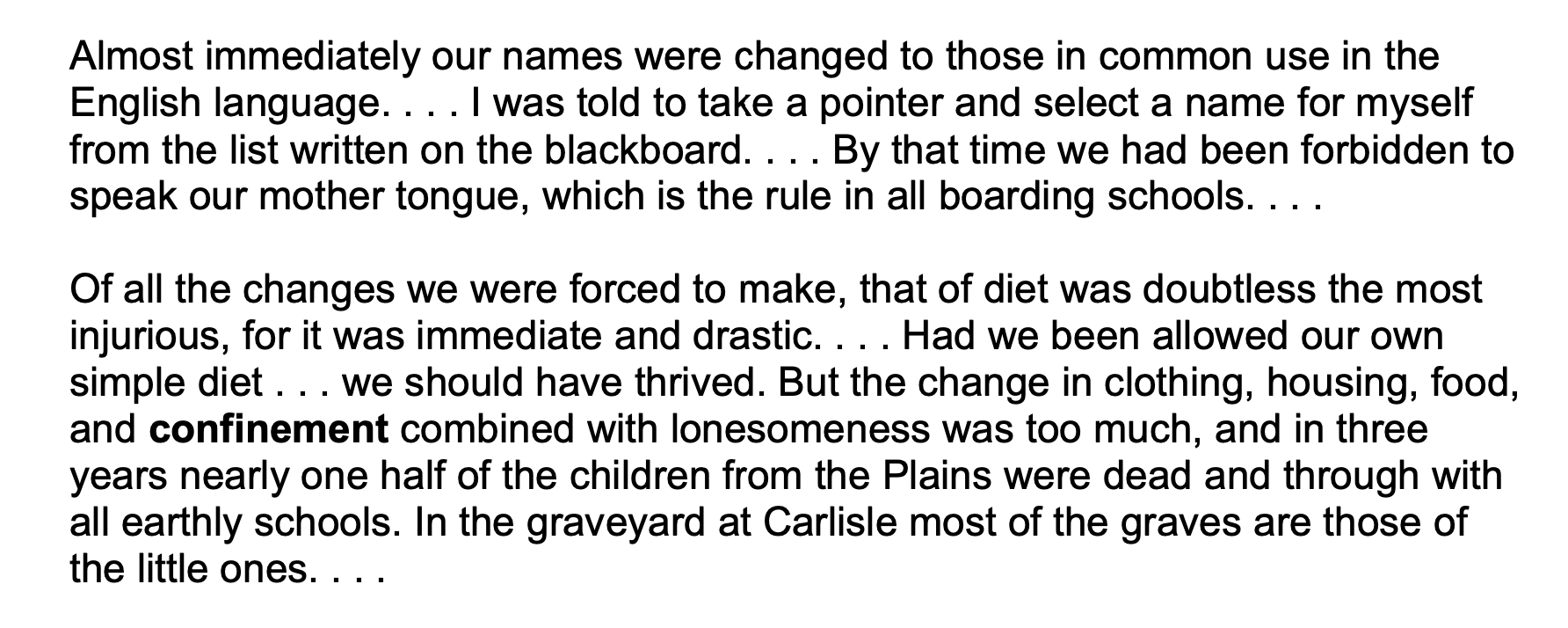
solicit pity from the reader about the cruelty he was forced to endure.
challenge the reader's preconceptions about residential boarding schools.
prove that Native American culture was inarguably superior to white culture.
demonstrate the extreme efforts taken to try to change his heart and mind.
The main purpose of changing names and solely speaking in English was to
convert Native American children from nativists to nationalists.
force students to assimilate to white culture and the English language.
draw connections between indigenous heritage and the American way.
reclaim the traditions from the founding of the American colonies.