Log in
Sign up for FREE
arrow_back
Library
Period 4.2 (Chapters 14-15) Quiz: Industrial Revolution & the Reform Era
By Haiyen Truong
star
star
star
star
star
Share
share
Last updated over 1 year ago
11 questions
Add this activity
Required
1
CCSS.ELA-LITERACY.RH.11-12.2
CUL 4.0
…
+2
Required
1
CCSS.ELA-LITERACY.RH.11-12.3
IIUR.01
…
+2
Required
1
CCSS.ELA-LITERACY.RH.11-12.4
IIWD.01
…
+2
Required
1
CCSS.ELA-LITERACY.RH.11-12.2
IIUR.01
…
+2
Required
1
CCSS.ELA-LITERACY.RH.11-12.2
CUL 3.0
…
+2
Required
1
CCSS.ELA-LITERACY.RH.11-12.1
IICI.01
…
+2
Required
1
Required
1
IIUR.01
0
Question 1
1.
Review:
The Constitutional Convention addressed the North-South controversy over slavery through the
three-fifths compromise.
Northwest Ordinance.
closing of the slave trade until 1807.
Great Compromise.
Chapter 14:
Forging the National Economy (1790-1860)
Question 2
2.
Push factors that led to Irish immigration in the 1840s were
the granting of limited home rule to most of Ireland by Great Britain.
the migration from the countryside to the city.
an influx of immigrants from mostly Eastern European countries.
the rebellion against British rule and the potato famine.
Question 3
3.
The sentiment of fear and opposition to open immigration was called
suffrage.
racism.
nativism.
the cult of domesticity.
Question 4
4.
As a result of the development of the cotton gin,
the South diversified its economy.
technology assumed a large role in cotton production.
slavery revived and expanded.
there was less need for reliance on slaves to work in the cotton fields.
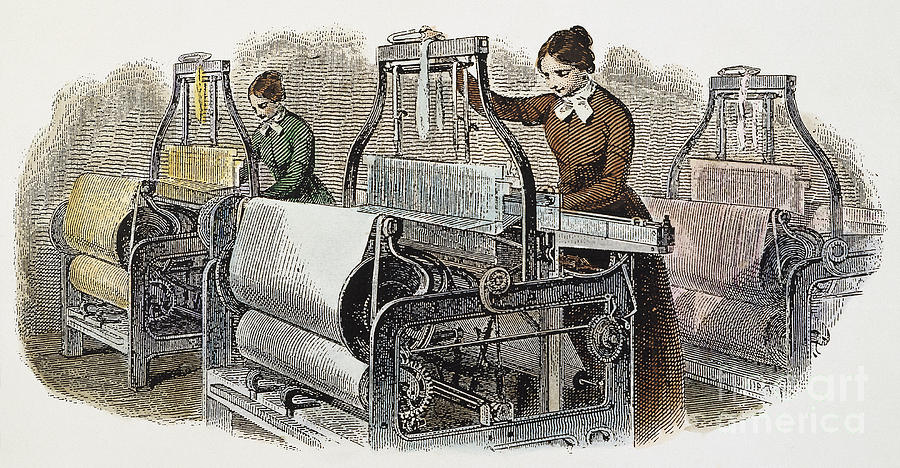
Questions 5-6 refer to the image below.
zoom_in
Required
1
CCSS.ELA-LITERACY.RH.11-12.2
CUL 3.0
…
+2
Question 6
6.
As the Market Revolution transformed the United States economy, women’s roles were increasingly perceived to be
most important in their raising of good, republican children.
focused on domesticity and private life.
central to the development of manufacturing in the United States.
expanded into the public sphere.
Chapter 15:
The Ferment of Reform and Culture (1790-1860)
Question 7
7.
Known for its influence on Martin Luther King Jr. and Mahatma Gandhi, the essay “Civil Disobedience” was written by the transcendentalist
Henry David Thoreau
Ralph Waldo Emerson
Edgar Allen Poe
Louisa May Alcott
Question 8
8.
Women became especially active in the social reforms stimulated by the Second Great
Awakening because
religious social reform legitimized their activity outside the home.
they saw an opportunity to gain political power.
social reform seemed more attractive than church life itself.
many of the leading preachers and evangelists were women.
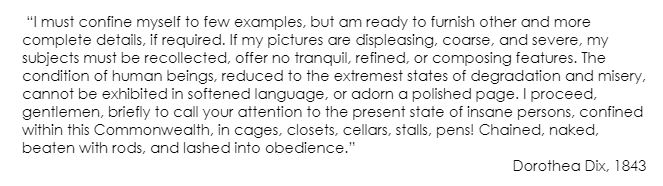
Questions #9-10 refer to the following prompt.
zoom_in
Required
1
CCSS.ELA-LITERACY.RH.11-12.2
IICI.01
…
+2
Question 10
10.
The active role of women in reform movements such as this one in many ways inspired
the Seneca Falls Convention, which focused on greater gender equality.
the Enlightenment’s focus on individualism.
the rise of Republican Motherhood to define the ideal woman.
the American System’s inclusion of all forms of labor.
Question 11
11.
Period 4 (1800-1848) done! How are you feeling about the Semester 1 Final for APUSH?
Question 5
5.
Work in the cotton mills of New England
provided many women with financial independence for the first time.
paid less than doing piecework at home.
allowed women to broaden their search for husbands .
gave women a trade they could take with them when they moved.
Question 9
9.
The revivals of the Second Great Awakening inspired
new religious revivalism of the Puritan doctrine of predestination.
numerous social reform efforts.
a series of slave revolts.
anti–democratic sentiments among most American leaders.