How does the ionic and atomic radius of sodium compare with those of sulphur?
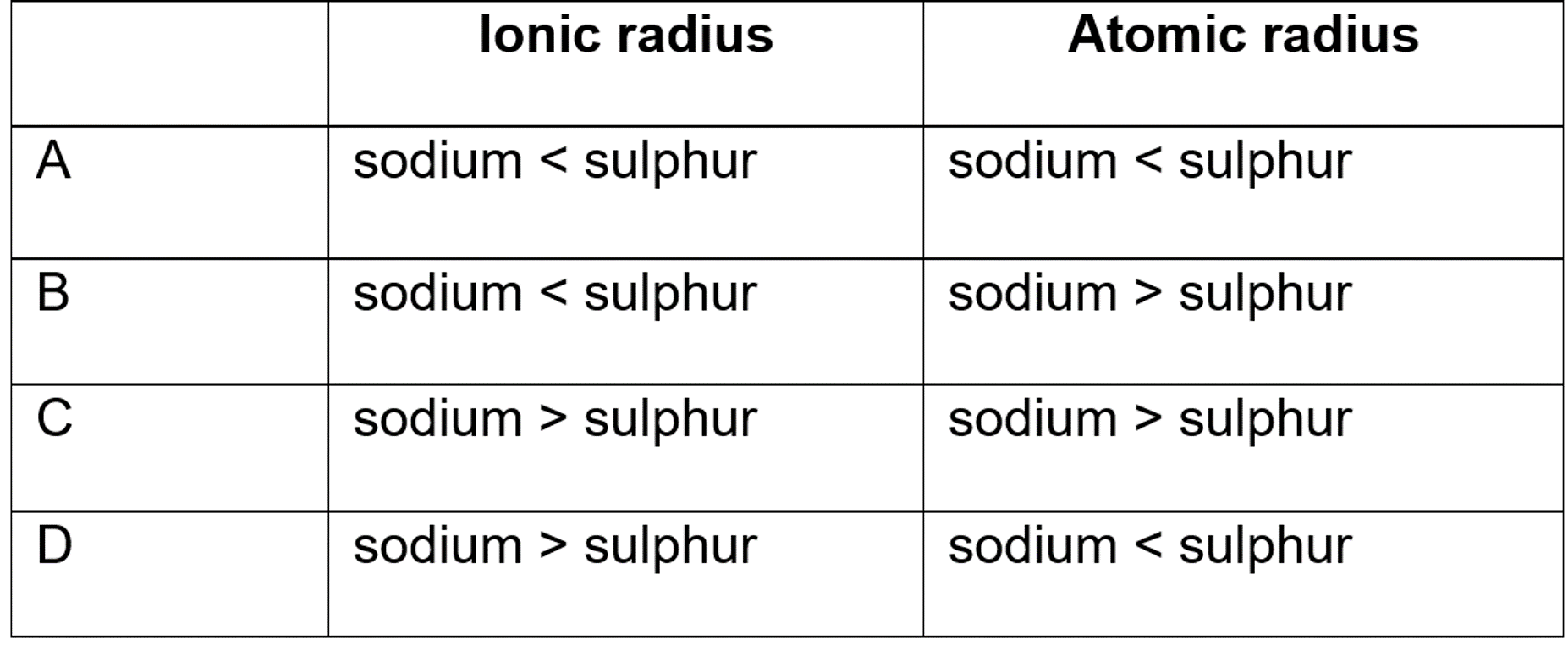
How does the ionic and atomic radius of sodium compare with those of sulphur?
Categorize each given characteristic to describe the reason for the trends in atomic radius on the Periodic Table
number of energy levels remains the same
strong effective nuclear charge
number of energy levels increase
number of protons increase
atomic number increases
electron shielding
electron replusion
Atomic radius trend down a group (top to bottom)
Atomic radius trend across a period (left to right)
What occurs when an atom of chlorine forms a chloride ion?
Which atom has the largest atomic radius?
Which ONE of the following electron configurations represents an ion of an alkali metal?
How does the ionic and atomic radius of sodium compare with those of sulphur?