At which point in a titration does this graph represent?
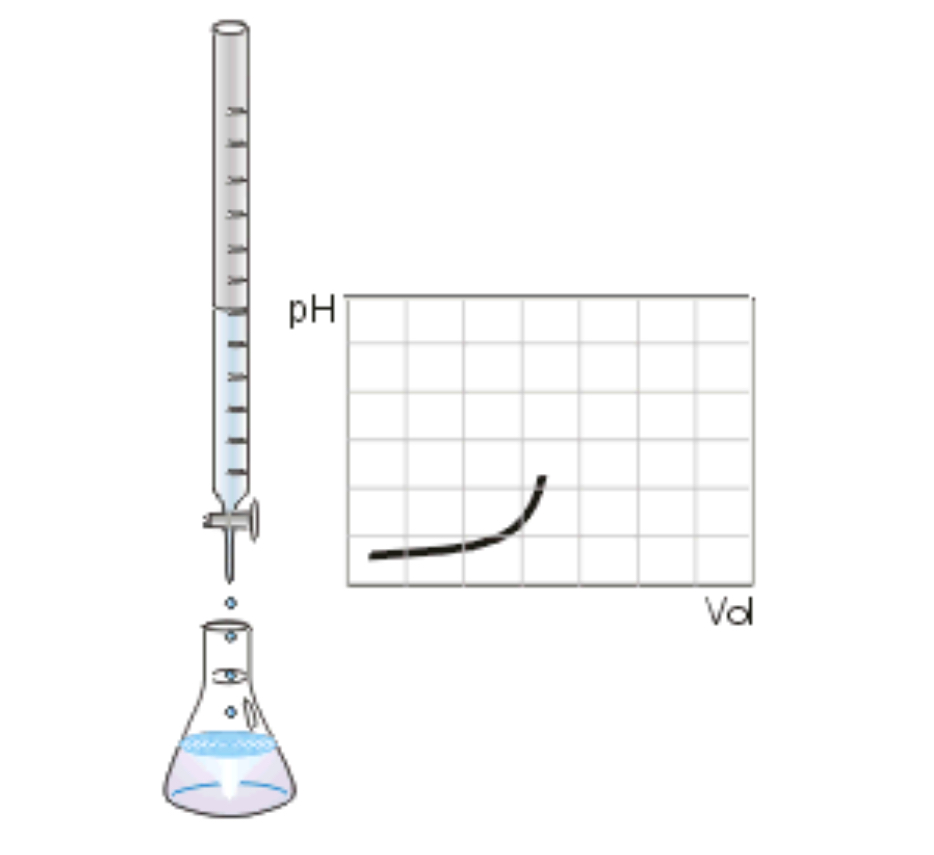
At which point in a titration does this graph represent?
Which piece of apparatus is used to add small measured volumes of one reactant to the other reactant during a titration?
Which piece of apparatus is used to accurately measure the volume of a reactant before transferring it to a conical flask?
If the initial reading in a titration is 0,50 cm3 and the final reading is 26,95 cm3, what is the titre (volume)?
12,0 cm3 of 1,00 mol.dm-3 base NaOH has been added to 5,0 cm3 of 2,00 mol.dm-3 HCl.
They react as: HCl + NaOH → NaCl + H2O. Which of the following statements is true?
At which point in a titration does this graph represent?
You are titrating a base into a standard solution of acid and reach the equivalence point but the tap on the burette sticks, causing you to add a few extra drops of base into the acid. How will your calculated concentration of the base be affected? The calculated value will be ....
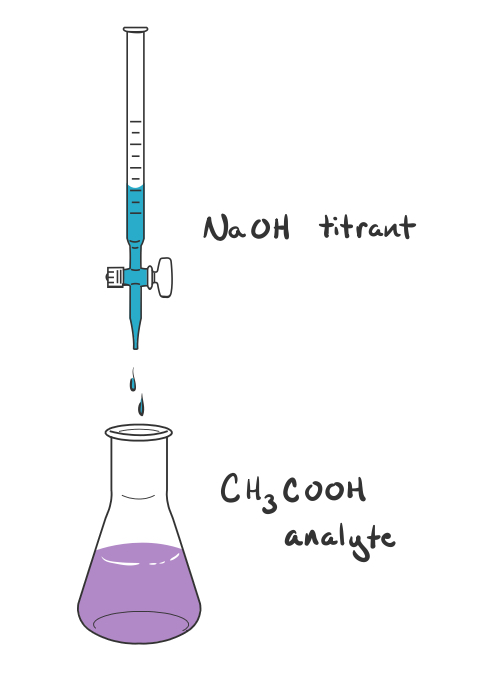
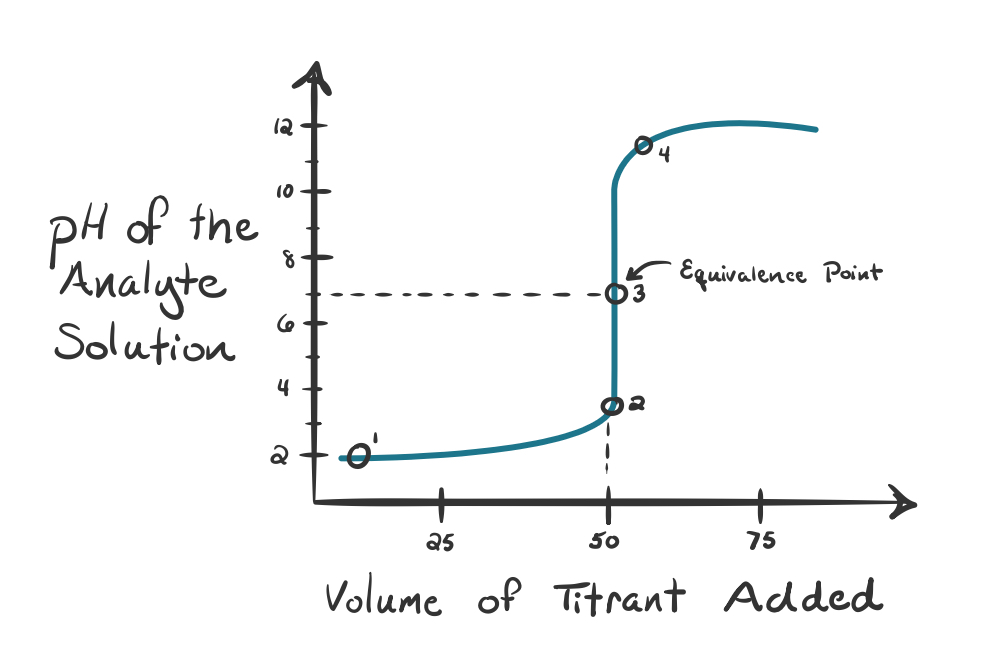
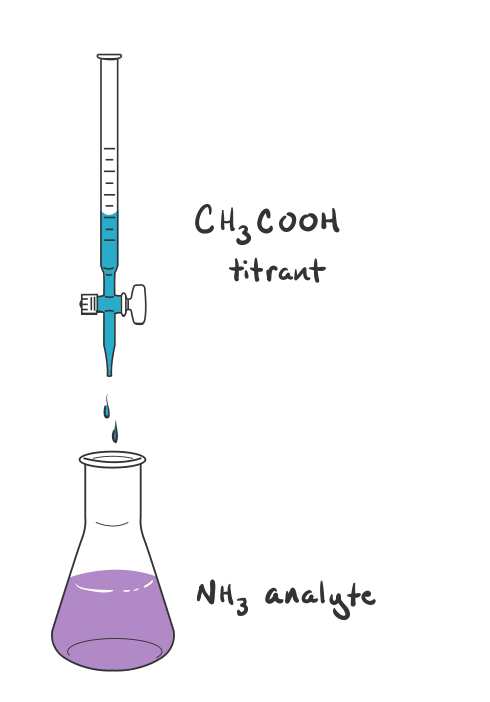
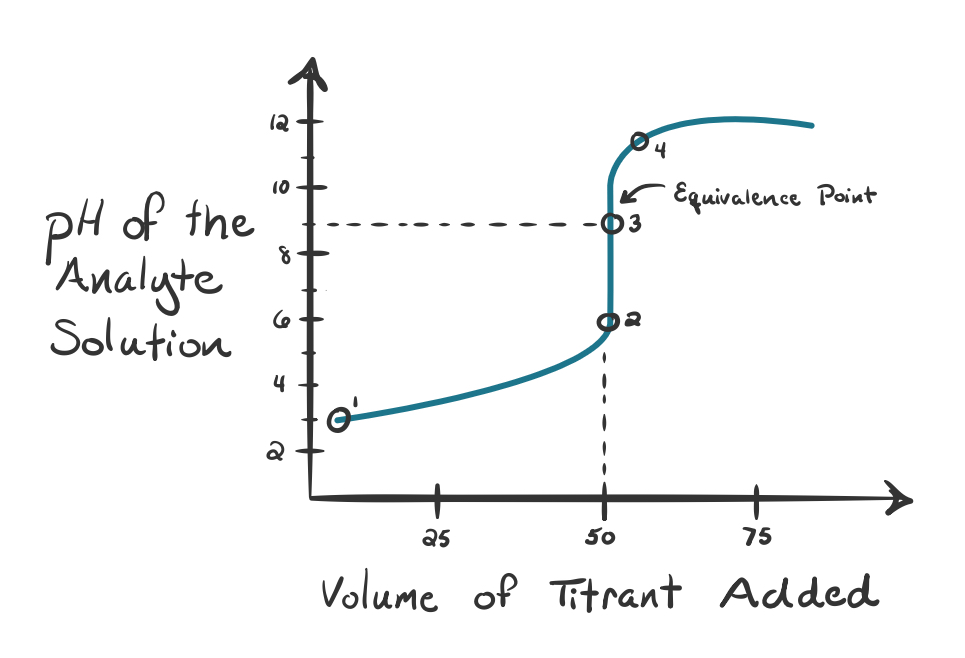
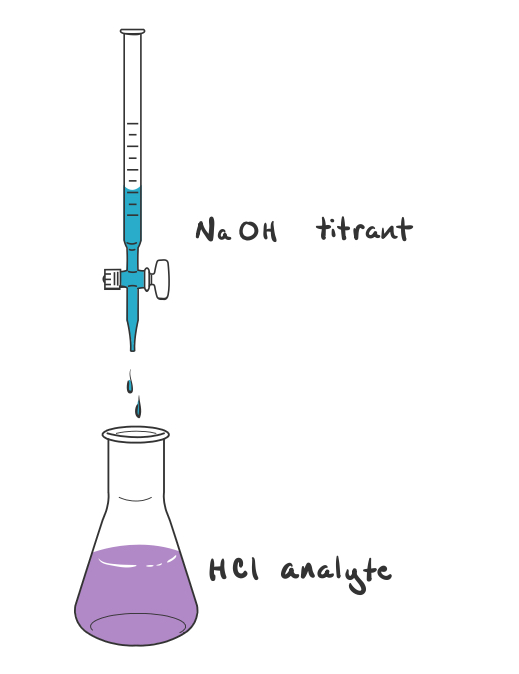
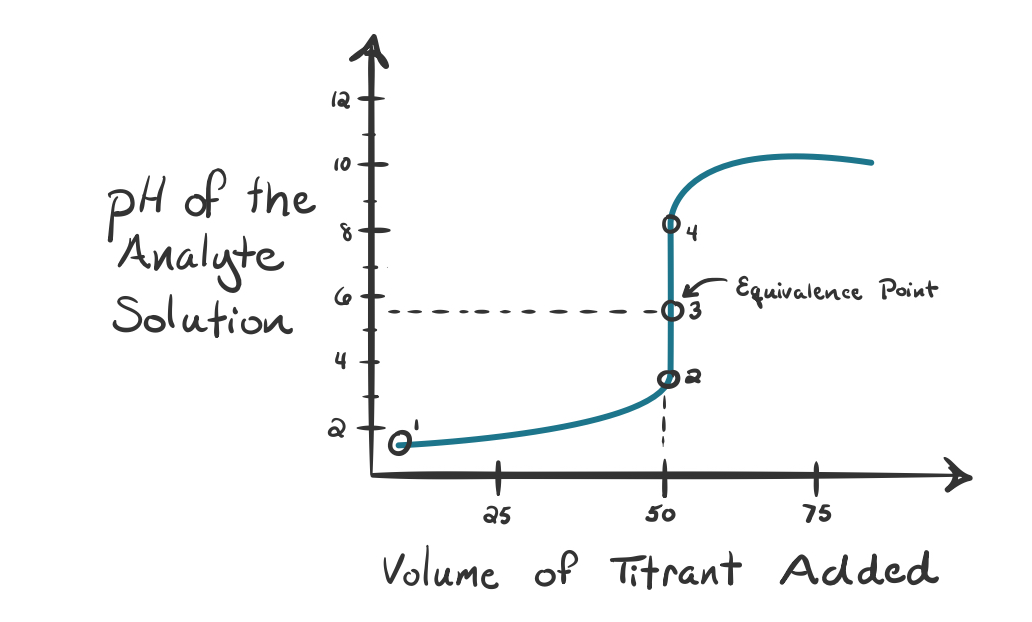
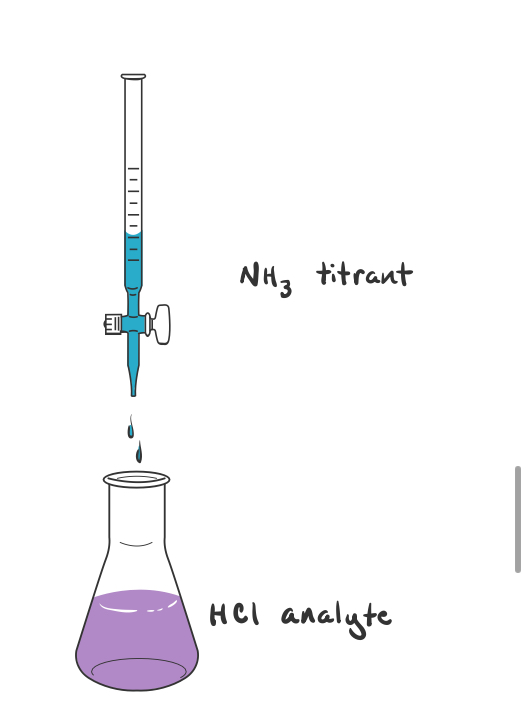
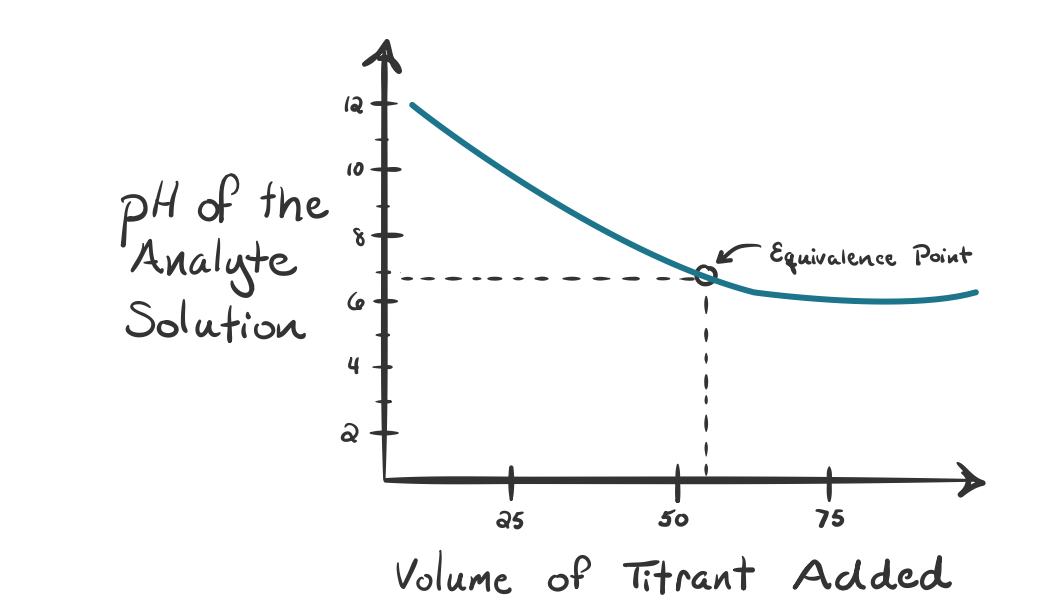
Match the following titration set-ups with the corresponding titration curve:
| Draggable item | arrow_right_alt | Corresponding Item |
|---|---|---|
| arrow_right_alt |
|
| arrow_right_alt | ||
| arrow_right_alt | |
| arrow_right_alt |
Consider the following information regarding pH indicators:
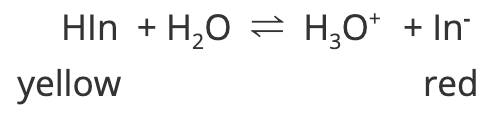
At a low pH, a weak acid indicator is almost entirely in the HIn form, the colour of which predominates. As the pH increases - the intensity of the colour of HIn decreases and the equilibrium is pushed to the right. Therefore the intensity of the colour of In- increases. An indicator is most effective if the colour change is distinct and over a low pH range. For most indicators the range is within ±1 of its pH at its Ka value and at the point of changing colour [HIn] = [In-].
Consider an indicator that ionized as shown below for which its Ka = 1.0 x 10⁻⁴
Which of the responses are true statements? Select all that apply: