APUSH Chapter 23 - Political Paralysis in the Gilded Age (1869-1896) - SY23
star
star
star
star
star
Last updated over 1 year ago
24 questions
0
0
0
Required
1
IIRC.01
Required
1
IIRC.01
Question 1
1.
Warm Up: In your own words, what is the American Dream?
Question 2
2.
Warm Up: What does the American Dream mean to you?
Question 3
3.
Building Knowledge Together: Please prepare for our 4 Corners activity by categorizing each statement.
There are no right answers. The purpose of this activity is to prime your brain to consider major themes in the upcoming unit.
The American Dream is not about having stuff, it’s about having opportunity.
The United States provides equal opportunity for all.
0
Question 4
4.
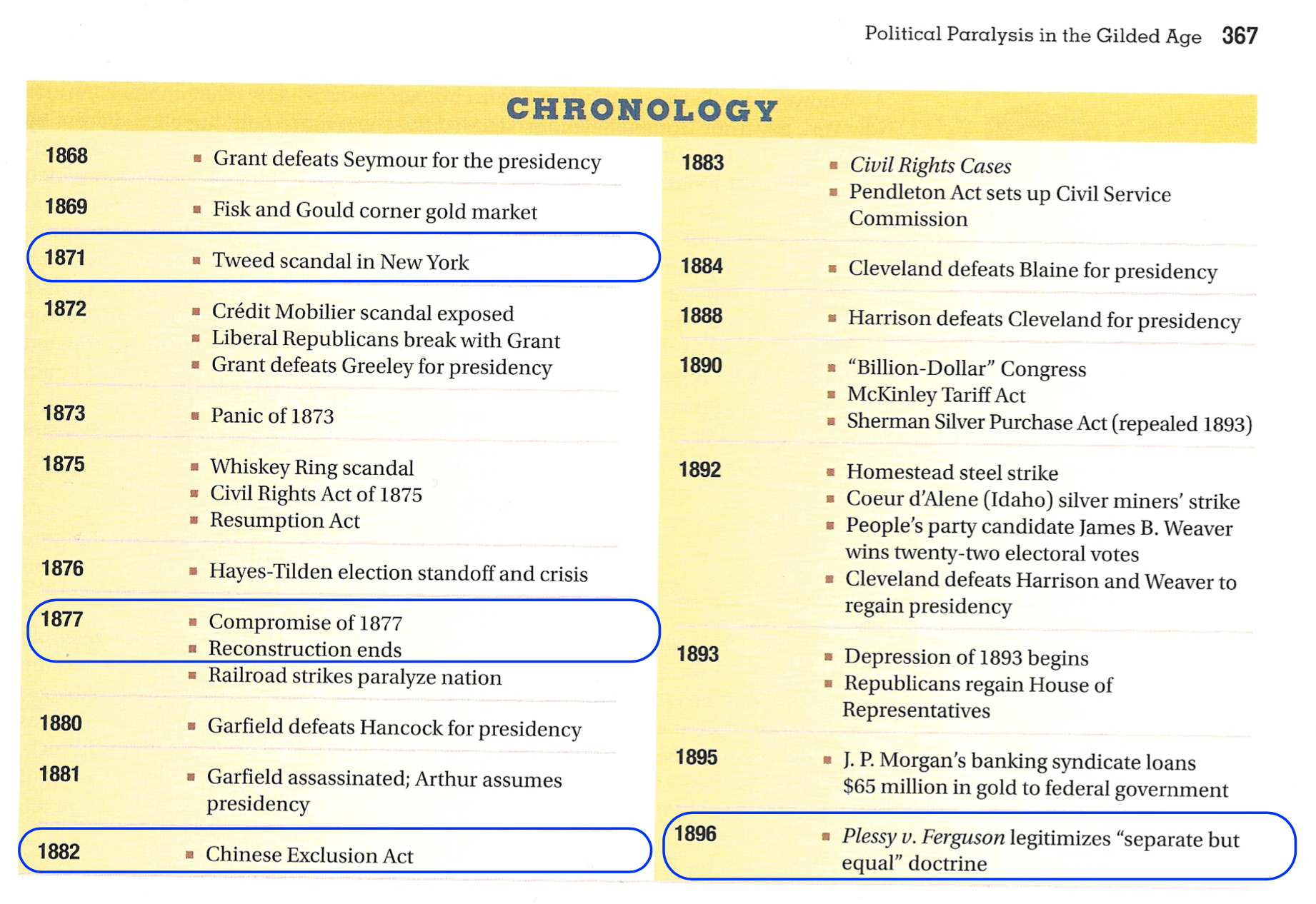
Review the key terms and big ideas here. What do you already know about from the upcoming unit?
Required
1
Question 5
5.
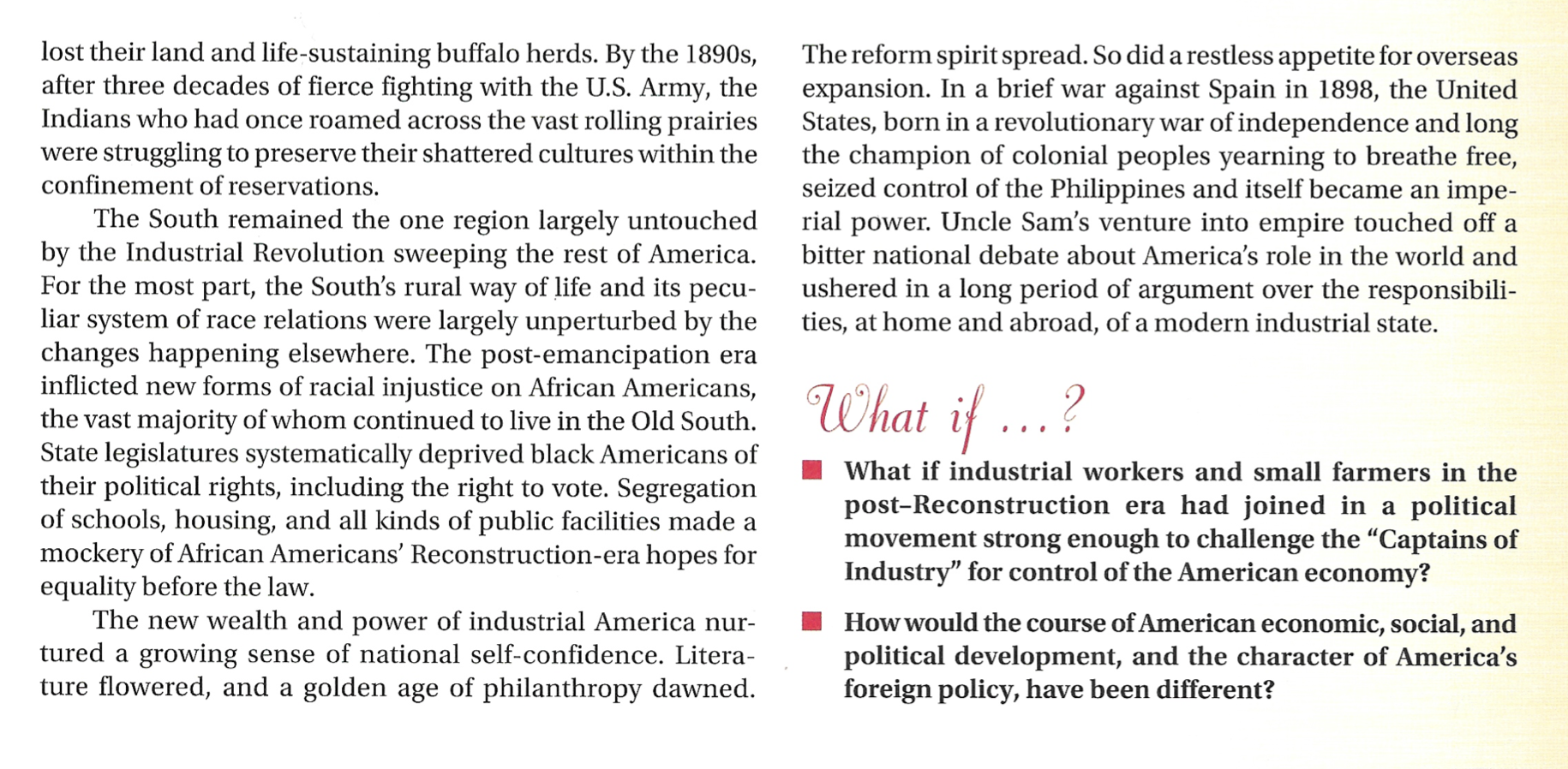
Which statement best expresses the central idea of this section?
IICI.01
Required
0
Question 6
6.
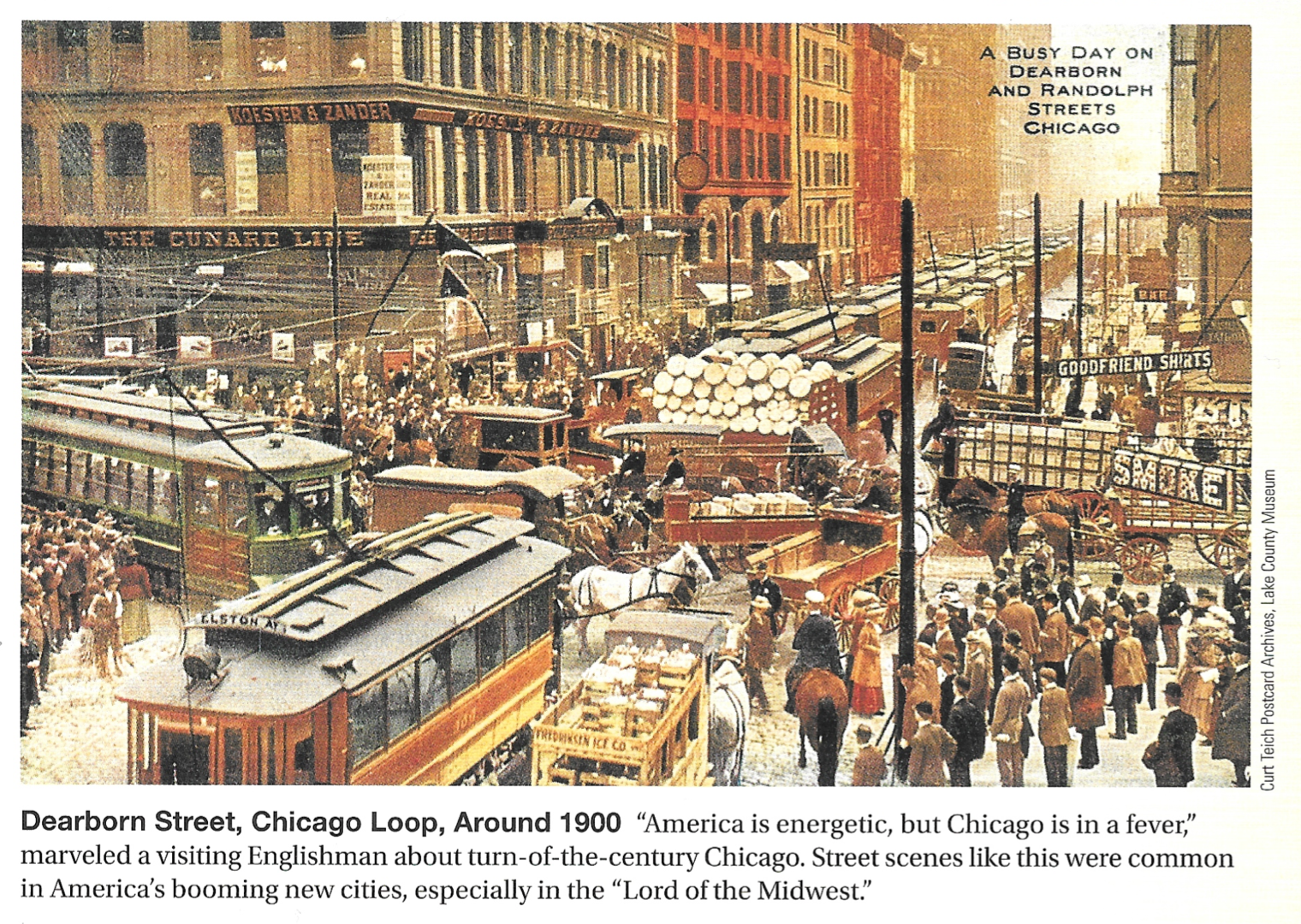
How does this image of the Chicago loop around 1900 compare to the Chicago loop today?
0
Question 7
7.
That's all due for Monday, 2/13. Any questions?
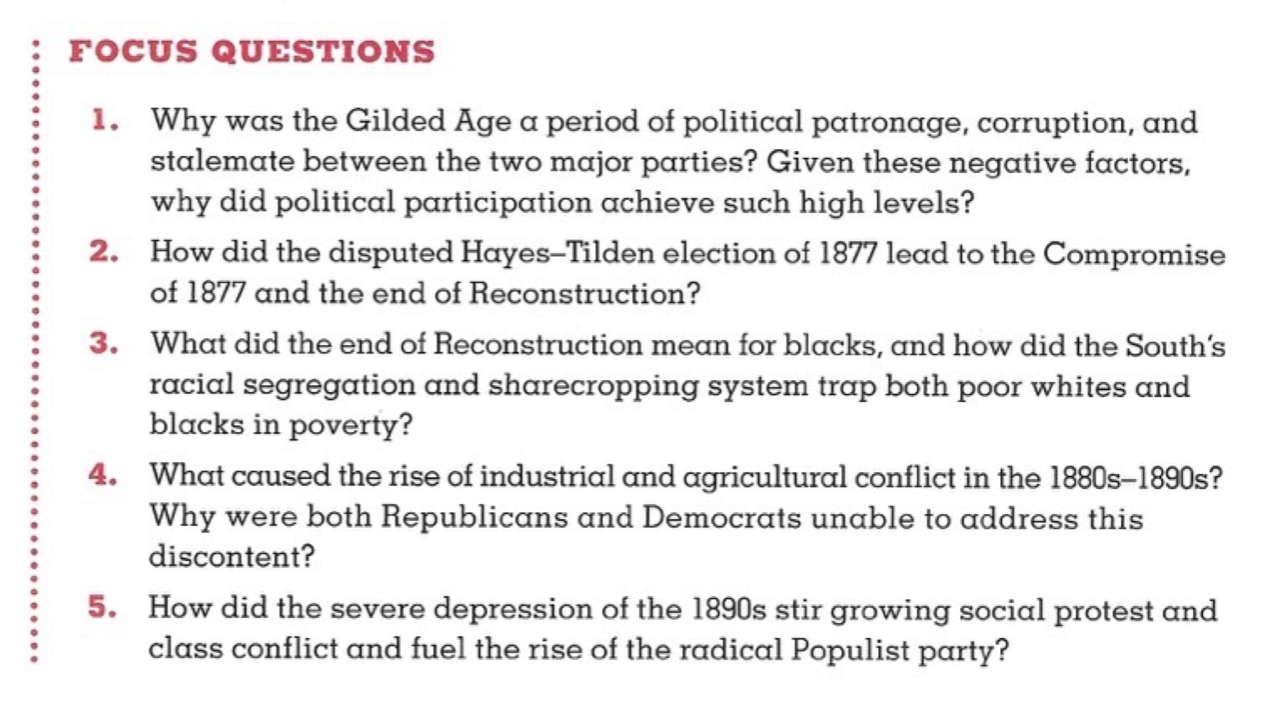
Welcome to your Chapter 23 reading! As always, the Focus Questions should guide your reading but you are not required to take notes or annotate.
Required
1
Question 8
8.
What was a defining feature of post-Civil War life in America?
IIRC.02
Question 9
9.
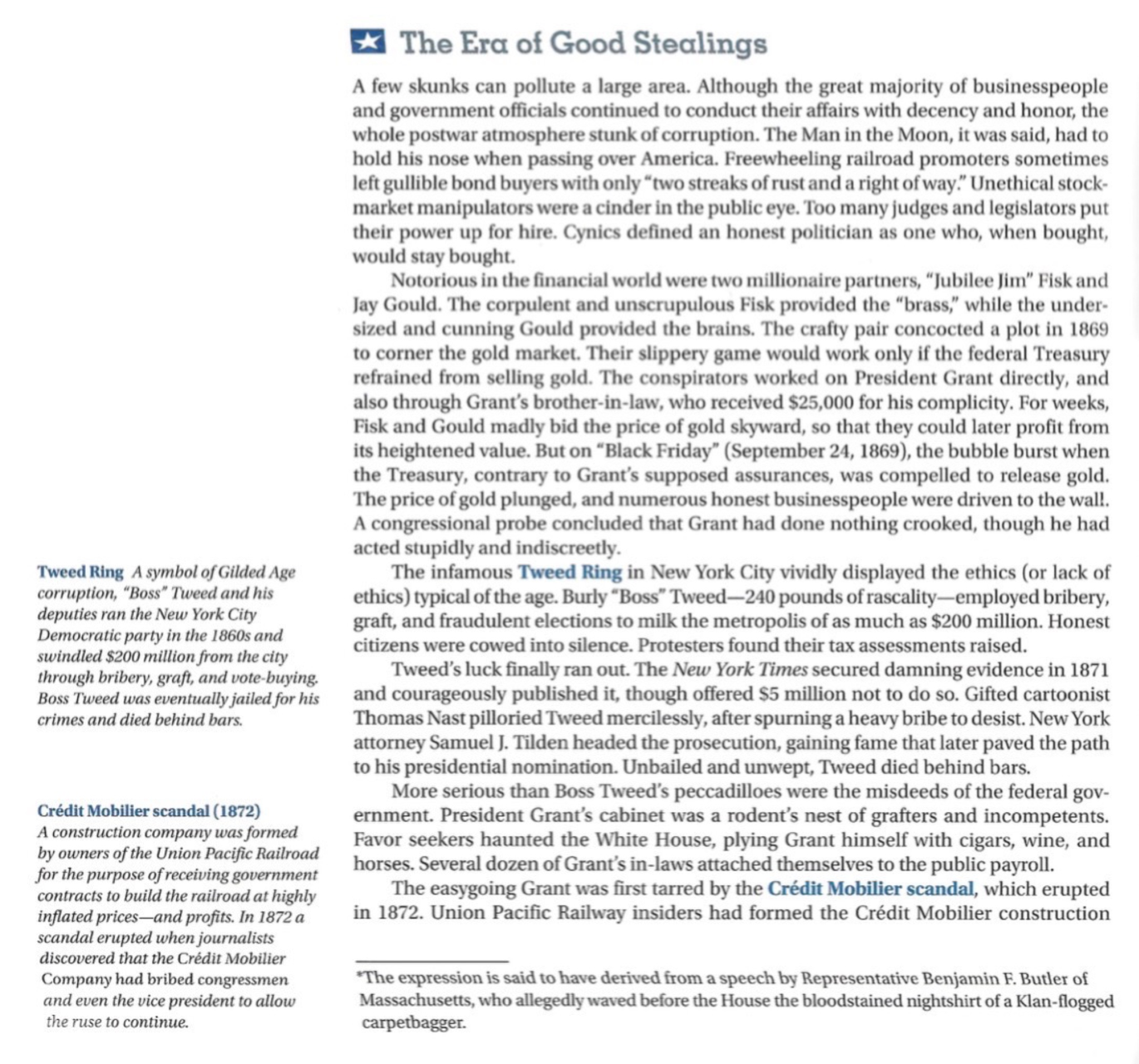
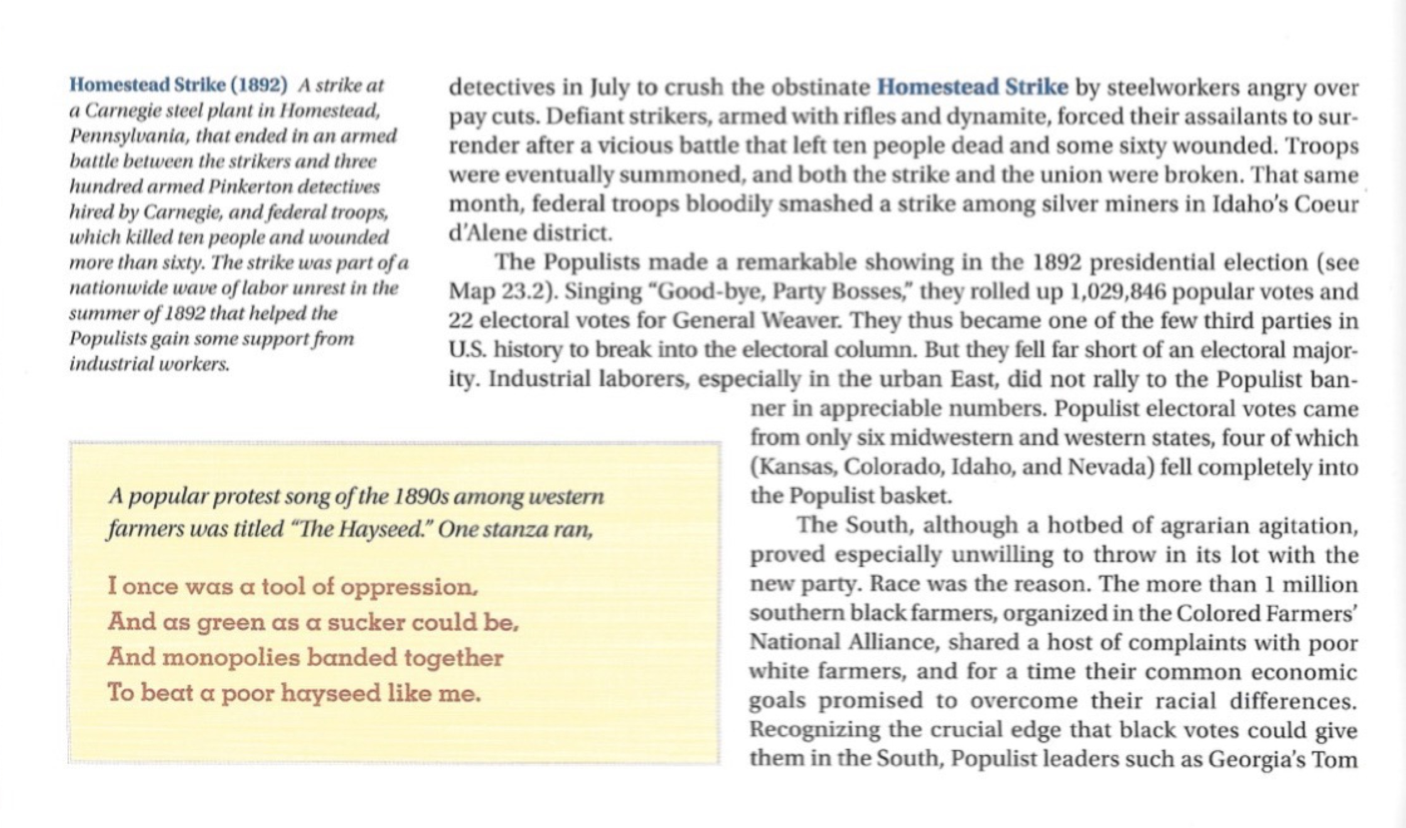
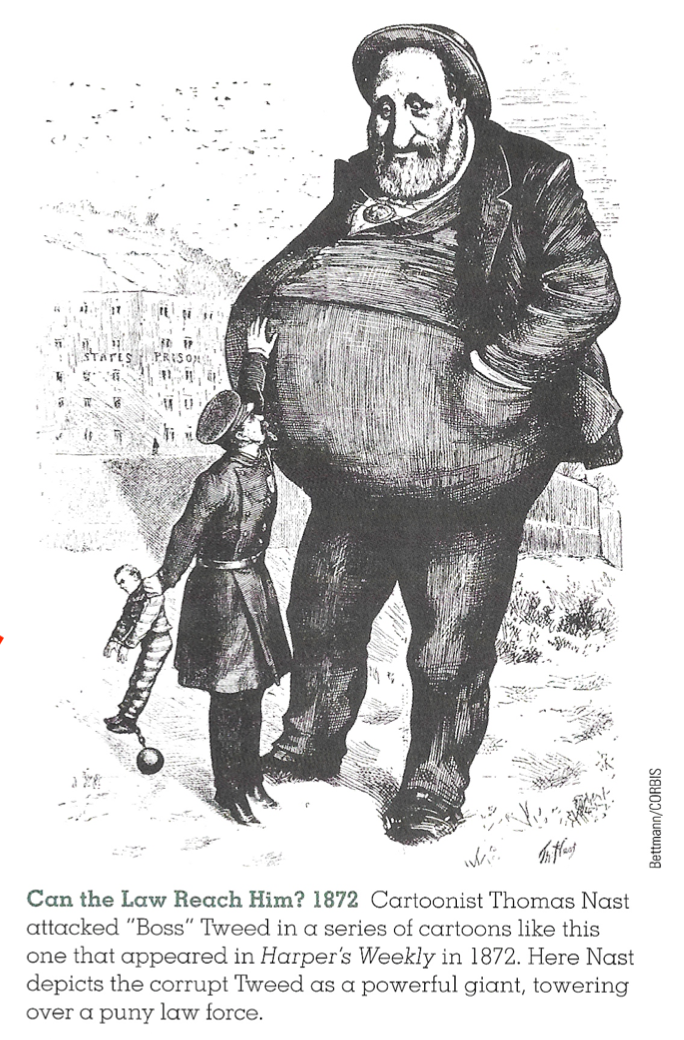
One weapon that caused the downfall and eventual jailing of New York City's infamous Boss Tweed was
Required
1
Question 10
10.
RWC.01
0
Question 11
11.
That's all due for Tuesday, 2/14. Any questions?
Required
1
Question 12
12.
IIWD.01
Required
1
Question 13
13.
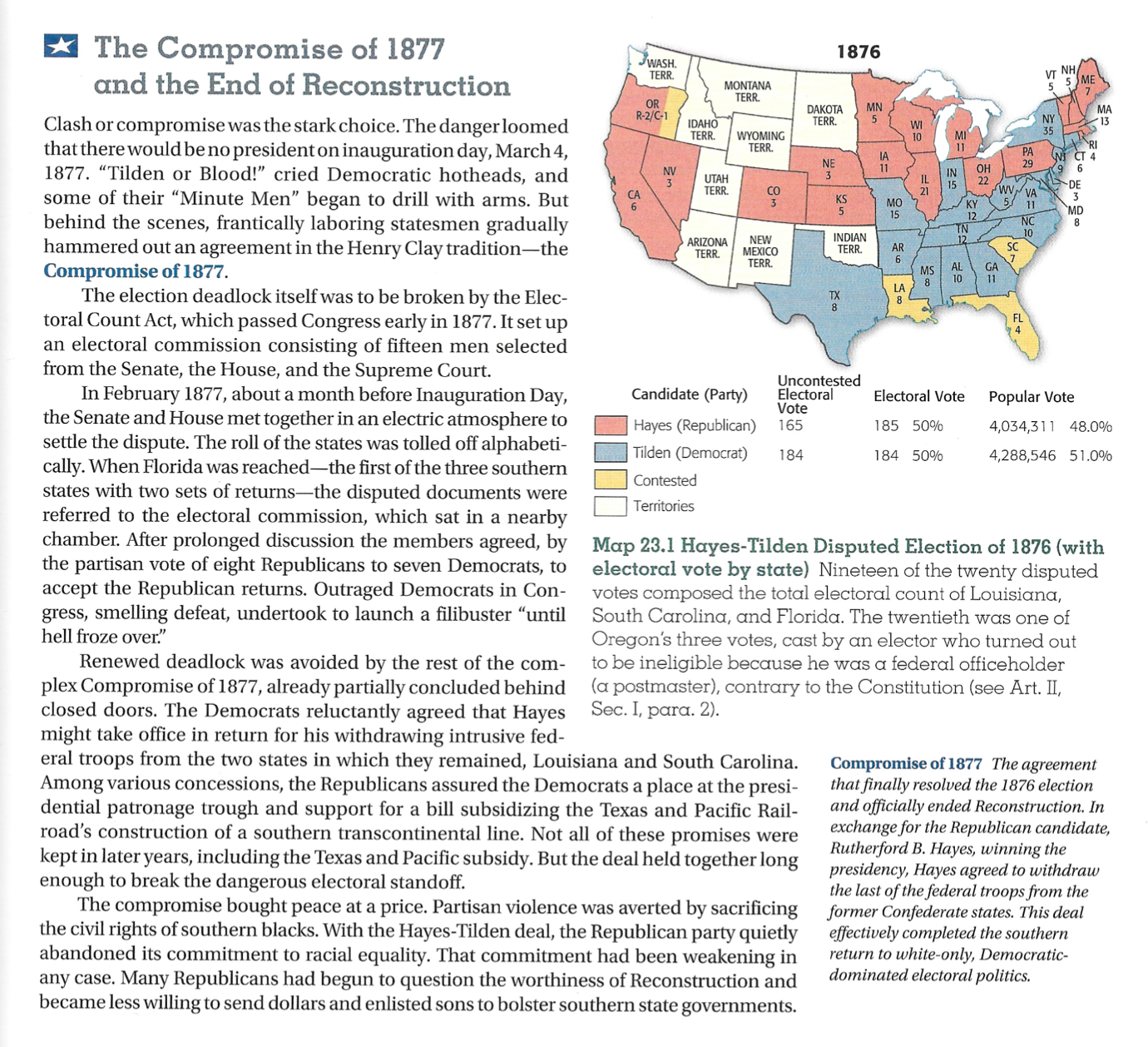
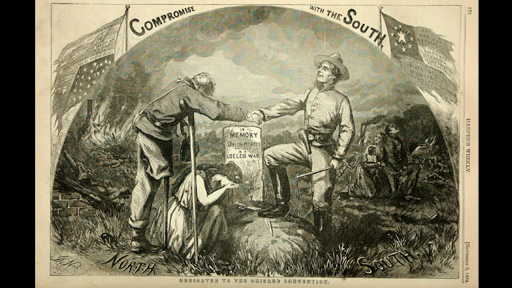
The Compromise of 1877 resulted in
IIRC.01
Required
1
Question 14
14.
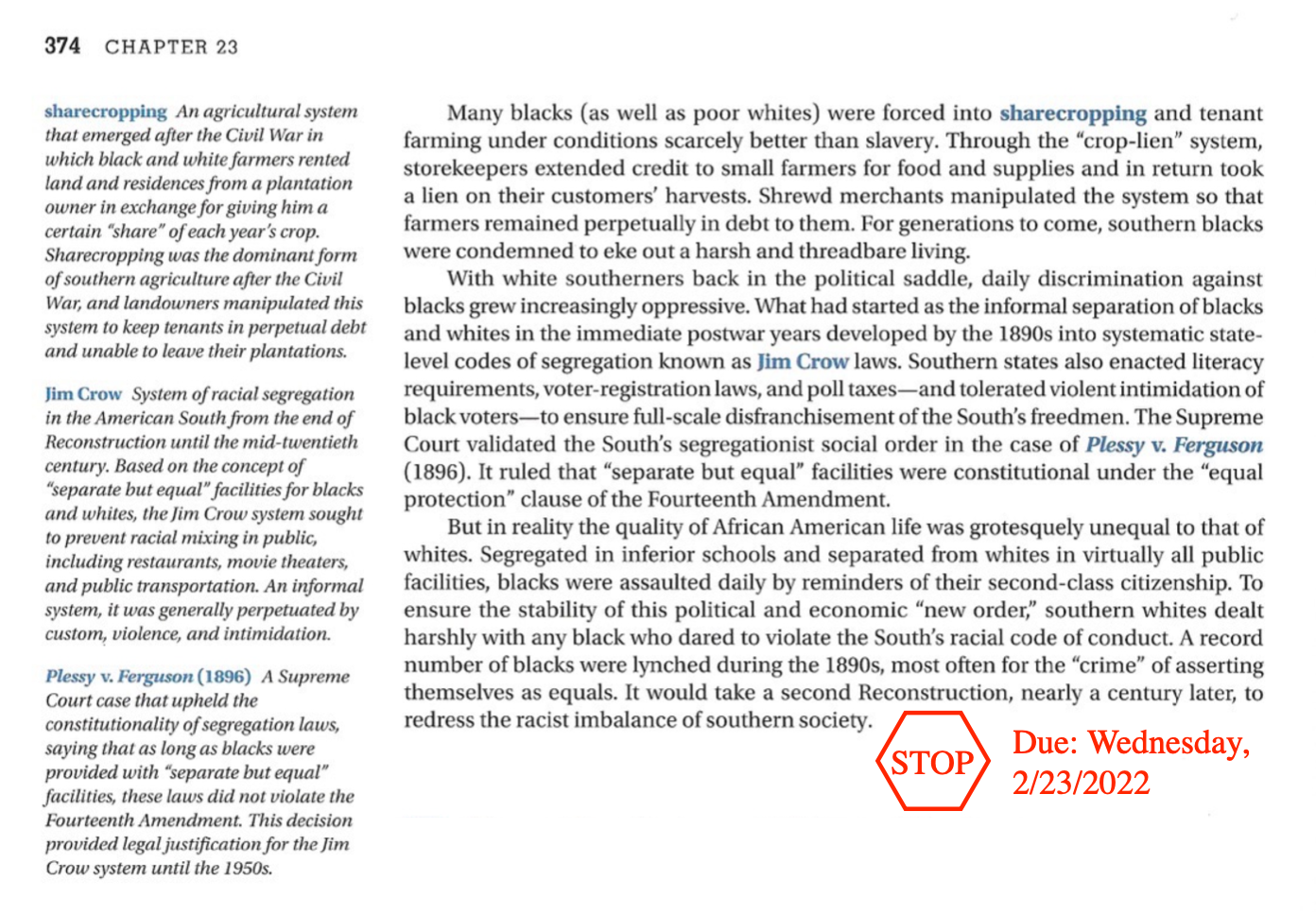
The sharecropping and tenant farming system that emerged in the post-Civil War South
IIRC.01
Question 15
15.
In the 1896 case of Plessy v. Ferguson, the Supreme Court ruled that
0
Question 16
16.
That's all due for Wednesday, 2/15. Any questions?
Required
1
Question 17
17.
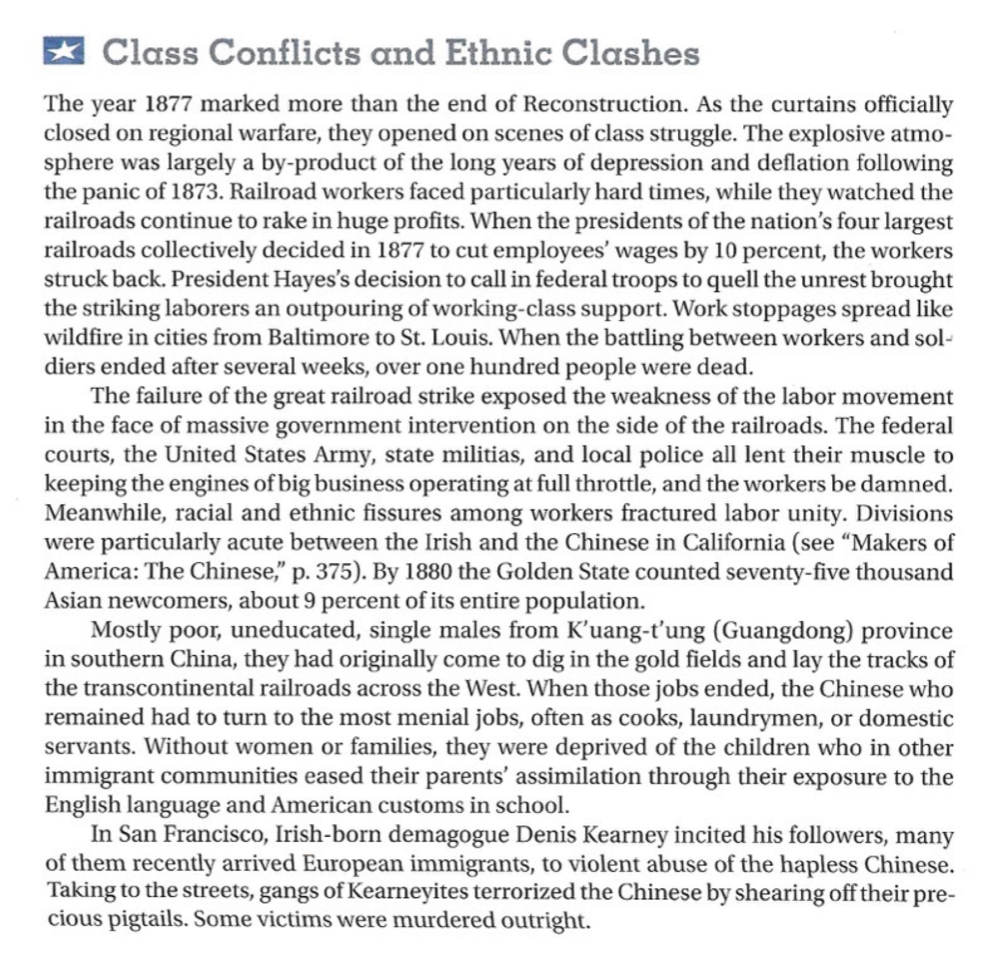
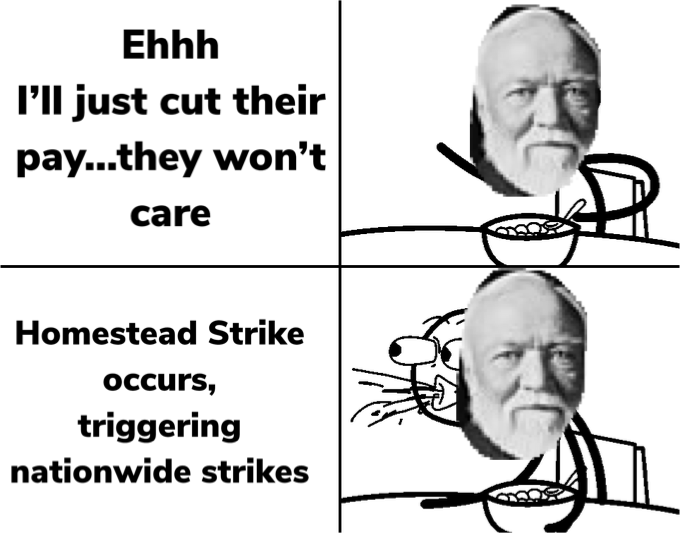
Railroad workers went on strike in 1877 because
IIUR.01
Required
1
Question 18
18.
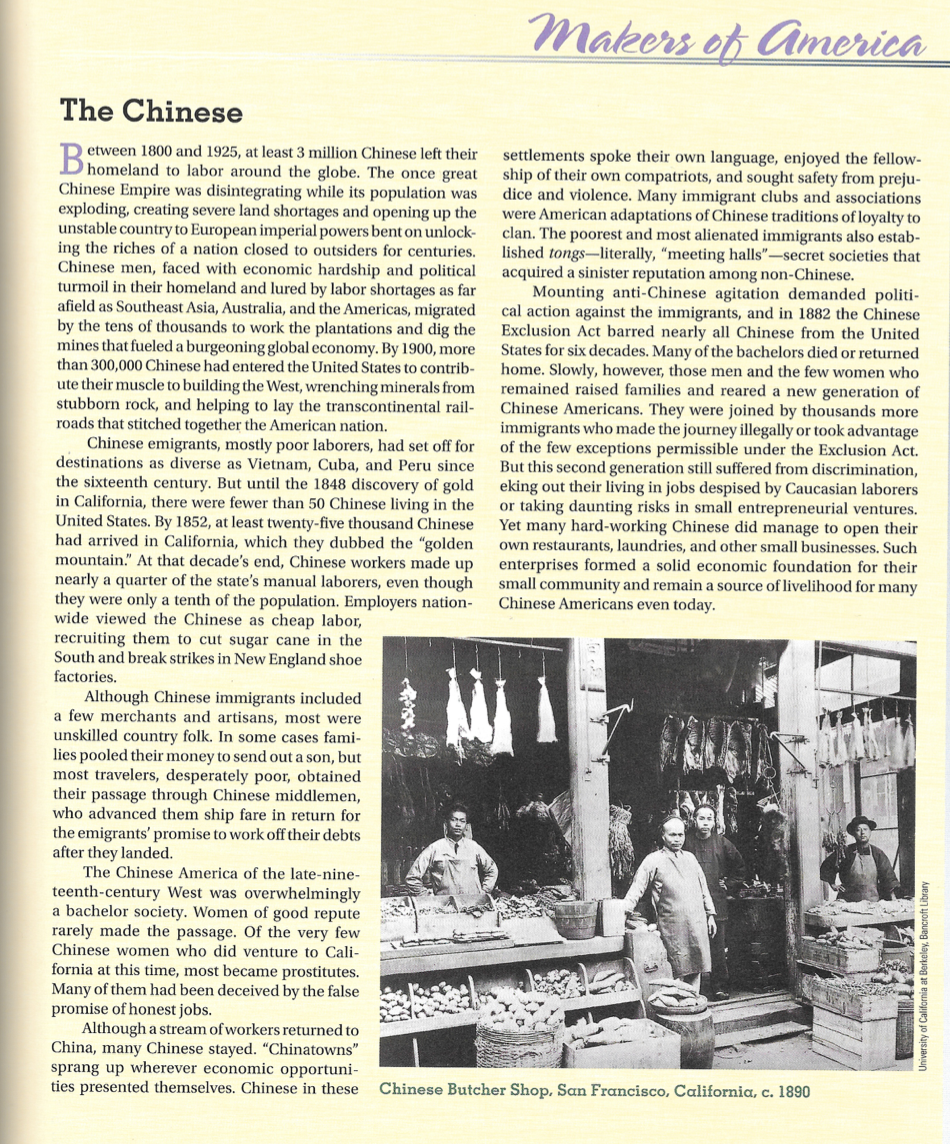
One of the main reasons that the Chinese migrated to the United States was to
IIRC.01
Required
1
Question 19
19.
IIRC.01
0
Question 20
20.
That's all due for Thursday, 2/16. Any questions?
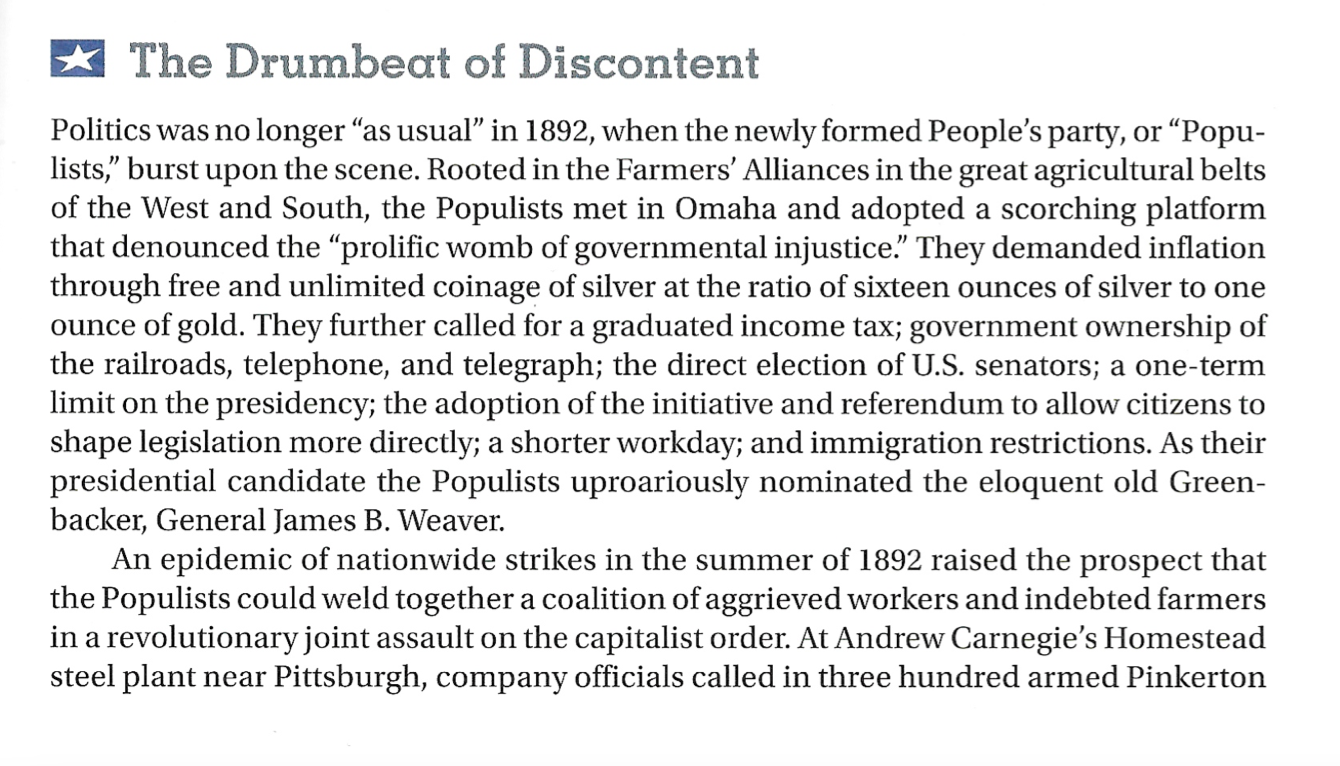
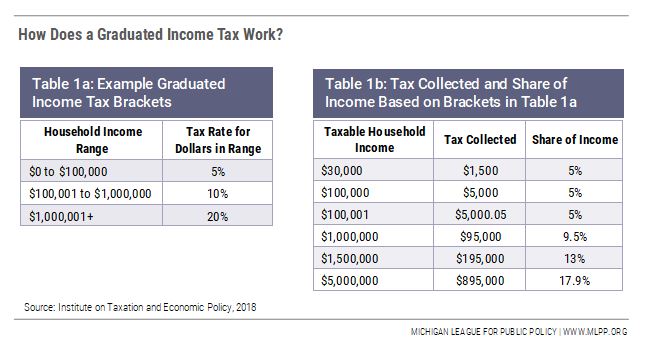
Also called a "progressive tax," a graduated income tax increases the rate - or % someone is taxes - based on the amount of money they earn. Basically, the more you earn, the more taxes you pay.
In the fall of 2021, Governor Pritzker proposed a graduated income tax in the state of Illinois. The proposal was rejected.
Required
1
Question 21
21.
Which statement is best supported by the data in Table 1b?
SQN.01
Required
1
Question 22
22.
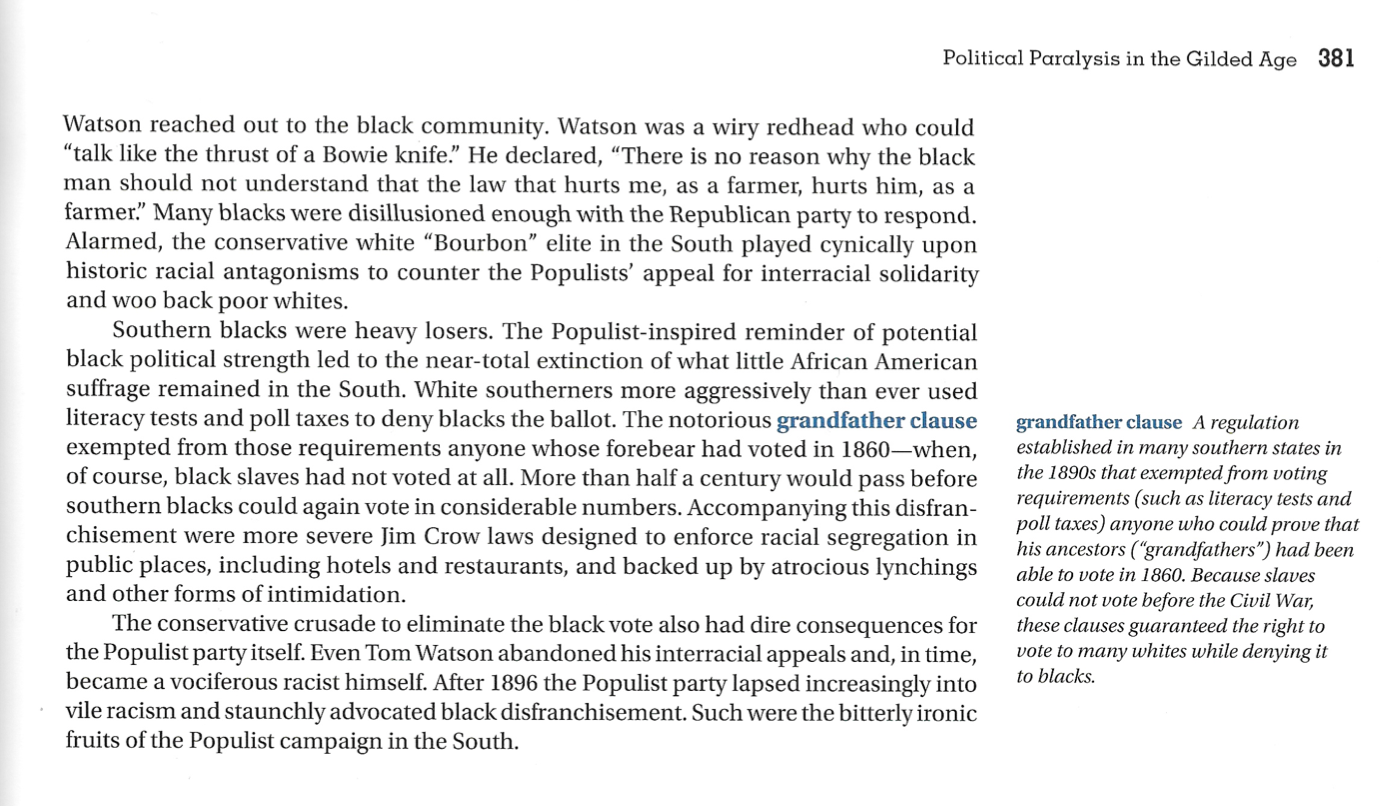
The early Populist campaign to create a coalition of white and black farmers ended in
IIRC.02
0
Question 23
23.
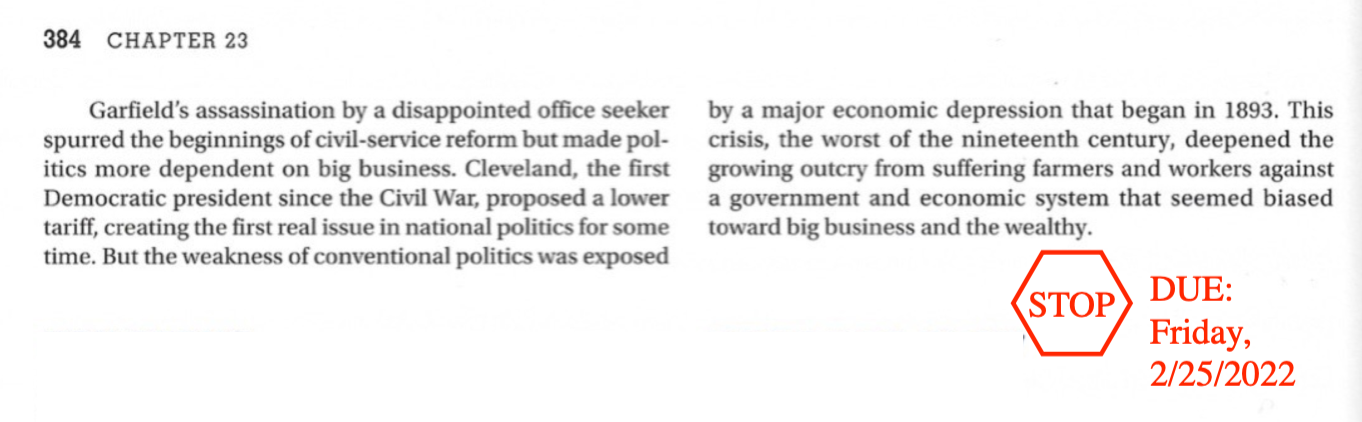
Excellent reading! Close out this Chapter by reviewing the "Chapter Summary" and using the "rectangle" tool to box the 5 most important key terms in the space provided.
Be sure to click "Submit" in Formative and Google Classroom by Friday, 2/25.
0
Question 24
24.
Chapter 23 complete! Any questions?
Politics and business should be kept separate.
Children under the age of 14 should be allowed to work if their families rely on them for income.
Citizens should be required to pay more income tax if they make more money.
Strongly Agree
Agree
Disagree
Strongly Disagree
As the United States expanded in territory, wealth, and power, American used its newfound industrial might to expand its influence of other countries.
The United States at the turn of the 20th century was consumed by the final defeat of the Plains Indians and extinction of the American buffalo.
The Gilded Age is characterized by isolationist sentiment from an emerging industrial country that did not need to rely on the economies of other countries.
The United States was able to quickly recover after the Civil War as the North and South were easily able to reintegrate socially, politically, and economically.
Major economic and political gains for ex-slaves
Religious revivals
Population decline
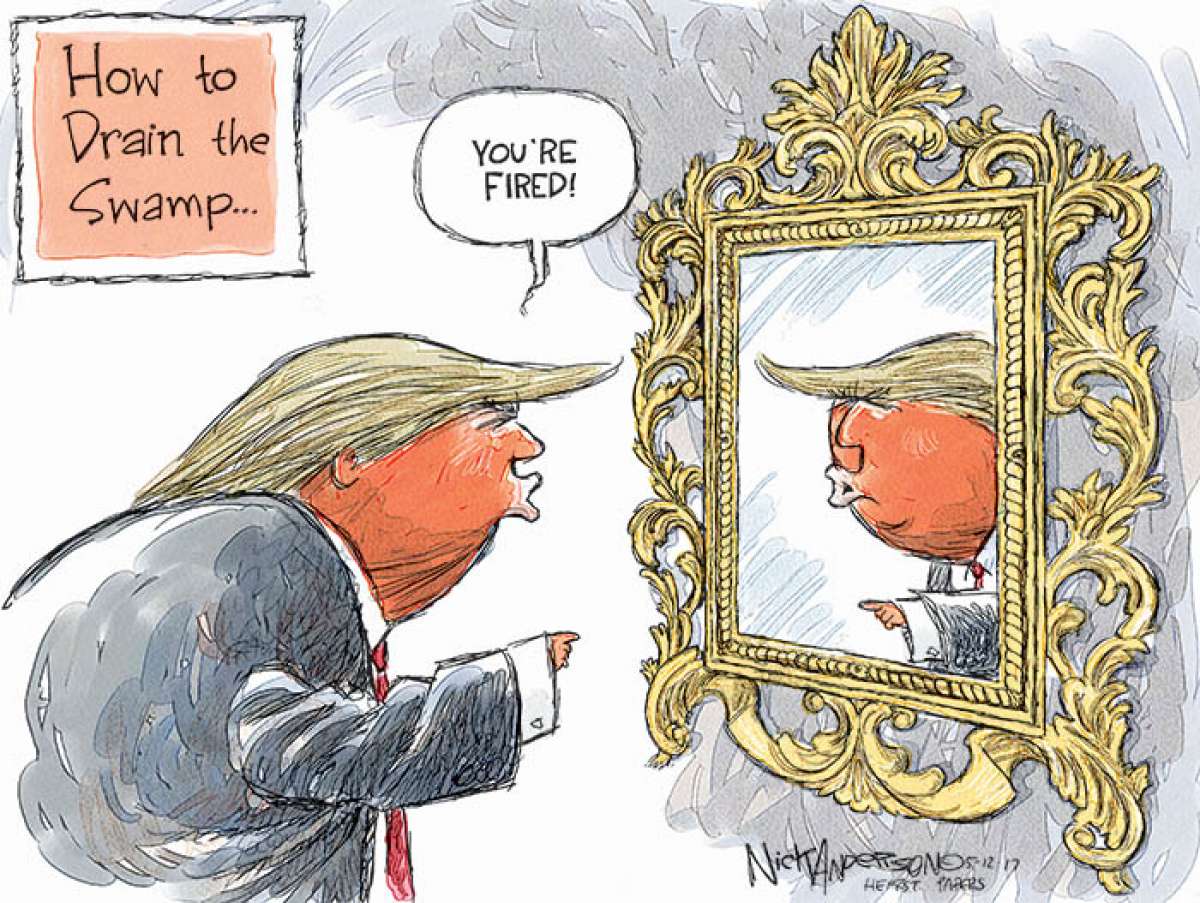
Widespread corruption in business and politics
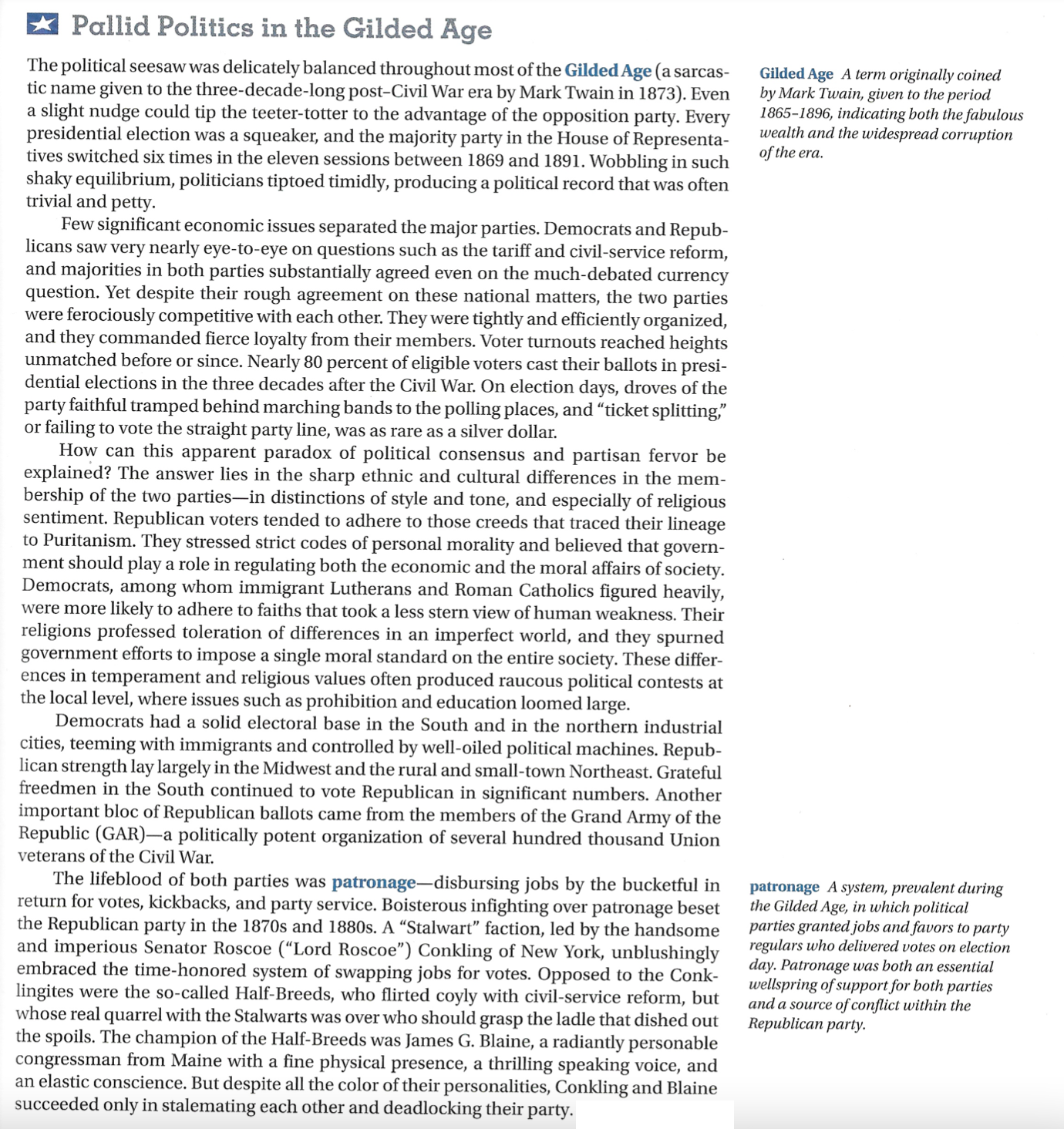
The phrase "lifeblood of both parties" in the 5th paragraph mainly serves to

undermine the argument against the rise of big-city political machines in the Gilded Age.
call for the formation of labor unions and working-class activism to keep big business in check.
suggest that both political parties both gave jobs in exchange for votes, money, and loyalty.
highlight a key difference between the Democratic and the Republican parties.
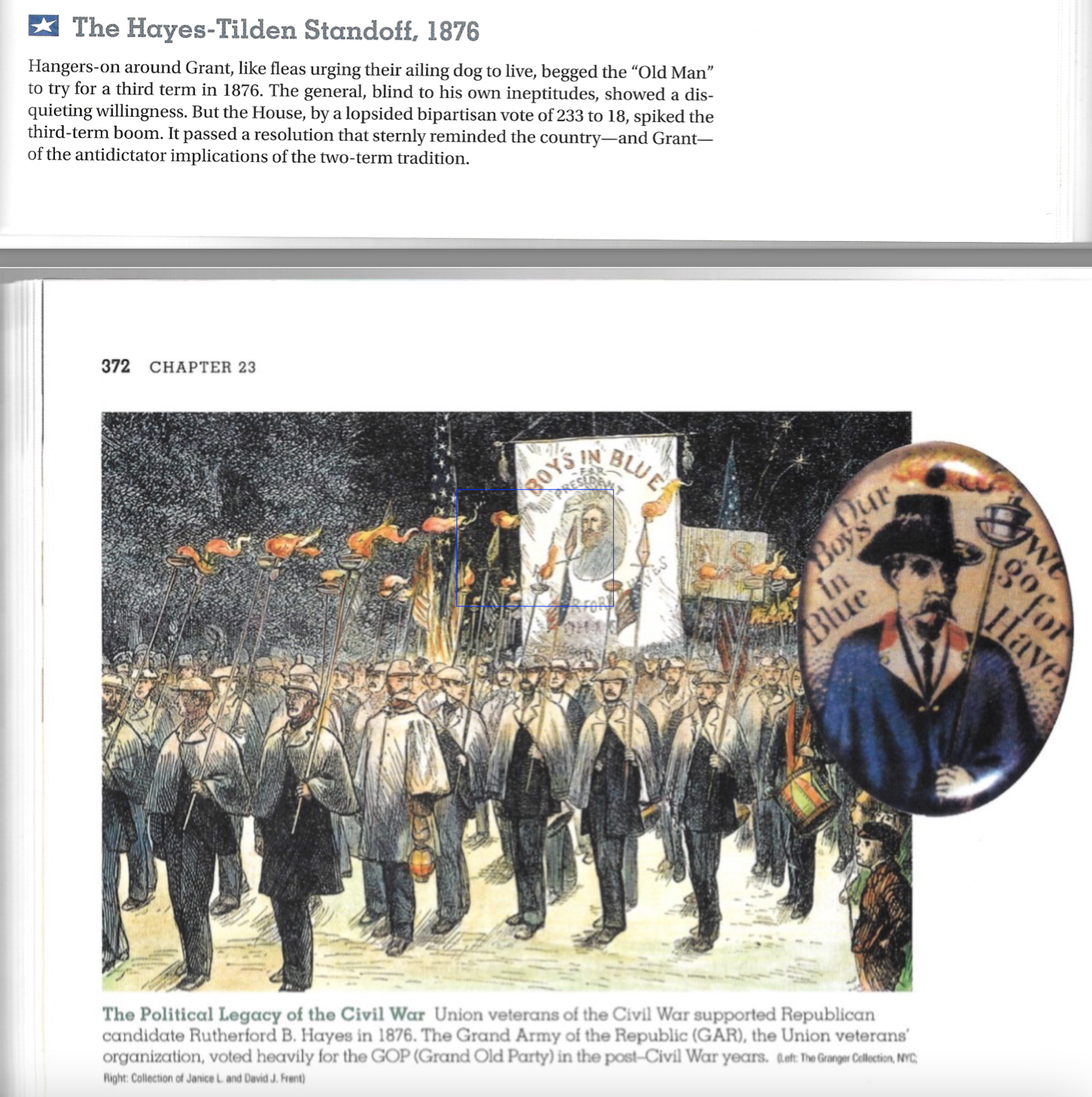
As used in line 2, "blind to" most nearly means
sensitive to
controlled by
oblivious to
covered for
an end to Indian warfare and the creation of the reservation system.
the withdrawal of federal troops from the South and the end of Reconstruction.
a plan to build the transcontinental railroad and admit new western states to the Union.
a Republican commitment to protect black civil rights in the South.
applied the principle of “separate but equal” to the division of land and crops for Black farmers.
kept poor black and white farmers in perpetual debt through the crop-lien system.
was found unconstitutional by the Supreme Court in 1896.
enabled many former slaves to work their way up the economic ladder.
they refused to cross the picket lines of cargo loaders.
the four largest railroads cut salaries by 10 percent.
the railroads tried to hire Chinese workers.
their hours were cut back by the railroad companies.
establish laundries, restaurants, and other small
businesses.
create a basis for American cultural relations with China.
escape religious persecution.
work in gold mining and railroad building.
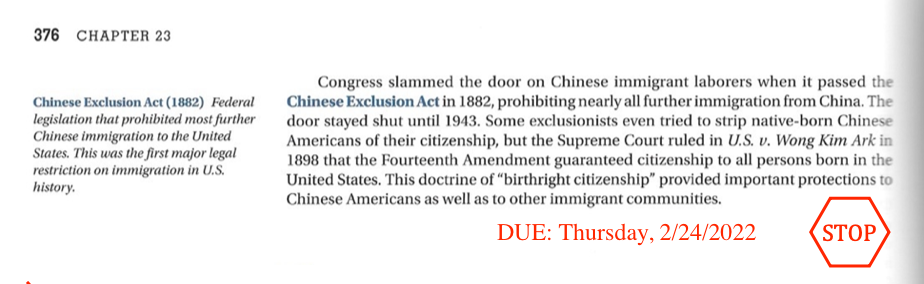
In the wake of anti-Chinese violence in California, the United States Congress
sent federal agents to protect the Chinese from attack.
passed a law prohibiting Chinese immigration to America.
forced the Chinese into restricted areas.
Under a graduated income tax, someone who makes $1,000,000 pays the same amount as someone who makes $100,001 because they are in the same bracket.
Under a graduated income tax, someone who makes $30,000 would pay the same rate of taxes as someone who makes $100,000.
Under a graduated income tax, someone who makes $30,000 would pay the same amount of taxes as someone who makes $1,000,000.
Under a graduated income tax, someone who makes $5,000,000 pays a higher percentage of their income because they contribute more.
the resurgence of Republican political power in the South.
the breakdown of segregation in areas outside southern cities.
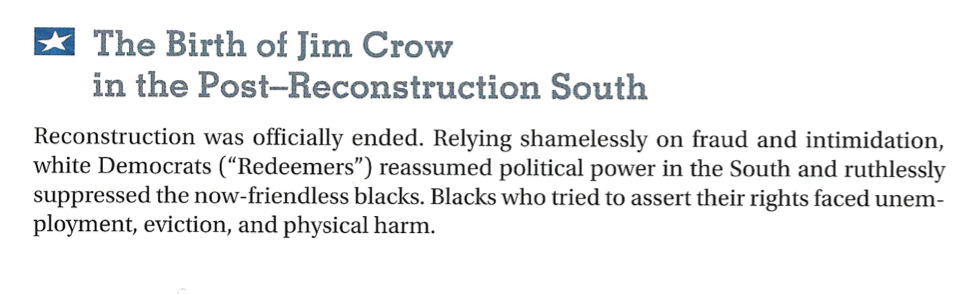
a racist backlash that eliminated black voting in the South.
the transformation of Tom Watson into a fervent civil rights leader.